How does wind form?
The Sun heats land and water unevenly. Warm air rises, cooler air rushes in, and that moving air is wind.
The big idea: The Sun warms some places more than others. Warm air rises and leaves lower pressure behind, so cooler air flows in to fill the gap. Moving air is wind.
It's like
The interactive parts didn't load. The explanations below still work; try reloading the page.
A day at the beach: how wind forms
- Wind bends the trees and lifts the kites. You can't see air, but you can see what it does. So what sets the air moving?
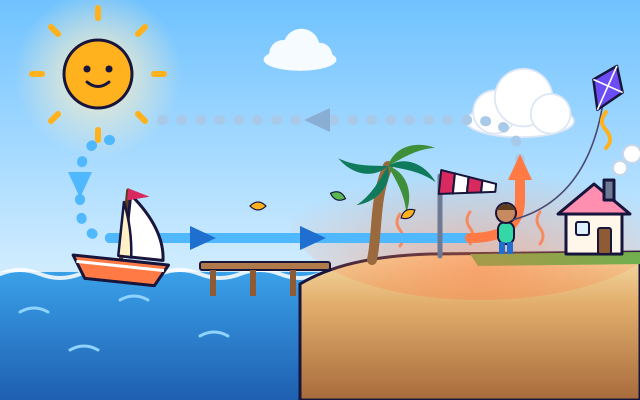
- On a sunny morning the Sun shines on the beach and the sea. The land warms up quickly, but the water warms up slowly.
- The hot land warms the air above it. Warm air spreads out and gets lighter, so it rises. High up, it can make puffy clouds.
- Cooler, heavier air over the sea slides in to fill the space. This wind from the sea is a sea breeze. High up, air flows back and sinks over the water.
- At night the land cools faster than the water. Now the sea is the warmer place, so the breeze turns around and blows from the land: a land breeze.
- The same idea works for the whole planet. The Sun heats the middle of the Earth more than the poles, so giant winds carry warm and cool air around the world.
Inside a sea breeze
Tap each part of the sea breeze. Watch what it does when you find it!
- Sunshine. Sunlight is the energy that starts the wind. It shines on land and sea alike, but they don't warm up the same way.
- Warm land. Sand, soil and rock warm up quickly in sunshine and cool down quickly at night.
- Cool sea. Water takes a lot of heat to warm up. Sunlight also sinks deep into it, and waves stir the warm water down, so the sea surface warms slowly.
- Rising warm air. Air over the hot land warms up and spreads out. That makes it lighter than the air around it, so it rises.
- Puffy cloud. As the warm air rises it cools. The water vapor in it turns into tiny droplets, and a puffy cloud forms over the land.
- Low pressure. Where warm air rises, the air presses down a little less on the ground. We call that low pressure. Air flows toward it.
- High pressure. Cool air over the sea is heavier and presses down a bit more. That's higher pressure, and the air spreads out from there.
- Sea breeze. Near the ground, cool air flows from the sea onto the land. That's the sea breeze you feel at the beach in the afternoon.
- Air flowing back. High up, the air that rose over the land flows back out over the sea. Then it cools and sinks, and the loop starts again.
- Windsock. A windsock fills with moving air. It points the way the wind is blowing to, and it stands out straighter when the wind is stronger.
Coastal model: land and sea temperatures
Change the land and water temperatures. Watch the air move, and see which way the windsock points.
Experiment: Which way does the breeze blow when the land is warmer than the sea?
- Make the land hot and the sea cool.
- Watch the air and the windsock.
- Now make the land colder than the sea. What changes?
What we found: When the land is warmer, air rises over the land and cooler sea air flows in: a sea breeze blowing toward the land. When the land is colder, the breeze turns around and blows out to sea. A bigger difference makes a stronger breeze.
Turn on JavaScript to try it yourself.
Fishing trip
Sail out to the fishing buoy, stop there to fish, then sail back to the dock. Change the land and sea temperatures to steer the breeze.
How uneven heating makes wind
Air is made of tiny particles that are always moving. When air warms up, its particles move faster and spread out, so a box of warm air is lighter than the same box of cool air. Light, warm air rises, and heavier, cool air sinks.
The Sun doesn't heat everything equally. Dark soil, rock and sand warm up fast, but water warms up slowly, because it takes a lot of energy to heat water and the warmth gets stirred deep into the sea.
On a sunny day the air over the land gets warmer than the air over the sea. It rises, and the air pressing on the ground over the land gets a little lower. Cooler air from the sea flows in to fill the gap: a sea breeze. At night everything turns around, and a gentle land breeze blows out to sea.
The whole planet works like a giant beach. The tropics get the most sunshine and the poles the least, so huge loops of rising and sinking air carry heat around the world. Earth's spin bends these winds, which is why sailors long ago could count on steady trade winds.
Key words
- Wind
- Air moving from one place to another.
- Air pressure
- How hard the air presses on things. Air flows from higher to lower pressure.
- Sea breeze
- A daytime wind blowing from the cooler sea toward the warmer land.
- Land breeze
- A night-time wind blowing from the cooler land out toward the warmer sea.
- Specific heat capacity
- How much energy it takes to warm something up. Water needs a lot.
- Coriolis effect
- The way Earth's spin bends the path of big winds.
Check your thinking
-
On a sunny day, which warms up faster?
Show the answer
The land. Land warms quickly. Water needs lots of energy to warm up, and the warmth gets stirred deep down.
-
What does warm air do?
Show the answer
It rises. Warm air spreads out and gets lighter, so it rises.
-
At night, which way does the breeze usually blow at the beach?
Show the answer
From the land out to sea. At night the land cools faster than the sea, so the sea is warmer and the breeze blows toward it.
-
In the model, the land is 30 °C and the sea is 20 °C. What happens if you warm the sea to 30 °C as well?
Show the answer
The breeze dies down. With no temperature difference there is no pressure difference, so nothing pushes the air.
-
What bends the paths of the big global winds, such as the trade winds?
Show the answer
Earth's rotation (the Coriolis effect). As Earth spins, moving air is deflected to the right in the Northern Hemisphere and to the left in the Southern.
-
How can you tell the wind is blowing?
Show the answer
Leaves wiggle and kites fly. You can't see air, but you can see what moving air does.
You're a Earth & weather expert!
You watched, looked inside, tried it, solved the challenge and went deeper. Pick another question below, or switch the age at the top to see this topic another way.
More about earth & weather
 #75
Earth & weather
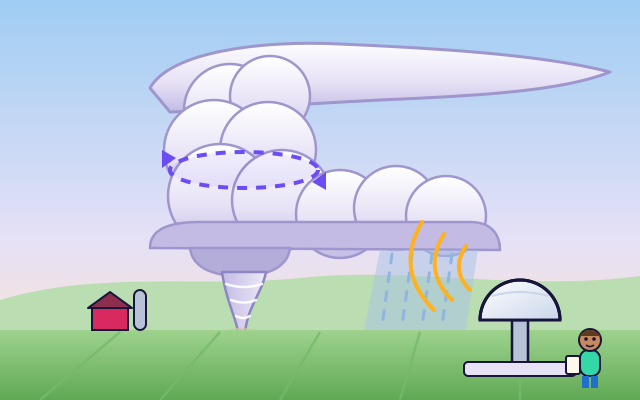
How do tornadoes form?
Explore airflow inside a simplified rotating thunderstorm. Watch a tornado develop and follow its movement across a model landscape.
#75
Earth & weather
How do tornadoes form?
Explore airflow inside a simplified rotating thunderstorm. Watch a tornado develop and follow its movement across a model landscape.
 #76
Earth & weather
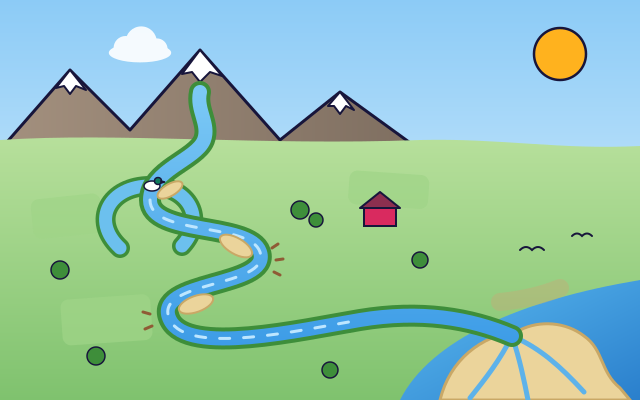
How do rivers shape the land?
Guide flowing water across a landscape and watch erosion, sediment transport, and deposition. Change slope and flow to create bends, channels, and deltas.
#76
Earth & weather
How do rivers shape the land?
Guide flowing water across a landscape and watch erosion, sediment transport, and deposition. Change slope and flow to create bends, channels, and deltas.
 #77
Earth & weather
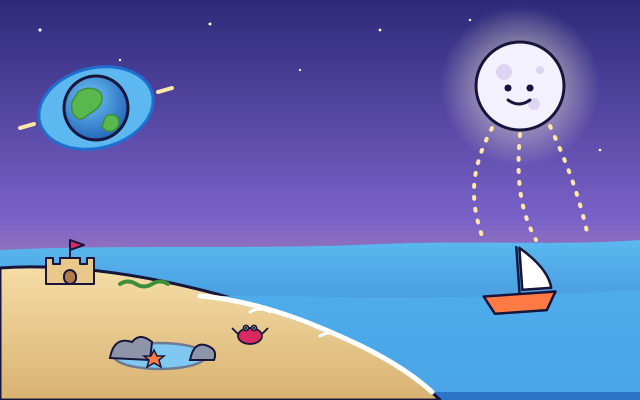
Why do ocean tides rise and fall?
Explore the Moon's and Sun's influence on a simplified ocean model. Move them into different positions and compare patterns of tidal change.
#77
Earth & weather
Why do ocean tides rise and fall?
Explore the Moon's and Sun's influence on a simplified ocean model. Move them into different positions and compare patterns of tidal change.
 #446
Earth & weather
How do snowflakes form?
Grow virtual ice crystals under different conditions and compare their branching patterns.
#446
Earth & weather
How do snowflakes form?
Grow virtual ice crystals under different conditions and compare their branching patterns.
Keep exploring
Games to play next
- Weather LabPredict the weather in a box, then run a fair test to find out why.
- Seasons and SkiesFrom days of the week to Earth's tilt: dress for the weather, read the sky and discover why seasons happen.
- Landform ExplorerMountains, valleys, peninsulas and deltas — learn the shapes of the land and find them on Earth.
Guide for grown-ups
- How to start homeschooling: a step-by-step guide for familiesA guide for parents · 7 min read
Science games by grade
Science worksheets by grade
- Preschool Science Worksheets
- Pre-K Science Worksheets
- Kindergarten Science Worksheets
- 1st Grade Science Worksheets
- 2nd Grade Science Worksheets
- 3rd Grade Science Worksheets
- 4th Grade Science Worksheets
- 5th Grade Science Worksheets
- 6th Grade Science Worksheets
- 7th Grade Science Worksheets
- 8th Grade Science Worksheets