How do rivers shape the land?
Flowing water wears land away in one place and drops it in another, carving valleys, bends and deltas.
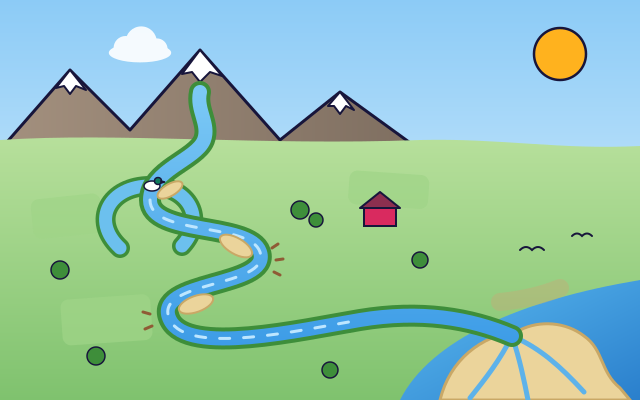
The big idea: Fast-moving water picks up and carries rock, sand and mud. When the water slows down, it drops what it carries. So rivers wear land away in some places and build it up in others.
It's like
The interactive parts didn't load. The explanations below still work; try reloading the page.
From mountain trickle to delta
- Rain and melting snow run downhill. Little trickles join into streams, and streams join into a river. Where a river begins is called its source.
- On steep slopes the water rushes fast. It bumps pebbles along that scrape the riverbed, so the river cuts down into the land and makes a V-shaped valley.
- The river carries what it wears away. Big rocks roll along the bottom, pebbles bounce, fine sand and mud float, and some minerals dissolve in the water.
- On flat land the river bends. Water on the outside of a bend flows faster and wears the bank away. On the inside it slows and drops sand. The bends grow bigger.
- Sometimes a loop gets so big that its neck almost touches. During a flood the river cuts straight across, and the old loop is left behind as an oxbow lake.
- Where the river meets the sea, the water slows down and drops its sand and mud. Layer by layer, new land grows into the sea. This fan of land is a delta.
A river from source to sea
Follow the river from the mountains to the sea. Tap each place to see what the water is doing there.
- Source. A river's source is where it begins: often springs, melting snow or rain gathering high in the hills.
- Tributary. A tributary is a smaller stream that flows into a bigger river. Each one adds more water.
- Waterfall. Waterfalls form where the river flows over hard rock that sits on top of softer rock. The soft rock wears away faster, leaving a step.
- V-shaped valley. In the mountains the fast river cuts down into the land. The sides slide in, making a valley shaped like a V.
- Meander bend. A meander is a big bend. Fast water on the outside wears away the bank, making a steep little cliff called a cut bank.
- Point bar. On the inside of a bend the water is slow, so it drops sand and gravel. This little beach is called a point bar.
- Oxbow lake. An oxbow lake is an old river loop that got cut off when the river took a shortcut. Birds, frogs and fish love its calm water.
- Floodplain. The flat land beside the river is the floodplain. When the river floods, it spreads mud over it, which makes great soil for farms.
- Delta. At the sea the river slows down and drops its sand and mud. New land builds up and the river splits into many small channels. That's a delta.
Stream table: slope and flow
Change the slope and the amount of water. Watch the river's path, the sandbars on the bends and the new land at the sea.
Experiment: How does the slope change the river's path?
- Set a steep slope with lots of water and watch for a while.
- Now set a gentle slope.
- Compare the river's path and the new land at the sea.
What we found: On a gentle slope the river slows down and wanders. It wears away the outside of each bend and drops sand on the inside, so the bends grow into big loops. On a steep slope the fast water rushes almost straight downhill and carries lots of sand to the sea.
Turn on JavaScript to try it yourself.
Make an oxbow lake
The herons want a quiet oxbow lake. Shape the river so a loop gets cut off within 60 seconds. Careful: too much water floods the fields.
Erosion, deposition and the river's journey
A river is always moving things. Fast water has lots of energy, so it can pick up sand and pebbles and roll big rocks along. As those rocks bump along the bottom, they scrape the riverbed and wear it down. This wearing away is called erosion.
When the water slows down, it can't carry as much, so it drops some of its load. Dropping sand and mud is called deposition. Big rocks are dropped first, and fine mud travels the farthest, all the way to the sea.
High in the mountains the slope is steep, so rivers are fast and cut deep V-shaped valleys. On flat land they slow down and swing from side to side in big bends called meanders. The outside of each bend wears away while the inside fills with sand, so the bends slowly move. When a loop gets cut off, it leaves behind an oxbow lake.
At the sea, the river slows almost to a stop and drops its last sand and mud. Over many years this builds new land called a delta. People farm the rich soil of floodplains and deltas, but they have to watch out for floods.
Key words
- Erosion
- The wearing away and removal of rock and soil by water, wind or ice.
- Deposition
- Dropping sediment when moving water slows down.
- Sediment
- Bits of rock, sand and mud that water carries.
- Meander
- A big bend in a river.
- Oxbow lake
- A horseshoe-shaped lake left behind when a meander loop is cut off.
- Delta
- New land built from sediment where a river enters a sea or lake.
- Sinuosity
- How wiggly a river is.
Check your thinking
-
What is a delta?
Show the answer
New land built where a river drops its sediment at the sea. When the river slows at the sea it drops sand and mud, and new land grows.
-
On which side of a bend does the river wear the bank away?
Show the answer
The outside. Water flows fastest on the outside of a bend, so that bank erodes.
-
How does an oxbow lake form?
Show the answer
A loop is cut off when the river takes a shortcut. The loop's neck gets so narrow that the river cuts across, leaving the loop behind.
-
How do big rocks move in a river?
Show the answer
They roll along the bottom. Big rocks are too heavy to float, so the water rolls them along the bed.
-
A river channel is 30 km long, but its valley is only 12 km long. What is its sinuosity?
Show the answer
2.5. Sinuosity = channel length ÷ valley length = 30 ÷ 12 = 2.5, a strongly meandering river.
-
What do rivers carry along?
Show the answer
Sand, pebbles and mud. Rivers carry bits of rock: sand, pebbles and mud.
You're a Earth & weather expert!
You watched, looked inside, tried it, solved the challenge and went deeper. Pick another question below, or switch the age at the top to see this topic another way.
More about earth & weather
 #77
Earth & weather
Why do ocean tides rise and fall?
Explore the Moon's and Sun's influence on a simplified ocean model. Move them into different positions and compare patterns of tidal change.
#77
Earth & weather
Why do ocean tides rise and fall?
Explore the Moon's and Sun's influence on a simplified ocean model. Move them into different positions and compare patterns of tidal change.
 #446
Earth & weather
How do snowflakes form?
Grow virtual ice crystals under different conditions and compare their branching patterns.
#446
Earth & weather
How do snowflakes form?
Grow virtual ice crystals under different conditions and compare their branching patterns.
 #447
Earth & weather
How do hailstones grow?
Follow an ice particle through a storm and watch additional layers accumulate.
#447
Earth & weather
How do hailstones grow?
Follow an ice particle through a storm and watch additional layers accumulate.
 #448
Earth & weather
How does fog form near the ground?
Change air temperature and moisture and watch tiny droplets appear.
#448
Earth & weather
How does fog form near the ground?
Change air temperature and moisture and watch tiny droplets appear.
Keep exploring
Games to play next
- Landform ExplorerMountains, valleys, peninsulas and deltas — learn the shapes of the land and find them on Earth.
- River MysterySomething changed the river. Sample sites with a limited budget, follow the evidence and find where the change begins.
- Weather LabPredict the weather in a box, then run a fair test to find out why.
Guide for grown-ups
- How to start homeschooling: a step-by-step guide for familiesA guide for parents · 7 min read
Science games by grade
Science worksheets by grade
- Preschool Science Worksheets
- Pre-K Science Worksheets
- Kindergarten Science Worksheets
- 1st Grade Science Worksheets
- 2nd Grade Science Worksheets
- 3rd Grade Science Worksheets
- 4th Grade Science Worksheets
- 5th Grade Science Worksheets
- 6th Grade Science Worksheets
- 7th Grade Science Worksheets
- 8th Grade Science Worksheets