How does a forest recover after a fire?
Roots that survived underground, seeds that blow in and animals that return rebuild a burned forest, step by step.
The big idea: A forest recovers in stages. Plants that survived underground sprout first, seeds bring new plants, and animals come back as food and shelter return.
It's like a garden bed after digging: bare soil first, then tiny green shoots, then flowers, then bushes, each one making room for the next.
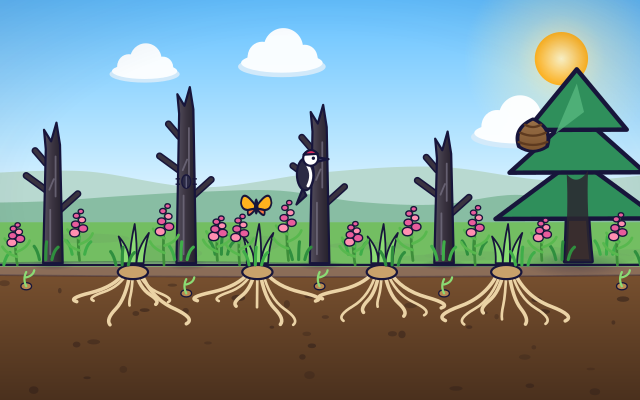
The interactive parts didn't load. The explanations below still work; try reloading the page.
From ash to forest
- A wildfire has passed through this forest. The fire is out and the animals have moved away to safety. Black trunks stand in grey ash. It looks as if nothing is left. But look closer.
- Soil is a good blanket. Just below the surface, roots and buried seeds stayed cool and alive. Within weeks, green shoots push up through the ash, which is full of minerals that help plants grow.
- New seeds arrive too. Light, fluffy seeds blow in on the wind. Birds drop seeds from berries they ate. And some pine cones stay sealed for years until heat opens them.
- A year later the ground is green and pink with grasses and fireweed. Insects come for the flowers. Beetles live in the dead trees, and woodpeckers come to eat the beetles and nest in the trunks.
- After a few years, shrubs and young trees crowd the slope. Deer come to graze on the tender new growth. The old black trunks fall and rot, turning slowly into soil.
- Many years later, tall trees shade the ground again and forest animals such as owls return. The forest has recovered by itself, one stage at a time.
What helps a forest come back?
This is the forest one year after the fire, cut open so you can see under the ground. Tap each part.
- Ash. Ash is what is left of the burned plants. It is full of minerals, and rain washes them into the soil where new plants can use them.
- Standing dead tree. A dead tree that is still standing is called a snag. Beetles live in its wood, and woodpeckers dig nest holes in it.
- Survivor tree. Some big trees survive. Thick bark works like a coat that keeps the living part of the trunk from getting too hot.
- Living roots. The soil kept these roots cool. They are alive and have stored food, so they can send up new shoots very quickly.
- Cones and seeds. Some pine cones are glued shut with sticky resin. The heat of a fire melts the resin, and the cones open and drop their seeds onto the bare ground.
- Pioneer plants. Fireweed is a pioneer: one of the first plants to arrive. Its fluffy seeds float in on the wind, and it loves open, sunny ground.
- Returning animals. Animals return as their food and shelter return: first insects, then the birds that eat them, then deer that graze on the fresh green shoots.
Recovery timeline
Drag the sun along the timeline, or press Play. Watch under the ground, in the air and among the trees. What comes back first?
Experiment: What grows first after the fire?
- Put the sun at the start: one day after the fire.
- Drag it slowly to three weeks and look under the ground.
- Keep going to 80 years. Notice when seeds, flowers, animals and trees appear.
What we found: Shoots from living roots come first, within weeks, because the roots already have stored food. Then seeds bring flowers, bushes and young trees. Animals return as their food returns.
Turn on JavaScript to try it yourself.
Put the recovery in order
Rebuild the forest in the right order. Tap the card that happens first after the fire, then the next, until the forest is back.
A forest heals itself
A forest after a fire looks empty, but it is full of things waiting to grow. Soil is a very good blanket. A hand's depth down it stays cool, so many roots and buried seeds survive. Some big trees survive too, protected by thick bark.
The first green shoots come from those living roots, often within a few weeks. They grow fast because the roots have food stored in them, and because the ash is full of minerals. With the tall trees gone, sunshine reaches the ground for the first time in years.
Next come the seeds. Some blow in on the wind, some are dropped by birds, and some fall from pine cones that only open in the heat of a fire. Sun-loving plants called pioneers, such as fireweed, cover the ground. Insects arrive for the flowers, beetles move into the dead trees, and woodpeckers follow the beetles.
Year by year the forest changes. Bushes grow, deer come to eat them, and young trees rise above the flowers. After many years the trees are tall again. In many forests, fire is a natural part of life. But wildfires are dangerous and people start most of them by accident, so never play with fire, and always let a grown-up handle campfires.
Key words
- Succession
- The way the plants and animals in a place change, in order, over many years.
- Pioneer plant
- One of the first plants to grow on bare ground.
- Snag
- A dead tree that is still standing. It is a home for insects, birds and small mammals.
- Seed bank
- Seeds waiting in the soil, sometimes for years, until they get the chance to grow.
- Resprout
- To grow new shoots from roots or buds that stayed alive.
- Serotinous cone
- A pine cone that is sealed shut and opens in the heat of a fire.
Check your thinking
-
Why are many roots still alive after a fire?
Show the answer
Soil kept them cool, like a blanket. Just below the surface the soil hardly heats up, so roots and buried seeds survive.
-
Which usually appears first after a fire?
Show the answer
Shoots from surviving roots. Roots are already there with stored food, so their shoots beat everything that has to grow from seed.
-
How do new seeds get to the burned ground?
Show the answer
Wind, birds and cones that open in the heat. Light seeds blow in, birds drop seeds, and some pine cones open only after a fire.
-
Why do woodpeckers come to a burned forest?
Show the answer
Beetles live in the dead trees, and woodpeckers eat them. Dead trees fill with insects, which are food for woodpeckers. The trunks are good for nest holes too.
-
Which fire would you expect a forest to recover from most slowly?
Show the answer
A very severe fire, far from any unburned forest, followed by dry years. Severe fire kills roots and seeds in the soil, distance delays new seed, and drought slows growth.
-
Why do deer come back a few years after the fire?
Show the answer
There are lots of fresh, tender plants to eat. Bushes and young trees have soft new leaves that deer love.
You're a Plants & ecosystems expert!
You watched, looked inside, tried it, solved the challenge and went deeper. Pick another question below, or switch the age at the top to see this topic another way.
More about plants & ecosystems
 #245
Plants & ecosystems
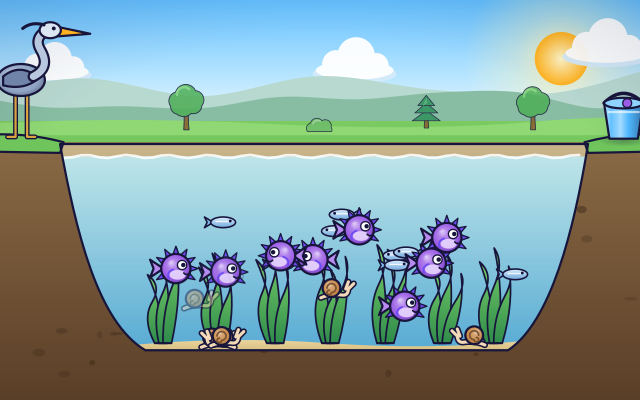
How can an invasive species change an ecosystem?
Introduce a fictional species and investigate changes in competition and food relationships.
#245
Plants & ecosystems
How can an invasive species change an ecosystem?
Introduce a fictional species and investigate changes in competition and food relationships.
 #246
Plants & ecosystems
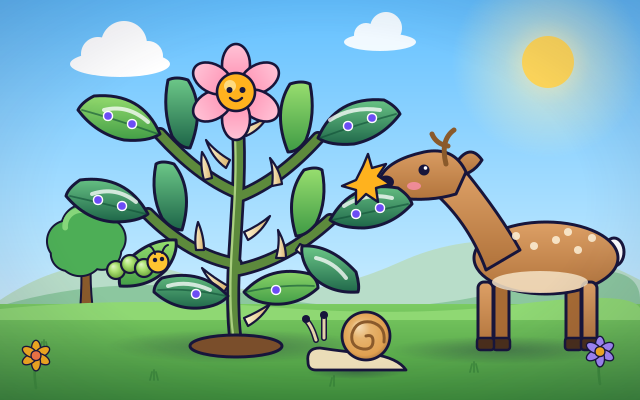
How do plants defend themselves?
Compare thorns, tough leaves, and defensive chemicals against different plant-eating visitors.
#246
Plants & ecosystems
How do plants defend themselves?
Compare thorns, tough leaves, and defensive chemicals against different plant-eating visitors.
 #247
Plants & ecosystems
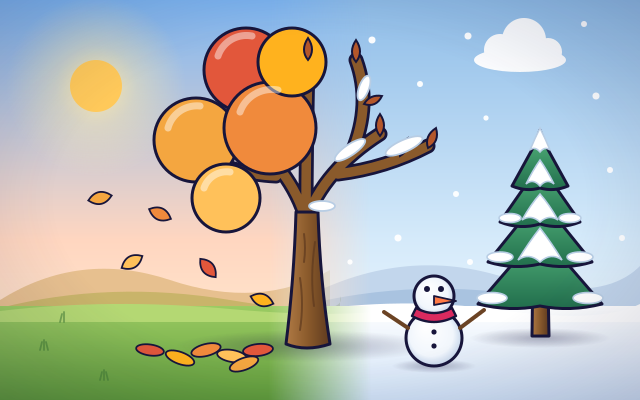
How do trees survive winter?
Follow seasonal changes in buds, leaves, and growth in selected tree species.
#247
Plants & ecosystems
How do trees survive winter?
Follow seasonal changes in buds, leaves, and growth in selected tree species.
 #248
Plants & ecosystems
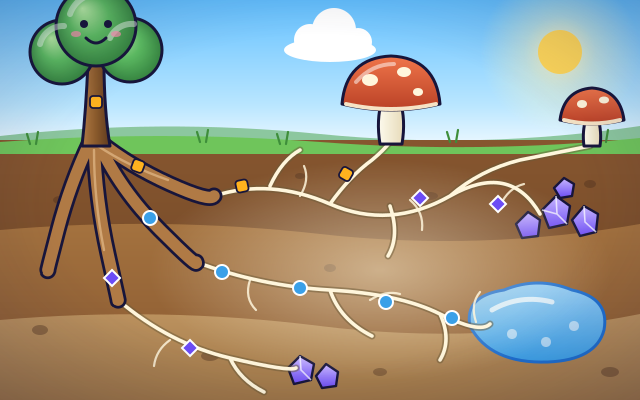
How do plant roots and fungi help each other?
Trace sugars, water, and minerals through a simplified underground partnership.
#248
Plants & ecosystems
How do plant roots and fungi help each other?
Trace sugars, water, and minerals through a simplified underground partnership.
Keep exploring
Games to play next
- Label LabPut the right labels on beautiful science diagrams, from bean plants to heart chambers.
- Habitat Builder 3DFind the right home for frogs, camels, polar bears and more.
- Classification ExplorerSort living things by what you can see, then follow and build yes-or-no keys.
Guide for grown-ups
- How to start homeschooling: a step-by-step guide for familiesA guide for parents · 7 min read
Science games by grade
Science worksheets by grade
- Preschool Science Worksheets
- Pre-K Science Worksheets
- Kindergarten Science Worksheets
- 1st Grade Science Worksheets
- 2nd Grade Science Worksheets
- 3rd Grade Science Worksheets
- 4th Grade Science Worksheets
- 5th Grade Science Worksheets
- 6th Grade Science Worksheets
- 7th Grade Science Worksheets
- 8th Grade Science Worksheets