How does an electric kettle switch itself off?
Follow the steam from boiling water down a hidden tube to a metal disc that snaps and flips the switch.
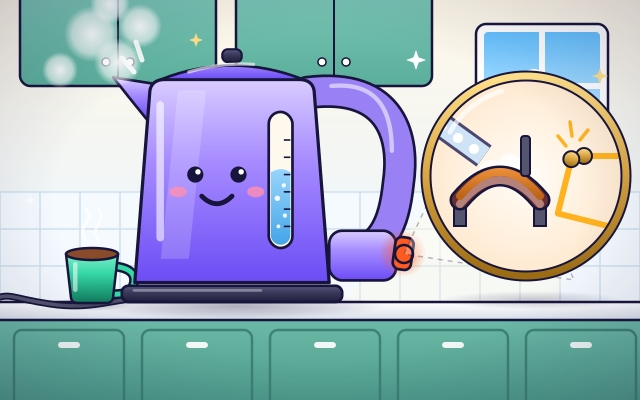
The big idea: A kettle does not measure the water. It waits for steam. Steam from boiling water flows down a tube and heats a disc made of two metals. The disc snaps, pushes the switch and stops the electricity.
It's like the click-button on a jam jar lid: it sits one way, then suddenly pops the other. In a kettle, hot steam pops the disc, and the pop flips the switch.
The interactive parts didn't load. The explanations below still work; try reloading the page.
How a kettle knows when to stop
- Water goes in, the lid is shut, and the switch is pressed down. Inside the switch, two pieces of metal touch, and that lets electricity flow.
- Electricity flows through a heating element in the base. It is hard for electricity to get through, so the element gets very hot and heats the water. Warm water rises and cooler water sinks to take its place.
- At 100 degrees Celsius the water boils. Bubbles of steam form at the hot bottom, rise and burst at the top. The space under the lid fills with hot steam.
- With the lid shut, the steam finds a small opening near the top. It leads into a tube that runs down inside the handle to the switch. At the bottom waits a small metal disc.
- The disc is made of two different metals stuck together. When they get hot, one grows more than the other, so the disc has to bend. Suddenly it snaps inside out and pushes the switch off.
- The contacts in the switch are pulled apart, so electricity cannot flow. The element cools and the boiling stops. The kettle switched itself off, using nothing but its own steam.
Look inside an electric kettle
Tap each part of the kettle and watch what it does.
- Heating element. The heating element sits under a flat metal plate at the bottom. Electricity makes it very hot, and the plate passes the heat to the water.
- Lid. The lid keeps the steam inside the kettle. That matters: with the lid shut, the steam has to go down the tube. With the lid open, it just floats away.
- Steam tube. A tube hidden in the handle carries steam from the top of the kettle down to the switch.
- Snap disc. This small disc is made of two metals stuck together. When steam heats it, one metal grows more than the other. The disc suddenly pops inside out and pushes the switch.
- Switch and contacts. Pressing the switch pushes two metal contacts together so electricity can flow. When the disc snaps, it pushes them apart and the electricity stops.
- Boil-dry guard. A second disc touches the bottom plate. If the kettle is switched on with no water, the plate gets too hot, this disc snaps and the power is cut.
- Power base and cord. The base stays plugged in on the counter. Round connectors in the middle pass electricity up into the kettle, so the kettle can be lifted off to pour.
What makes it switch off?
Tap the switch to boil the water. Watch the steam, the disc and the contacts in the magnifier. Then try it with the lid open.
Experiment: You leave the lid open. What will the kettle do when the water boils?
- With the lid shut, tap the switch and wait for the click.
- Press Start again with cold water. Tap the lid to open it, then switch on.
- Watch the steam and the disc. Close the lid and see what happens.
What we found: With the lid shut, steam is pushed down the tube, heats the disc, and the kettle clicks off a few seconds after boiling starts. With the lid open the steam escapes out of the top, the disc stays too cool to snap, and the kettle keeps boiling. The kettle senses steam, not the water.
Turn on JavaScript to try it yourself.
Just enough for three
Three cups need a quarter liter each. Put in just enough water, make sure the kettle can switch itself off, and boil it.
Steam flips the switch
An electric kettle has a heating element in its base. When you press the switch, electricity flows through the element, and because electricity struggles to get through it, the element gets very hot. The heat passes into the water. Warm water rises, cooler water sinks, and soon all the water is hot.
At 100 degrees Celsius the water boils and makes lots of steam. Here is the clever part: the kettle does not have a thermometer in the water. Instead, with the lid shut, the steam is pushed into a small tube that runs down inside the handle.
At the end of the tube sits a little disc made of two different metals stuck together. When metals get hot they grow a tiny bit, and these two grow by different amounts. That makes the disc want to bend. It holds its shape as long as it can, then suddenly pops inside out, like the click-button on a jam jar lid. A jar lid pops because you press it, though. The disc pops because of heat.
The popping disc pushes the switch. Two metal contacts inside are pulled apart, the electricity stops, and the kettle is off. That is why you should always shut the lid: without it, the steam floats away and the disc does not get hot. A second disc under the bottom plate switches the kettle off if someone turns it on with no water inside.
Key words
- Heating element
- The part that gets hot when electricity flows through it.
- Circuit
- A complete loop that electricity can flow around. A gap in the loop stops it.
- Bimetallic disc
- A disc made of two metals that bends or pops when it gets hot.
- Thermal expansion
- Things getting slightly bigger when they get hotter.
- Contacts
- The two pieces of metal in a switch that touch to let electricity flow and separate to stop it.
Check your thinking
-
What tells a kettle that the water is boiling?
Show the answer
Steam reaching a metal disc. Steam flows down a tube and heats the disc. The kettle senses the steam, not the time.
-
What happens inside the switch when the disc snaps?
Show the answer
Two contacts are pushed apart, so the electricity stops. Electricity needs a complete loop. Pulling the contacts apart makes a gap, so it cannot flow.
-
Why might a kettle keep boiling if its lid is left open?
Show the answer
The steam escapes from the top and does not go down the tube. The disc only gets hot if steam is pushed down the tube. An open lid lets the steam float away.
-
Why does the disc bend when it gets hot?
Show the answer
It is made of two metals, and one grows more than the other. Two metals stuck together cannot both stay flat if one grows more, so the disc bends and then pops.
-
You boil twice as much water in the same kettle from the same starting temperature. About how long does it take?
Show the answer
About twice as long. The energy needed is proportional to the mass of water, and the power is fixed, so the time doubles.
You're a Everyday machines expert!
You watched, looked inside, tried it, solved the challenge and went deeper. Pick another question below, or switch the age at the top to see this topic another way.
More about everyday machines
 #162
Everyday machines
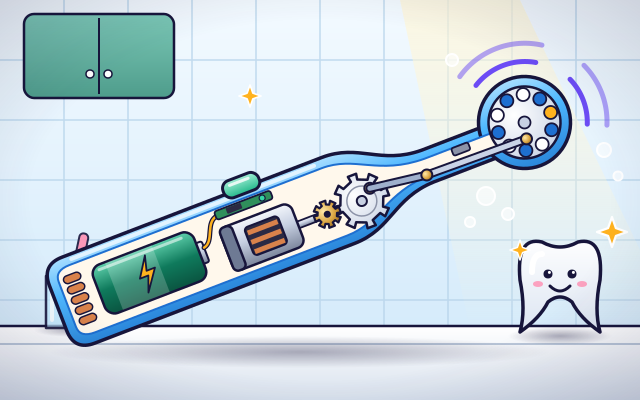
How does an electric toothbrush move its head?
Follow motor movement into rotating or vibrating brush mechanisms.
#162
Everyday machines
How does an electric toothbrush move its head?
Follow motor movement into rotating or vibrating brush mechanisms.
 #200
Everyday machines
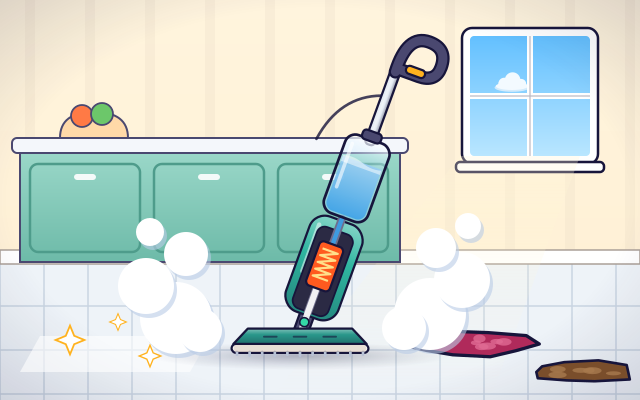
How does a steam cleaner work?
Follow water through heating and delivery, then watch steam loosen simulated dirt.
#200
Everyday machines
How does a steam cleaner work?
Follow water through heating and delivery, then watch steam loosen simulated dirt.
 #31
Everyday machines
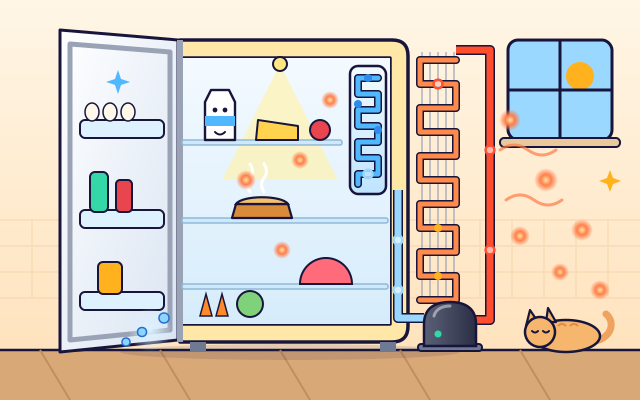
How does a refrigerator keep food cold?
Explore a transparent refrigerator and follow heat moving from the food compartment into the room. Open its door and observe what changes.
#31
Everyday machines
How does a refrigerator keep food cold?
Explore a transparent refrigerator and follow heat moving from the food compartment into the room. Open its door and observe what changes.
 #32
Everyday machines
How does a washing machine clean clothes?
Load virtual laundry and watch the wash, rinse, drain, and spin stages. Look inside the drum and explore the roles of water, detergent, and movement.
#32
Everyday machines
How does a washing machine clean clothes?
Load virtual laundry and watch the wash, rinse, drain, and spin stages. Look inside the drum and explore the roles of water, detergent, and movement.
Keep exploring
Games to play next
- Circuit Workshop 3DWire up batteries, bulbs and switches on a 3D workbench.
- Machine RepairFix levers, pulleys, gears and ramps so every contraption works.
- Clock TowerKeep the town on time: set the tower clock's hands just right.
Guide for grown-ups
- How to start homeschooling: a step-by-step guide for familiesA guide for parents · 7 min read
Science games by grade
Science worksheets by grade
- Preschool Science Worksheets
- Pre-K Science Worksheets
- Kindergarten Science Worksheets
- 1st Grade Science Worksheets
- 2nd Grade Science Worksheets
- 3rd Grade Science Worksheets
- 4th Grade Science Worksheets
- 5th Grade Science Worksheets
- 6th Grade Science Worksheets
- 7th Grade Science Worksheets
- 8th Grade Science Worksheets