How does an electric toothbrush move its head?
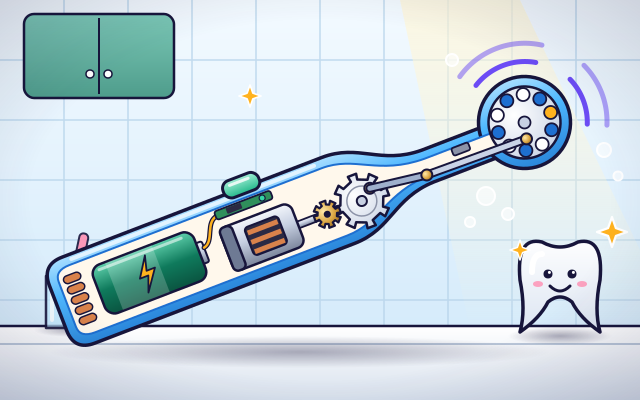
A battery, a motor, gears and a crank turn round-and-round spinning into thousands of little brush strokes.
The big idea: The motor can only spin. A crank and a rod change that spinning into a quick back-and-forth swivel of the brush head, thousands of times a minute.
It's like car windshield wipers: a motor turns round and round, and a crank and rods change that into a swing from side to side.
The interactive parts didn't load. The explanations below still work; try reloading the page.
Inside an electric toothbrush
- One press of the button and the brush head starts to buzz. No hand could move that fast. What is hiding in the handle?
- Open it up. The button closes a switch, and electricity flows from the battery to a small motor. The motor's shaft starts to spin.
- The motor spins very fast but weakly. A small gear on its shaft turns a bigger gear. The big gear turns more slowly, with a stronger push.
- A pin sits off-center on the big gear. As it goes round, it pushes and pulls a rod. The rod tugs the brush head one way, then the other.
- Some brushes vibrate instead. The motor spins a lopsided weight. Each turn tugs the brush one way, then the other, so the head shakes hundreds of times a second.
- Battery, motor, gears, crank, rod: together they make thousands of tiny strokes a minute. You only guide the brush gently from tooth to tooth.
Look inside an electric toothbrush
The handle is cut open. Tap each part to see it work.
- Battery. The rechargeable battery stores energy. It is the heaviest part, which is why the handle feels solid.
- Button and circuit board. The soft button presses a switch on a little circuit board. The board also runs a timer that tells you when two minutes are up.
- Motor. The electric motor turns electricity into spinning. It is about as big as the end of your thumb and spins thousands of times a minute.
- Gears. The small gear on the motor turns a bigger gear. The big gear goes round more slowly, but with a stronger push.
- Crank. The crank is a pin set away from the middle of the big gear. As the gear turns, the pin travels in a circle and drags a rod with it.
- Push rod. The push rod runs up the thin neck of the brush. Guides keep it straight, so it can only slide to and fro.
- Brush head. The rod is hooked to a pin on the round brush head. Pushing and pulling the pin makes the head swivel one way, then the other.
- Charging coil. A coil of wire in the bottom of the handle picks up energy from a coil in the charging stand, through the plastic. No metal has to touch.
From spin to swish
Switch on the motor and follow the movement from the gears to the brush head. Change the speed and the crank, then try the buzzing kind.
Experiment: The motor can only spin round and round. What will the brush head do?
- Tap the button and watch the pin on the big gear.
- Follow the rod up the neck to the brush head.
- Make the crank bigger, then switch to the buzzing kind.
What we found: The pin on the gear travels in a circle and drags the rod in and out. The rod tugs a pin on the brush head, so the head swivels back and forth instead of spinning. A bigger crank makes a wider swing. The buzzing kind spins a lopsided weight to shake the head instead.
Turn on JavaScript to try it yourself.
Beat the timer
Clean all five model teeth before the timer runs out.
How an electric toothbrush works
An electric toothbrush is a small machine in a waterproof case. In the handle is a rechargeable battery. When you press the button, a switch closes and electricity flows from the battery to a tiny motor. The motor's shaft spins thousands of times a minute.
Spinning is the only thing a motor can do, but a brush head that spun round and round would not clean well. So the brush changes the movement. A small gear on the motor turns a bigger gear, which goes round more slowly but pushes harder. A pin sits off-center on the big gear. As the pin travels round, it pushes and pulls a rod, and the rod tugs the brush head. The head swivels one way, then the other. This off-center pin is called a crank.
Other brushes vibrate instead. Some spin a lopsided weight, so every turn gives the head a little shake. Sonic brushes use an electromagnet to flick the head from side to side hundreds of times a second.
Either way, the brush makes thousands of tiny strokes while you simply guide it, gently, from tooth to tooth. Pressing hard does not help: it squashes the bristles so they cannot sweep. The handle charges without any metal touching, because a coil in the stand passes energy to a coil in the handle. A car's wipers are only a rough comparison: wipers swing slowly through a wide angle, and a brush head makes a small swing very fast.
Key words
- Motor
- A machine that turns electricity into spinning.
- Gear ratio
- How many times the small gear must turn to turn the big gear once.
- Crank
- An off-center pin or arm on a turning part. It changes round-and-round motion into to-and-fro motion.
- Oscillation
- A movement that repeats back and forth, like a swing.
- Torque
- Turning force: how hard something twists.
- Inductive charging
- Passing energy from one coil of wire to another without the two touching.
Check your thinking
-
What turns the motor's spinning into a back-and-forth swivel?
Show the answer
A crank pin and a rod. The off-center pin goes round and drags the rod in and out, and the rod swivels the head.
-
Why does the motor turn a small gear that turns a big gear?
Show the answer
To make the turning slower but stronger. A big gear driven by a small one turns more slowly with a harder push, which is what the brush head needs.
-
A pinion with 8 teeth drives a gear with 24 teeth. The motor spins at 9,000 turns a minute. How fast does the gear turn?
Show the answer
3,000 turns a minute. The gear has three times as many teeth, so it turns three times slower: 9,000 ÷ 3 = 3,000.
-
What happens to the brush head if the crank pin sits farther from the middle of the gear?
Show the answer
It swings through a wider angle. A pin farther out travels in a bigger circle, so it moves the rod farther and the head swings wider.
-
Why is pressing hard with an electric toothbrush a bad idea?
Show the answer
It squashes the bristles so they cannot sweep. Bristles clean with their tips. Squashed flat, they slide instead of sweeping, and the head may even stall.
-
How does a vibrating brush with an off-center weight shake its head?
Show the answer
The unbalanced weight pulls the head one way, then the other, on every turn. A spinning mass that is off-center produces a force that keeps changing direction, so the head is shaken once per turn.
You're a Everyday machines expert!
You watched, looked inside, tried it, solved the challenge and went deeper. Pick another question below, or switch the age at the top to see this topic another way.
More about everyday machines
 #200
Everyday machines
How does a steam cleaner work?
Follow water through heating and delivery, then watch steam loosen simulated dirt.
#200
Everyday machines
How does a steam cleaner work?
Follow water through heating and delivery, then watch steam loosen simulated dirt.
 #31
Everyday machines
How does a refrigerator keep food cold?
Explore a transparent refrigerator and follow heat moving from the food compartment into the room. Open its door and observe what changes.
#31
Everyday machines
How does a refrigerator keep food cold?
Explore a transparent refrigerator and follow heat moving from the food compartment into the room. Open its door and observe what changes.
 #32
Everyday machines
How does a washing machine clean clothes?
Load virtual laundry and watch the wash, rinse, drain, and spin stages. Look inside the drum and explore the roles of water, detergent, and movement.
#32
Everyday machines
How does a washing machine clean clothes?
Load virtual laundry and watch the wash, rinse, drain, and spin stages. Look inside the drum and explore the roles of water, detergent, and movement.
 #33
Everyday machines
How does a vacuum cleaner pick up dirt?
Follow moving air and dust through the nozzle, filter, and collection bin. Compare airflow with a clean filter and a clogged filter.
#33
Everyday machines
How does a vacuum cleaner pick up dirt?
Follow moving air and dust through the nozzle, filter, and collection bin. Compare airflow with a clean filter and a clogged filter.
Keep exploring
Games to play next
- Circuit Workshop 3DWire up batteries, bulbs and switches on a 3D workbench.
- Machine RepairFix levers, pulleys, gears and ramps so every contraption works.
- Clock TowerKeep the town on time: set the tower clock's hands just right.
Guide for grown-ups
- How to start homeschooling: a step-by-step guide for familiesA guide for parents · 7 min read
Science games by grade
Science worksheets by grade
- Preschool Science Worksheets
- Pre-K Science Worksheets
- Kindergarten Science Worksheets
- 1st Grade Science Worksheets
- 2nd Grade Science Worksheets
- 3rd Grade Science Worksheets
- 4th Grade Science Worksheets
- 5th Grade Science Worksheets
- 6th Grade Science Worksheets
- 7th Grade Science Worksheets
- 8th Grade Science Worksheets