How does a steam cleaner work?
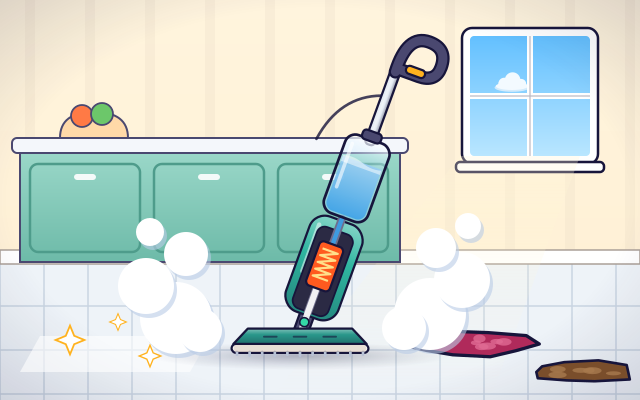
A steam cleaner boils a little water at a time. The hot steam soaks into dried-on dirt and loosens it, so a cloth can wipe it away.
The big idea: A steam cleaner heats water until it boils and turns into steam. The steam is very hot and slightly wet. It warms and soaks the dirt so it lets go of the floor, and a cloth pad wipes it up. No soap is needed.
It's like a kettle joined to a mop: the kettle part makes steam, and the mop part wipes up what the steam has loosened.
The interactive parts didn't load. The explanations below still work; try reloading the page.
Cleaning with nothing but water
- Jam, mud and grease have dried onto the kitchen floor. A dry cloth just slides over them. Dad fetches the steam mop. How can plain water shift this?
- First the tank is filled with clean tap water. There is no soap and no spray. Water is the only thing that goes in.
- Inside is an electric heater, like the one in a kettle. It gets hotter than boiling water. When the light turns green, it is ready to make steam.
- Squeezing the trigger pumps a little water onto the hot heater. It boils in a flash and becomes steam. Steam takes up far more room than water, so it rushes down the tube to the mop head.
- Look closely under the pad. Hot steam turns back into tiny drops of hot water on the cold dirt. The heat softens it and the water soaks in, so the dirt lets go of the floor.
- The soft cloth pad wipes up the loosened dirt, and the warm floor dries in moments. Steam can burn, so a steam cleaner is a tool for grown-ups.
From water to steam to clean
Step through the journey: water goes in at the top and comes out as steam at the bottom.
- 1. Fill the tank. Clean water is poured into the tank. This is the only thing the cleaner uses up.
- 2. Heat up. Electricity flows through the heater and makes it very hot. A red light means wait. A green light means it is hot enough to boil water.
- 3. Pump the water. Squeezing the trigger runs a tiny pump. It pushes water, a little at a time, from the tank down to the heater.
- 4. Flash to steam. The water touches the hot heater and boils at once. As steam, its tiny particles fly far apart, so it takes up much more room.
- 5. Steam travels down. The steam pushes its way down the tube and out through small holes in the mop head, into the cloth pad.
- 6. Dirt lets go. On the cool floor, the steam turns back into hot water drops. Heat softens the dirt and water soaks into it, so it stops sticking.
- 7. The pad wipes up. The cloth pad has thousands of tiny fibers. They grab the loose dirt and hold it. Afterward, the pad goes in the wash.
Cold pad or hot steam?
Rub a sticky spot with the cold pad. Then heat up, turn on the steam and try again. Watch the close-up in the magnifier.
Experiment: Which cleans a dried, sticky spot better: a cold pad or a pad with hot steam?
- With the heater off, hold the mop on a sticky spot for a few seconds.
- Switch the heater on. When the light is green, turn on the steam.
- Hold the mop on the same spot and watch the magnifier.
What we found: The cold pad slid over the sticky spot and left it there. With steam, the heat softened the dirt and the hot water soaked in, so the pad wiped it away in moments.
Turn on JavaScript to try it yourself.
Clean it before the tank runs dry
Clean every spot before the water tank runs dry. Steam only where there is dirt.
Why steam cleans so well
A steam cleaner is really a small kettle joined to a mop. You pour in clean water. A pump sends a little of it to an electric heater, which is hotter than boiling water. The water boils at once and becomes steam. Steam needs far more room than water does, so it pushes its way down a tube and out through the cloth pad on the floor.
Why is steam so good at cleaning? Dried jam, mud and grease stick because they have set hard or because they cling tightly to the floor. Heat changes that. Warm grease turns soft and runny, like butter in a hot pan. Dried sugar dissolves again in hot water. When steam touches the cool floor it turns back into tiny drops of very hot water right on the dirt, so the dirt is heated and soaked together.
The steam does not make the dirt vanish. It only loosens it. The cloth pad does the rest. Its tiny fibers grab the loose dirt and hold it, which is why the pad looks grubby afterward and has to be washed. The kettle-and-mop picture is not perfect, because a kettle boils all its water at once, while the cleaner boils just a few drops at a time.
Steam cleaning needs no soap, and the floor dries quickly because the thin film of hot water evaporates. But steam carries a great deal of heat and can burn skin badly. A steam cleaner is a tool for grown-ups, and it is never pointed at people, pets or plants.
Key words
- Steam
- Water that has been heated until it turns into a hot gas.
- Boiling point
- The temperature at which a liquid turns into a gas: 100 degrees Celsius for water at normal air pressure.
- Heating element
- A part that gets hot when electricity flows through it, as in a kettle or a toaster.
- Condense
- To turn from a gas back into a liquid, as steam does on a cold window.
- Latent heat
- The energy taken in when a liquid becomes a gas, and given back when the gas condenses.
- Microfiber
- Cloth made of extremely fine fibers that trap dirt and soak up water.
Check your thinking
-
What does a steam cleaner need in its tank?
Show the answer
Only clean water. A steam cleaner uses heat and water, not soap.
-
How does steam help to remove dried-on dirt?
Show the answer
It heats and soaks the dirt so it lets go. Heat softens the dirt and hot water soaks in, so it stops sticking.
-
After the steam has loosened the dirt, what removes it from the floor?
Show the answer
The cloth pad wipes it up. Steam only loosens the dirt. The pad's fibers grab it and carry it away.
-
Why is a steam cleaner a tool for grown-ups?
Show the answer
Steam is very hot and can burn skin. Steam carries a lot of heat and burns skin badly, so it must be handled with care.
-
A pump sends water to a heater faster than the heater can boil it. What comes out?
Show the answer
A cooler, wetter mixture of steam and hot water. The heater's power limits how many grams it can vaporize each second. Extra water passes through as hot liquid, so the output carries less energy for each gram.
-
Why does a gram of steam deliver more heat to the floor than a gram of boiling water?
Show the answer
It also gives up latent heat when it condenses. Condensing releases about 2,260 joules for each gram, on top of the heat released as the hot water then cools.
You're a Everyday machines expert!
You watched, looked inside, tried it, solved the challenge and went deeper. Pick another question below, or switch the age at the top to see this topic another way.
More about everyday machines
 #31
Everyday machines
How does a refrigerator keep food cold?
Explore a transparent refrigerator and follow heat moving from the food compartment into the room. Open its door and observe what changes.
#31
Everyday machines
How does a refrigerator keep food cold?
Explore a transparent refrigerator and follow heat moving from the food compartment into the room. Open its door and observe what changes.
 #32
Everyday machines
How does a washing machine clean clothes?
Load virtual laundry and watch the wash, rinse, drain, and spin stages. Look inside the drum and explore the roles of water, detergent, and movement.
#32
Everyday machines
How does a washing machine clean clothes?
Load virtual laundry and watch the wash, rinse, drain, and spin stages. Look inside the drum and explore the roles of water, detergent, and movement.
 #33
Everyday machines
How does a vacuum cleaner pick up dirt?
Follow moving air and dust through the nozzle, filter, and collection bin. Compare airflow with a clean filter and a clogged filter.
#33
Everyday machines
How does a vacuum cleaner pick up dirt?
Follow moving air and dust through the nozzle, filter, and collection bin. Compare airflow with a clean filter and a clogged filter.
 #34
Everyday machines
How does a toilet flush?
Press the handle on a cutaway toilet. Follow water from the tank through the bowl and waste pipe, then watch the tank refill.
#34
Everyday machines
How does a toilet flush?
Press the handle on a cutaway toilet. Follow water from the tank through the bowl and waste pipe, then watch the tank refill.
Keep exploring
Games to play next
- Machine RepairFix levers, pulleys, gears and ramps so every contraption works.
- Circuit Workshop 3DWire up batteries, bulbs and switches on a 3D workbench.
- Clock TowerKeep the town on time: set the tower clock's hands just right.
Guide for grown-ups
- How to start homeschooling: a step-by-step guide for familiesA guide for parents · 7 min read
Science games by grade
Science worksheets by grade
- Preschool Science Worksheets
- Pre-K Science Worksheets
- Kindergarten Science Worksheets
- 1st Grade Science Worksheets
- 2nd Grade Science Worksheets
- 3rd Grade Science Worksheets
- 4th Grade Science Worksheets
- 5th Grade Science Worksheets
- 6th Grade Science Worksheets
- 7th Grade Science Worksheets
- 8th Grade Science Worksheets