How does flowing water generate electricity?
A dam stores water high up. Falling water spins a turbine and a generator to make clean electricity.
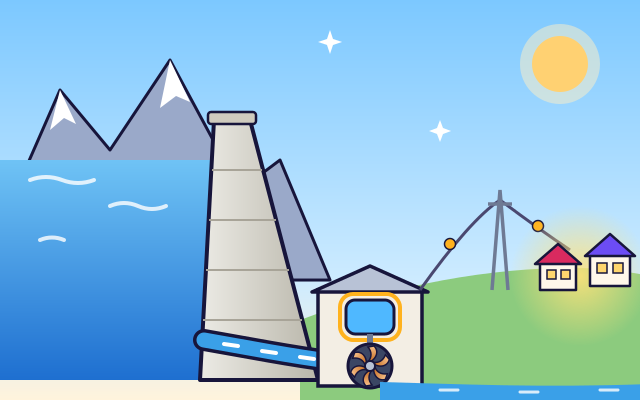
The big idea: Water high up has stored energy because gravity can pull it down. A dam holds back a lake, and when the water rushes down a big pipe it spins a turbine. The turbine turns a generator, which makes electricity. More water, or water falling from higher up, makes more electricity.
It's like
The interactive parts didn't load. The explanations below still work; try reloading the page.
From lake to light bulb
- Rivers flow downhill from the mountains, and moving water is powerful. For hundreds of years people used water wheels to grind grain with it.
- A dam is a huge wall across a river. The water backs up behind it into a deep lake called a reservoir. The higher the water, the more energy it stores.
- When a gate opens, water rushes into a giant pipe called a penstock. As it falls, it speeds up and gains lots of moving energy.
- At the bottom, the rushing water pushes against the curved blades of a turbine and makes it spin very fast, like a pinwheel in the wind.
- The turbine's shaft turns a generator above it. Magnets spin past coils of wire and make electricity, which travels along power lines to homes and schools.
- After the turbine, the water flows back into the river. The sun lifts water into the clouds, rain refills the lake, and the cycle starts again. That's why hydropower is renewable.
Inside a hydroelectric dam
This cutaway shows the inside of a dam and its power station. Tap each part to watch it work.
- Reservoir. The reservoir is the lake behind the dam. Its water is high up, so it stores lots of energy, like a ball held high in the air.
- Dam. The dam is a thick wall of concrete or rock. It is wider at the bottom because the water pushes hardest down deep.
- Intake gate. The intake gate opens and closes to control how much water flows. A screen stops logs and fish from getting in.
- Penstock. The penstock is a huge pipe that carries water steeply down to the turbine. The water speeds up as it falls.
- Turbine. The turbine is a wheel with curved blades. Rushing water pushes the blades, and the turbine spins.
- Generator. The generator sits above the turbine on the same shaft. Inside, magnets spin past coils of wire and make electricity.
- Transformer and power lines. A transformer raises the voltage, and power lines carry the electricity to the town far away.
- Tailrace. After pushing the turbine, the water flows gently out through the tailrace and back into the river.
Dam lab: height and flow
Change how high the lake is and how much water flows through the gate. Which makes more electricity? Count the houses that light up.
Experiment: Does water falling from higher up make more electricity?
- Open the gate halfway.
- Make the lake low, then count the houses lit.
- Make the lake high and count again.
What we found: Water falling from higher up gains more energy, so the turbine spins harder and more houses light up. More flow helps too: twice the water makes about twice the electricity.
Turn on JavaScript to try it yourself.
Power the town all day
Keep the town's lights on from morning to midnight. Open the gate just enough to match what the town needs, and save water for the busy evening!
Energy from falling water
Anything that is high up has stored energy, because gravity can pull it down. A book on a shelf has it, and so does every drop of water in a mountain lake. When the water falls, that stored energy turns into moving energy.
A hydroelectric dam captures this energy. The dam holds back a deep lake, and a gate lets water rush down a big pipe called a penstock. At the bottom, the fast water pushes the curved blades of a turbine, and the turbine spins a generator that makes electricity.
Two things decide how much electricity a dam makes: how far the water falls and how much water flows. Water falling twice as far, or twice as much water, makes about twice as much electricity. That's why big dams are tall and built on large rivers.
Hydropower is renewable because the sun keeps lifting water into the clouds and rain keeps refilling the lakes. It doesn't burn fuel or make smoke. But dams also flood valleys and can block fish swimming upstream, so engineers build fish ladders and choose sites carefully.
Key words
- Reservoir
- The lake of water stored behind a dam.
- Head
- How far the water falls from the lake to the turbine.
- Penstock
- The large pipe that carries water down from the reservoir to the turbine.
- Turbine
- A wheel with curved blades that flowing water spins.
- Renewable energy
- Energy from sources that nature keeps refilling, like rain, wind and sunshine.
Check your thinking
-
What gives the water behind a dam its stored energy?
Show the answer
Being high up, so gravity can pull it down. Water high up has stored gravitational energy that turns into motion as it falls.
-
Which change makes a dam produce more electricity?
Show the answer
More water flowing, or water falling from higher up. Power grows with both the flow and the height of the fall.
-
Why is hydropower called renewable?
Show the answer
Rain keeps refilling the lakes. The sun drives the water cycle, and rain refills reservoirs again and again.
-
What turns the turbine's spinning into electricity?
Show the answer
A generator with magnets and coils. The turbine spins magnets inside coils of wire, which makes electricity.
-
Why are dams built thicker at the bottom than at the top?
Show the answer
Water pressure increases with depth. Pressure = ρ g × depth, so the push on the wall is greatest at the base.
You're a Electricity & energy expert!
You watched, looked inside, tried it, solved the challenge and went deeper. Pick another question below, or switch the age at the top to see this topic another way.
More about electricity & energy
 #376
Electricity & energy
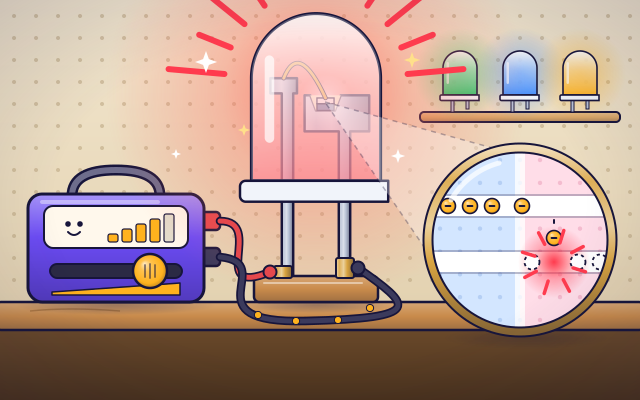
How do LEDs produce light?
Explore a simplified semiconductor junction as electrical energy becomes light.
#376
Electricity & energy
How do LEDs produce light?
Explore a simplified semiconductor junction as electrical energy becomes light.
 #377
Electricity & energy
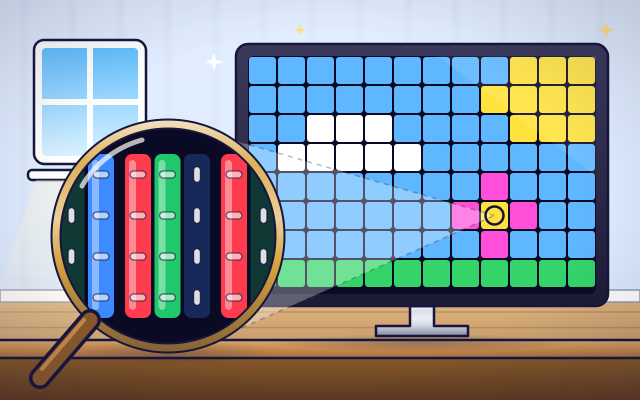
How do LCD screens make pictures?
Control tiny screen elements and color filters to build a pixel-based picture.
#377
Electricity & energy
How do LCD screens make pictures?
Control tiny screen elements and color filters to build a pixel-based picture.
 #378
Electricity & energy
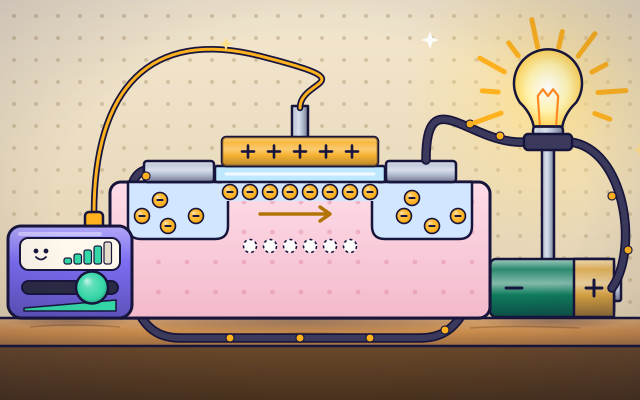
How do transistors act as electronic switches?
Use a small control signal to switch another current path in a model circuit.
#378
Electricity & energy
How do transistors act as electronic switches?
Use a small control signal to switch another current path in a model circuit.
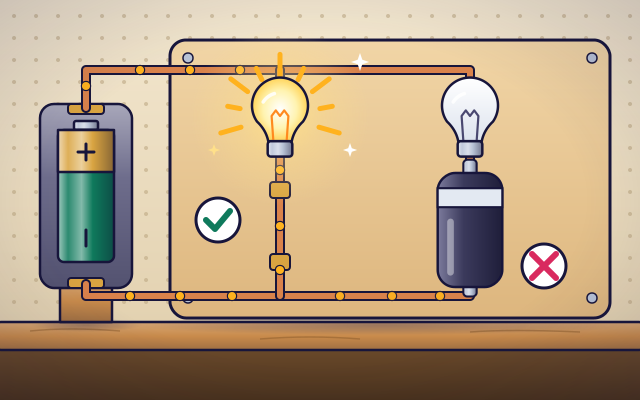 #379
Electricity & energy
How do diodes guide electricity in one direction?
Reverse connections and compare current through a wire and a diode.
#379
Electricity & energy
How do diodes guide electricity in one direction?
Reverse connections and compare current through a wire and a diode.
Keep exploring
Games to play next
- Circuit Workshop 3DWire up batteries, bulbs and switches on a 3D workbench.
- Garden AutomationProgram a garden robot with sensor rules — then watch a whole day play out.
- SwitchworksFlip switches to light the lamps in the target pattern — in as few presses as you can.
Guide for grown-ups
- How to start homeschooling: a step-by-step guide for familiesA guide for parents · 7 min read
Science games by grade
Science worksheets by grade
- Preschool Science Worksheets
- Pre-K Science Worksheets
- Kindergarten Science Worksheets
- 1st Grade Science Worksheets
- 2nd Grade Science Worksheets
- 3rd Grade Science Worksheets
- 4th Grade Science Worksheets
- 5th Grade Science Worksheets
- 6th Grade Science Worksheets
- 7th Grade Science Worksheets
- 8th Grade Science Worksheets