How do LEDs produce light?
Push electrons across the junction inside an LED chip and watch each drop turn into a flash of colored light.
The big idea: An LED chip has two layers. A battery pushes electrons from one layer into holes in the other. Each electron that drops into a hole gives off a tiny flash of light, and the size of the drop sets the color.
It's like a marble dropping off a step: every drop makes a tap. In an LED, every electron that drops makes a flash, and a taller step makes bluer light.
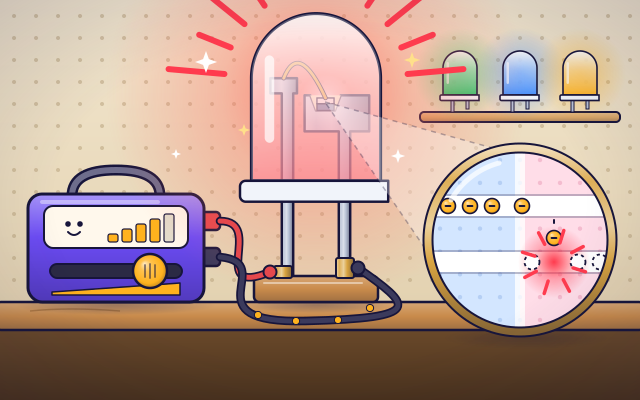
The interactive parts didn't load. The explanations below still work; try reloading the page.
Where LED light comes from
- These little lights are LEDs. They are in lamps, screens, toys and traffic lights. They shine brightly but barely get warm. So where does the light come from?
- Inside the clear plastic dome are two metal legs. One leg holds a tiny chip in a shiny cup. A wire thinner than a hair joins the chip to the other leg.
- Zoom in on the chip. It is made of two layers. One layer has spare electrons that can move. The other has gaps called holes, where an electron is missing. The place where the layers meet is called the junction.
- Connect a battery the right way around. It pushes electrons toward the junction, where a small hill holds them back. With enough push, they get over the hill and cross to the other side.
- On the other side, each electron drops into a hole. As it drops, it loses energy, and that energy shoots out as a tiny flash of light. Billions of flashes every second make a steady glow.
- The size of the drop sets the color. A chip with a small drop gives red light. A bigger drop gives green, and the biggest gives blue. Bigger drops also need a bigger push from the battery.
- Because the energy goes straight into light, very little is wasted as heat. That is why LED lamps use far less electricity than old bulbs, and why they last for years.
Look inside an LED
Tap each part of the LED. The magnifier shows the chip, zoomed in thousands of times.
- Dome lens. The clear plastic dome protects the tiny chip. Its rounded top works like a lens: it gathers the light and sends it forward in a beam.
- LED chip. This is where the light is made. The chip is a tiny sandwich of two layers of a special material called a semiconductor. It is about as big as a grain of sand.
- Reflector cup. The chip sits in a tiny shiny cup. Light that shoots out sideways bounces off the cup and goes up through the dome, so it is not wasted.
- Bond wire. This gold wire is thinner than a hair. It joins the top of the chip to the other leg, so electricity can flow all the way through.
- Long leg (plus). The longer leg is called the anode. It connects to the plus side of the battery. The two leg lengths show you which way around the LED goes.
- Short leg (minus). The shorter leg is the cathode. It connects to the minus side of the battery. The rim of the dome is also flat on this side, as an extra clue.
- The junction. This is the chip, zoomed in. Electrons from one layer cross the junction and drop into holes in the other layer. Each drop gives off a tiny flash of light.
Push electrons across the junction
Drag the knob on the power box to push harder, and watch the electrons in the magnifier. Try the red, green and blue chips. Then swap the wires!
Experiment: Which LED needs the biggest push from the battery before it lights?
- Choose the red chip. Slide the push up slowly until it just starts to glow.
- Do the same with the green chip, then with the blue one.
- Look in the magnifier. Which chip has the biggest drop?
What we found: Blue needs the biggest push, then green, then red. Inside a blue chip the drop is bigger. Each electron needs more energy to get there, and it gives off bluer light when it drops.
Turn on JavaScript to try it yourself.
Just-right robot lights
Give each of the robot's three lights just enough push: glowing nicely, not too dim and not too bright. Then press Check.
How an LED turns electricity into light
LED is short for light-emitting diode. At its heart is a chip about the size of a grain of sand. The chip is made from a semiconductor, a material that carries electricity better than glass but not as well as metal. Engineers build it in two layers. One layer has spare electrons that are free to move. The other has holes, which are places where an electron is missing.
When you connect a battery the right way around, it pushes the electrons toward the place where the two layers meet, called the junction. With enough push, electrons cross over and drop into the holes. Each time an electron drops, it has energy left over, and that energy flies out as a tiny flash of light.
The size of the drop decides the color. Chips made from different materials have different drops: a small drop gives red light, a bigger one gives green, and the biggest gives blue. That is also why a blue LED needs a bigger push from the battery than a red one. White LEDs are really blue LEDs with a coating that glows yellow. Blue and yellow light together look white.
An old-style bulb makes light by heating a wire until it glows, so most of its energy becomes heat. An LED skips the heating step. That is why it stays cool, uses much less electricity and can last for many years. Our picture of balls dropping off a step is a simplified model: real electrons are not little balls. But the idea of dropping and giving off light is right. And an LED only works one way around. Turn the battery around and it stays dark.
Key words
- Semiconductor
- A material, such as the crystal in an LED chip, that conducts electricity only partly, in ways engineers can control.
- Electron
- A tiny particle with a negative electric charge. Moving electrons make an electric current.
- Hole
- A gap in the chip where an electron is missing. An electron can drop into it.
- Junction
- The place where the two layers of the chip meet.
- Photon
- The smallest possible bit of light. One electron dropping into one hole makes one photon.
- Band gap
- The size of the energy drop inside the chip. It sets the color of the light.
Check your thinking
-
What happens at the moment an LED makes light?
Show the answer
An electron drops into a hole and gives off a flash. The electron loses energy as it drops into the hole, and that energy leaves as light.
-
Why does a blue LED need a bigger push than a red one?
Show the answer
The drop inside a blue chip is bigger. A bigger drop means each electron needs more energy to get there, so the battery must push harder.
-
Which color of light comes from the smallest drop?
Show the answer
Red. Red light carries the least energy of the three, so it comes from the smallest drop.
-
What happens if you connect an LED to the battery backward?
Show the answer
It stays dark, because no electrons cross the junction. Backward, the battery pulls the electrons and the holes away from the junction, so nothing drops and nothing flashes.
-
Why does an LED lamp use less electricity than an old-style bulb for the same light?
Show the answer
It turns electricity straight into light instead of heating a wire. An old bulb wastes most of its energy as heat. An LED skips the heating step.
-
A red LED turns on at 1.8 volts. On a 5-volt supply, which series resistor gives about 20 milliamps?
Show the answer
160 ohms. The resistor must drop 5 minus 1.8, which is 3.2 volts. 3.2 volts divided by 0.020 amps is 160 ohms.
You're a Electricity & energy expert!
You watched, looked inside, tried it, solved the challenge and went deeper. Pick another question below, or switch the age at the top to see this topic another way.
More about electricity & energy
 #377
Electricity & energy
How do LCD screens make pictures?
Control tiny screen elements and color filters to build a pixel-based picture.
#377
Electricity & energy
How do LCD screens make pictures?
Control tiny screen elements and color filters to build a pixel-based picture.
 #378
Electricity & energy
How do transistors act as electronic switches?
Use a small control signal to switch another current path in a model circuit.
#378
Electricity & energy
How do transistors act as electronic switches?
Use a small control signal to switch another current path in a model circuit.
 #379
Electricity & energy
How do diodes guide electricity in one direction?
Reverse connections and compare current through a wire and a diode.
#379
Electricity & energy
How do diodes guide electricity in one direction?
Reverse connections and compare current through a wire and a diode.
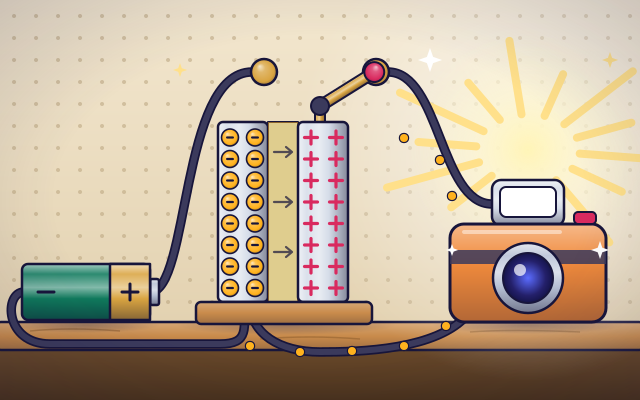 #380
Electricity & energy
How do capacitors store and release energy?
Charge a virtual capacitor and use its stored energy for a brief action.
#380
Electricity & energy
How do capacitors store and release energy?
Charge a virtual capacitor and use its stored energy for a brief action.
Keep exploring
Games to play next
- Circuit Workshop 3DWire up batteries, bulbs and switches on a 3D workbench.
- SwitchworksFlip switches to light the lamps in the target pattern — in as few presses as you can.
- Machine RepairFix levers, pulleys, gears and ramps so every contraption works.
Guide for grown-ups
- How to start homeschooling: a step-by-step guide for familiesA guide for parents · 7 min read
Science games by grade
Science worksheets by grade
- Preschool Science Worksheets
- Pre-K Science Worksheets
- Kindergarten Science Worksheets
- 1st Grade Science Worksheets
- 2nd Grade Science Worksheets
- 3rd Grade Science Worksheets
- 4th Grade Science Worksheets
- 5th Grade Science Worksheets
- 6th Grade Science Worksheets
- 7th Grade Science Worksheets
- 8th Grade Science Worksheets