How do fish breathe underwater?
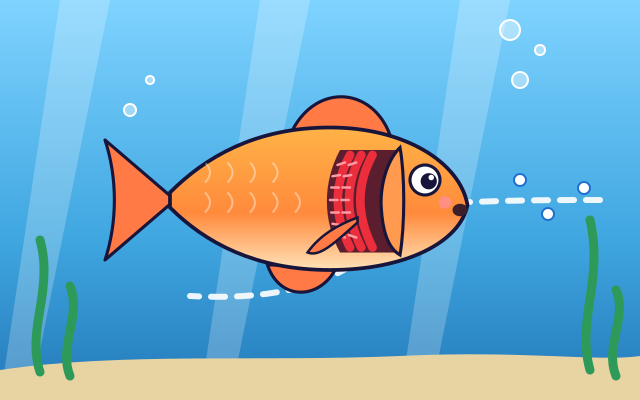
Water goes in a fish's mouth and out over its gills, where oxygen slips into its blood.
The big idea: Water has a little oxygen mixed into it. A fish pushes water over its gills, which are thin and full of blood, so oxygen moves from the water into the blood.
It's like
The interactive parts didn't load. The explanations below still work; try reloading the page.
Breathing underwater
- A fish opens its mouth to take in water, then closes it and pushes the water back. The water flows out through openings behind the gill covers.
- Under each gill cover are the gills: rows of soft, red, feathery parts. They're red because they're full of blood.
- Each gill filament is covered in tiny, thin plates. Water flows between the plates, and blood flows inside them, just a hair's width away.
- Oxygen moves from the water, where there's more of it, into the blood, where there's less. At the same time, carbon dioxide moves out of the blood into the water.
- The fish's heart pumps blood through the gills to pick up oxygen. Then the bright red blood travels all around the body, giving the muscles the oxygen they need.
- You have lungs, which take oxygen from air. Air goes in and out the same way. Fish gills take oxygen from water, which flows one way. Out of water, gills flop together and stop working.
Inside a fish's breathing system
Tap each part. The lens shows a close-up of a gill filament.
- Mouth. Water comes in through the mouth. When the fish closes its mouth, it pushes the water back over the gills.
- Gill cover (operculum). The gill cover is a bony flap that protects the soft gills. It opens to let water flow out.
- Gill arch. Gill arches are curved bones that hold up the gills, like the spine of a comb.
- Gill filaments. Each arch has two rows of soft, red filaments. Having so many gives a big surface for oxygen to pass through.
- Lamellae. Lamellae are tiny, thin plates on each filament. Blood flows inside them, very close to the water, so oxygen can get in easily.
- Heart. A fish's heart pumps blood forward to the gills, where it picks up oxygen. Then the blood flows on around the body.
- Blood vessels. Blood vessels carry oxygen-rich blood from the gills to the muscles, and bring used blood back to the heart.
- Swim bladder. The swim bladder is a bag of gas that helps the fish float at the right depth. It isn't for breathing.
Water over the gills
Change how fast the fish pumps water and how fresh the water is. Watch oxygen move into the blood and the blood turn bright red.
Experiment: What happens to the fish's blood when it pumps more water over its gills?
- Start with cold, fresh water.
- Set the pumping very slow and look at the blood.
- Then pump fast. How red does the blood get?
What we found: Pumping more water brings more oxygen past the gills, so more goes into the blood. Warm, still water holds less oxygen, so the fish has to work harder.
Turn on JavaScript to try it yourself.
Gills or lungs?
Sort each animal and fact: does it go with gills or with lungs?
Breathing underwater
Every animal needs oxygen to turn its food into energy. You get oxygen from the air with your lungs. Fish get oxygen from the water with their gills. The oxygen fish use isn't the oxygen inside the water molecules: it's oxygen gas dissolved in the water, like the fizz in a soda.
Water has much less oxygen in it than air does, so fish have to move a lot of water over their gills. They gulp water in through their mouths and push it out through openings behind their gill covers. Some sharks keep swimming with their mouths open to keep water flowing.
Gills are made of lots of thin, red filaments covered in even thinner plates. Blood flows inside the plates, just a tiny distance from the water. Oxygen moves from the water, where there is more of it, into the blood, where there is less. Carbon dioxide moves the other way.
If a fish is taken out of water, its soft gills collapse and stick together, so they can't take in oxygen even though air has plenty. In the same way, your lungs can't take oxygen from water. Each breathing system is built for its own world.
Key words
- Gills
- Organs that take oxygen from water.
- Diffusion
- When something spreads from where there's a lot of it to where there's less.
- Lamellae
- Thin plates on gill filaments where gas exchange happens.
- Countercurrent exchange
- When two flows go opposite ways so more can pass between them.
- Operculum
- The bony gill cover of a bony fish.
Check your thinking
-
Where do fish get their oxygen from?
Show the answer
Oxygen dissolved in the water. A little oxygen gas is mixed into water, and gills take it out.
-
Why are gills red?
Show the answer
They are full of blood. Lots of blood flows close to the surface of the gills, which makes them red.
-
Why can't a fish breathe out of water, even though air has more oxygen?
Show the answer
Its gills collapse and stick together in air. Without water to hold them apart, the thin gill plates stick together and lose their surface.
-
Which animal lives in the sea but breathes air with lungs?
Show the answer
A whale. Whales are mammals with lungs, so they swim up to breathe through their blowhole.
-
How does water move over a fish's gills?
Show the answer
In through the mouth and out behind the gill covers, one way. Water flows one way: in the mouth, over the gills and out.
You're a Animals expert!
You watched, looked inside, tried it, solved the challenge and went deeper. Pick another question below, or switch the age at the top to see this topic another way.
More about animals
 #97
Animals
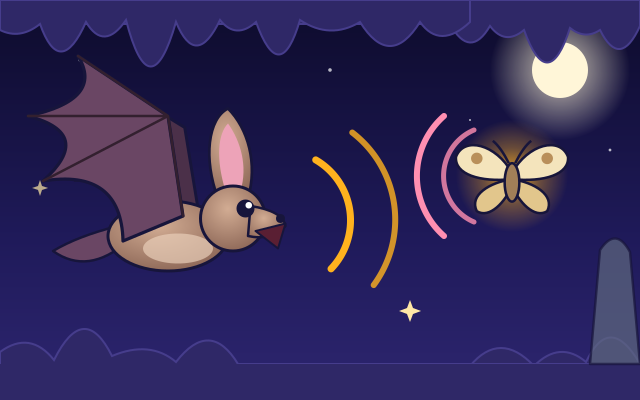
How do bats find their way in the dark?
Send sound pulses through a dark virtual cave and interpret returning echoes. Use their timing and direction to locate obstacles and insects.
#97
Animals
How do bats find their way in the dark?
Send sound pulses through a dark virtual cave and interpret returning echoes. Use their timing and direction to locate obstacles and insects.
 #98
Animals
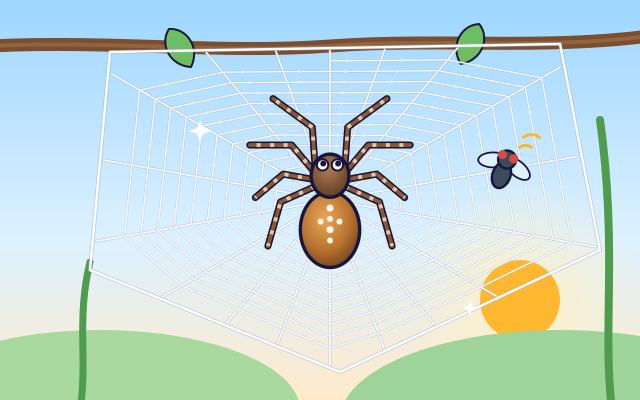
How do spiders spin webs?
Explore silk production and build an orb web using anchor lines, spokes, and a spiral. Touch different sections and watch vibrations travel.
#98
Animals
How do spiders spin webs?
Explore silk production and build an orb web using anchor lines, spokes, and a spiral. Touch different sections and watch vibrations travel.
 #100
Animals
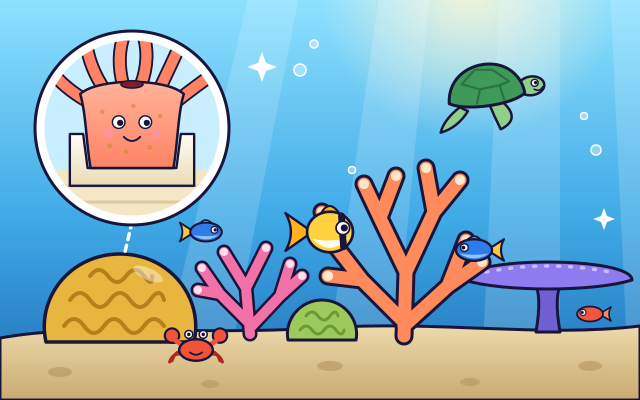
How do coral reefs grow?
Zoom into reef-building coral polyps and watch their skeletons accumulate over time. Explore how growing reefs provide shelter for many other living things.
#100
Animals
How do coral reefs grow?
Zoom into reef-building coral polyps and watch their skeletons accumulate over time. Explore how growing reefs provide shelter for many other living things.
 #201
Animals
How do a cat's whiskers work?
Explore how whiskers detect contact and nearby air movement around a virtual cat.
#201
Animals
How do a cat's whiskers work?
Explore how whiskers detect contact and nearby air movement around a virtual cat.
Keep exploring
Games to play next
- Deep Sea ExplorationLight the blue, meet ocean wildlife and discover hidden treasures.
- Habitat Builder 3DFind the right home for frogs, camels, polar bears and more.
- Classification ExplorerSort living things by what you can see, then follow and build yes-or-no keys.
Draw it or make it
- How to draw a fishDrawing lesson
- Woven Paper FishPaper craft
Guide for grown-ups
- How to start homeschooling: a step-by-step guide for familiesA guide for parents · 7 min read
Science games by grade
Science worksheets by grade
- Preschool Science Worksheets
- Pre-K Science Worksheets
- Kindergarten Science Worksheets
- 1st Grade Science Worksheets
- 2nd Grade Science Worksheets
- 3rd Grade Science Worksheets
- 4th Grade Science Worksheets
- 5th Grade Science Worksheets
- 6th Grade Science Worksheets
- 7th Grade Science Worksheets
- 8th Grade Science Worksheets