How do spiders spin webs?
Watch a garden spider make silk, build a wheel-shaped web step by step, and feel for dinner through the threads.
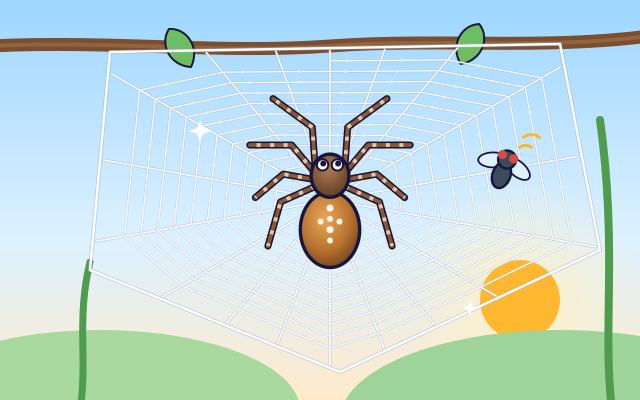
The big idea: Spiders make liquid silk inside their bodies. It turns into strong thread as it is pulled out. An orb spider builds a bridge, a frame, spokes and a sticky spiral, then feels vibrations to find its prey.
It's like
The interactive parts didn't load. The explanations below still work; try reloading the page.
How an orb web is built
- Silk starts as a runny liquid inside the spider. When it is pulled out through tiny nozzles called spinnerets, it turns into a strong, solid thread.
- First, the spider lets a thread float away on the breeze. When it catches on a twig, she pulls it tight and walks across. This is the bridge line.
- She drops from the bridge on a new line to make a Y shape. Then she adds frame lines all around the outside, like a picture frame.
- Next she adds spokes, called radii, from the middle to the frame, like the spokes of a bicycle wheel. They are tight and strong.
- She lays a temporary spiral from the middle out. Then she walks back in, laying a stretchy, sticky spiral and taking the temporary one away.
- A fly gets stuck on the sticky spiral. Its buzzing shakes the threads. The spider feels the shaking with her legs and runs straight to it.
A spider's web-making tools
Tap each part of the spider and the web to find out what it does.
- Silk glands. Silk glands inside the abdomen make liquid silk. Orb spiders have several kinds of glands, each making a different silk: strong, stretchy, sticky or for wrapping.
- Spinnerets. Spinnerets are tiny nozzles at the tip of the abdomen. As liquid silk is pulled out through them, it turns into solid thread.
- Leg claws. Web-building spiders have a small extra claw on each foot. It grips the silk like a hook, so the spider can walk on her web without getting stuck.
- Vibration sensors. Spiders have special slits in their legs that feel even tiny shakes. With a leg on each spoke, the spider can tell which way the shaking comes from.
- Eyes. Most spiders have eight eyes. Web-building spiders don't see very well, so they rely on touch and vibrations instead.
- Fangs. The spider's fangs bite trapped insects. Garden spiders are gentle with people, and their bite is not dangerous to us.
- Spoke (radius). Spokes are made of strong, dry silk and pulled tight. Shakes travel quickly along them to the spider in the middle.
- Sticky spiral. The spiral is stretchy and covered with tiny drops of glue. It stretches when a bug hits it, so the bug doesn't bounce off, and the glue holds it.
Build the web, then feel the vibrations
Build the orb web in the right order. Then tap a spoke and tap the spiral. Which shake reaches the spider better?
Experiment: Which thread carries a shake to the spider best: a spoke or the spiral?
- Build the web: bridge, frame, spokes, then spiral.
- Tap a spoke and watch the shake travel to the spider.
- Tap the spiral. Compare the readout.
What we found: Spokes win! They are tight, straight and dry, so a shake races along them to the middle. The stretchy spiral wobbles and soaks up the shake, so less of it reaches the spider.
Turn on JavaScript to try it yourself.
What's on my web?
It's foggy and the spider can't see. Feel each shake: if a bug is stuck, tap the shaking spoke. If it's just the wind or a leaf, press Ignore.
The amazing orb web
Spider silk is made of protein, like your hair. Inside the spider it is a runny liquid. As the spider pulls it out through her spinnerets, the liquid stretches and turns into a solid thread thinner than a hair.
An orb web is built in a set order. First comes the bridge line, carried by the breeze. Then the spider makes a Y, adds a frame around the outside, and fills in spokes from the middle like a bicycle wheel.
Last, she lays a temporary spiral outward and then a sticky spiral inward, eating up the temporary one as she goes. Many orb spiders build a fresh web every day or night, and some even eat the old web to reuse the silk.
The spider waits at the hub or in a hiding place nearby, holding a signal thread. She can't see well, but her legs feel the smallest shake. Bugs that buzz make the web shake differently from wind or a falling leaf.
Key words
- Spinnerets
- Nozzles at the end of a spider's abdomen where silk comes out.
- Orb web
- A round, wheel-shaped web with spokes and a spiral.
- Radius (radii)
- A spoke of the web, running from the middle to the frame.
- Capture spiral
- The stretchy, sticky spiral that catches insects.
- Hub
- The center of the web, where the spokes meet and the spider often waits.
- Vibration
- A quick back-and-forth shaking that can travel along a thread.
Check your thinking
-
What are the tiny nozzles that silk comes out of called?
Show the answer
Spinnerets. Spinnerets are at the tip of the abdomen.
-
How does an orb spider find a bug stuck in its web?
Show the answer
It feels the vibrations with its legs. Shakes travel along the threads to the spider's legs.
-
What does a spider build first?
Show the answer
A bridge line. The bridge line, carried by the breeze, holds up the rest of the web.
-
Why is the spiral stretchy?
Show the answer
So a flying bug doesn't snap it or bounce off. Stretching soaks up the bug's crash, and the glue holds it tight.
-
What do many orb spiders do with their old web?
Show the answer
Eat it and reuse the silk. Silk is made of protein, so eating the old web saves material for the next one.
You're a Animals expert!
You watched, looked inside, tried it, solved the challenge and went deeper. Pick another question below, or switch the age at the top to see this topic another way.
More about animals
 #100
Animals
How do coral reefs grow?
Zoom into reef-building coral polyps and watch their skeletons accumulate over time. Explore how growing reefs provide shelter for many other living things.
#100
Animals
How do coral reefs grow?
Zoom into reef-building coral polyps and watch their skeletons accumulate over time. Explore how growing reefs provide shelter for many other living things.
 #201
Animals
How do a cat's whiskers work?
Explore how whiskers detect contact and nearby air movement around a virtual cat.
#201
Animals
How do a cat's whiskers work?
Explore how whiskers detect contact and nearby air movement around a virtual cat.
 #202
Animals
How does panting help dogs cool down?
Follow airflow and compare evaporation under different simulated conditions.
#202
Animals
How does panting help dogs cool down?
Follow airflow and compare evaporation under different simulated conditions.
 #203
Animals
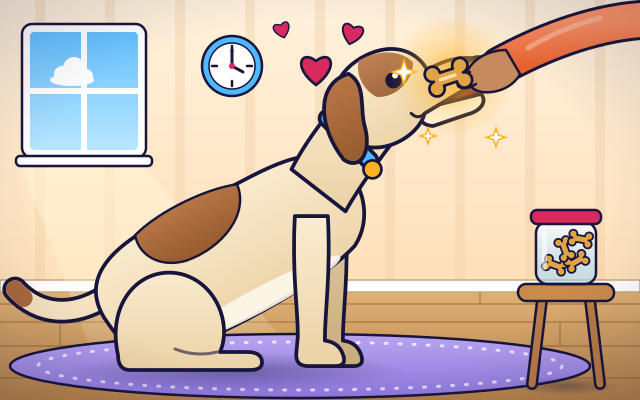
How do pets learn commands and routines?
Teach a virtual pet actions using clear cues and consistent positive rewards.
#203
Animals
How do pets learn commands and routines?
Teach a virtual pet actions using clear cues and consistent positive rewards.
Keep exploring
Games to play next
- Classification ExplorerSort living things by what you can see, then follow and build yes-or-no keys.
- Habitat Builder 3DFind the right home for frogs, camels, polar bears and more.
- Forest Trails PhotosCreep up on the animals of a big forest valley and take the closest, best wildlife photos you can, without startling them.
Guide for grown-ups
- How to start homeschooling: a step-by-step guide for familiesA guide for parents · 7 min read
Science games by grade
Science worksheets by grade
- Preschool Science Worksheets
- Pre-K Science Worksheets
- Kindergarten Science Worksheets
- 1st Grade Science Worksheets
- 2nd Grade Science Worksheets
- 3rd Grade Science Worksheets
- 4th Grade Science Worksheets
- 5th Grade Science Worksheets
- 6th Grade Science Worksheets
- 7th Grade Science Worksheets
- 8th Grade Science Worksheets