How do paper wasps build nests?
Paper wasps scrape wood, chew it into wet pulp and shape it into a nest of six-sided paper rooms.
The big idea: Wood is made of tiny threads called fibers. The wasp mixes them with her saliva, spreads the mush thin, and it dries into paper.
It's like papier-mâché: wet, mushy paper that you shape and then leave to dry hard. The wasp makes her own mush by chewing wood.
The interactive parts didn't load. The explanations below still work; try reloading the page.
From fence post to paper nest
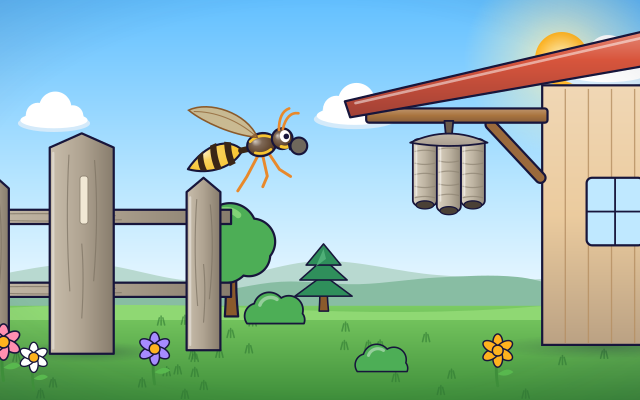
- In spring, a paper wasp queen lands on an old, gray fence post. She is not looking for food. She is collecting building material.
- She walks backward, scraping the wood with her jaws. Thin threads of wood, called fibers, peel away and leave a pale stripe behind.
- She chews the fibers and mixes them with saliva. The dry threads turn into a wet, gray ball of mush called pulp.
- Holding the pulp ball in her jaws, she flies to her nest. It hangs under a roof, where rain cannot reach the paper.
- She presses the pulp into a thin strip on the edge of a cell, feeling its shape with her antennae. As the water dries, the strip turns into light gray paper.
- Strip by strip, the nest grows. Each six-sided room, called a cell, holds one egg. The cells share walls, so she needs less paper.
Look inside a paper wasp nest
This nest has been cut open so you can see inside. Tap each part.
- The stalk. The nest hangs from a single strong stalk. The wasp builds it first, with extra chewed pulp to make it tough.
- The paper walls. Every wall is made of thin strips of pulp laid side by side. You can often see stripes, because each load of wood was a slightly different color.
- Six-sided cells. Seen from below, every cell is a hexagon, a shape with six sides. Hexagons fit together with no gaps, and neighbors share their walls.
- An egg. The queen glues one tiny egg near the top of each cell. The cells open downward, so the glue keeps the egg from falling out.
- A larva. The egg hatches into a soft, pale larva. Adult wasps feed it chewed-up caterpillars and other insects, and it grows to fill its cell.
- A silk cap. When the larva is fully grown, it spins a silk cap over its cell. Hidden inside, it slowly changes into an adult wasp, then chews its way out.
- The builder. A wasp adds a new strip of wet pulp to the edge of a cell. She walks backward as she spreads it, and her antennae feel that the wall is the right thickness.
Make paper like a wasp
Tap the fence post to scrape wood, set how much saliva the wasp mixes in, then tap the nest to build. What makes a good wall?
Experiment: What happens if the wasp builds with pulp that is too dry?
- Tap the fence post to scrape some wood.
- Leave the saliva low and tap the nest. What happens to the wall?
- Scrape again, slide the saliva to the middle and build. Then try it very runny.
What we found: Dry fibers do not stick, so the wall crumbles. Very runny pulp sags and drips before it can dry. In between, the wet fibers tangle together and lock into paper as the water dries.
Turn on JavaScript to try it yourself.
Save the pulp
Build 5 cells before the pulp runs out. Every wall costs one load of pulp, but cells that touch share walls.
How wasps make paper
Wood looks solid, but it is made of millions of tiny threads called fibers, all stuck together. A paper wasp scrapes these fibers from old wood, such as a fence, a dead branch or a garden bench. If you look closely at weathered wood in summer, you may see the thin, pale stripes she leaves behind.
She chews the fibers and mixes them with her saliva until she has a small ball of wet mush called pulp. Then she flies to her nest and spreads the pulp into a strip that is thinner than a page of this book. When the water dries, the fibers are tangled together so tightly that they stay in place. That tangle is paper.
The wasp builds her paper into six-sided cells. Six-sided shapes fit together with no gaps, and each wall is shared by two cells, so the wasp needs fewer trips to the fence. The queen lays one egg in each cell. The cells open downward and the whole nest hangs from one stalk under a roof or a branch, where it stays dry.
Paper wasps are useful neighbors, because they catch caterpillars to feed their young. But they will sting to protect their nest. So watch wasps from far away, never touch a nest, and tell a grown-up if you find one near your home. Papier-mâché is a good comparison, but there is one difference: you use glue, and the wasp's fibers mostly hold together by themselves.
Key words
- Fiber
- A tiny thread. Wood and paper are made of plant fibers.
- Pulp
- A wet mush of loose fibers. It can be shaped, and it dries into paper.
- Mandibles
- An insect's jaws. A wasp uses them to scrape, chew, carry and shape.
- Cell
- One six-sided room in the nest, where a single young wasp grows.
- Hexagon
- A shape with six straight sides.
- Petiole
- The stalk that the nest hangs from.
Check your thinking
-
What is a paper wasp's nest made of?
Show the answer
Wood fibers chewed with saliva. She scrapes wood, chews it into pulp with saliva and spreads it thin to dry.
-
Why does the wasp add saliva to the wood fibers?
Show the answer
Wet fibers can be shaped, and they stick together as they dry. Dry fibers will not hold together. Wetting them lets the wasp mold them, and they lock together when dry.
-
Why are the cells built so that they touch each other?
Show the answer
Cells that touch share walls, so less paper is needed. A shared wall is built once but used by two cells. That means fewer trips to fetch wood.
-
Why do paper wasps hang their nests under roofs and branches?
Show the answer
To keep the paper dry. Paper gets soft when it is wet, so the nest needs shelter from rain.
-
You find a wasp nest in the garden. What is the best thing to do?
Show the answer
Watch from far away and tell a grown-up. Wasps defend their nest. From a distance you can watch them safely, and a grown-up can decide what to do.
-
A wasp doubles the thickness of a wall. What is the cost?
Show the answer
Twice as many loads of pulp, so twice as many flights to fetch wood. Thicker walls are stronger, but every extra layer is another trip. Wasps build only as thick as the nest needs.
You're a Animals expert!
You watched, looked inside, tried it, solved the challenge and went deeper. Pick another question below, or switch the age at the top to see this topic another way.
More about animals
 #213
Animals
How do birds build nests?
Compare designs and arrange virtual materials that support model eggs.
#213
Animals
How do birds build nests?
Compare designs and arrange virtual materials that support model eggs.
 #214
Animals
How does a chick grow and hatch inside an egg?
Use a transparent egg and time slider to explore development and hatching.
#214
Animals
How does a chick grow and hatch inside an egg?
Use a transparent egg and time slider to explore development and hatching.
 #215
Animals
How do ducks keep their feathers water-resistant?
Inspect feather structure, animate preening, and compare water on different surfaces.
#215
Animals
How do ducks keep their feathers water-resistant?
Inspect feather structure, animate preening, and compare water on different surfaces.
 #216
Animals
How do squirrels store and find food?
Hide virtual nuts and explore how changing landmarks affect finding them again.
#216
Animals
How do squirrels store and find food?
Hide virtual nuts and explore how changing landmarks affect finding them again.
Keep exploring
Games to play next
- Habitat Builder 3DFind the right home for frogs, camels, polar bears and more.
- Classification ExplorerSort living things by what you can see, then follow and build yes-or-no keys.
- Forest Trails PhotosCreep up on the animals of a big forest valley and take the closest, best wildlife photos you can, without startling them.
Guide for grown-ups
- How to start homeschooling: a step-by-step guide for familiesA guide for parents · 7 min read
Science games by grade
Science worksheets by grade
- Preschool Science Worksheets
- Pre-K Science Worksheets
- Kindergarten Science Worksheets
- 1st Grade Science Worksheets
- 2nd Grade Science Worksheets
- 3rd Grade Science Worksheets
- 4th Grade Science Worksheets
- 5th Grade Science Worksheets
- 6th Grade Science Worksheets
- 7th Grade Science Worksheets
- 8th Grade Science Worksheets