How can an invasive species change an ecosystem?
When a living thing arrives where it does not belong, with no enemies to keep it in check, it can change a whole pond.
The big idea: An invasive species is a newcomer that spreads fast and harms the living things already there. It often wins because nothing in its new home eats it.
It's like a surprise guest at a picnic who eats very fast and whom nobody can slow down. Soon the others go hungry, even though nobody meant any harm.
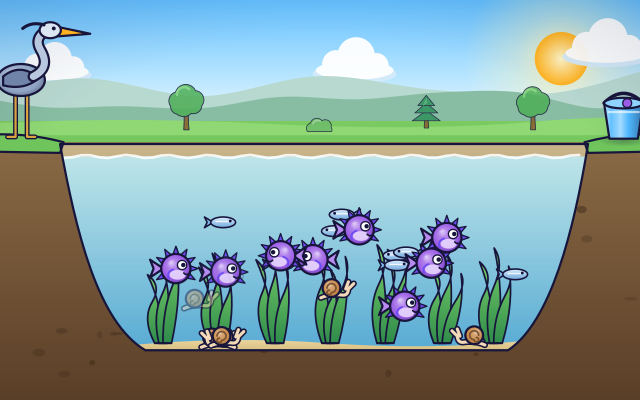
The interactive parts didn't load. The explanations below still work; try reloading the page.
The puffback moves in
- In this pond, every living thing is kept in check by another. Snails graze the pondweed, minnows eat the snails and a heron eats the minnows. Nothing takes over.
- One day somebody lets a pet fish go in the pond. It is a purple puffback, a made-up fish from a faraway country. It does not belong here.
- Back home, bigger fish ate puffbacks. Here, nothing does: the heron finds it far too spiky. With no enemies, almost every baby puffback survives.
- Puffbacks eat snails, the same food the minnows need. The two are competing, and there are more and more puffbacks. The minnows go hungry and their numbers fall.
- The change spreads. With few minnows, the heron leaves to find food elsewhere. With few snails to graze it, the pondweed grows out of control and the water turns green.
- People can help by catching the invaders early, before there are too many. Best of all is stopping them from arriving: never release pets, and clean boats and boots.
The pond food web, with a newcomer
Tap each living thing, then the two special spots, to see how the puffback fits in.
- Pondweed. Pondweed makes its own food from sunlight. Snails graze on it, which stops it from filling the whole pond.
- Pond snails. Snails eat pondweed and are eaten by minnows. Now puffbacks eat them too, so the snails have twice as many hunters.
- Minnows. Minnows are small native fish that eat snails. They have always lived here, and the heron depends on them.
- Heron. The heron wades in the shallows and spears minnows with its long beak. It cannot eat the spiky puffback.
- Purple puffback. The puffback is a made-up fish from far away. It eats snails, lays lots of eggs and is too spiky for anything here to eat.
- Competition. Minnows and puffbacks both eat snails. When two kinds of living thing need the same food, they compete, and there may not be enough for both.
- No predator. This arrow is missing. In the pond, nothing eats the puffback, so nothing keeps its numbers down.
Model pond: add a newcomer
Check the five meters. Then tap the bucket to release the puffbacks and watch which meters change, and in what order. Tap a puffback to net it.
Experiment: What happens to the minnows after the puffbacks arrive?
- Before you start, look at the meters: everything is steady.
- Tap the bucket. Watch the purple meter grow.
- Which meter drops first? Which ones follow?
What we found: The puffbacks multiply because nothing eats them. They eat the snails, so the minnows run short of food and get fewer. Then the heron loses its food too, and the pondweed spreads because few snails are left to eat it.
Turn on JavaScript to try it yourself.
Catch them early
Puffbacks have just arrived, and they breed every year. Tap them to net them all before your 14 nets run out.
Why some newcomers take over
Plants and animals live in the places where they have lived for a very long time. Those are their native homes. But people move living things around the world, sometimes by accident, in ships, on boats or in soil, and sometimes on purpose, as pets, crops and garden plants.
Most newcomers cause no trouble, and many cannot survive in a new place at all. But a few spread quickly and harm the living things that were already there. These are called invasive species. The purple puffback in this topic is made up, but it behaves the way real invaders do.
Why do invaders win? Back home, something ate them or made them sick, and that kept their numbers down. In the new place those enemies are missing. If the newcomer also has lots of babies and eats a common food, it can grow and grow. It competes with native animals for food, and the natives lose out.
The harm then spreads along the food web. Animals that ate the natives go hungry, and plants that were kept short may grow wild. The best cure is to stop invaders from arriving: never let pets go in the wild, never empty a fish tank into a pond, and clean boots and boats. If an invader does arrive, catching it early, while there are only a few, works far better than waiting. Like the picnic guest, the invader means no harm. It is just in the wrong place.
Key words
- Native species
- A living thing that has lived in a place naturally for a very long time.
- Invasive species
- A newcomer that spreads fast and harms the living things already there.
- Competition
- When two living things need the same food or space and there is not enough for both.
- Enemy release
- Leaving behind the animals and germs that kept your numbers down.
- Indirect effect
- A change that reaches a living thing through others, like dominoes falling.
- Prevention
- Stopping a problem before it starts: here, stopping new species from being moved and released.
Check your thinking
-
Why can a newcomer spread so fast in a new place?
Show the answer
Nothing there eats it, so most of its babies survive. At home, enemies kept its numbers down. In the new place they are missing.
-
Minnows and puffbacks both eat snails. What is that called?
Show the answer
Competition. When two kinds of living thing need the same food, they compete for it.
-
The heron does not eat puffbacks or snails. Why does it leave the pond?
Show the answer
The minnows it eats have become scarce. The puffbacks eat the minnows' food, so there are fewer minnows for the heron: a change passed along the food web.
-
When is the best time to remove an invader?
Show the answer
As early as possible, while there are only a few. A few are easy to catch. Wait, and they breed faster than anyone can catch them.
-
In the model, a native predator that can eat the puffback is added. What changes?
Show the answer
The puffback stays rare and the natives are much less affected. A predator raises the invader's death rate, which removes its main advantage, enemy release.
-
What is the best way to protect ponds from invaders?
Show the answer
Never release pets or plants, and clean boats and boots. Stopping invaders from arriving is far easier than getting them out again.
You're a Plants & ecosystems expert!
You watched, looked inside, tried it, solved the challenge and went deeper. Pick another question below, or switch the age at the top to see this topic another way.
More about plants & ecosystems
 #246
Plants & ecosystems
How do plants defend themselves?
Compare thorns, tough leaves, and defensive chemicals against different plant-eating visitors.
#246
Plants & ecosystems
How do plants defend themselves?
Compare thorns, tough leaves, and defensive chemicals against different plant-eating visitors.
 #247
Plants & ecosystems
How do trees survive winter?
Follow seasonal changes in buds, leaves, and growth in selected tree species.
#247
Plants & ecosystems
How do trees survive winter?
Follow seasonal changes in buds, leaves, and growth in selected tree species.
 #248
Plants & ecosystems
How do plant roots and fungi help each other?
Trace sugars, water, and minerals through a simplified underground partnership.
#248
Plants & ecosystems
How do plant roots and fungi help each other?
Trace sugars, water, and minerals through a simplified underground partnership.
 #249
Plants & ecosystems
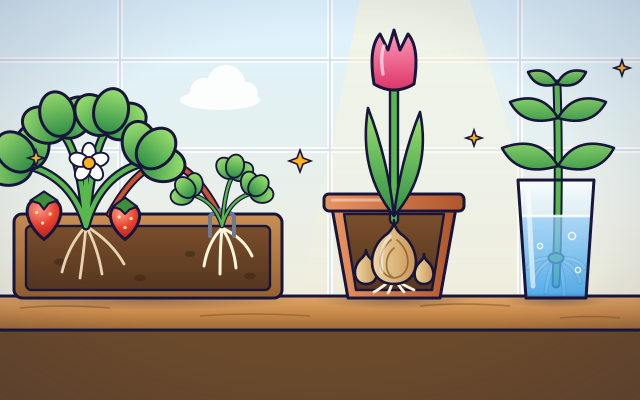
How do plants make new plants without seeds?
Explore runners, bulbs, and cuttings and follow them into new plants.
#249
Plants & ecosystems
How do plants make new plants without seeds?
Explore runners, bulbs, and cuttings and follow them into new plants.
Keep exploring
Games to play next
- Classification ExplorerSort living things by what you can see, then follow and build yes-or-no keys.
- Habitat Builder 3DFind the right home for frogs, camels, polar bears and more.
- Label LabPut the right labels on beautiful science diagrams, from bean plants to heart chambers.
Guide for grown-ups
- How to start homeschooling: a step-by-step guide for familiesA guide for parents · 7 min read
Science games by grade
Science worksheets by grade
- Preschool Science Worksheets
- Pre-K Science Worksheets
- Kindergarten Science Worksheets
- 1st Grade Science Worksheets
- 2nd Grade Science Worksheets
- 3rd Grade Science Worksheets
- 4th Grade Science Worksheets
- 5th Grade Science Worksheets
- 6th Grade Science Worksheets
- 7th Grade Science Worksheets
- 8th Grade Science Worksheets