How do geothermal power plants use Earth's heat?
A geothermal power plant sends water down to hot rock and uses the steam that comes back to spin a turbine.
The big idea: The deeper you go into the ground, the hotter it gets. A geothermal plant brings that heat up with water, turns it into steam to spin a turbine, then sends the water back down to be heated again.
It's like a kettle that never needs plugging in. Hot rock is the stove, the steam spins a pinwheel called a turbine, and the water is poured back in to boil again.
The interactive parts didn't load. The explanations below still work; try reloading the page.
Power from the heat of the Earth
- In some places hot water bubbles out of the ground all by itself, and geysers shoot steam into the air. Nobody lit a fire. The heat comes from deep inside the Earth.
- If you lower a thermometer down a deep hole, it climbs and climbs. Near the top the rock is cool. A few kilometers down it is hotter than boiling water.
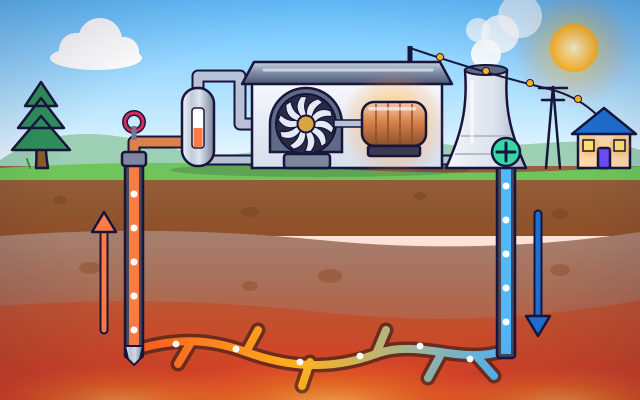
- Engineers drill a well down to the hot, cracked rock. Very hot water rushes up the pipe. Near the top it has more room, so part of it flashes into steam.
- The steam blasts through a wheel with many blades, called a turbine, and spins it fast. The turbine turns a generator, and the generator makes electricity for the town.
- After the turbine, the steam is cooled until it turns back into water. A pump sends that water down a second well, back to the hot rock, so it is never wasted.
- The water goes round and round: down to the hot rock, up as steam, through the turbine, and back down. The rock stays hot, so the plant can run day and night, in any weather.
Look inside a geothermal plant
Tap each part. Follow the water all the way around its loop.
- Hot rock. Kilometers down, the rock is hotter than boiling water. It is full of cracks, and water creeping through the cracks soaks up the heat.
- Production well. This steel pipe reaches all the way down to the hot rock. Hot water rushes up it, pushed by the pressure deep underground.
- Separator. Inside this tall tank the hot water suddenly has more room. Part of it flashes into steam, which rises to the top. The rest stays as water.
- Turbine. The turbine is a wheel with many curved blades. Steam rushing through pushes on the blades and spins it very fast.
- Generator. The turbine turns the generator. Inside, magnets spin past coils of wire, and that makes electricity flow to the town.
- Cooling tower. Used steam is cooled here until it turns back into water. The white cloud above the tower is water vapor, like the cloud over a hot bath.
- Injection well and pump. A pump pushes the cooled water down this second well. It seeps back through the hot rock, warms up and is used again.
How deep should the well go?
Drag the bottom of the well deeper, or use the slider. Watch the water's temperature, the steam and the turbine. Try switching the pump off, too.
Experiment: What will happen to the electricity if the well is drilled deeper?
- Start with a shallow well and the pump running. Is there any steam?
- Drag the well deeper a little at a time.
- Watch for the moment the turbine starts to spin, then go deeper still.
What we found: A shallow well brings up water that is only warm, so there is no steam and the turbine stays still. Deeper rock is hotter. Once the water is hotter than boiling, some of it flashes to steam, and the deeper you go, the more steam and electricity you get.
Turn on JavaScript to try it yourself.
Keep the lights on all day
Set up the plant, then press Run a day. All six windows must still be lit when evening comes.
How Earth's heat becomes electricity
The ground under your feet feels cool, but the Earth is very hot inside. That heat has been there since the planet formed, and more is made all the time deep in the rock. It leaks slowly up toward the surface, so the deeper you dig, the hotter it gets.
In most places you would have to drill a very long way to find rock hot enough to be useful. But near volcanoes and hot springs, hot rock lies only a kilometer or two down. That is where geothermal power plants are built. Iceland, for example, heats most of its homes with hot water from the ground.
A plant works like a giant kettle. Water in the cracks of the hot rock heats up. A well brings it to the surface, where part of it flashes into steam. The steam spins a turbine, and the turbine turns a generator that makes electricity. Then the steam is cooled back into water and pumped down a second well to be heated again.
Because the rock stays hot day and night, a geothermal plant keeps running when the wind drops and the Sun sets. The kettle picture has one weak spot, though. You can turn a stove up, but you cannot turn the Earth up. If a plant takes heat faster than it flows back into the rock, the rock near the wells slowly cools, so engineers take care not to rush it.
Key words
- Geothermal
- Coming from the heat inside the Earth. 'Geo' means Earth and 'thermal' means heat.
- Turbine
- A wheel with many blades that spins when steam, water or wind pushes on it.
- Generator
- A machine that makes electricity when it is turned.
- Reservoir
- The hot, cracked rock deep underground that holds the hot water.
- Geothermal gradient
- How quickly rock gets hotter as you go deeper, in degrees per kilometer.
- Reinjection
- Pumping the used water back underground so it can be heated again.
Check your thinking
-
Where does a geothermal plant get its heat?
Show the answer
From hot rock deep underground. The Earth is hot inside, and the plant brings that heat up with water.
-
What does the steam do at the power plant?
Show the answer
It spins the turbine, which turns the generator. Steam pushes on the turbine's blades. The spinning turbine turns the generator, which makes electricity.
-
A well brings up water that is only as warm as a bath. Why does the turbine stay still?
Show the answer
Warm water makes no steam, and the turbine needs steam. Only water hotter than boiling can flash into steam, and steam is what pushes the blades.
-
Why is the used water pumped back underground?
Show the answer
So the hot rock always has water to heat. If the water were not sent back, the cracks in the rock would slowly empty and the plant would fade.
-
In a region with a gradient of 40 degrees per kilometer and a surface temperature of 15 degrees, about how hot is the rock 3 kilometers down?
Show the answer
135 degrees Celsius. 15 plus 3 times 40 is 135 degrees Celsius.
-
A plant doubles its water flow and at first makes more power, but output falls over the years. What is the most likely reason?
Show the answer
Heat is being removed faster than it flows back into the rock. Rock near the wells is reheated only by slow conduction, so drawing heat too fast cools the reservoir.
You're a Electricity & energy expert!
You watched, looked inside, tried it, solved the challenge and went deeper. Pick another question below, or switch the age at the top to see this topic another way.
More about electricity & energy
 #388
Electricity & energy
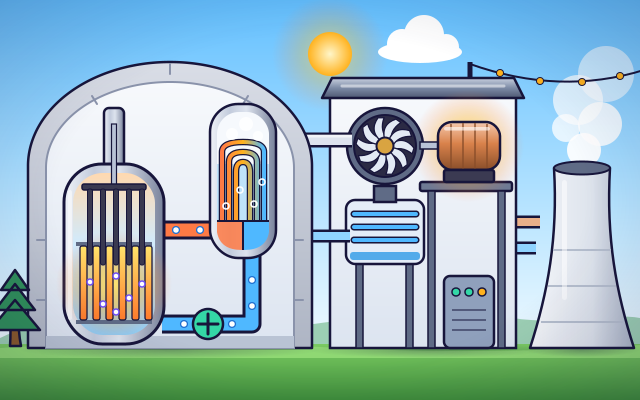
How does a nuclear power reactor work?
Trace controlled fission, control rods, coolant, and heat transfer into electricity generation.
#388
Electricity & energy
How does a nuclear power reactor work?
Trace controlled fission, control rods, coolant, and heat transfer into electricity generation.
 #389
Electricity & energy
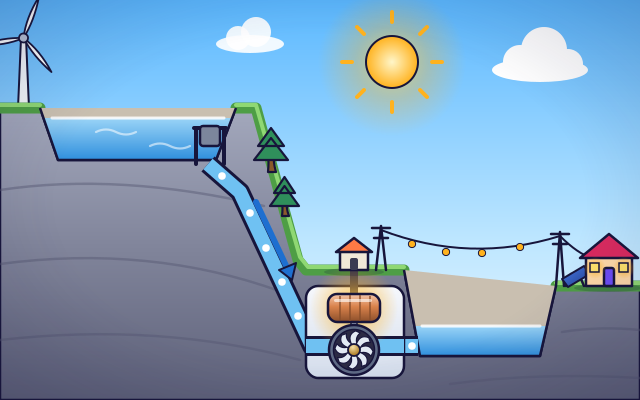
How do pumped-storage stations store energy?
Pump water uphill, then release it through turbines when electricity is needed.
#389
Electricity & energy
How do pumped-storage stations store energy?
Pump water uphill, then release it through turbines when electricity is needed.
 #390
Electricity & energy
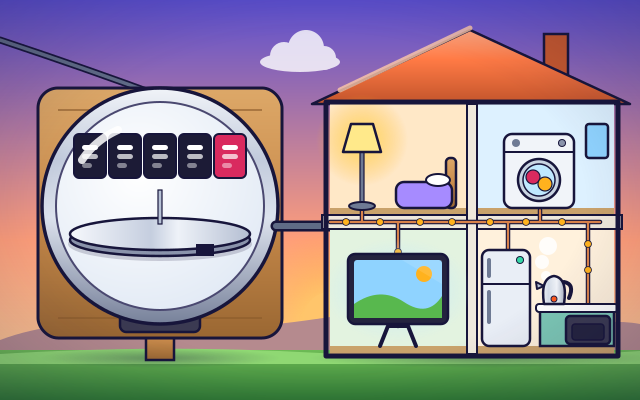
How do electricity meters measure household use?
Switch appliances on and off and watch their energy use accumulate.
#390
Electricity & energy
How do electricity meters measure household use?
Switch appliances on and off and watch their energy use accumulate.
 #398
Electricity & energy
How do circuit breakers interrupt excessive current?
Add virtual loads and watch protective equipment disconnect a model circuit.
#398
Electricity & energy
How do circuit breakers interrupt excessive current?
Add virtual loads and watch protective equipment disconnect a model circuit.
Keep exploring
Games to play next
- Circuit Workshop 3DWire up batteries, bulbs and switches on a 3D workbench.
- Garden AutomationProgram a garden robot with sensor rules — then watch a whole day play out.
- SwitchworksFlip switches to light the lamps in the target pattern — in as few presses as you can.
Guide for grown-ups
- How to start homeschooling: a step-by-step guide for familiesA guide for parents · 7 min read
Science games by grade
Science worksheets by grade
- Preschool Science Worksheets
- Pre-K Science Worksheets
- Kindergarten Science Worksheets
- 1st Grade Science Worksheets
- 2nd Grade Science Worksheets
- 3rd Grade Science Worksheets
- 4th Grade Science Worksheets
- 5th Grade Science Worksheets
- 6th Grade Science Worksheets
- 7th Grade Science Worksheets
- 8th Grade Science Worksheets