How do pumped-storage stations store energy?
A pumped-storage station saves spare electricity by pumping water uphill, then gets it back by letting the water run down through a turbine.
The big idea: Electricity is hard to keep, but water is easy to keep. Spare electricity pumps water up to a high lake. Later the water rushes back down, spins a turbine and makes electricity again.
It's like a giant battery made of water. Charging it means pumping water up the hill. Using it means letting the water run back down through a turbine.
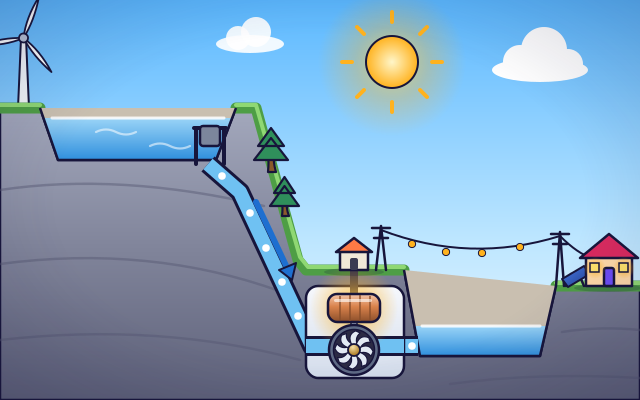
The interactive parts didn't load. The explanations below still work; try reloading the page.
A battery made of water
- At midday the sun is bright and the wind is strong. Solar panels and wind turbines make more electricity than the town is using. Where can the spare go?
- The spare electricity runs a big pump deep inside the hill. It pushes water from the low lake up a long pipe to the high lake.
- Now the high lake is full. Water held up high has stored energy, because gravity is ready to pull it down. It can wait for hours with almost nothing lost.
- In the evening the sun sets and everyone switches on lights, ovens and screens. The gate opens, and the water rushes back down the pipe.
- The rushing water spins the same wheel backward. Now it is a turbine, and the motor above it works as a generator. Electricity flows to the town.
- By morning the high lake is low again. When the sun and wind return, the pump fills it back up. A little energy is lost each time, but most of it comes back.
Look inside a pumped-storage station
Tap each part. Follow the water from the high lake down to the low lake.
- Upper reservoir. This lake sits high on the hill. When it is full of water, the station is fully charged, like a full battery.
- Intake gate. This strong gate holds the water back. When it opens, water pours into the pipe. A screen keeps branches and fish out.
- Penstock (the big pipe). The penstock is a huge pipe or tunnel through the rock, wide enough to drive a truck through. Water flows up it when pumping and down it when making electricity.
- Pump-turbine. This wheel with curved blades does two jobs. Spun by a motor, it pumps water uphill. Spun by falling water, it is a turbine.
- Motor-generator. This machine also does two jobs. Fed with electricity, it is a motor that spins the pump. Spun by the turbine, it is a generator that makes electricity.
- Lower reservoir. The water ends up in this low lake after making electricity. It stays here until there is spare electricity to pump it back up.
- Power lines. These wires work in both directions. They bring spare electricity to the pump, and later they carry electricity back to the town.
Charge and use the water battery
Pump the high lake full, then let all the water run back down. Compare the electricity you used with the electricity you got back.
Experiment: You pump the high lake full, then let it all run back down. How much of your electricity do you get back?
- Press Pump up and wait until the high lake is full.
- Press Let it flow and wait until the high lake is empty.
- Compare the two numbers: used for pumping, and made by the turbine.
What we found: You get most of your electricity back, but not all. The pump, the turbine and the pipes all waste a little as heat and swirling water. Even so, getting back about three quarters makes this the biggest kind of battery in the world.
Turn on JavaScript to try it yourself.
Keep the lights on all day
Press Start the day. Pump while the sun and wind make spare electricity, then let the water flow when the town needs more in the evening.
How a lake can store electricity
Electricity has to be used at the very moment it is made. That is awkward, because the sun and the wind do not always match what people need. At midday there may be far too much, and on a still evening far too little. So power companies need a way to save electricity for later.
One of the best ways is surprisingly simple: lift something heavy. A pumped-storage station has two lakes, one high on a hill and one low. When there is spare electricity, a pump pushes water from the low lake up to the high one. The electricity is gone, but its energy is now stored in the lifted water.
When electricity is needed, a gate opens and the water rushes back down through a turbine. The turbine turns a generator, and electricity flows out again. The same machine usually does both jobs: it is a pump one way and a turbine the other. It can start in about a minute, so it is perfect for sudden rushes of demand.
The water battery is not a perfect battery. Every pump, turbine and pipe wastes a little energy as heat, so only about three quarters comes back. It also needs a hill, two lakes and a lot of water, so it cannot be built just anywhere. But once built, a station can work for many decades.
Key words
- Reservoir
- A lake used for storing water.
- Potential energy
- Energy something has because it is up high and could fall.
- Head
- How much higher the top lake is than the bottom lake.
- Penstock
- The big pipe or tunnel that carries water between the reservoirs and the turbine.
- Turbine
- A wheel with blades that spins when water rushes through it.
- Efficiency
- How much of the energy you put in comes back out as something useful.
Check your thinking
-
What does the station do when there is spare electricity?
Show the answer
It pumps water up to the high lake. Spare electricity runs the pump, and the lifted water stores the energy for later.
-
It is evening and the town needs more electricity. What should the station do?
Show the answer
Open the gate so water runs down through the turbine. Falling water spins the turbine and generator, which send electricity to the town.
-
Why do you get back a bit less electricity than you used for pumping?
Show the answer
The pump, turbine and pipes waste a little energy as heat. No machine is perfect. Rubbing and swirling turn a little of the energy into heat each way.
-
Two stations have the same size of lake. One hill is twice as high. Which stores more energy?
Show the answer
The one on the higher hill. Water lifted higher has farther to fall, so each bucketful can do more work on the way down.
-
About how much energy is stored by lifting 1,000 kilograms of water (one cubic meter) through 100 meters? Use g = 9.8 newtons per kilogram.
Show the answer
About 980,000 joules. E = m g h = 1,000 times 9.8 times 100 = 980,000 joules, which is about 0.27 kilowatt-hours.
-
Does a pumped-storage station add new energy to the grid over a full day?
Show the answer
No. It returns less than it takes, but at a more useful time. It is storage, not a source: it shifts energy from times of surplus to times of need, losing about a quarter on the way.
You're a Electricity & energy expert!
You watched, looked inside, tried it, solved the challenge and went deeper. Pick another question below, or switch the age at the top to see this topic another way.
More about electricity & energy
 #390
Electricity & energy
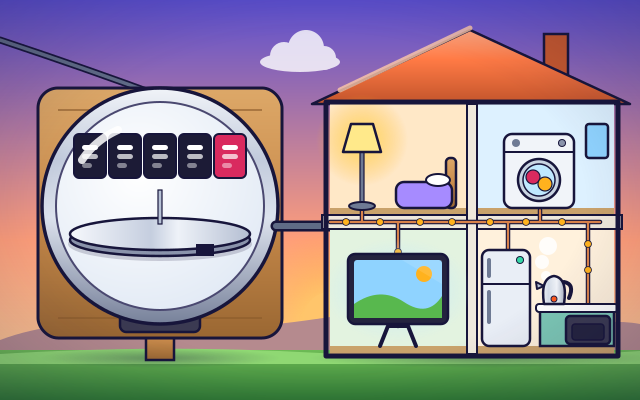
How do electricity meters measure household use?
Switch appliances on and off and watch their energy use accumulate.
#390
Electricity & energy
How do electricity meters measure household use?
Switch appliances on and off and watch their energy use accumulate.
 #398
Electricity & energy
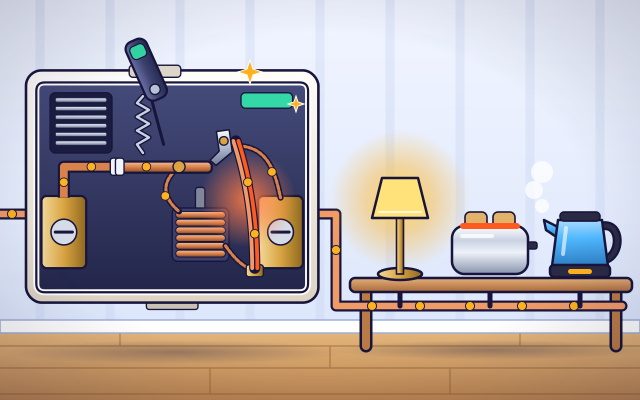
How do circuit breakers interrupt excessive current?
Add virtual loads and watch protective equipment disconnect a model circuit.
#398
Electricity & energy
How do circuit breakers interrupt excessive current?
Add virtual loads and watch protective equipment disconnect a model circuit.
 #399
Electricity & energy
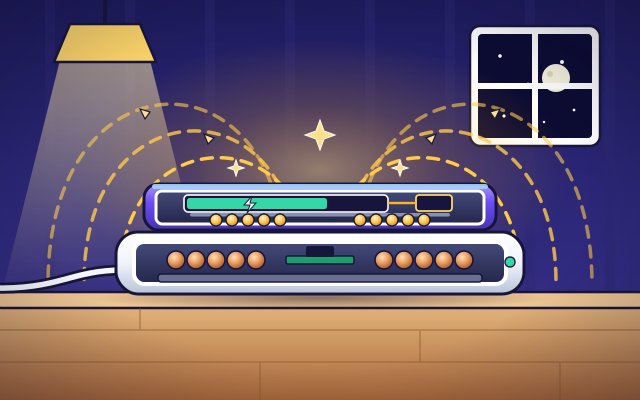
How does wireless charging recharge a device?
Align coils and follow energy transfer between a charging pad and device.
#399
Electricity & energy
How does wireless charging recharge a device?
Align coils and follow energy transfer between a charging pad and device.
 #41
Electricity & energy
How does electricity turn on a light?
Build virtual circuits using batteries, wires, switches, and bulbs. Find breaks in a circuit and compare simple series and parallel arrangements.
#41
Electricity & energy
How does electricity turn on a light?
Build virtual circuits using batteries, wires, switches, and bulbs. Find breaks in a circuit and compare simple series and parallel arrangements.
Keep exploring
Games to play next
- Circuit Workshop 3DWire up batteries, bulbs and switches on a 3D workbench.
- SwitchworksFlip switches to light the lamps in the target pattern — in as few presses as you can.
- Machine RepairFix levers, pulleys, gears and ramps so every contraption works.
Guide for grown-ups
- How to start homeschooling: a step-by-step guide for familiesA guide for parents · 7 min read
Science games by grade
Science worksheets by grade
- Preschool Science Worksheets
- Pre-K Science Worksheets
- Kindergarten Science Worksheets
- 1st Grade Science Worksheets
- 2nd Grade Science Worksheets
- 3rd Grade Science Worksheets
- 4th Grade Science Worksheets
- 5th Grade Science Worksheets
- 6th Grade Science Worksheets
- 7th Grade Science Worksheets
- 8th Grade Science Worksheets