How does a nuclear power reactor work?
Inside a reactor, splitting atoms heat water. Control rods set how much heat, and steam turns that heat into electricity.
The big idea: When a uranium atom splits, it gives out heat and a few tiny particles that can split more atoms. Control rods soak up spare particles to keep the splitting steady. Water carries the heat away to make steam for a turbine.
It's like a kettle with a dimmer switch. The fuel is the heater, the control rods are the dimmer that turns the heat up or down, and the steam spins a turbine.
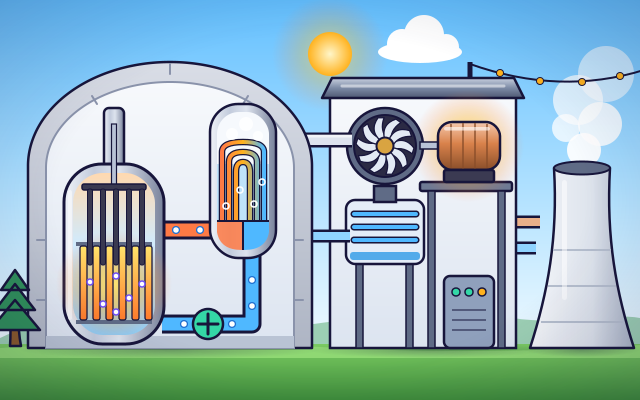
The interactive parts didn't load. The explanations below still work; try reloading the page.
From splitting atoms to electricity
- This power station makes electricity for a whole city, day and night. It burns nothing. The white cloud over the tower is only water vapor. So where does its heat come from?
- Zoom in on the fuel, far smaller than you can see. A tiny particle called a neutron hits a uranium atom. The atom wobbles and splits in two, giving out heat and a few new neutrons.
- Each new neutron can split another atom. That is a chain reaction. Control rods soak up the spare neutrons, so just one carries on each time and the heat stays steady.
- Inside the dome, the fuel sits in a strong steel tank full of water. A pump pushes the water past the hot fuel rods. It carries the heat away and comes back cooler, round and round.
- The hot water flows through tubes and boils a second lot of water without ever touching it. That steam spins a turbine, and the turbine turns a generator that makes electricity.
- Thick steel and a concrete dome keep the fuel and its invisible rays safely shut in. If anything is not as planned, the control rods drop all the way in and the splitting stops.
Look inside a nuclear power plant
Tap each part. Follow the heat from the fuel all the way to the generator.
- Fuel rods. These long metal tubes are filled with small pellets of uranium. Atoms split inside the pellets, and that makes the rods hot.
- Control rods. Control rods soak up neutrons. Slide them in and fewer atoms split, so there is less heat. Pull them out and there is more.
- Reactor vessel. The fuel and water sit inside this tank, made of steel as thick as your hand is long. It holds the water in under high pressure.
- Coolant pump and pipes. This pump keeps the water moving in a loop: past the hot fuel, off to give away its heat, then back again.
- Steam generator. Hot water from the reactor runs through bent tubes here. Clean water outside the tubes boils into steam. The two waters never mix.
- Turbine. Steam rushes through the turbine's blades and spins it many times every second.
- Generator. The turbine turns the generator. Inside, magnets spin past coils of wire, and electricity flows out to the city.
- Condenser and cooling tower. Cold pipes turn the used steam back into water so it can be boiled again. The spare warmth leaves from the cooling tower as a cloud of water vapor.
- Containment building. The reactor sits inside this dome of thick concrete and steel. It is a strong shield that keeps the fuel and its rays shut in.
Control the reactor
Drag the knob to lift the control rods out of the core, then slide them back in. Watch the neutrons, the water and the turbine.
Experiment: What happens to the heat when the control rods slide deeper into the core?
- Lift the rods all the way out. Watch the fuel glow and the turbine speed up.
- Slide the rods halfway in. What changes?
- Slide them all the way in and wait a moment.
What we found: The deeper the rods go, the more neutrons they soak up. Fewer atoms split, so there is less heat, less steam and less electricity. With the rods all the way in, the splitting stops.
Turn on JavaScript to try it yourself.
Follow the city's day
The city needs different amounts at morning, midday and night. Each time, move the rods to bring the arrow into the green band and hold it steady.
How a reactor makes electricity
Everything is made of atoms, and in the middle of each atom is a tiny core called a nucleus. Most atoms never change. But the nucleus of one kind of uranium can split in two when a tiny particle called a neutron hits it. The split gives out heat and two or three new neutrons.
Those new neutrons can go on to split more uranium atoms, which give out more neutrons, and so on. This is called a chain reaction. A power reactor keeps it slow and steady. Control rods made of special metals soak up the spare neutrons, so that just one from each split carries on. Slide the rods in and the reactor makes less heat. Draw them out a little and it makes more.
The rest of the plant is a kettle and a pinwheel. Water pumped past the hot fuel carries the heat to a steam generator. There it boils a second, separate lot of water. The steam spins a turbine, the turbine turns a generator, and the generator makes electricity. The steam is cooled back into water and used again.
Uranium gives off invisible rays called radiation, so the fuel is kept behind many barriers: sealed metal tubes, a thick steel tank and a thick concrete dome. Sensors watch the reactor all the time and can drop the control rods in to stop the splitting. A reactor makes no smoke, but the used fuel stays radioactive for a very long time, so it is stored with great care in pools of water and then in strong casks. The kettle picture leaves that part out.
Key words
- Nucleus
- The tiny, heavy middle of an atom.
- Neutron
- A tiny particle that can make a uranium atom split.
- Fission
- The splitting of an atom's nucleus into two smaller pieces, which gives out heat.
- Chain reaction
- A reaction that keeps itself going, because each step sets off the next one.
- Control rod
- A rod that soaks up neutrons. Sliding it into the core slows the chain reaction.
- Coolant
- The water that carries heat away from the fuel.
Check your thinking
-
What does the heat from the splitting atoms do first?
Show the answer
It heats the water flowing past the fuel. Water pumped past the hot fuel rods carries their heat away to make steam.
-
What happens when the control rods slide all the way into the core?
Show the answer
They soak up the neutrons, so the splitting stops. With the neutrons absorbed, no new atoms are split and the heat fades.
-
The hot reactor water makes steam from other water. Do the two waters mix?
Show the answer
No. The heat passes through the walls of metal tubes. Only heat crosses the tube walls. The reactor's water stays sealed in its own loop inside the dome.
-
For a steady power level, how many neutrons from each fission must go on to cause another fission, on average?
Show the answer
Exactly one. With a multiplication factor of 1 each fission is replaced by exactly one more, so the rate neither grows nor shrinks.
-
What is the white cloud above the cooling tower?
Show the answer
Water vapor, like the cloud over a hot bath. The tower gets rid of spare warmth by letting warm water evaporate. Nothing is burned.
-
Why is the fuel kept inside a thick steel vessel and a concrete containment?
Show the answer
They shield against radiation and keep radioactive material sealed in. Several barriers, one inside another, block radiation and enclose the fuel and the primary loop.
You're a Electricity & energy expert!
You watched, looked inside, tried it, solved the challenge and went deeper. Pick another question below, or switch the age at the top to see this topic another way.
More about electricity & energy
 #389
Electricity & energy
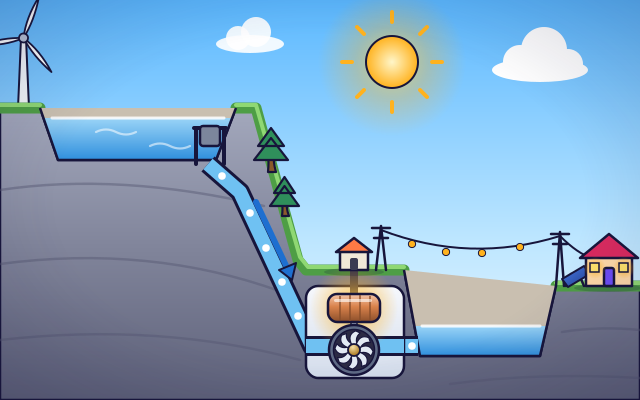
How do pumped-storage stations store energy?
Pump water uphill, then release it through turbines when electricity is needed.
#389
Electricity & energy
How do pumped-storage stations store energy?
Pump water uphill, then release it through turbines when electricity is needed.
 #390
Electricity & energy
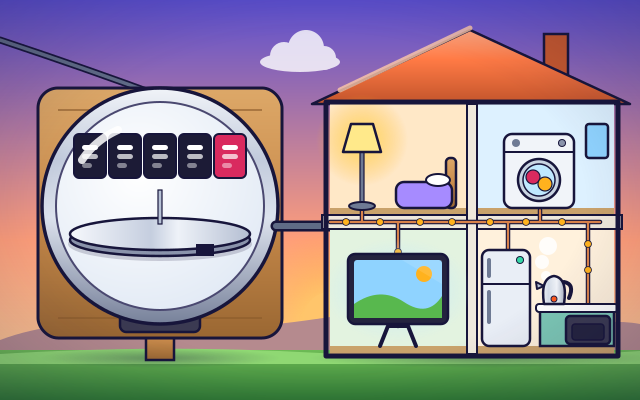
How do electricity meters measure household use?
Switch appliances on and off and watch their energy use accumulate.
#390
Electricity & energy
How do electricity meters measure household use?
Switch appliances on and off and watch their energy use accumulate.
 #398
Electricity & energy
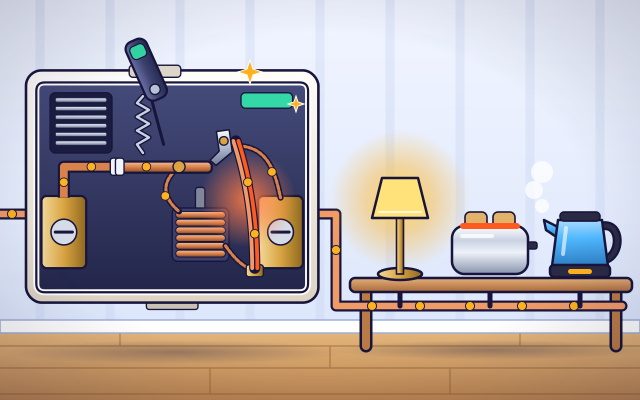
How do circuit breakers interrupt excessive current?
Add virtual loads and watch protective equipment disconnect a model circuit.
#398
Electricity & energy
How do circuit breakers interrupt excessive current?
Add virtual loads and watch protective equipment disconnect a model circuit.
 #399
Electricity & energy
How does wireless charging recharge a device?
Align coils and follow energy transfer between a charging pad and device.
#399
Electricity & energy
How does wireless charging recharge a device?
Align coils and follow energy transfer between a charging pad and device.
Keep exploring
Games to play next
- Circuit Workshop 3DWire up batteries, bulbs and switches on a 3D workbench.
- Garden AutomationProgram a garden robot with sensor rules — then watch a whole day play out.
- SwitchworksFlip switches to light the lamps in the target pattern — in as few presses as you can.
Guide for grown-ups
- How to start homeschooling: a step-by-step guide for familiesA guide for parents · 7 min read
Science games by grade
Science worksheets by grade
- Preschool Science Worksheets
- Pre-K Science Worksheets
- Kindergarten Science Worksheets
- 1st Grade Science Worksheets
- 2nd Grade Science Worksheets
- 3rd Grade Science Worksheets
- 4th Grade Science Worksheets
- 5th Grade Science Worksheets
- 6th Grade Science Worksheets
- 7th Grade Science Worksheets
- 8th Grade Science Worksheets