How does glue hold surfaces together?
Glue flows into the tiny bumps of two surfaces, then hardens and grips them both.
The big idea: Glue starts as a liquid so it can flow into every tiny bump and hole. Then it hardens, and the hard glue grips both surfaces like thousands of tiny hooks.
It's like pouring jelly over a tray of bumpy ice-cube shapes: runny jelly fills every dip, then it sets and the tray is hard to pull off.
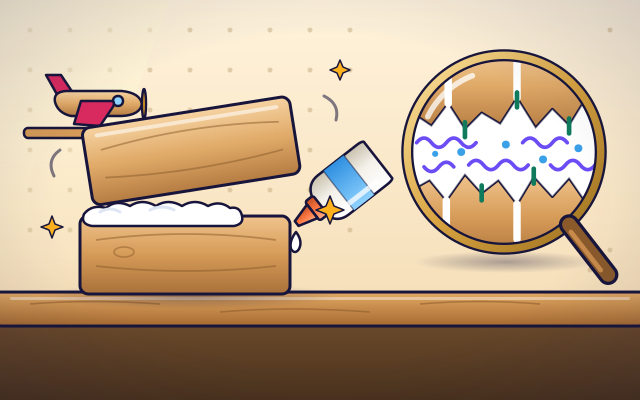
The interactive parts didn't load. The explanations below still work; try reloading the page.
From runny to rock solid
- The wing has snapped off the toy plane. Glue can fix it. But glue is a runny liquid, so how can it hold two hard pieces together?
- Zoom in. Wood that looks smooth is really covered in tiny hills and holes. Two dry pieces only touch at the tips of the hills, so they do not hold.
- Now add glue. Because it is a liquid, it flows into every dip and hole and touches all of both surfaces. This is called wetting.
- Then we wait. The water in white glue soaks into the wood and dries into the air. The long, stringy glue molecules pull close, tangle and lock. The glue has cured.
- Hard glue grips in two ways. It holds on to each piece of wood, and it holds itself together. Both grips must be strong, or the joint breaks.
- The plane flies again! Different glues suit different jobs: a glue stick for paper, white glue for wood, and stronger glues that grown-ups use for plastic and metal.
Look inside a glued joint
This magnifier shows the thin line of glue between two pieces of wood. Tap each part.
- Glue bottle. Inside the closed bottle the glue stays wet and runny, because its water cannot escape. The narrow tip lets you put a thin line just where you want it.
- Bumps and pores. Wood is full of tiny hills, dips and tube-shaped holes called pores. Glue flows into them and hardens there, like a key locked into a keyhole.
- Stringy glue molecules. Glue is made of very long, stringy molecules called polymers. While the glue is wet they slide past each other. When it dries they tangle and lock, like a bowl of cold spaghetti.
- Water. Water keeps the glue runny so it can spread. Then the water soaks into the wood and dries into the air, and the glue sets.
- Grip on the wood (adhesion). This is where glue meets wood. The glue molecules pull on the wood molecules right next to them. That grip is called adhesion.
- Glue holding itself (cohesion). In the middle, glue is holding on to more glue. That inner strength is called cohesion. Wet glue has almost none, so a wet joint slides apart.
The glue test rig
Pick a glue, spread it over the joint, choose how long to wait, then run the pull test. What makes the joint strong?
Experiment: You cover the whole joint with white glue and pull right away. What happens?
- Choose white glue and spread it over the whole joint.
- Leave the waiting time at zero and press Pull test.
- Now wait until the glue is dry and pull again. Then try with only a little glue.
What we found: Wet glue is still a liquid, so the pieces slide apart. Once the water has gone, the glue is a solid that grips both pieces. Glue only where it touches, too: half the glue gives about half the strength.
Turn on JavaScript to try it yourself.
The repair shop
Three broken things need fixing before their owners come back. Pick a glue that suits each one and is ready in time.
How glue really holds
Run your finger over a table and it feels smooth. Under a strong microscope, though, it looks like mountains and valleys. If you press two dry things together, only the very tops of those mountains touch. That is far too little contact for them to hold.
Glue fixes this by being a liquid first. It flows into every valley and hole of both surfaces, so it touches nearly all of them. Scientists call this wetting. Dust and grease get in the way, which is why clean surfaces stick much better.
Next, the glue has to turn solid. White glue and glue sticks harden when their water dries away. Hot glue hardens as it cools down. Some strong glues that grown-ups use harden because two liquids react with each other. All of these changes are called curing.
A cured joint is held by two grips. Adhesion is the glue holding on to each surface. Cohesion is the glue holding itself together. Our jelly-in-a-tray picture explains the shape locking in, but it leaves out adhesion: real glue molecules also pull on the surface molecules beside them.
Key words
- Adhesive
- Any material that joins two surfaces by sticking to both of them. Glue is an adhesive.
- Wetting
- When a liquid spreads out and flows into every dip of a surface, touching all of it.
- Adhesion
- The grip between the glue and the surface it is stuck to.
- Cohesion
- The strength that holds the glue itself together.
- Curing
- The change from runny glue to hard glue, by drying, cooling or a chemical reaction.
- Polymer
- A very long molecule made of many small units joined in a chain. Most glues are polymers.
Check your thinking
-
Why does glue need to start as a liquid?
Show the answer
So it can flow into the tiny dips and touch the whole surface. A liquid can flow into every dip and hole. That gives the glue far more of the surface to hold on to.
-
You pull a joint apart while the glue is still wet. What happens, and why?
Show the answer
It slides apart, because wet glue is a liquid and cannot hold itself together. Wet glue has almost no cohesion. The stringy molecules still slide past each other until the water has gone.
-
Why does white glue work well on wood but badly on a smooth plastic toy?
Show the answer
Wood has pores that the glue can flow into and that soak up the water. The glue locks into wood's pores, and the wood drinks up the water so the glue can harden. Smooth plastic offers neither.
-
A joint is covered with glue on only half of its area. How strong is it likely to be?
Show the answer
About half as strong, because glue only holds where it touches. Glue can only grip the parts of the surfaces it actually touches.
-
A dusty shelf bracket is glued without cleaning it first, and it falls off. Which grip failed?
Show the answer
Adhesion: the glue stuck to the dust, not to the bracket. Dust keeps the adhesive from touching the real surface, so the glue bonds to loose particles that simply lift away.
You're a Everyday chemistry & materials expert!
You watched, looked inside, tried it, solved the challenge and went deeper. Pick another question below, or switch the age at the top to see this topic another way.
More about everyday chemistry & materials
 #407
Everyday chemistry & materials
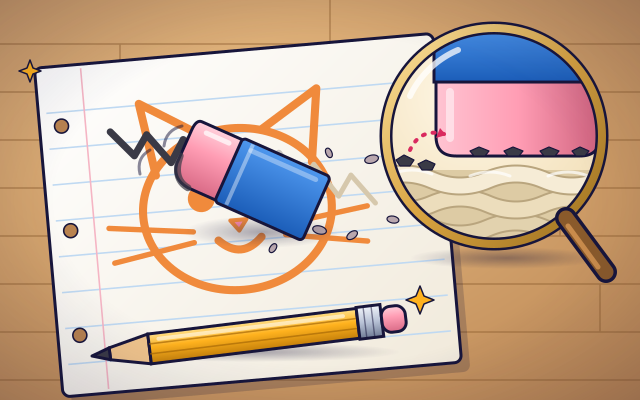
How do erasers remove pencil marks?
Zoom into paper fibers and follow graphite transferring from paper to an eraser.
#407
Everyday chemistry & materials
How do erasers remove pencil marks?
Zoom into paper fibers and follow graphite transferring from paper to an eraser.
 #408
Everyday chemistry & materials
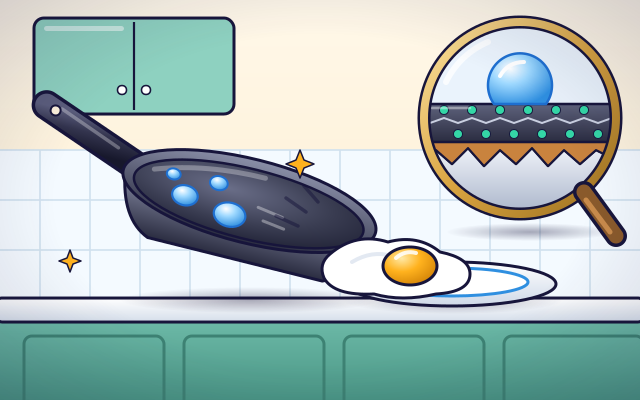
How do nonstick pans resist sticking?
Explore a coated surface and compare its interaction with food and droplets.
#408
Everyday chemistry & materials
How do nonstick pans resist sticking?
Explore a coated surface and compare its interaction with food and droplets.
 #409
Everyday chemistry & materials
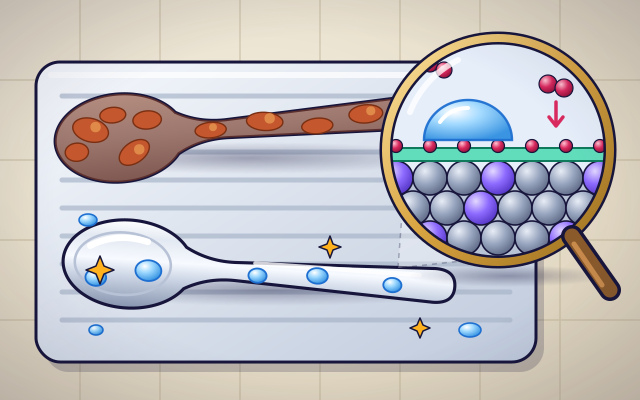
Why does stainless steel resist rust?
Inspect its protective surface layer and compare it with ordinary steel.
#409
Everyday chemistry & materials
Why does stainless steel resist rust?
Inspect its protective surface layer and compare it with ordinary steel.
 #410
Everyday chemistry & materials
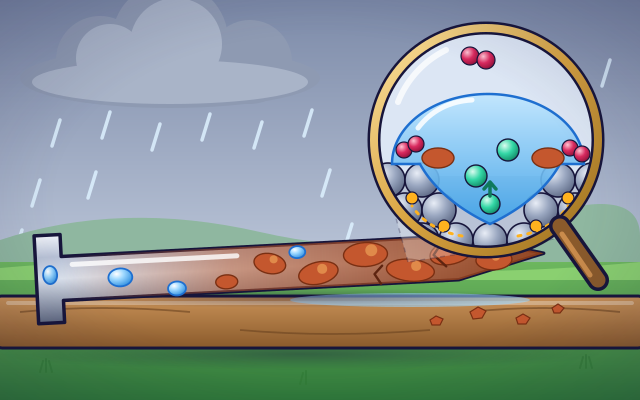
How does rust form?
Change moisture and oxygen around model iron and follow surface changes over time.
#410
Everyday chemistry & materials
How does rust form?
Change moisture and oxygen around model iron and follow surface changes over time.
Keep exploring
Games to play next
- Weather LabPredict the weather in a box, then run a fair test to find out why.
- Science QuizzesOlly's Science Quiz Show: plants, animals, the body, weather, space and more, for every grade.
- Ratio KitchenScale recipes, fill ratio tables and find the better buy.
Guide for grown-ups
- How to start homeschooling: a step-by-step guide for familiesA guide for parents · 7 min read
Science games by grade
Science worksheets by grade
- Preschool Science Worksheets
- Pre-K Science Worksheets
- Kindergarten Science Worksheets
- 1st Grade Science Worksheets
- 2nd Grade Science Worksheets
- 3rd Grade Science Worksheets
- 4th Grade Science Worksheets
- 5th Grade Science Worksheets
- 6th Grade Science Worksheets
- 7th Grade Science Worksheets
- 8th Grade Science Worksheets