How does rust form?
When iron is wet and in the air, it slowly turns into flaky, orange-brown rust.
The big idea: Rust forms when iron, water and oxygen meet. The iron slowly joins with the oxygen and becomes a new, crumbly material. Without water, or without oxygen, it cannot happen.
It's like a cut apple turning brown: the air joins with the apple, slowly, wherever it can reach. Rust is the air joining with iron.
The interactive parts didn't load. The explanations below still work; try reloading the page.
How iron turns to rust
- A bike is left out in the rain. A few weeks later its chain and every scratch are orange-brown and rough. The shiny iron has turned into rust. How?
- Three iron nails sit in three jars. One has dry air. One has water with all the air kept out. One has water and air together. Only the third nail rusts.
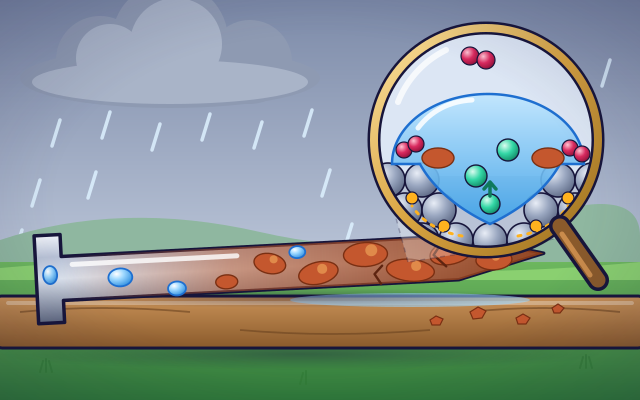
- Look closely under a drop of water. In the middle, iron atoms leave the metal and float into the water. Each one leaves tiny electric bits called electrons behind, and they travel through the metal to the edge of the drop.
- The floating iron meets oxygen in the water and becomes rust. Rust takes up more room than iron, so it is puffy and cracked. It flakes off, and fresh iron underneath starts to rust too.
- Salt water makes rusting faster. The salt helps electricity move through the water, so the iron and the oxygen can swap electrons more quickly. Warm, damp places speed it up too.
- To stop rust, keep water and oxygen away from the iron. Paint covers it. Oil on the chain pushes water off. A coat of zinc protects steel buckets and fences.
Rust, step by step
Step through what happens to iron under one drop of water. Each ball is an atom.
- Shiny iron. Clean iron is made of atoms packed closely together. In dry air it stays shiny for a very long time.
- A drop of water lands. A drop of water lands. Oxygen from the air dissolves into it, most of all around the edge, where the water is thin.
- Iron atoms slip away. In the middle of the drop, iron atoms leave the metal and float into the water. Each one leaves two electrons behind in the metal.
- Oxygen takes the electrons. The electrons travel through the metal to the edge of the drop. There, oxygen and water take them and turn into new particles that drift toward the middle.
- Rust forms. The floating iron and the new particles meet between the middle and the edge. They join, take up more oxygen and settle as a ring of orange-brown rust.
- The hole gets deeper. Rust is puffy and full of holes, so it does not seal the iron. It flakes away, water keeps getting in, and the pit in the metal grows deeper.
The rust jar
Change how wet the jar is and how much oxygen is in it, then let the days pass. Tap the water bottle or the pump, or use the sliders. What does rust need?
Experiment: You keep the nail soaking wet but pump all the oxygen out of the jar. What happens over two weeks?
- Make the jar wet with normal air, and move the days forward. Watch the nail.
- Start again. Keep it wet, but pump the oxygen out. Move the days forward.
- Now try normal air but a bone-dry jar.
What we found: The nail rusts only when it has water and oxygen together. Wet with no oxygen, or oxygen with no water, and it stays shiny. Salt in the water makes the rust come faster.
Turn on JavaScript to try it yourself.
Rust race: pick the winner
Three jars, three nails. Before the days go by, tap the jar whose nail will rust the most. Three rounds.
How rust really forms
Rust is not dirt, and it is not a stain. It is a new material, made when iron joins with oxygen. Shiny, strong iron slowly turns into something orange-brown, rough and crumbly. Scientists call this kind of slow change corrosion.
Rust needs three things at the same time: iron, water and oxygen. The oxygen comes from the air. Take away the water, and iron stays shiny for years, which is why tools are kept dry. Take away the oxygen, and wet iron does not rust either.
Under a drop of water, iron atoms slip out of the metal into the water. They leave tiny electric particles, called electrons, behind. The electrons travel through the metal to the edge of the drop, where oxygen takes them. Then the iron and the oxygen meet in the water and settle as rust.
Rust is puffy and full of holes, so it never seals the iron underneath. It flakes off, and the rusting carries on. Salt water makes it faster, because salt helps electricity move through water. Our brown-apple picture is right about air joining in slowly, but an apple does not need water added. Iron does.
Key words
- Rust
- The crumbly, orange-brown material that iron turns into when it is wet and in the air.
- Corrosion
- The slow eating away of a metal as it reacts with what is around it.
- Oxygen
- A gas that makes up about one fifth of the air. Iron joins with it to make rust.
- Electron
- A tiny electric particle. Iron atoms give electrons away when they rust.
- Oxidation
- When a material joins with oxygen, or gives away electrons. Rusting is oxidation.
- Galvanizing
- Coating steel with zinc. The zinc corrodes first and so protects the steel, even at a scratch.
Check your thinking
-
Which three things are needed for rust to form?
Show the answer
Iron, water and oxygen. Take away the water or the oxygen and the rusting stops.
-
Why does painting an iron gate stop it from rusting?
Show the answer
The paint keeps water and oxygen away from the iron. No water and no oxygen at the surface means no rust. A scratch lets them back in.
-
A nail is kept under water in a sealed jar with all the air taken out. Will it rust?
Show the answer
Hardly at all, because there is no oxygen. Water alone is not enough. Rust needs oxygen as well.
-
Why do cars and bikes rust faster near the sea?
Show the answer
Salty water helps electricity move, so rust forms faster. Salt in the water lets the iron and the oxygen swap electrons more quickly.
-
A painted steel fence and a galvanized (zinc-coated) fence both get a deep scratch. Which rusts at the scratch, and why?
Show the answer
The painted one: paint is only a barrier, but zinc gives up electrons in the iron's place. Zinc is more easily oxidized than iron, so near a scratch the zinc corrodes and the exposed steel is protected. Paint offers nothing once it is broken.
You're a Everyday chemistry & materials expert!
You watched, looked inside, tried it, solved the challenge and went deeper. Pick another question below, or switch the age at the top to see this topic another way.
More about everyday chemistry & materials
 #411
Everyday chemistry & materials
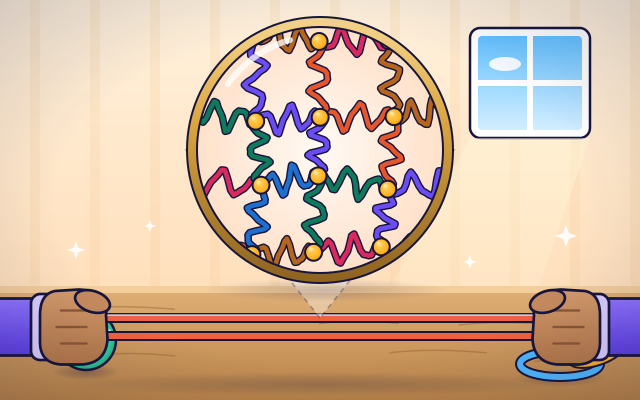
How does rubber stretch and return to shape?
Pull a simplified polymer network and observe rearrangement and recovery.
#411
Everyday chemistry & materials
How does rubber stretch and return to shape?
Pull a simplified polymer network and observe rearrangement and recovery.
 #412
Everyday chemistry & materials
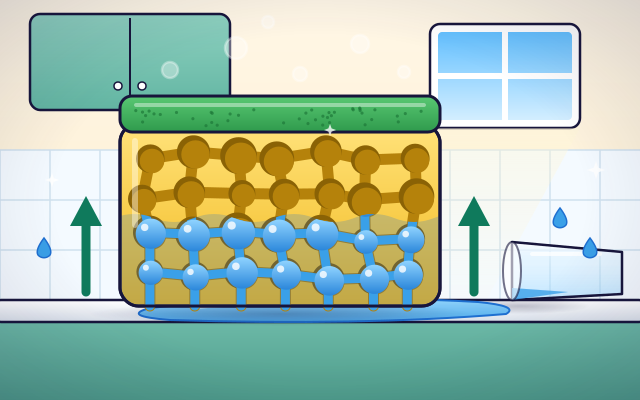
How do sponges soak up water?
Follow water into connected pores and compare absorption in different structures.
#412
Everyday chemistry & materials
How do sponges soak up water?
Follow water into connected pores and compare absorption in different structures.
 #413
Everyday chemistry & materials
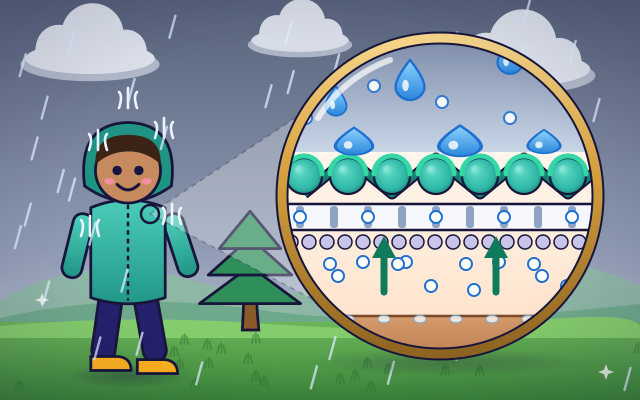
How can clothing be waterproof and breathable?
Compare liquid droplets and water vapor interacting with different fabric layers.
#413
Everyday chemistry & materials
How can clothing be waterproof and breathable?
Compare liquid droplets and water vapor interacting with different fabric layers.
 #414
Everyday chemistry & materials
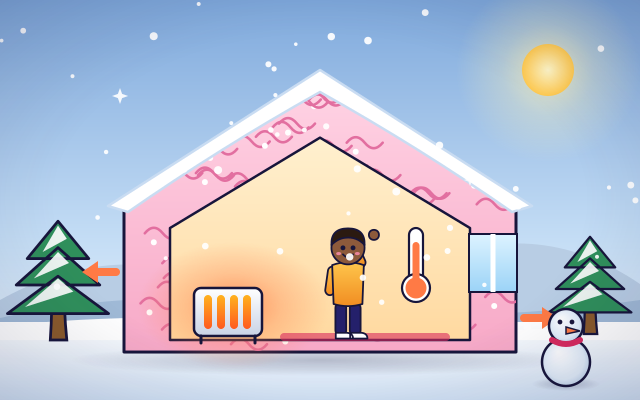
How does insulation slow heat loss?
Compare materials and trapped air around a model home or lunch container.
#414
Everyday chemistry & materials
How does insulation slow heat loss?
Compare materials and trapped air around a model home or lunch container.
Keep exploring
Games to play next
- Weather LabPredict the weather in a box, then run a fair test to find out why.
- Science QuizzesOlly's Science Quiz Show: plants, animals, the body, weather, space and more, for every grade.
- Ratio KitchenScale recipes, fill ratio tables and find the better buy.
Guide for grown-ups
- How to start homeschooling: a step-by-step guide for familiesA guide for parents · 7 min read
Science games by grade
Science worksheets by grade
- Preschool Science Worksheets
- Pre-K Science Worksheets
- Kindergarten Science Worksheets
- 1st Grade Science Worksheets
- 2nd Grade Science Worksheets
- 3rd Grade Science Worksheets
- 4th Grade Science Worksheets
- 5th Grade Science Worksheets
- 6th Grade Science Worksheets
- 7th Grade Science Worksheets
- 8th Grade Science Worksheets