Why does stainless steel resist rust?
A little chromium in the steel builds a see-through shield that keeps water and air off the iron.
The big idea: Stainless steel is steel with chromium mixed in. Chromium at the surface joins with oxygen from the air to make a thin, tight shield. If the shield is scratched, it grows back at once.
It's like the skin on a scraped knee, only much faster: scratch it, and a new protective layer grows back in a moment.
The interactive parts didn't load. The explanations below still work; try reloading the page.
Why stainless steel stays shiny
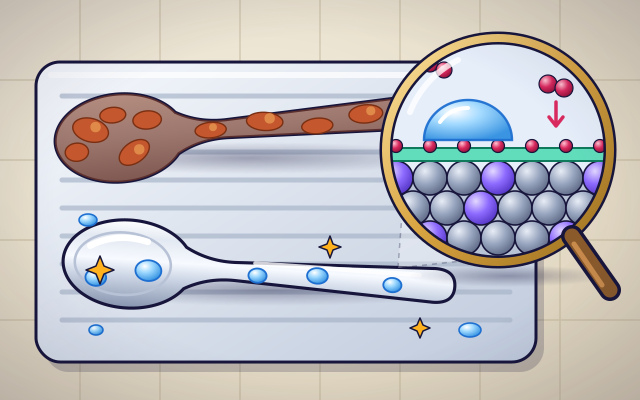
- Two spoons are left wet by the sink. After a few weeks the ordinary steel spoon is brown with rust, but the stainless steel spoon is as shiny as ever. What is its secret?
- Steel is iron with a tiny bit of carbon. To make it stainless, steelmakers melt in another metal, chromium: at least about one part in every ten.
- Chromium atoms at the surface grab oxygen from the air. Together they make a very thin, tight layer that covers the whole spoon. Water and air cannot get through it to the iron.
- What if the shield gets scratched? Fresh chromium is uncovered, it meets oxygen, and the shield grows back in a moment. It mends itself, again and again.
- Ordinary steel has no shield. Water and oxygen reach the iron and turn it into rust. Rust is crumbly and full of holes, so it flakes away and lets the water in deeper.
- That is why spoons, sinks, pots and doctors' tools are made of stainless steel. It needs oxygen to keep its shield, and very salty water can still be hard on it.
Look inside stainless steel
The magnifier shows the very top of the spoon, so close that you can see atoms. Tap each part.
- Iron atoms. Most of the atoms are iron. Iron makes the steel strong, but on its own it joins with oxygen and water to make rust.
- Chromium atoms. Chromium atoms are mixed in among the iron. At least about one atom in ten must be chromium for the shield to cover everything.
- Invisible shield. The shield is made of chromium joined with oxygen. It is far thinner than a soap bubble, so the metal still looks shiny, but it is tight enough to keep water out.
- Oxygen from the air. Oxygen from the air is what the chromium joins with. The shield needs oxygen to form and to mend itself.
- Water drop. Water sits on the shield and cannot get through to the iron underneath, so no rust can start.
- Scratch, healing. A scratch tears the shield. The chromium underneath meets oxygen and the shield grows back before rust can begin.
Ordinary steel against stainless
Keep both spoons wet and let the days pass. Scratch them. Then change how much chromium is in the right-hand spoon.
Experiment: You scratch the stainless steel spoon and leave it wet for two weeks. What happens at the scratch?
- Keep both spoons wet and move the days forward. Watch the close-ups.
- Scratch both spoons, then let more days pass.
- Now lower the chromium in the right-hand spoon a little at a time. When does rust appear?
What we found: The ordinary spoon rusts all over, and fastest when wet. The stainless spoon stays bright, and its scratch heals because fresh chromium meets oxygen. With too little chromium the shield has gaps, and rust starts in them.
Turn on JavaScript to try it yourself.
Just enough chromium
Chromium costs a lot. Make a spoon that stays shiny for 30 wet days using as little chromium as you can.
How stainless steel protects itself
Steel is mostly iron, and iron has a weakness. When it is wet, it joins with oxygen from the air and slowly turns into rust. Rust is crumbly and full of tiny holes. It flakes away, and the water gets to the fresh iron below, so the rusting carries on.
Stainless steel has another metal mixed in, called chromium: at least about ten parts in every hundred. Chromium joins with oxygen even more eagerly than iron does. But what it makes is very different from rust. It is a thin, tight, see-through layer that sticks firmly to the metal.
That layer works like a shield. It is thousands of times thinner than a hair, so you cannot see it and the spoon still shines. Water and air cannot pass through it to the iron. If you scratch it, the chromium underneath meets oxygen and a new shield grows in a moment.
It is called stainless, but it is not stain-proof. The shield needs oxygen, so stainless steel can rust where dirt keeps the air away, and very salty water can break through. Our scraped-knee picture fits the healing, but skin takes days to grow back. This shield takes less than a second.
Key words
- Alloy
- A metal made by melting two or more elements together. Steel and stainless steel are both alloys.
- Chromium
- A hard, silvery metal. Mixed into steel, it builds the protective layer that makes the steel stainless.
- Oxide
- What you get when a material joins with oxygen. Rust is iron oxide. The shield is chromium oxide.
- Passive film
- The invisible, protective layer on stainless steel.
- Corrosion
- The slow eating away of a metal as it reacts with its surroundings. Rusting is the corrosion of iron.
- Pitting
- Corrosion that makes small, deep holes where something, usually salt, has broken through the protective film.
Check your thinking
-
What protects stainless steel from rust?
Show the answer
A thin, invisible layer made of chromium and oxygen. Chromium at the surface joins with oxygen to make a tight shield that water cannot pass.
-
A stainless steel sink gets scratched. Why does it not rust at the scratch?
Show the answer
Chromium under the scratch meets oxygen and the shield grows back. The shield is made by the metal itself, so fresh metal simply makes a fresh shield.
-
Why does rust not protect ordinary steel the way the shield protects stainless steel?
Show the answer
Rust is crumbly and full of holes, so it flakes off and lets water in. A shield only works if it is tight and stays on. Rust is neither.
-
A steel has only a little chromium, about 5 parts in 100. What would you expect?
Show the answer
The shield has gaps, so rust starts in them. There are too few chromium atoms at the surface to join into one complete layer.
-
Why do railings by the sea use a grade of stainless steel with more chromium and added molybdenum?
Show the answer
Chloride ions from salt can break the passive film locally and cause pitting. Chlorides attack weak points in the film and start pits. Higher chromium and molybdenum make the film harder to break and quicker to heal.
You're a Everyday chemistry & materials expert!
You watched, looked inside, tried it, solved the challenge and went deeper. Pick another question below, or switch the age at the top to see this topic another way.
More about everyday chemistry & materials
 #410
Everyday chemistry & materials
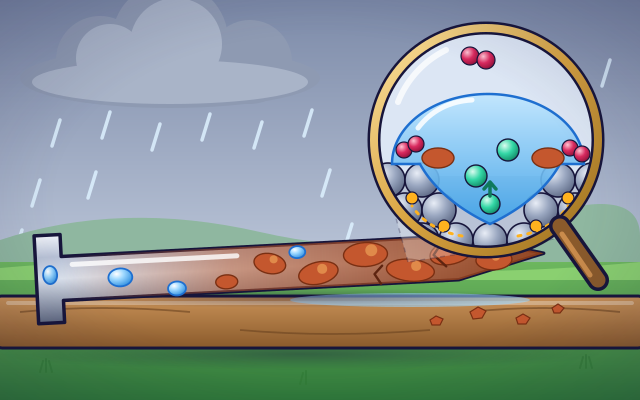
How does rust form?
Change moisture and oxygen around model iron and follow surface changes over time.
#410
Everyday chemistry & materials
How does rust form?
Change moisture and oxygen around model iron and follow surface changes over time.
 #411
Everyday chemistry & materials
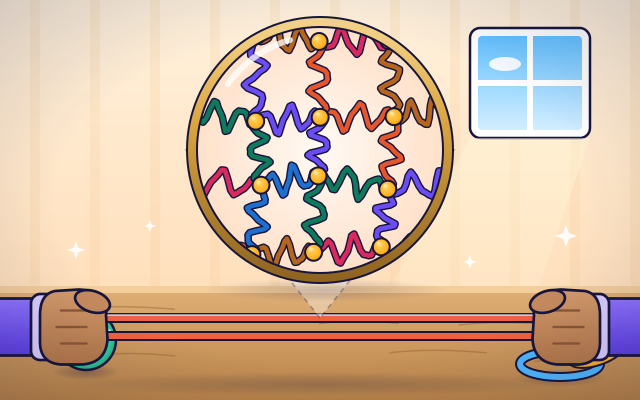
How does rubber stretch and return to shape?
Pull a simplified polymer network and observe rearrangement and recovery.
#411
Everyday chemistry & materials
How does rubber stretch and return to shape?
Pull a simplified polymer network and observe rearrangement and recovery.
 #412
Everyday chemistry & materials
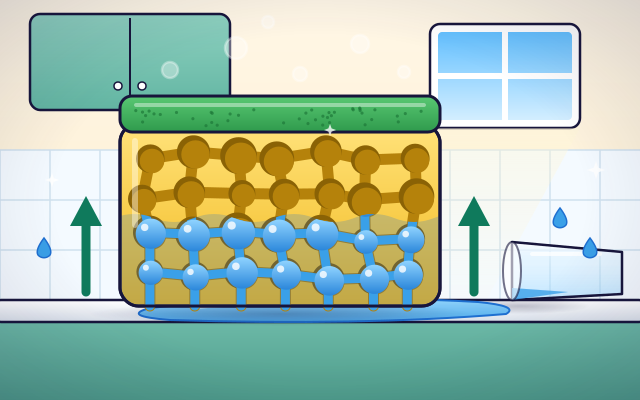
How do sponges soak up water?
Follow water into connected pores and compare absorption in different structures.
#412
Everyday chemistry & materials
How do sponges soak up water?
Follow water into connected pores and compare absorption in different structures.
 #413
Everyday chemistry & materials
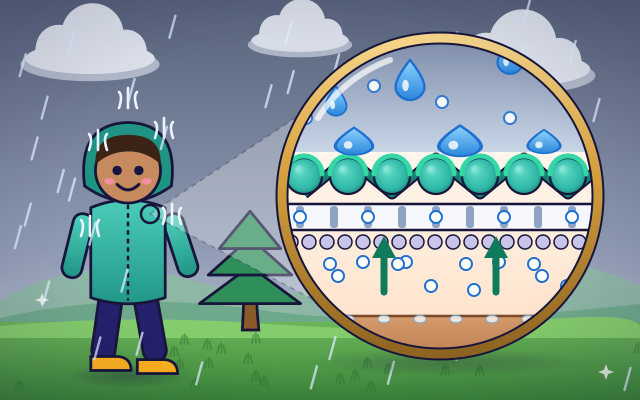
How can clothing be waterproof and breathable?
Compare liquid droplets and water vapor interacting with different fabric layers.
#413
Everyday chemistry & materials
How can clothing be waterproof and breathable?
Compare liquid droplets and water vapor interacting with different fabric layers.
Keep exploring
Games to play next
- Weather LabPredict the weather in a box, then run a fair test to find out why.
- Science QuizzesOlly's Science Quiz Show: plants, animals, the body, weather, space and more, for every grade.
- Ratio KitchenScale recipes, fill ratio tables and find the better buy.
Guide for grown-ups
- How to start homeschooling: a step-by-step guide for familiesA guide for parents · 7 min read
Science games by grade
Science worksheets by grade
- Preschool Science Worksheets
- Pre-K Science Worksheets
- Kindergarten Science Worksheets
- 1st Grade Science Worksheets
- 2nd Grade Science Worksheets
- 3rd Grade Science Worksheets
- 4th Grade Science Worksheets
- 5th Grade Science Worksheets
- 6th Grade Science Worksheets
- 7th Grade Science Worksheets
- 8th Grade Science Worksheets