Why do we get goosebumps?
Every hair has a tiny muscle. When you are cold or scared, the muscles pull the hairs upright and bunch the skin into bumps.
The big idea: Cold sensors send a message, and tiny muscles pull every hair upright. On a furry animal, raised fur holds warm air like a blanket. Our hair is too thin for that, so goosebumps are a leftover.
It's like a bird fluffing its feathers on a cold day: the fluffed layer holds warm air like a puffy jacket. Your skin tries too, but your hairs are too thin.
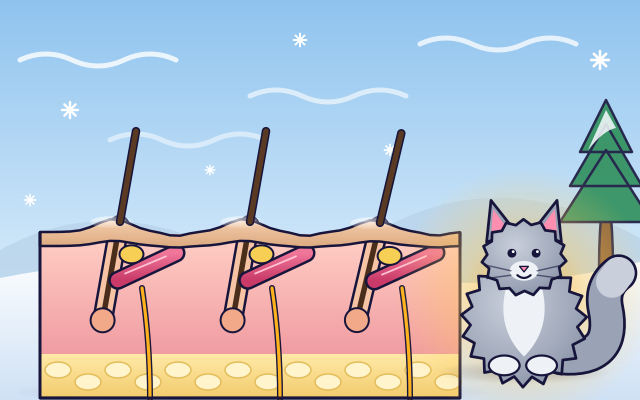
The interactive parts didn't load. The explanations below still work; try reloading the page.
The tiny muscles under your hairs
- A cold wind blows, and Leo shivers. Tiny bumps pop up on his arms, and the little hairs stand on end. These are goosebumps. Why does skin do that?
- Inside the skin, every hair grows out of a slanted tube called a follicle. A tiny muscle is attached to the side of each follicle, like a rope tied to a leaning pole.
- Cold sensors in the skin notice the chill. They send a message along nerves to the brain, and the brain sends an order straight back to every tiny muscle. You do not have to think about it.
- Each muscle squeezes shorter and pulls its follicle upright, so the hair stands on end. The skin around the hair gets pushed up into a bump, and that bump is a goosebump.
- On a furry animal this trick really works. When the fur stands up, it holds a thick layer of still air, and still air keeps heat in. Fluffed-up fur also makes a scared animal look bigger.
- People have the same muscles, but our hairs are too thin to trap much air. Goosebumps are a leftover from furry ancestors long ago. Strong feelings, like a scare or beautiful music, can set them off too.
A slice of skin with three hairs
Here is a tiny slice of skin, made much bigger. Tap each part to see what it does when you get cold.
- Hair. A thin thread made of the same tough stuff as your nails. It normally lies at a slant, close to the skin.
- Follicle. The slanted tube in the skin that a hair grows from. New hair is made at the bottom, in the rounded bulb.
- Tiny muscle. A tiny muscle that runs from the follicle up to the top of the skin. When it squeezes shorter, it pulls the hair upright.
- Oil gland. A small gland beside the follicle. It makes an oil that keeps hair and skin soft and a little bit waterproof.
- The bump. When the muscle pulls, the skin around the hair is pushed up into a little hill. That hill is the goosebump.
- Cold sensor. A nerve ending near the surface that fires when the skin cools down. It starts the message.
- Nerve. Nerves carry the cold message to the brain, and carry the brain's order back to the tiny muscles.
Goosebump lab: cold, hair and fur
Change the air temperature and watch the muscles, hairs and bumps. Then switch to thick fur. How much warm air does each kind of hair hold?
Experiment: When the hairs stand up, which holds more warm air: thin human hair or thick fur?
- Slide the temperature down until the hairs stand up. Look at the bumps.
- Warm it up again. What do the muscles do?
- Switch to thick fur and make it cold again. Compare the blanket of air.
What we found: Cold makes the tiny muscles pull every hair upright, and warmth lets them relax. With thick fur, the raised hairs hold a thick blanket of still air, so less heat escapes. With thin human hair there is almost nothing to hold the air, so goosebumps barely warm us.
Turn on JavaScript to try it yourself.
A cozy day for the fox
Press Start the day. Keep the comfort needle in the green: fluff the fur in the cold and smooth it in the sun. Stay cozy for most of the day. For 3 stars, stay cozy for almost all of it.
Why your skin makes goosebumps
Goosebumps start with your hairs. Each hair grows out of a slanted tube in the skin called a follicle. A tiny muscle is attached to the side of every follicle. Most of the time the muscle is relaxed, and the hair lies close to your skin.
When cold sensors in your skin feel a chill, they send a message along nerves to your brain. The brain sends an order straight back: pull! Every tiny muscle squeezes shorter and tugs its follicle upright. The hair stands on end, and the skin around it is pushed up into a little bump. You cannot do this on purpose, and you cannot stop it. It is automatic, like blinking when something flies toward your eye.
For a furry animal this is a great trick. Fur that stands up holds a thick layer of still air, and still air is very good at keeping heat in. That is why a cat or a squirrel looks so fluffy on a cold morning. Birds fluff up their feathers for the same reason. Standing fur also makes an animal look bigger, which can scare off an enemy.
People have the muscles, but we no longer have thick fur. Our thin hairs cannot hold much air, so goosebumps hardly warm us at all. They are a leftover from our furry ancestors of long ago. This is where our bird comparison stops working: the bird's fluffing really keeps it warm, and ours does not. We warm up by shivering, moving around and putting on more clothes. And because the same automatic nerves react to strong feelings, a scary story or a beautiful song can give you goosebumps too.
Key words
- Follicle
- The slanted tube in the skin that a hair grows from.
- Tiny hair muscle
- The small muscle on each follicle that pulls the hair upright.
- Reflex
- Something your body does automatically, without you deciding to do it.
- Insulation
- Anything that slows heat from escaping, such as a blanket, a coat or a layer of still air in fur.
- Sympathetic nervous system
- The automatic part of your nerves that gets your body ready for cold, danger or excitement.
- Vestigial
- A leftover: a body feature that worked well for distant ancestors but does little now.
Check your thinking
-
What pulls a hair upright when you get goosebumps?
Show the answer
A tiny muscle attached to its follicle. The muscle squeezes shorter and pulls the slanted follicle upright, so the hair stands on end.
-
Why does raised fur keep an animal warmer?
Show the answer
It holds a thicker layer of still air, which keeps heat in. Still air is a poor carrier of heat, so a thicker layer of it slows the heat leaving the body.
-
Why do goosebumps not keep people very warm?
Show the answer
Our hairs are too thin to hold much air. We kept the muscles but lost the thick fur, so there is almost nothing to trap a blanket of air.
-
You get goosebumps during a scary story in a warm room. Why?
Show the answer
The same automatic nerves react to strong feelings. The nerves that order goosebumps also respond to fear, excitement and awe, so no cold is needed.
-
A strong wind blows through a fox's fluffed fur. What happens to the insulation, and what can the fox do?
Show the answer
Wind stirs away trapped air, so insulation falls; curling up reduces the loss. Insulation comes from still air. Moving air carries heat away, so the fox must protect the layer, for example by curling up or finding shelter.
-
Put these in order: what happens first when you get cold?
Show the answer
Cold sensors in the skin send a message along the nerves. First the sensors notice the cold. Then the message travels, the muscles pull, the hairs stand up, and the bumps appear.
You're a Human body expert!
You watched, looked inside, tried it, solved the challenge and went deeper. Pick another question below, or switch the age at the top to see this topic another way.
More about human body
 #268
Human body
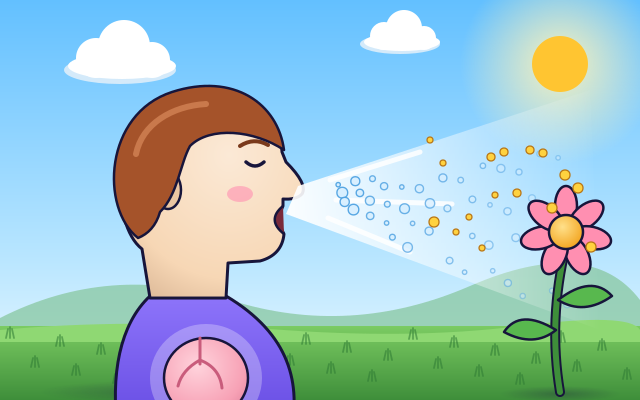
How does a sneeze happen?
Follow an irritation signal and coordinate the muscles involved in a sneeze animation.
#268
Human body
How does a sneeze happen?
Follow an irritation signal and coordinate the muscles involved in a sneeze animation.
 #269
Human body
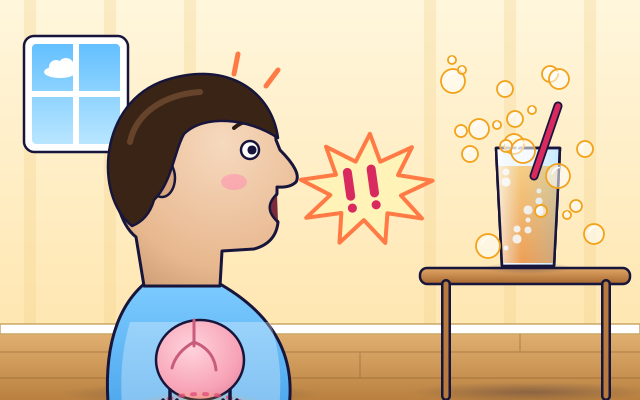
How do hiccups happen?
Animate a diaphragm contraction and the associated rapid closure of the vocal folds.
#269
Human body
How do hiccups happen?
Animate a diaphragm contraction and the associated rapid closure of the vocal folds.
 #270
Human body
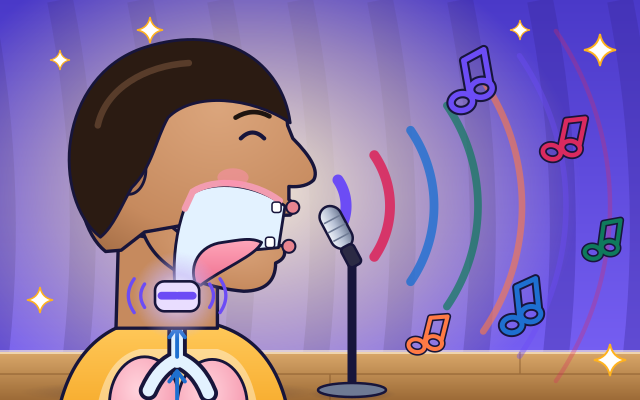
How do we produce our voices?
Adjust airflow and vocal folds, then shape sounds with mouth and tongue positions.
#270
Human body
How do we produce our voices?
Adjust airflow and vocal folds, then shape sounds with mouth and tongue positions.
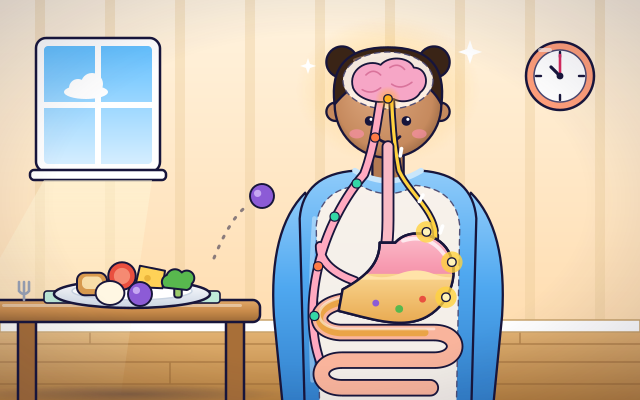 #271
Human body
How does the body signal hunger and fullness?
Follow messages between the digestive system and brain around a model meal.
#271
Human body
How does the body signal hunger and fullness?
Follow messages between the digestive system and brain around a model meal.
Keep exploring
Games to play next
- Body ExplorerTap, match and label your way around the amazing human body.
- Label LabPut the right labels on beautiful science diagrams, from bean plants to heart chambers.
- Science QuizzesOlly's Science Quiz Show: plants, animals, the body, weather, space and more, for every grade.
Guide for grown-ups
- How to start homeschooling: a step-by-step guide for familiesA guide for parents · 7 min read
Science games by grade
Science worksheets by grade
- Preschool Science Worksheets
- Pre-K Science Worksheets
- Kindergarten Science Worksheets
- 1st Grade Science Worksheets
- 2nd Grade Science Worksheets
- 3rd Grade Science Worksheets
- 4th Grade Science Worksheets
- 5th Grade Science Worksheets
- 6th Grade Science Worksheets
- 7th Grade Science Worksheets
- 8th Grade Science Worksheets