How does the body signal hunger and fullness?
Your stomach, your gut and your brain trade messages all day to tell you when to eat and when you have had enough.
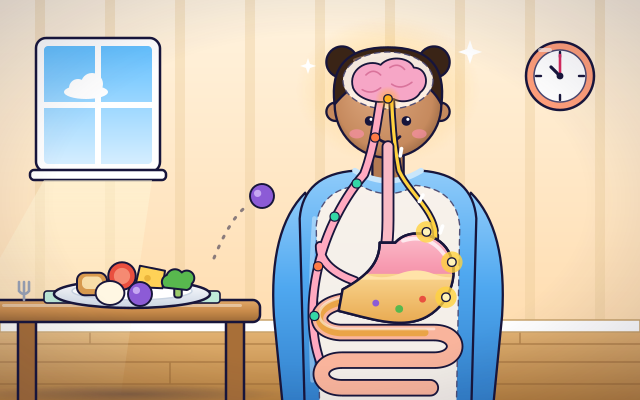
The big idea: An empty stomach sends a hunger messenger to the brain. A filling stomach sends a fast stretch signal along a nerve, and the gut sends slower messengers that say you have had enough.
It's like a car's fuel gauge: sensors in the tank send a reading to the dashboard, so the driver knows when to fill up and when to stop.
The interactive parts didn't load. The explanations below still work; try reloading the page.
Messages from your middle
- It is nearly lunchtime and Mia's stomach is growling. Nobody told it the time. So how does her body know it needs food, and how will it know when to stop?
- An empty stomach makes a chemical messenger called ghrelin. It travels in the blood to a control center deep in the brain, and Mia starts to feel hungry.
- Mia eats. Each bite slides down a tube called the esophagus into her stomach, a stretchy bag of muscle that grows as it fills.
- As the stomach stretches, sensors in its wall switch on. Their signal zips up a long nerve, the vagus nerve, and reaches the brain in a fraction of a second: filling up!
- Food then trickles into the small intestine, which sends its own messengers through the blood. They are slower: the full "I have had enough" message takes about twenty minutes to build.
- Hungry, then comfortable: the stomach, the gut and the brain keep trading messages all day. Eating slowly gives the slow messengers time to arrive.
The message makers
Tap each part to see what message it sends, and how the message travels.
- Stomach. The stomach is a stretchy bag of muscle. It holds your meal, mixes it and lets it out a little at a time.
- Hunger messenger (ghrelin). An empty stomach releases a messenger called ghrelin into the blood. More ghrelin means a stronger hungry feeling. After a meal, ghrelin drops.
- Bloodstream. Chemical messengers called hormones ride in the blood. Blood reaches every part of the body, but this delivery takes time.
- Stretch sensors. Sensors in the stomach wall notice when the wall stretches. The more the stomach fills, the more signals they send.
- Vagus nerve. The vagus nerve is like a long cable from the stomach and gut up to the brain. Signals travel along it in a fraction of a second.
- Small intestine. When food reaches the small intestine, cells in its wall send out fullness messengers. They also tell the stomach to slow down.
- Control center (hypothalamus). A small control center deep in the brain, the hypothalamus, collects all the messages and turns your hungry feeling up or down.
A model meal: which message is faster?
Give Mia some bites, then wait. Watch the fast nerve signal and the slow messengers. What does the brain's dial do after she stops eating?
Experiment: Mia eats four bites quickly and then stops. What happens to her feeling of fullness over the next few minutes?
- Tap four bites, one after another.
- Watch the yellow stretch signal zip up the nerve.
- Press Wait 5 minutes two or three times. Watch the dial and the green messengers.
What we found: The stretch signal arrives almost at once, but it is only part of the story. The slow messengers from the gut keep arriving for about twenty minutes, so the feeling of fullness keeps growing after the last bite.
Turn on JavaScript to try it yourself.
Stop at just right
Mia wants to finish lunch feeling comfortable. Offer bites and pauses, then press All done. Remember: some messages arrive late!
How hunger and fullness work
Your body uses energy all the time, even when you sleep. Hunger is how it asks for more. When your stomach has been empty for a while, it releases a chemical messenger called ghrelin into your blood. The blood carries it to a control center in your brain, and you start to think about food.
When you eat, two kinds of messages go back the other way. The first is fast. Sensors in the stomach wall feel it stretch and send signals up a long nerve, the vagus nerve. That message arrives in less than a second.
The second kind is slow. As food moves into the small intestine, the gut sends out its own messengers. They travel in the blood and build up little by little, so the full "I have had enough" feeling takes about twenty minutes. That is why eating slowly, and pausing to notice how you feel, helps the messages keep up.
The fuel gauge comparison is not perfect. A fuel gauge reads one thing, but your brain adds up many messages, and feelings, smells, sleep and habits change them too. Every body is different, and bodies need different amounts on different days. Learning to notice your own hungry and full signals is a useful skill.
Key words
- Hormone
- A chemical messenger that travels in the blood.
- Ghrelin
- The hunger hormone, released by an empty stomach.
- Vagus nerve
- A long nerve that carries signals between the brain and organs such as the stomach.
- Hypothalamus
- A small control center deep in the brain that turns hunger up or down.
- Satiety
- The comfortable feeling of having had enough to eat.
- Feedback loop
- A system that checks how things are going and then adjusts.
Check your thinking
-
What does an empty stomach send to the brain?
Show the answer
A hunger messenger called ghrelin. An empty stomach releases ghrelin into the blood, and the brain reads it as hunger.
-
Which message reaches the brain first when you eat?
Show the answer
The stretch signal along the vagus nerve. Nerve signals take a fraction of a second. Messengers in the blood take minutes.
-
Why can it help to eat slowly and pause?
Show the answer
The slow fullness messengers need time to arrive. The "had enough" messengers from the gut take about twenty minutes to build up.
-
What would happen to the fast "filling up" message if the stomach wall could not sense stretch?
Show the answer
The brain would have to wait for the slow messengers. Without stretch sensors, only the slower messengers in the blood would report the meal.
-
In a feedback loop, what does the control center do?
Show the answer
It compares the sensor reports with what the body needs and adjusts the response. The hypothalamus combines the incoming signals and turns appetite up or down in response.
You're a Human body expert!
You watched, looked inside, tried it, solved the challenge and went deeper. Pick another question below, or switch the age at the top to see this topic another way.
More about human body
 #272
Human body
How does the lymphatic system move fluid?
Trace fluid through lymph vessels and valves and back into blood circulation.
#272
Human body
How does the lymphatic system move fluid?
Trace fluid through lymph vessels and valves and back into blood circulation.
 #273
Human body
How do cells release energy from food?
Follow a simplified cellular-respiration pathway and connect energy release to cell activities.
#273
Human body
How do cells release energy from food?
Follow a simplified cellular-respiration pathway and connect energy release to cell activities.
 #274
Human body
How do cells build proteins?
Follow a message from DNA to a ribosome and assemble an amino-acid chain.
#274
Human body
How do cells build proteins?
Follow a message from DNA to a ribosome and assemble an amino-acid chain.
 #275
Human body
How does skin make its pigment?
Explore pigment-producing cells and follow melanin into surrounding skin cells.
#275
Human body
How does skin make its pigment?
Explore pigment-producing cells and follow melanin into surrounding skin cells.
Keep exploring
Games to play next
- Body ExplorerTap, match and label your way around the amazing human body.
- Science QuizzesOlly's Science Quiz Show: plants, animals, the body, weather, space and more, for every grade.
- Label LabPut the right labels on beautiful science diagrams, from bean plants to heart chambers.
Guide for grown-ups
- How to start homeschooling: a step-by-step guide for familiesA guide for parents · 7 min read
Science games by grade
Science worksheets by grade
- Preschool Science Worksheets
- Pre-K Science Worksheets
- Kindergarten Science Worksheets
- 1st Grade Science Worksheets
- 2nd Grade Science Worksheets
- 3rd Grade Science Worksheets
- 4th Grade Science Worksheets
- 5th Grade Science Worksheets
- 6th Grade Science Worksheets
- 7th Grade Science Worksheets
- 8th Grade Science Worksheets