How does a sneeze happen?
A tickle in your nose sends a signal to your brain. A deep breath, a shut gate, a hard squeeze, and then the air blasts out and cleans your nose.
The big idea: Sensors in the nose call the sneeze center. It fires the muscles in order: breathe in, shut the throat gate, squeeze, let go. Trapped air under pressure bursts out and sweeps the nose clean.
It's like a balloon pinched shut: squeeze it and pressure builds, let go and the air blasts out. Your throat does the pinching and your chest does the squeezing.
The interactive parts didn't load. The explanations below still work; try reloading the page.
How your body builds a sneeze
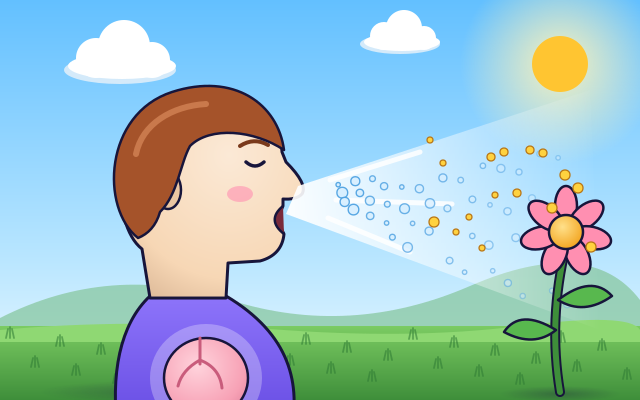
- Nora sniffs a flower, and tiny grains of pollen float up into her nose. Something tickles. Her breath catches... a sneeze is coming. But how does her body do it?
- The specks land on the soft, damp lining of the nose. Sensors there fire, and a signal races along a nerve to a spot at the base of the brain: the sneeze center.
- The sneeze center sends orders to the muscles. First the diaphragm, the dome of muscle under the lungs, pulls down hard. The lungs fill with a big breath of air, and the eyes squeeze shut.
- Next, a gate in the throat snaps shut, trapping the air. Then the muscles of the chest and belly squeeze hard. The air has nowhere to go, so the pressure builds and builds.
- Suddenly the gate bursts open. ACHOO! The squeezed air blasts out through the nose and mouth, carrying the specks and some sticky mucus out with it. The nose is clean again.
- A sneeze sprays thousands of tiny droplets, and they can carry germs. So catch your sneeze in your elbow or a tissue, and wash your hands afterward. Your nose did its job: it cleaned itself.
The parts that make a sneeze
This is a side view with the inside parts showing. Tap each one to see its job in a sneeze.
- Nose lining. The soft, damp skin inside the nose. Sticky mucus traps dust, and tiny hairs sweep it away. Sensors here feel anything that should not be there.
- Sensor nerve. The nerve that carries the alarm from the nose lining to the brain. It also carries feeling from the rest of your face.
- Sneeze center. A small control spot at the base of the brain. When enough alarm signals arrive, it runs the sneeze: breathe in, shut, squeeze, let go.
- Throat gate. A pair of folds in your voice box that can close the windpipe. Shut, they trap the air so pressure can build. Open, they release the blast.
- Lungs. The stretchy air bags in your chest. A sneeze starts by filling them with much more air than a normal breath.
- Diaphragm. A dome of muscle under the lungs. When it pulls down, the lungs stretch and air rushes in. That is the deep breath before a sneeze.
- Chest and belly muscles. Muscles between the ribs and across the belly. They squeeze the chest like hands squeezing a balloon, and that builds the pressure.
Sneeze lab: breath, gate and blast
Shake pepper at the nose, then press Achoo. Try a small breath and a big one, and try it with the throat gate left open.
Experiment: What happens if the throat gate stays open while the muscles squeeze?
- Shake the pepper, choose a big breath, keep the gate shut, and press Achoo.
- Shake again. Switch the gate off, so it stays open, and press Achoo.
- Shut the gate again and try a small sip of air.
What we found: With the gate shut, the squeeze builds pressure, and opening the gate lets it all go in one blast that sweeps the pepper out. With the gate open, the air leaks away while the muscles squeeze, so there is only a puff. A small breath makes a small sneeze, because there is less air to blast.
Turn on JavaScript to try it yourself.
Be the sneeze center
Pepper is stuck in the nose. Fire the four moves in the right order to build a sneeze and blow it all out. For 3 stars, make no mistakes.
Why and how you sneeze
A sneeze is your nose's way of cleaning itself in a hurry. The inside of your nose is lined with soft, damp skin covered in sticky mucus. Most dust gets stuck in the mucus and is slowly swept away by tiny hairs. But when something really tickles, such as pollen, pepper or a puff of dust, sensors in the lining send an alarm along a nerve to your brain.
The alarm goes to a small control spot at the base of the brain called the sneeze center. You do not decide to sneeze. The sneeze center runs the whole thing by itself, like pressing play on a recording. That is why it is so hard to stop a sneeze once it has started.
The sneeze has four steps. First you take a big, deep breath, as the diaphragm under your lungs pulls down. Second, a gate in your throat snaps shut and traps the air. Third, the muscles of your chest and belly squeeze hard, so the pressure of the trapped air builds up. Fourth, the gate bursts open and the air blasts out through your nose and mouth, carrying the tickly specks and some mucus with it. It works like a balloon pinched shut and then let go, except that a balloon squeezes itself, and your chest needs muscles to do the squeezing.
The blast sprays thousands of tiny droplets, and they can travel a long way. When you have a cold, those droplets carry germs. That is why it is kind to catch your sneeze in your elbow or a tissue, and to wash your hands afterward. It is also better not to hold a sneeze in by pinching your nose. Let it out, and let your nose finish its cleaning.
Key words
- Reflex
- Something your body does automatically, without you deciding to do it.
- Sneeze center
- The control spot at the base of the brain that runs a sneeze.
- Diaphragm
- The dome of muscle under the lungs. It pulls down to draw air in.
- Throat gate
- Folds in the voice box that can close the windpipe.
- Pressure
- How hard squeezed air pushes on everything around it.
- Mucus
- The sticky, slippery liquid that lines your nose and traps dust and germs.
Check your thinking
-
What is a sneeze for?
Show the answer
Clearing irritating things out of the nose. A sneeze is the nose's fast way to throw out pollen, dust and other irritants.
-
Which step of a sneeze comes first?
Show the answer
A deep breath in. The lungs must fill first, because that air is what gets squeezed and blasted out.
-
Why should you sneeze into your elbow or a tissue?
Show the answer
A sneeze sprays tiny droplets that can carry germs. The droplets can carry cold germs. Catching them keeps the people around you healthy.
-
Why does the gate in the throat shut before the muscles squeeze?
Show the answer
To trap the air so that pressure can build up. If the gate stayed open, the air would leak out gently as the muscles squeezed. Trapped air builds pressure for a blast.
-
In our model, the squeeze pressure rises from 2 kilopascals to 8 kilopascals. What happens to the air speed?
Show the answer
It about doubles. The speed rises with the square root of the pressure, so four times the pressure gives twice the speed.
-
Nora takes only a tiny sip of air before a sneeze. What is the sneeze like?
Show the answer
Small, because there is little air to blast out. The breath is the fuel of a sneeze. Less air in means less air to rush out.
You're a Human body expert!
You watched, looked inside, tried it, solved the challenge and went deeper. Pick another question below, or switch the age at the top to see this topic another way.
More about human body
 #269
Human body
How do hiccups happen?
Animate a diaphragm contraction and the associated rapid closure of the vocal folds.
#269
Human body
How do hiccups happen?
Animate a diaphragm contraction and the associated rapid closure of the vocal folds.
 #270
Human body
How do we produce our voices?
Adjust airflow and vocal folds, then shape sounds with mouth and tongue positions.
#270
Human body
How do we produce our voices?
Adjust airflow and vocal folds, then shape sounds with mouth and tongue positions.
 #271
Human body
How does the body signal hunger and fullness?
Follow messages between the digestive system and brain around a model meal.
#271
Human body
How does the body signal hunger and fullness?
Follow messages between the digestive system and brain around a model meal.
 #272
Human body
How does the lymphatic system move fluid?
Trace fluid through lymph vessels and valves and back into blood circulation.
#272
Human body
How does the lymphatic system move fluid?
Trace fluid through lymph vessels and valves and back into blood circulation.
Keep exploring
Games to play next
- Body ExplorerTap, match and label your way around the amazing human body.
- Label LabPut the right labels on beautiful science diagrams, from bean plants to heart chambers.
- Science QuizzesOlly's Science Quiz Show: plants, animals, the body, weather, space and more, for every grade.
Guide for grown-ups
- How to start homeschooling: a step-by-step guide for familiesA guide for parents · 7 min read
Science games by grade
Science worksheets by grade
- Preschool Science Worksheets
- Pre-K Science Worksheets
- Kindergarten Science Worksheets
- 1st Grade Science Worksheets
- 2nd Grade Science Worksheets
- 3rd Grade Science Worksheets
- 4th Grade Science Worksheets
- 5th Grade Science Worksheets
- 6th Grade Science Worksheets
- 7th Grade Science Worksheets
- 8th Grade Science Worksheets