How do hiccups happen?
A hiccup is a sudden jerk of the diaphragm, the breathing muscle. Air rushes in, and a split second later your vocal folds snap shut: hic!
The big idea: Something bothers the nerves of your breathing muscle. It jerks down, air rushes in, and the vocal folds snap shut and stop it. The sudden stop is the sound you hear.
It's like a door slammed shut by a gust of wind: the air rushes one way and the door bangs closed across it. Your vocal folds are the door.
The interactive parts didn't load. The explanations below still work; try reloading the page.
The jumpy breathing muscle
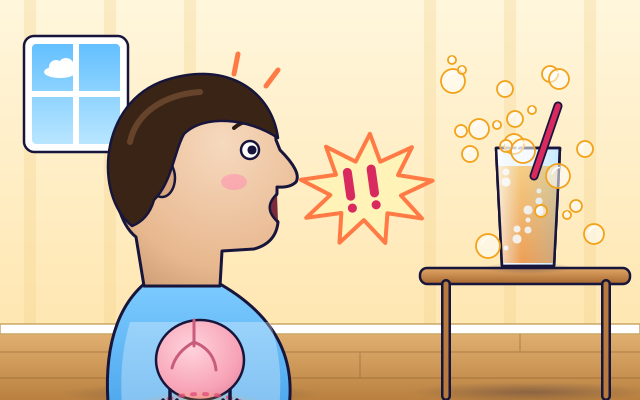
- Mia gulps down a fizzy drink too fast. A moment later: hic! And again: hic! Her shoulders jump each time, and she cannot stop it. What is her body doing?
- Normally you breathe with a dome of muscle under your lungs, called the diaphragm. It pulls down smoothly and air flows in. It relaxes back up and air flows out.
- The bubbles stretch Mia's stomach, which sits just under the diaphragm. Nerves nearby get jumpy and send a signal. Suddenly the diaphragm jerks down hard, and air rushes in.
- A split second later, two folds in your voice box snap shut across the windpipe. The rushing air is stopped all at once. That sudden stop makes the hic sound.
- The reflex keeps repeating: jerk, snap, hic, and a few seconds later the same again. Each hiccup pulls in only a little air, because the folds shut so fast.
- Mia breathes slowly and calmly. Before long the jumpy nerves settle and the hiccups fade away. Most hiccups stop by themselves in a few minutes.
The parts that make a hiccup
This is a side view with the inside parts showing. Tap each one to see its job in a hiccup.
- Diaphragm. The dome of muscle under your lungs that does most of the work of breathing. In a hiccup it jerks down suddenly, all by itself.
- Diaphragm nerve. A long nerve that runs from the neck down to the diaphragm. It carries every order to breathe, and the jumpy order to hiccup.
- Hiccup center. A control spot at the base of the brain. It normally keeps your breathing smooth. When nerves bother it, it sends out hiccup orders too.
- Vocal folds. Two folds in your voice box. They open to let you breathe and come together to let you talk. In a hiccup they snap shut and stop the air.
- Lungs. The stretchy air bags in your chest. When the diaphragm jerks down, they are pulled open and air rushes toward them.
- Stomach. Your stomach sits just under the diaphragm. Eating fast, swallowing air or fizzy drinks can stretch it and set off hiccups.
Hiccup lab: the jerk and the snap
Tap the fizzy drink to start the hiccups. Then switch the vocal folds' snap off. What happens to the sound?
Experiment: What happens if the vocal folds stay open when the diaphragm jerks?
- Tap the fizzy drink and watch a few hiccups. Look at the folds from above.
- Switch off the snap. Watch the air trace and listen.
- Switch the snap back on, then take slow, calm breaths.
What we found: The jerk of the diaphragm only pulls air in. It is the vocal folds, snapping shut across the rushing air, that make the hic. With the folds left open, the air flows in freely and all you get is a quick gasp.
Turn on JavaScript to try it yourself.
Be the vocal folds
You are the vocal folds. Watch the signal travel down the nerve, and snap shut right after each jerk of the diaphragm. Make 5 good hics. For 3 stars, make no mistakes.
Why you hiccup, and why it goes hic
Under your lungs is a wide, dome-shaped muscle called the diaphragm. It is your main breathing muscle. When it pulls down, your lungs stretch and air flows in. When it relaxes, air flows out. A part of your brain keeps this going smoothly all day and all night, without you thinking about it.
A hiccup is a mistake in that smooth rhythm. Something bothers the nerves around the diaphragm. Often it is a stomach stretched by eating too fast, swallowing air or drinking something fizzy, because the stomach sits right underneath. Getting very excited or laughing hard can do it too. The control spot in the brain then fires a jumpy order, and the diaphragm jerks down suddenly.
The jerk pulls air in fast. But a split second later, two folds in your voice box, the vocal folds, snap shut across your windpipe. The rushing air is stopped all at once, and that sudden stop is the hic you hear. It is a little like a door slammed by a gust of wind. The comparison is not perfect: wind slams the door, but your vocal folds are closed by their own muscles.
Hiccups almost always stop by themselves within a few minutes. People have many tricks, such as slow breathing, holding a breath for a few seconds or sipping water. They may help by changing the rhythm of your breathing, but scientists have not proved that any of them works every time. Scientists are not even sure what hiccups are for. Babies hiccup a lot, even before they are born, so one idea is that hiccups help very young babies in some way.
Key words
- Diaphragm
- The dome of muscle under the lungs that does most of the work of breathing.
- Vocal folds
- Two folds in the voice box. They can close the windpipe, and they vibrate when you speak.
- Reflex
- Something your body does automatically, without you deciding to do it.
- Diaphragm nerve
- The long nerve that carries orders from the brain down to the diaphragm.
- Millisecond
- One thousandth of a second. A blink of your eye takes more than a hundred of them.
Check your thinking
-
Which muscle jerks suddenly in a hiccup?
Show the answer
The diaphragm, under the lungs. A hiccup starts with a sudden jerk of the diaphragm, the main breathing muscle.
-
What makes the hic sound?
Show the answer
The vocal folds snapping shut across the rushing air. The sound is the rushing air being stopped all at once by the closing folds.
-
Why can a fizzy drink start the hiccups?
Show the answer
The bubbles stretch the stomach, which sits right under the diaphragm. A puffed-up stomach bothers the nerves around the diaphragm just above it, and they send jumpy signals.
-
In the lab, the vocal folds were kept open during a jerk. What did you get?
Show the answer
A quick gasp of air, with no hic. Without the folds stopping it, the air just flows in freely. The snap is what makes the sound.
-
Why does each hiccup pull only a small volume of air into the lungs?
Show the answer
The glottis closes almost as soon as the air starts to flow. The diaphragm pulls hard, but the vocal folds shut about 35 milliseconds later, so the flow has very little time.
-
What usually happens to a bout of hiccups?
Show the answer
It stops by itself within a few minutes. The irritated nerves settle down, usually within minutes, and normal breathing takes over again.
You're a Human body expert!
You watched, looked inside, tried it, solved the challenge and went deeper. Pick another question below, or switch the age at the top to see this topic another way.
More about human body
 #270
Human body
How do we produce our voices?
Adjust airflow and vocal folds, then shape sounds with mouth and tongue positions.
#270
Human body
How do we produce our voices?
Adjust airflow and vocal folds, then shape sounds with mouth and tongue positions.
 #271
Human body
How does the body signal hunger and fullness?
Follow messages between the digestive system and brain around a model meal.
#271
Human body
How does the body signal hunger and fullness?
Follow messages between the digestive system and brain around a model meal.
 #272
Human body
How does the lymphatic system move fluid?
Trace fluid through lymph vessels and valves and back into blood circulation.
#272
Human body
How does the lymphatic system move fluid?
Trace fluid through lymph vessels and valves and back into blood circulation.
 #273
Human body
How do cells release energy from food?
Follow a simplified cellular-respiration pathway and connect energy release to cell activities.
#273
Human body
How do cells release energy from food?
Follow a simplified cellular-respiration pathway and connect energy release to cell activities.
Keep exploring
Games to play next
- Body ExplorerTap, match and label your way around the amazing human body.
- Label LabPut the right labels on beautiful science diagrams, from bean plants to heart chambers.
- Science QuizzesOlly's Science Quiz Show: plants, animals, the body, weather, space and more, for every grade.
Guide for grown-ups
- How to start homeschooling: a step-by-step guide for familiesA guide for parents · 7 min read
Science games by grade
Science worksheets by grade
- Preschool Science Worksheets
- Pre-K Science Worksheets
- Kindergarten Science Worksheets
- 1st Grade Science Worksheets
- 2nd Grade Science Worksheets
- 3rd Grade Science Worksheets
- 4th Grade Science Worksheets
- 5th Grade Science Worksheets
- 6th Grade Science Worksheets
- 7th Grade Science Worksheets
- 8th Grade Science Worksheets