How do we produce our voices?
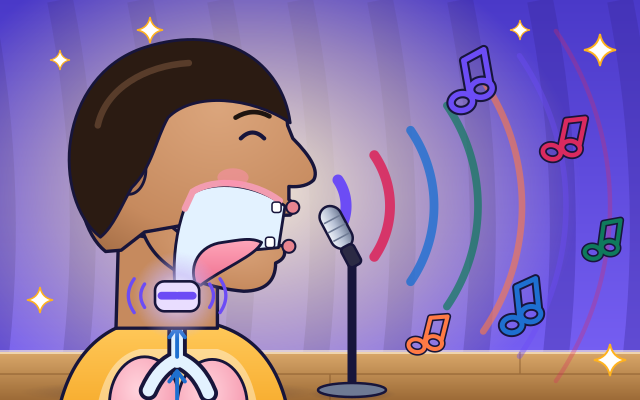
Your voice needs three things: air from the lungs, a buzz from the vocal folds, and a shape from your throat, tongue and lips.
The big idea: Air blowing between the vocal folds makes them vibrate. Tight folds give a high note and loose folds a low one. Then the tongue and lips shape the buzz into eee, aah, ooo and every other sound.
It's like a guitar: air is the finger that plucks, the vocal folds are the strings that set the note, and your mouth is the hollow body that shapes the sound.
The interactive parts didn't load. The explanations below still work; try reloading the page.
Air, buzz and shape
- Maya sings into a microphone, and her voice fills the room. A voice needs three things working together: air, a buzz and a shape. Let's look inside.
- First, the power. The lungs push air up the windpipe. When you just breathe out, the air slips through silently. No push of air, no voice.
- Next, the buzz. In the voice box are two small folds. To speak, they come together. The air pushes them apart, they spring back, and this happens again and again, hundreds of times each second.
- Small muscles can stretch the folds. Stretched tight and thin, they vibrate faster, and the note is higher. Loose and thick, they vibrate more slowly, and the note is lower. More air makes it louder.
- The buzz is not a word yet. It travels through your throat and mouth, and their shape changes its sound. Tongue high and forward: eee. Jaw open: aah. Lips round, tongue back: ooo.
- Children have short vocal folds, so their voices are high. Grown-ups have longer, thicker folds, so their voices are lower. The size and shape of your throat, mouth and nose make your voice sound like you.
The parts that make your voice
This head and chest are cut open down the middle so you can see inside. Tap each part to see what it does for your voice.
- Lungs. The power for your voice. They push air up the windpipe, and a harder push makes a louder sound.
- Windpipe. The tube that carries air from the lungs up to the voice box.
- Vocal folds. Two small folds inside the voice box. When they come together and air blows through, they vibrate. That buzz is the start of your voice.
- Throat. The space above the voice box. The buzz travels up through it, and its shape helps color the sound.
- Tongue. The busiest shaper of all. Moving it up, down, forward or back changes the space in your mouth, and that changes the vowel.
- Lips. Lips can spread, round or close. Rounding them makes ooo. Closing and popping them makes sounds such as p, b and m.
- Nose. For sounds like m and n, the air and the sound go out through the nose. Pinch your nose and try to hum!
Voice lab: air, buzz and shape
Change the breath, stretch the folds and pick a vowel, or drag the tongue yourself. Watch the folds, the wave and the mouth. Press Hear it to listen.
Experiment: What changes when you stretch the vocal folds tighter but keep the mouth the same?
- Choose Aah. Slide the fold stretch from loose to tight. Watch the folds and the wave.
- Keep the stretch the same and try each vowel. Watch the tongue.
- Move the folds apart to whisper. Then make the breath very gentle.
What we found: The folds set the note and the mouth sets the vowel. Tighter folds vibrate faster and sound higher, but aah stays aah. Moving the tongue and lips changes the vowel without changing the note. With the folds apart there is no buzz, only a whisper, and with too little air there is no sound at all.
Turn on JavaScript to try it yourself.
A sound for every listener
Each listener asks for a sound: a vowel, a pitch, and loud, soft or whispered. Set the voice machine, then sing it. For 3 stars, get every one right the first time.
How air becomes words
Your voice starts with air. When you speak or sing, your lungs push air up the windpipe. At the top of the windpipe is the voice box, a small hollow box you can feel in the front of your neck. Inside it are two soft folds, the vocal folds.
When you breathe, the folds stay apart and the air passes silently. To make a sound, you bring them together. The air pushes them open, they spring shut, the air pushes again, and so on, hundreds of times every second. Each opening lets out a tiny puff of air, and all those puffs make a buzz. Put your fingers on your throat and hum, and you can feel it.
Small muscles change the folds. Stretch them tight and thin, and they vibrate faster, so the note goes up. Let them go loose and thick, and the note goes down. A guitar string does the same when you tighten it. Push more air, and the folds swing wider and the sound gets louder. Children have short folds, so their voices are high. As people grow, the folds get longer and thicker, and voices get lower.
A buzz is not speech yet. On its way out, the sound passes through your throat and mouth, and their shape changes it. A high, forward tongue makes eee. An open jaw makes aah. Round lips with the tongue pulled back make ooo. Lips, teeth and tongue also stop and release the air to make sounds such as p, t and k. Our guitar comparison is not perfect: a guitar's body keeps one shape, but you reshape your mouth many times every second as you talk.
Key words
- Vocal folds
- Two small folds in the voice box that vibrate when air blows between them.
- Voice box
- The hollow box at the top of the windpipe that holds the vocal folds.
- Pitch
- How high or low a sound is. Faster vibrations make a higher pitch.
- Hertz
- A unit for counting vibrations: one hertz is one vibration each second.
- Resonance
- When a space, such as your mouth, makes some sounds ring louder than others.
- Vowel
- A speech sound made with the mouth open, such as eee, aah or ooo.
Check your thinking
-
Where does the sound of your voice start?
Show the answer
At the vocal folds, which vibrate as air blows through them. The lungs only supply air. The sound begins where that air sets the vocal folds vibrating.
-
How do you sing a higher note?
Show the answer
Stretch the vocal folds tighter, so they vibrate faster. Tighter, thinner folds vibrate faster, and faster vibrations sound higher, just like a tightened guitar string.
-
Why do grown-ups usually have lower voices than children?
Show the answer
Their vocal folds are longer and thicker, so they vibrate more slowly. Bigger folds are like thicker, longer strings: they move more slowly, so the note is lower.
-
You say aah, then eee, on the same note. What did you change?
Show the answer
The shape of your mouth: the tongue moved up and forward. The note comes from the folds. The vowel comes from the shape of your mouth.
-
What is different about a whisper?
Show the answer
The folds stay apart, so there is no buzz, only rushing air. In a whisper the air hisses between folds that are held apart. Your mouth still shapes that hiss into words.
-
In our model, raising the tongue from low to high moves resonance 1 from 950 Hz down to 300 Hz. Which change of vowel is that?
Show the answer
From aah toward eee or ooo. A low tongue and open jaw give the high first resonance of aah. A high tongue gives the low first resonance shared by eee and ooo.
You're a Human body expert!
You watched, looked inside, tried it, solved the challenge and went deeper. Pick another question below, or switch the age at the top to see this topic another way.
More about human body
 #271
Human body
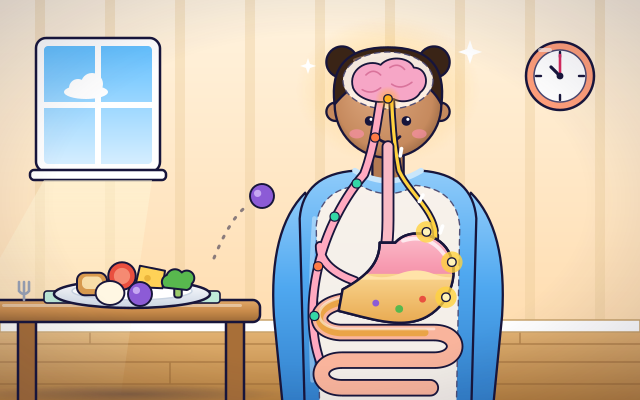
How does the body signal hunger and fullness?
Follow messages between the digestive system and brain around a model meal.
#271
Human body
How does the body signal hunger and fullness?
Follow messages between the digestive system and brain around a model meal.
 #272
Human body
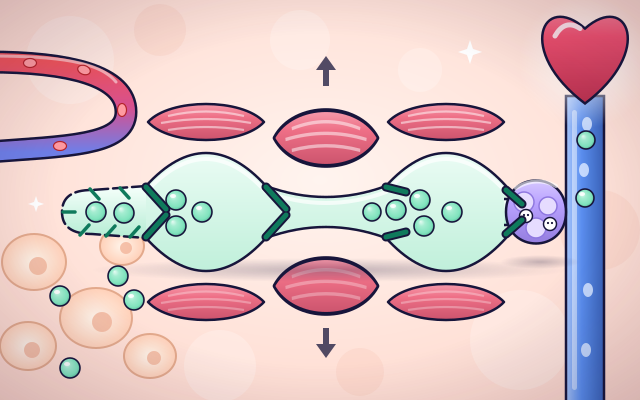
How does the lymphatic system move fluid?
Trace fluid through lymph vessels and valves and back into blood circulation.
#272
Human body
How does the lymphatic system move fluid?
Trace fluid through lymph vessels and valves and back into blood circulation.
 #273
Human body
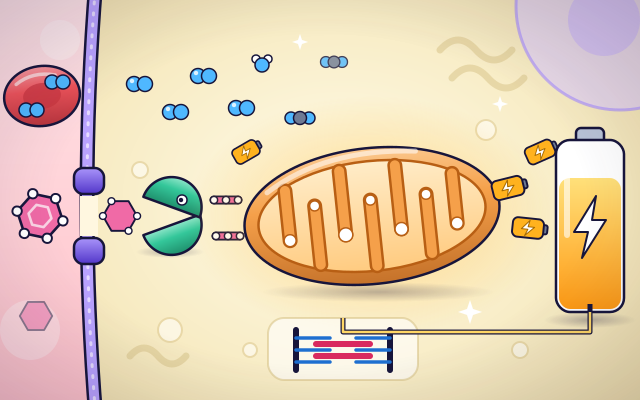
How do cells release energy from food?
Follow a simplified cellular-respiration pathway and connect energy release to cell activities.
#273
Human body
How do cells release energy from food?
Follow a simplified cellular-respiration pathway and connect energy release to cell activities.
 #274
Human body
How do cells build proteins?
Follow a message from DNA to a ribosome and assemble an amino-acid chain.
#274
Human body
How do cells build proteins?
Follow a message from DNA to a ribosome and assemble an amino-acid chain.
Keep exploring
Games to play next
- Body ExplorerTap, match and label your way around the amazing human body.
- Label LabPut the right labels on beautiful science diagrams, from bean plants to heart chambers.
- Science QuizzesOlly's Science Quiz Show: plants, animals, the body, weather, space and more, for every grade.
Guide for grown-ups
- How to start homeschooling: a step-by-step guide for familiesA guide for parents · 7 min read
Science games by grade
Science worksheets by grade
- Preschool Science Worksheets
- Pre-K Science Worksheets
- Kindergarten Science Worksheets
- 1st Grade Science Worksheets
- 2nd Grade Science Worksheets
- 3rd Grade Science Worksheets
- 4th Grade Science Worksheets
- 5th Grade Science Worksheets
- 6th Grade Science Worksheets
- 7th Grade Science Worksheets
- 8th Grade Science Worksheets