How do hormones guide growth?
Glands send chemical messages called hormones through your blood. Some of them tell your bones and muscles when to grow.
The big idea: Hormones are chemical messages. A gland releases them into the blood, they travel everywhere, and only the cells with the matching lock respond. Growth hormone tells bones to lengthen.
It's like keys floating down a river past many doors: every door meets every key, but a door only opens for the key that fits its lock.
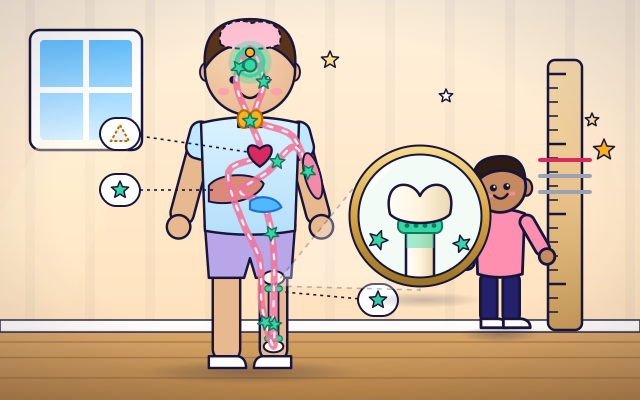
The interactive parts didn't load. The explanations below still work; try reloading the page.
How your body knows when to grow
- Every year Ana's mark on the wall is a little higher. Nobody tells her legs to get longer, and she cannot feel it happening. So what gives her body the order to grow?
- Just under the brain hangs a gland the size of a pea, called the pituitary. When the brain gives the word, it releases a chemical message called growth hormone into the blood.
- The message has no wires to follow. It simply rides along in the blood, and within about a minute the heart has pumped it to every part of the body, from head to toes.
- The message passes every cell, but only some have the matching lock on their surface. When the key fits, the cell gets to work. Cells without that lock do nothing at all.
- Near each end of a long bone is a soft band called a growth plate. When the growth message arrives, the cells there multiply. The new layers harden into bone, and the bone gets longer.
- Growth hormone works best with good sleep, healthy food and active play. Friends of the same age can be very different heights, and some grow early and others late. All of that is normal.
Glands, blood and growing places
Tap each part of this body map. The round windows zoom in on the tiny parts.
- Control center. A small part of the brain called the hypothalamus keeps watch over the body. It decides when more growth message is needed and tells the pituitary gland just below it.
- Pituitary gland. The pituitary is a gland the size of a pea, hanging under the brain. It makes growth hormone and several other messages that tell other glands what to do.
- Bloodstream. Hormones travel in the blood. The heart pumps them to every part of the body, so one small gland can talk to all your bones at once.
- Thyroid gland. The thyroid is a butterfly-shaped gland in the front of your neck. Its message tells cells how fast to use energy. Bones and the brain need it to grow and develop properly.
- Liver. When the growth message reaches the liver, the liver sends out a second message that carries the order on to the bones. Two messages work better than one.
- Growth plate. A growth plate is a band of soft, rubbery cartilage near the end of a long bone. Its cells multiply and are slowly replaced by hard bone, so the bone grows longer from its ends.
- Lock on a cell. Each cell has locks on its surface. A hormone is a key. The cell responds only when a key fits one of its locks. That is how a message in the blood reaches the right cells.
Send messages around the body
Tap a gland to release its message into the blood. Watch which parts of the body have the matching lock. Then let a year go by and see Ana grow.
Experiment: The growth message travels in the blood to every part of the body. Which parts respond to it?
- Tap the pituitary gland in the head and follow the star keys.
- Which parts light up? Which ones let the keys float past?
- Now tap the thyroid gland in the neck and compare.
What we found: The star keys floated past every part, but only the muscle, the liver and the bone had star-shaped locks, so only they responded. The triangle keys fitted locks almost everywhere. A hormone goes everywhere, but it only works where the lock matches.
Turn on JavaScript to try it yourself.
Message dispatcher
Five parts of the body call for help, one after another. Read what each one needs and send the message from the right gland.
Hormones: messages in your blood
Your body has two ways of sending messages. Nerves are like wires and send fast signals to one place. Hormones are chemical messages that travel in your blood. They are slower, but they can reach every part of your body at once and their effects last much longer.
Hormones are made by glands. The pituitary gland, under your brain, is the size of a pea. One of its messages is growth hormone. It rides in the blood to your liver, your muscles and your bones. Near the ends of your long bones are growth plates, bands of soft cartilage. The message makes their cells multiply, and the new layers harden into bone. That is how you get taller.
A hormone only works on cells with the right lock. That is why growth hormone makes a bone longer but does nothing to a tooth. Other hormones help too. Thyroid hormone, from a gland in your neck, sets how fast your cells work. Insulin helps cells take in sugar for fuel and for building.
Most growth hormone is released while you are in deep sleep, so sleep really does help you grow. How tall you become, and when you grow fastest, depends mostly on the family you come from. Friends of the same age can be very different heights and both be perfectly healthy. The river and keys comparison is not perfect: real keys are not used up, but hormones are broken down after a while, so glands must keep making more.
Key words
- Hormone
- A chemical message that a gland sends through the blood.
- Gland
- A part of the body that makes and releases a substance, such as a hormone.
- Pituitary gland
- A pea-sized gland under the brain that makes growth hormone.
- Receptor
- The lock on a cell that one kind of hormone fits.
- Growth plate
- The soft band near the end of a bone where it grows longer.
Check your thinking
-
How does a hormone get from a gland to the rest of the body?
Show the answer
It travels in the blood. Glands release hormones into the blood, and the heart pumps them all around the body.
-
Two healthy children of the same age are different heights. What is the best explanation?
Show the answer
People grow at different speeds and times, and that is normal. Height and the timing of growth vary a lot between healthy people, mostly because of what they inherit from their families.
-
Growth hormone reaches your teeth as well as your leg bones. Why do only the leg bones get longer?
Show the answer
Only the growth plates in the bones have the matching lock and can make new bone. A hormone is a key. It only works on cells with the right lock.
-
Why is a good night's sleep important for growing?
Show the answer
Most growth hormone is released during deep sleep. The pituitary sends out its biggest bursts of growth message while you are deeply asleep.
-
An adult's pituitary still releases growth hormone. Why does the adult not grow taller?
Show the answer
The growth plates have turned to bone, so the bones cannot lengthen. Once the growth plates have closed there is no cartilage left to lengthen the bone. Growth hormone goes on doing other jobs, such as helping to maintain muscle and bone.
-
The level of a hormone in the blood rises above normal. What does feedback do?
Show the answer
It turns down the signal that tells the gland to release it. This is negative feedback: a rise in the hormone, or in its effect, reduces the signal for its own release, which keeps the level steady.
You're a Human body expert!
You watched, looked inside, tried it, solved the challenge and went deeper. Pick another question below, or switch the age at the top to see this topic another way.
More about human body
 #260
Human body
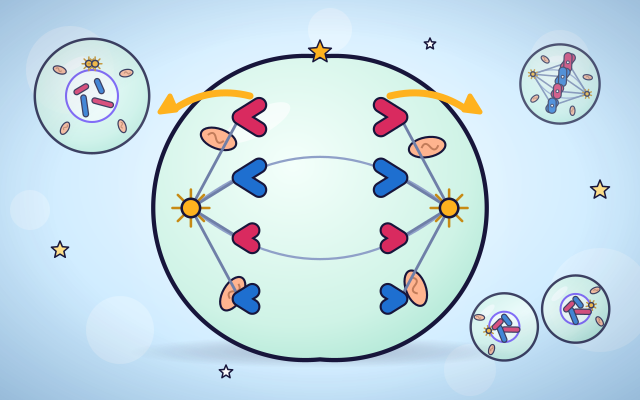
How do body cells make copies of themselves?
Arrange division stages and follow chromosomes as one model cell becomes two.
#260
Human body
How do body cells make copies of themselves?
Arrange division stages and follow chromosomes as one model cell becomes two.
 #261
Human body
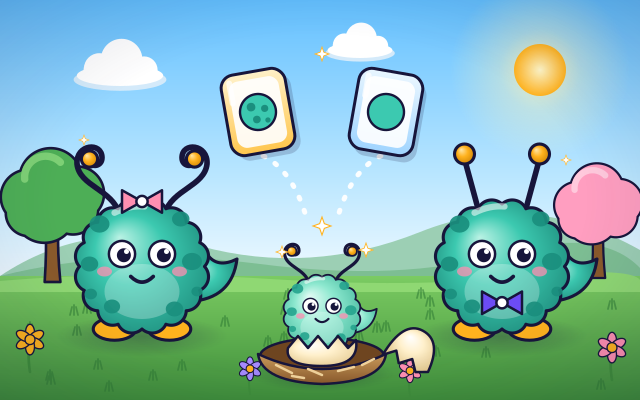
How do inherited traits pass through families?
Combine fictional gene versions and compare outcomes using a clearly simplified inheritance model.
#261
Human body
How do inherited traits pass through families?
Combine fictional gene versions and compare outcomes using a clearly simplified inheritance model.
 #262
Human body
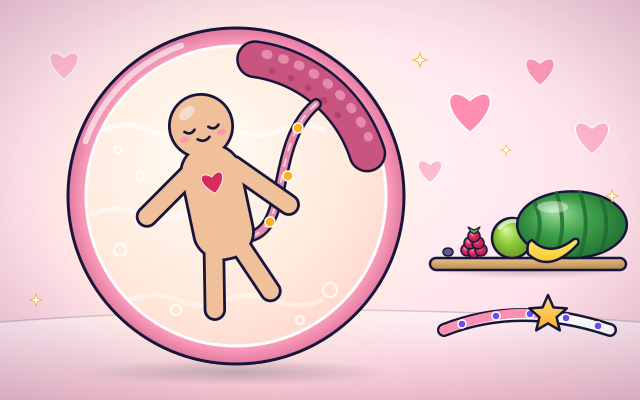
How does a baby develop before birth?
Follow a gentle developmental timeline exploring growth, the placenta, and changing proportions.
#262
Human body
How does a baby develop before birth?
Follow a gentle developmental timeline exploring growth, the placenta, and changing proportions.
 #263
Human body
How do adult teeth replace baby teeth?
Reveal changes above and below the gums through a dental-development timeline.
#263
Human body
How do adult teeth replace baby teeth?
Reveal changes above and below the gums through a dental-development timeline.
Keep exploring
Games to play next
- Body ExplorerTap, match and label your way around the amazing human body.
- Label LabPut the right labels on beautiful science diagrams, from bean plants to heart chambers.
- Science QuizzesOlly's Science Quiz Show: plants, animals, the body, weather, space and more, for every grade.
Guide for grown-ups
- How to start homeschooling: a step-by-step guide for familiesA guide for parents · 7 min read
Science games by grade
Science worksheets by grade
- Preschool Science Worksheets
- Pre-K Science Worksheets
- Kindergarten Science Worksheets
- 1st Grade Science Worksheets
- 2nd Grade Science Worksheets
- 3rd Grade Science Worksheets
- 4th Grade Science Worksheets
- 5th Grade Science Worksheets
- 6th Grade Science Worksheets
- 7th Grade Science Worksheets
- 8th Grade Science Worksheets