How does hand sanitizer affect microbes?
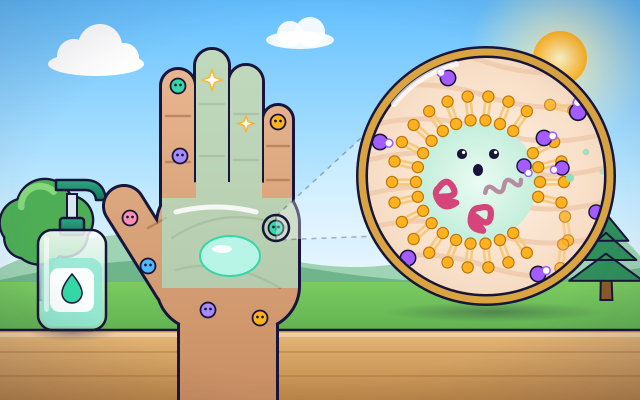
Hand gel is mostly alcohol. See how alcohol loosens a microbe's fatty skin and unfolds its tiny working parts.
The big idea: A microbe is held together by a thin, fatty skin, with shaped proteins working inside. Alcohol loosens the skin and unfolds the proteins, but only where the gel touches and while it is wet.
It's like a water balloon full of tiny machines: loosen the balloon's skin and everything leaks out. Alcohol loosens a microbe's fatty skin in the same way.
The interactive parts didn't load. The explanations below still work; try reloading the page.
Alcohol meets a microbe
- After playing in the park, hands carry microbes: living things far too small to see. Washing with soap and water is the usual way to clean hands, but there is no sink here. A grown-up brings out hand gel.
- The lens shows one microbe, drawn as a friendly model. Real ones are so small that thousands fit on the dot of an i. Most microbes do us no harm, and many are helpful.
- A microbe is wrapped in a membrane: a very thin skin made of fatty molecules. Inside are proteins, tiny parts folded into exact shapes. Each shape does a job that keeps the microbe alive.
- The gel is mostly alcohol. Alcohol molecules mix with fat, so they push in between the fatty molecules of the membrane. The thin skin loosens, gaps open and the inside starts to leak out.
- Alcohol also gets at the proteins. They unfold, like a paper airplane smoothed back into a flat sheet, and a protein without its shape cannot do its job. The microbe falls apart.
- The gel only works where it touches, so rub it over every part of both hands until they are dry. It does not remove dirt, and it cannot open every kind of microbe. That is why soap and water are the usual way.
Look closely at gel and microbes
Tap each part: on the hand, at the bottle and inside the lens.
- Alcohol. Alcohol molecules are small and mix with both water and fat. They push into the fatty membrane and loosen it.
- Membrane. The membrane is a thin, fatty skin that holds the microbe together and keeps its insides in.
- Proteins. Proteins are the microbe's working parts. Each is folded into an exact shape, and the shape is what lets it do its job.
- The gel. Hand gel is alcohol mixed with water and a thickener, so it stays on your hands long enough to be rubbed in. It is only for hands, and a grown-up helps young children use it.
- Model microbes. Microbes are living things too small to see. They are on everything, including skin. Most are harmless and many are helpful.
- Tough-coated microbe. Some microbes have tough outer coats that alcohol cannot open. Washing with soap and water rinses them off the skin instead.
- Dirt. Dirt and grease shield the microbes underneath, and gel does not remove dirt. Hands that look dirty need soap and water.
- Rubbing. Rubbing spreads the gel to every part of the hand. It needs to stay wet for about 20 seconds, so use enough and keep rubbing until it is dry.
Plain gel or alcohol gel?
Squirt gel, then rub every part of the hand: tap a part, or drag the other hand over it. The lens shows what happens to a model microbe.
Experiment: What happens to the model microbes with plain gel, and with alcohol gel?
- Choose plain gel. Squirt, rub all over and watch the lens.
- Start over. Choose alcohol gel, squirt and rub all over.
- Compare what the lens showed each time.
What we found: Plain gel does nothing to the model microbes: it is the alcohol that matters. Alcohol molecules push the fatty membrane apart and unfold the proteins inside, so the microbe falls apart. It only happens where the gel reaches.
Turn on JavaScript to try it yourself.
Beat the drying gel
Reach every model microbe before the gel dries. Choose how much gel to use, squirt, then rub every part of the hand.
What alcohol does to a microbe
Microbes are living things too small to see, and they are everywhere: in soil, in water, on tables and on skin. Most do us no harm, and many are useful. Each bacterium is a single tiny cell, wrapped in a membrane that is thinner than anything you can imagine.
That membrane is made of fatty molecules lined up side by side. Inside the cell are proteins, which are the working parts. Every protein is folded into an exact shape, and the shape is what lets it do its job. Alcohol attacks both. Its molecules mix with fat, so they push in between the fatty molecules and loosen the membrane until it leaks. Alcohol also makes proteins unfold, and an unfolded protein cannot work.
This only happens where the gel touches, and only while it is wet. That is why the instructions say to use enough gel, rub it over every part of both hands and keep going until they are dry. Thumbs, fingertips and the gaps between fingers are the parts people miss most.
Hand gel has limits. It does not remove dirt, and dirt shields the microbes under it. Some microbes have tough coats that alcohol cannot open. Washing with soap and water lifts dirt and microbes off the skin and rinses them down the drain, so washing is the usual way to clean hands. Gel is for times when there is no sink. It is only for hands, and a grown-up helps young children use it. Our picture is a simplified model.
Key words
- Microbe
- A living thing too small to see without a microscope, such as a bacterium. Most are harmless.
- Membrane
- The very thin, fatty skin around a cell that holds it together.
- Protein
- A tiny working part of a living thing. Its folded shape lets it do its job.
- Denature
- To make a protein lose its folded shape, so that it stops working.
- Evaporate
- To change from a liquid into a gas. Alcohol evaporates quickly, which is why the gel dries on your hands.
- Lipid
- A fatty molecule. Cell membranes are built from lipids.
Check your thinking
-
What does alcohol do to a microbe?
Show the answer
It loosens the fatty membrane and unfolds the proteins. Alcohol pushes between the fatty molecules of the membrane and makes the proteins lose their shape.
-
Your hands are muddy. Why is hand gel a poor choice?
Show the answer
Gel does not remove dirt, and dirt shields the microbes under it. The gel cannot reach through mud, and it does not take the mud away. Muddy hands need soap and water.
-
Why does a protein stop working when alcohol unfolds it?
Show the answer
Its job depends on its exact shape. A protein is like a key: it only works with the right shape. Unfolded, it cannot do its job.
-
Why should gel be rubbed over every part of the hands until it is dry?
Show the answer
It acts only where it touches, and only while it is wet. Alcohol needs to reach a microbe and stay in contact with it for a while. Parts that are missed, or that dry too soon, are not affected.
-
In the model, why does 100% alcohol open fewer microbes than a 70% gel?
Show the answer
It evaporates faster, and proteins unfold poorly without some water. Water helps alcohol denature proteins, and it slows evaporation, giving the alcohol more contact time.
-
Who helps young children use hand gel?
Show the answer
A grown-up. Gel is only for hands. It must never go in mouths or eyes, so a grown-up helps and watches.
You're a Everyday chemistry & materials expert!
You watched, looked inside, tried it, solved the challenge and went deeper. Pick another question below, or switch the age at the top to see this topic another way.
More about everyday chemistry & materials
 #404
Everyday chemistry & materials
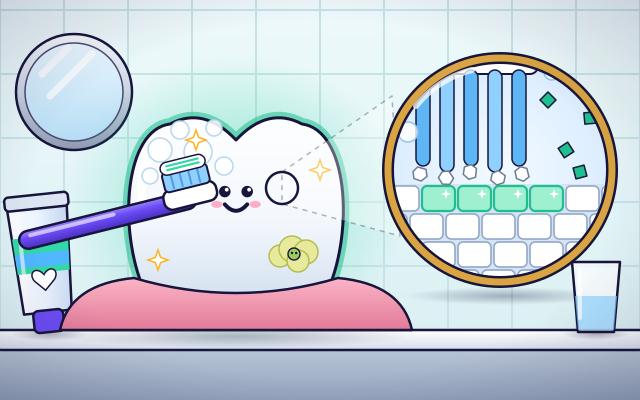
How does toothpaste clean and protect teeth?
Explore cleaning ingredients and fluoride interacting with a model tooth surface.
#404
Everyday chemistry & materials
How does toothpaste clean and protect teeth?
Explore cleaning ingredients and fluoride interacting with a model tooth surface.
 #405
Everyday chemistry & materials
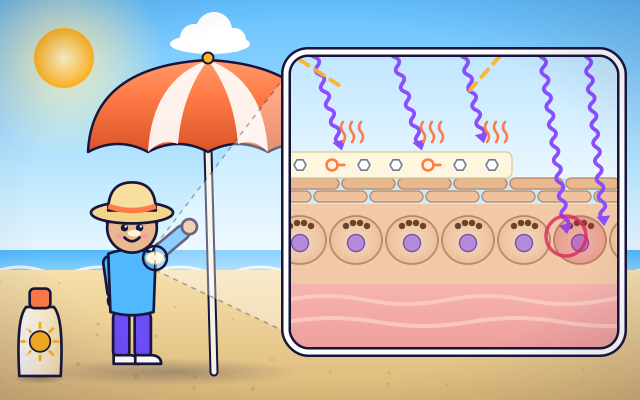
How does sunscreen protect skin?
Follow ultraviolet light interacting with sunscreen ingredients in a simplified skin model.
#405
Everyday chemistry & materials
How does sunscreen protect skin?
Follow ultraviolet light interacting with sunscreen ingredients in a simplified skin model.
 #406
Everyday chemistry & materials
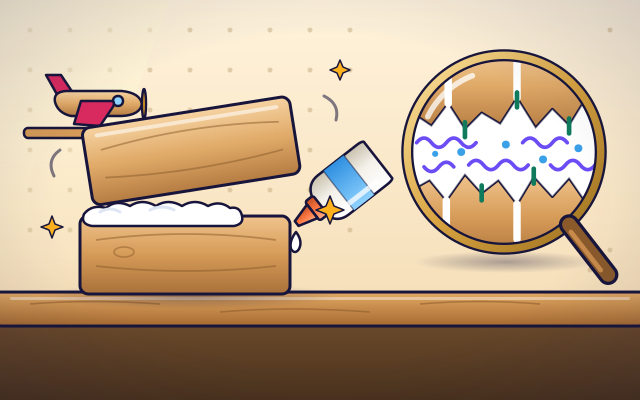
How does glue hold surfaces together?
Compare adhesives, surface contact, and curing while joining virtual materials.
#406
Everyday chemistry & materials
How does glue hold surfaces together?
Compare adhesives, surface contact, and curing while joining virtual materials.
 #407
Everyday chemistry & materials
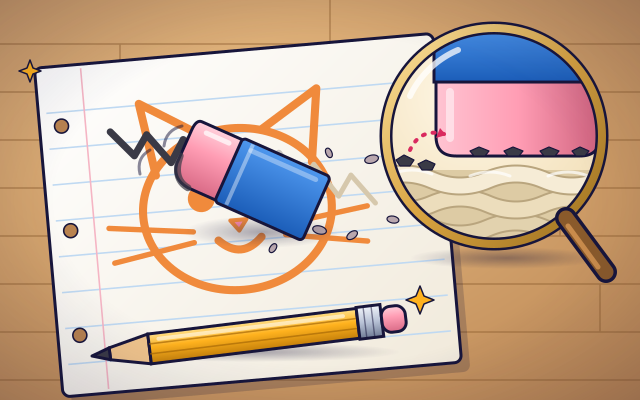
How do erasers remove pencil marks?
Zoom into paper fibers and follow graphite transferring from paper to an eraser.
#407
Everyday chemistry & materials
How do erasers remove pencil marks?
Zoom into paper fibers and follow graphite transferring from paper to an eraser.
Keep exploring
Games to play next
- Weather LabPredict the weather in a box, then run a fair test to find out why.
- Science QuizzesOlly's Science Quiz Show: plants, animals, the body, weather, space and more, for every grade.
- Ratio KitchenScale recipes, fill ratio tables and find the better buy.
Guide for grown-ups
- How to start homeschooling: a step-by-step guide for familiesA guide for parents · 7 min read
Science games by grade
Science worksheets by grade
- Preschool Science Worksheets
- Pre-K Science Worksheets
- Kindergarten Science Worksheets
- 1st Grade Science Worksheets
- 2nd Grade Science Worksheets
- 3rd Grade Science Worksheets
- 4th Grade Science Worksheets
- 5th Grade Science Worksheets
- 6th Grade Science Worksheets
- 7th Grade Science Worksheets
- 8th Grade Science Worksheets