How does toothpaste clean and protect teeth?
Tiny scrubbers, foam and fluoride: see what each part of toothpaste does on a model tooth.
The big idea: Toothpaste does two jobs. Tiny scrubbers and foam clean plaque off the teeth, and fluoride settles into the enamel and makes it harder for acid to damage.
It's like a kitchen sponge with scouring powder and dish soap, plus a coat of varnish: grit scrubs, foam carries dirt away, and fluoride leaves the surface tougher.

The interactive parts didn't load. The explanations below still work; try reloading the page.
What toothpaste does
- This model tooth is covered in plaque, a sticky film of germs. A pea-sized blob of toothpaste goes on the brush. What is in that paste, and what does each part do?
- Zoom in on the paste. It holds tiny scrubbing particles, a soap-like foam maker and fluoride, all mixed into a smooth, moist gel with a minty flavor.
- As you brush, the bristles push the tiny scrubbers across the tooth. They are harder than plaque, so they scrape it off, but softer than enamel, so the tooth is not scratched.
- The foam maker works like soap. It loosens the scraped-off bits, and the bubbles spread the paste around every tooth. When you spit, the foam carries the plaque away.
- Enamel is built from tiny mineral crystals. Acid can pull bits of mineral out. Fluoride helps new mineral settle back into those places, and the new mineral is tougher than before.
- After a sweet snack, plaque germs make acid. Enamel toughened by fluoride loses less mineral. That is why people brush twice a day, and spit out the foam instead of swallowing it.
Look inside toothpaste
The lens shows what is mixed into the paste. Tap each ingredient, then the tooth, the plaque and the brush.
- Tiny scrubbers (abrasive). Very small, hard particles. The bristles push them across the tooth, and they scrape plaque and stains off without scratching the enamel.
- Foam maker. A soap-like ingredient that makes foam. It loosens the scraped-off bits and helps the paste spread around all your teeth.
- Fluoride. Fluoride helps minerals settle back into enamel after acid has pulled some out, and the repaired enamel stands up to acid better.
- Moist gel. Water plus ingredients that hold on to water. They keep the paste soft and smooth, so it squeezes out of the tube and does not dry into a lump.
- Flavor. Mint or fruit flavor makes brushing pleasant. Toothpaste is sweetened without sugar, because sugar would feed the plaque germs.
- Enamel. Enamel is the hard outer layer of a tooth. It is built from tightly packed mineral crystals and is the hardest thing in your body.
- Plaque. A sticky film of germs that grows on teeth every day. When the germs get sugar, they make acid that attacks enamel.
- Bristles. The bristles do the moving. They sweep plaque away and carry the paste's scrubbers over every surface of the tooth.
What does each ingredient do?
Squeeze, brush, then run the acid test. Switch ingredients off one at a time to find out what each one is for.
Experiment: What difference does fluoride make when acid attacks the tooth after a sweet snack?
- With every ingredient switched on, squeeze, brush and press the acid test.
- Switch fluoride off. Squeeze again (you get a fresh tooth), brush and test.
- Compare the mineral lost in the two tests.
What we found: Brushing with or without fluoride cleans the tooth just as well, because the scrubbers and foam do the cleaning. The difference shows in the acid test: enamel that took up fluoride loses much less mineral.
Turn on JavaScript to try it yourself.
Mix a toothpaste
Choose what goes into the paste. It must remove all the plaque and keep the mineral loss in the acid test to 2% or less.
The two jobs of toothpaste
A sticky film called plaque grows on your teeth all day. It is full of germs. When you eat something sweet, the germs turn the sugar into acid, and the acid pulls tiny bits of mineral out of the enamel, the hard coat of your teeth.
Toothpaste has two jobs. The first is cleaning. It contains very small, hard particles that work as scrubbers. The bristles push them across the tooth, and they scrape the plaque off. They are softer than enamel, so they do not scratch it. A soap-like foam maker loosens the bits and carries them away when you spit.
The second job is protecting. Toothpaste contains fluoride. After acid has pulled mineral out of the enamel, saliva slowly puts mineral back. Fluoride helps that repair along, and the repaired enamel is tougher: the next time acid comes, it loses less.
The rest of the paste makes it nice to use. Water and moisture-holding ingredients keep it smooth, and flavor makes it taste good. It is sweetened without sugar, because sugar would feed the plaque germs. A pea-sized blob is enough. Spit the foam out when you finish, and young children brush with a grown-up's help. Our model tooth is a simplified picture of what really happens.
Key words
- Plaque
- A sticky film of germs that grows on teeth. The germs make acid from sugar.
- Enamel
- The hard, shiny outer coat of a tooth, made of mineral crystals.
- Abrasive
- A material made of fine, hard particles that scrubs or polishes a surface.
- Surfactant
- A soap-like ingredient that makes foam and helps lift dirt.
- Fluoride
- An ingredient that helps enamel repair itself and makes it tougher against acid.
- Remineralization
- Minerals from saliva settling back into enamel after acid has dissolved some of it.
Check your thinking
-
Which part of toothpaste scrapes the plaque off?
Show the answer
The tiny scrubbers (the abrasive). The abrasive particles do the scraping when the bristles push them across the tooth.
-
What is fluoride in toothpaste for?
Show the answer
It helps enamel repair itself and stand up to acid. Fluoride helps mineral settle back into enamel, and the repaired enamel loses less in the next acid attack.
-
Why is toothpaste never sweetened with sugar?
Show the answer
Plaque germs turn sugar into acid. Sugar is food for the germs in plaque, and they turn it into acid that attacks enamel.
-
You brush with a paste that has scrubbers and foam but no fluoride. What happens?
Show the answer
The tooth gets clean, but it is less protected from acid. Scrubbers and foam do the cleaning. Fluoride does the protecting.
-
In the model, why does a big rinse straight after brushing lead to more mineral loss later?
Show the answer
It washes away fluoride before the enamel has taken it up. Fluoride works at the tooth surface, so it helps more the longer it stays there.
-
How much toothpaste is enough?
Show the answer
A blob the size of a pea. A pea-sized blob has all the scrubbers and fluoride you need. Spit the foam out and do not swallow it.
You're a Everyday chemistry & materials expert!
You watched, looked inside, tried it, solved the challenge and went deeper. Pick another question below, or switch the age at the top to see this topic another way.
More about everyday chemistry & materials
 #405
Everyday chemistry & materials
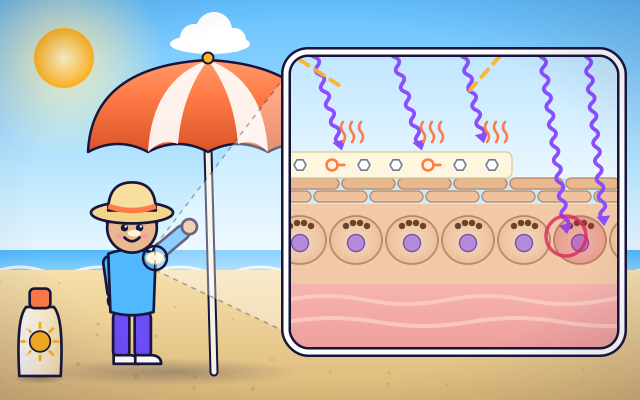
How does sunscreen protect skin?
Follow ultraviolet light interacting with sunscreen ingredients in a simplified skin model.
#405
Everyday chemistry & materials
How does sunscreen protect skin?
Follow ultraviolet light interacting with sunscreen ingredients in a simplified skin model.
 #406
Everyday chemistry & materials
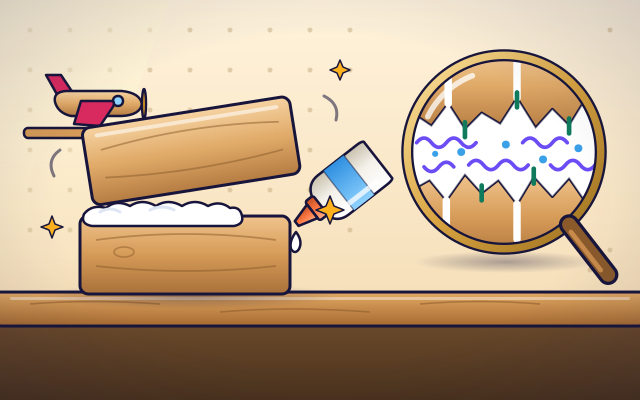
How does glue hold surfaces together?
Compare adhesives, surface contact, and curing while joining virtual materials.
#406
Everyday chemistry & materials
How does glue hold surfaces together?
Compare adhesives, surface contact, and curing while joining virtual materials.
 #407
Everyday chemistry & materials
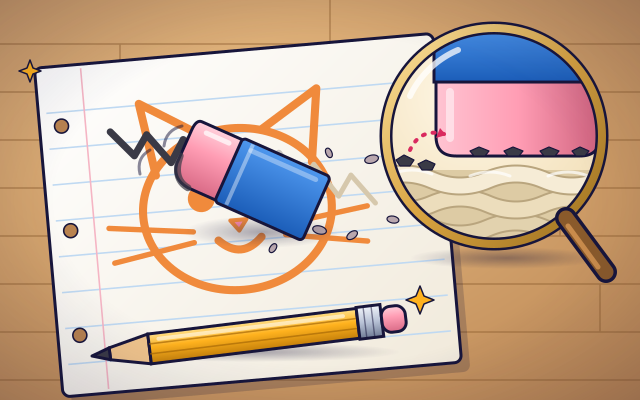
How do erasers remove pencil marks?
Zoom into paper fibers and follow graphite transferring from paper to an eraser.
#407
Everyday chemistry & materials
How do erasers remove pencil marks?
Zoom into paper fibers and follow graphite transferring from paper to an eraser.
 #408
Everyday chemistry & materials
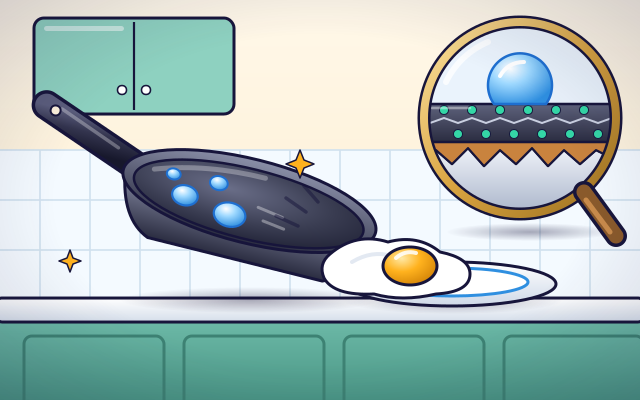
How do nonstick pans resist sticking?
Explore a coated surface and compare its interaction with food and droplets.
#408
Everyday chemistry & materials
How do nonstick pans resist sticking?
Explore a coated surface and compare its interaction with food and droplets.
Keep exploring
Games to play next
- Weather LabPredict the weather in a box, then run a fair test to find out why.
- Science QuizzesOlly's Science Quiz Show: plants, animals, the body, weather, space and more, for every grade.
- Ratio KitchenScale recipes, fill ratio tables and find the better buy.
Guide for grown-ups
- How to start homeschooling: a step-by-step guide for familiesA guide for parents · 7 min read
Science games by grade
Science worksheets by grade
- Preschool Science Worksheets
- Pre-K Science Worksheets
- Kindergarten Science Worksheets
- 1st Grade Science Worksheets
- 2nd Grade Science Worksheets
- 3rd Grade Science Worksheets
- 4th Grade Science Worksheets
- 5th Grade Science Worksheets
- 6th Grade Science Worksheets
- 7th Grade Science Worksheets
- 8th Grade Science Worksheets