How does sunscreen protect skin?
Sunlight carries invisible ultraviolet rays. See how a layer of sunscreen catches most of them in a model of skin.
The big idea: Sunlight includes ultraviolet (UV) light that we cannot see. Sunscreen puts a thin layer of UV filters on the skin that absorb most of the UV, and it works best together with shade and a hat.
It's like a see-through umbrella spread on your skin: the light you see passes, but most of the invisible UV is caught and turned into a tiny bit of warmth.
The interactive parts didn't load. The explanations below still work; try reloading the page.
Sunscreen and ultraviolet light
- A sunny day at the beach. Sunlight feels warm and looks bright, but it also carries a kind of light our eyes cannot see at all.
- Sunlight has three parts: warmth we feel, light we see, and ultraviolet, or UV, which we can neither see nor feel. UV rays carry more energy than visible light.
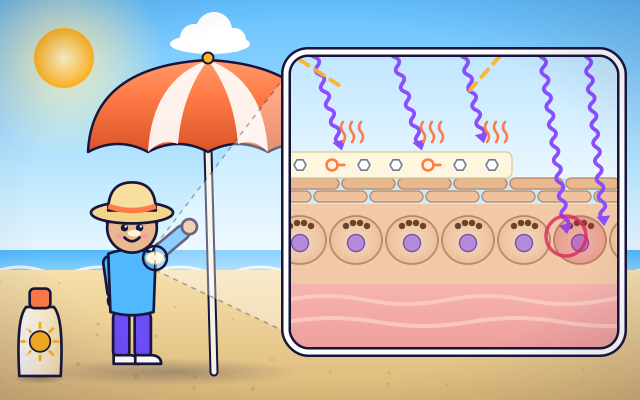
- Here is a model of skin. UV rays pass the tough outer layer and reach the living cells below. Skin has its own protection, a dark pigment called melanin, but it only catches some of the rays. Too much UV makes skin sore and red: a sunburn.
- Sunscreen puts a thin layer of UV filters on top of the skin. Some are tiny mineral particles and some are special molecules. They absorb UV rays and give the energy off as a tiny bit of warmth, so far fewer rays reach the cells.
- The number on the bottle is the SPF. With SPF 30, spread on thickly and evenly, about one burning ray in thirty gets through. A thin coat or a missed patch lets many more in, and no sunscreen stops every ray.
- Sunscreen wears off with water, sweat and rubbing, so it goes on again after swimming. It works best as part of a team: shade when the sun is high, a hat and clothes, and sunscreen on the skin that is left showing.
Look inside a model of skin
The window shows a simplified model of skin with sunscreen on it. Tap each part.
- UV rays. Ultraviolet rays are light we cannot see or feel. They carry more energy than visible light, enough to harm living skin cells.
- Visible light. The light our eyes can see. It bounces off the skin and passes through sunscreen, which is why a layer of sunscreen can look clear.
- Sunscreen layer. The cream or lotion spreads the UV filters in an even coat over the skin. Gaps and thin patches let rays through.
- UV filters. The working part of sunscreen. Mineral particles and special molecules absorb UV rays and give the energy off as a tiny bit of warmth.
- Outer layer of skin. The top of the skin is a tough layer of flat, dead cells. It keeps water in and germs out, but UV can pass through it.
- Melanin. Melanin is the pigment that gives skin its color. It sits like a little cap over the center of each cell and absorbs some UV. Everyone has it, in different amounts.
- Living skin cells. Below the outer layer are living cells that make new skin. Too much UV harms them, and the skin turns sore and red: a sunburn.
- Shade and a hat. Shade, a hat and clothes stop most rays before they arrive. Sunscreen is for the skin that is still showing.
With and without sunscreen
Watch the rays, then tap the bottle and spread the sunscreen with the finger. Try the hat and the umbrella, and go for a swim.
Experiment: What happens to the UV rays when the skin has an even layer of sunscreen on it?
- Watch the bare skin model and see where the purple rays end up.
- Tap the bottle, then spread the blob over the whole surface.
- Count the rays caught and the rays that reach living cells.
What we found: On bare skin, UV rays reach the living cells, and melanin catches only some. With an even layer of sunscreen almost every ray is absorbed and turned into a tiny bit of warmth. A few still get through, and gaps or a swim let many more in.
Turn on JavaScript to try it yourself.
Plan a day in the sun
Plan the day so that the UV reaching the skin stays under the limit. There are swims at 11:00 and 3:30.
How sunscreen catches UV
Sunlight is a mixture. Part of it is light we can see, part of it is warmth we can feel, and part of it is ultraviolet light, or UV, which we can neither see nor feel. UV rays carry more energy than the light we see, and that extra energy can harm the living cells in skin. Too much, and the skin becomes sore and red: a sunburn.
Skin has some protection of its own. Its outer layer is tough, and its cells hold a dark pigment called melanin that absorbs part of the UV. Everyone has melanin, in different amounts, but no skin stops all of the rays.
Sunscreen adds a layer of UV filters on top. Some filters are tiny mineral particles and others are special molecules. When a UV ray hits a filter, the filter absorbs it and gives the energy off as a tiny bit of warmth, much too small to feel. The number on the bottle, the SPF, tells you how much gets through: with SPF 30, spread thickly and evenly, about one burning ray in thirty.
That only works where the sunscreen is, and while it is there. Thin coats and missed spots let rays in, and water, sweat and rubbing take sunscreen off, so it goes on again after swimming. Even then a few rays get through. That is why sunscreen is one helper in a team: shade when the sun is high, a hat and clothes, and sunscreen for the skin still showing. Our skin picture is a simplified model, and a grown-up can help you put sunscreen on.
Key words
- Ultraviolet (UV)
- Light from the sun that we cannot see. It carries more energy than visible light.
- UV filter
- An ingredient of sunscreen that absorbs ultraviolet light.
- SPF
- Sun protection factor: the number on the bottle. A higher number lets less of the burning UV through.
- Melanin
- The pigment that gives skin, hair and eyes their color. It absorbs some UV.
- Wavelength
- The distance from one crest of a wave to the next. Shorter wavelengths of light carry more energy.
- Absorb
- To take in light and its energy instead of letting it pass or bounce off.
Check your thinking
-
What do the UV filters in sunscreen do?
Show the answer
They absorb UV and give the energy off as a tiny bit of warmth. A filter absorbs the ray and turns its energy into a tiny bit of warmth, so the ray never reaches the cells.
-
Why use shade and a hat as well as sunscreen?
Show the answer
No sunscreen stops every ray, and it wears off. A few rays always get through, and sunscreen rubs and washes off. Shade and hats stop rays before they arrive.
-
After a swim, why does sunscreen go on again?
Show the answer
Water and rubbing remove much of the layer. Swimming and towel-drying take much of the sunscreen off, and a thin or patchy layer lets far more UV through.
-
SPF 30, spread on thickly and evenly, lets through about how much of the burning UV?
Show the answer
About 1 part in 30. SPF 30 means about one-thirtieth gets through. No sunscreen stops everything.
-
Which kind of sunlight has the shortest wavelength and the most energy in each photon?
Show the answer
Ultraviolet. Photon energy rises as wavelength falls, and ultraviolet has the shortest wavelengths of the three.
-
When are the sun's UV rays strongest?
Show the answer
Around the middle of the day. When the sun is highest in the sky, its rays take the shortest path through the air, so more UV arrives. That is a good time for shade.
You're a Everyday chemistry & materials expert!
You watched, looked inside, tried it, solved the challenge and went deeper. Pick another question below, or switch the age at the top to see this topic another way.
More about everyday chemistry & materials
 #406
Everyday chemistry & materials
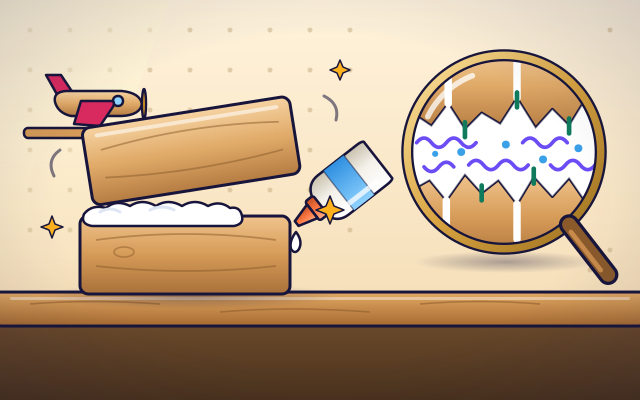
How does glue hold surfaces together?
Compare adhesives, surface contact, and curing while joining virtual materials.
#406
Everyday chemistry & materials
How does glue hold surfaces together?
Compare adhesives, surface contact, and curing while joining virtual materials.
 #407
Everyday chemistry & materials
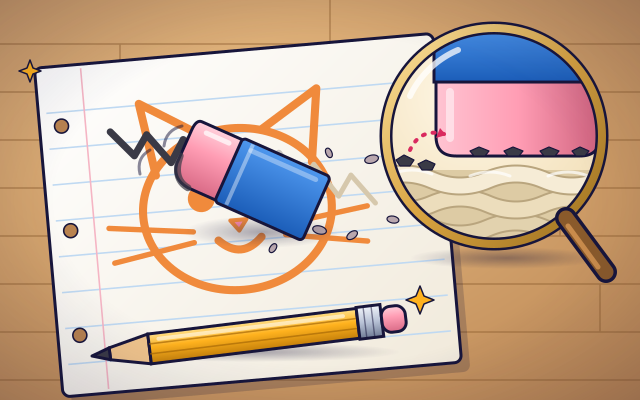
How do erasers remove pencil marks?
Zoom into paper fibers and follow graphite transferring from paper to an eraser.
#407
Everyday chemistry & materials
How do erasers remove pencil marks?
Zoom into paper fibers and follow graphite transferring from paper to an eraser.
 #408
Everyday chemistry & materials
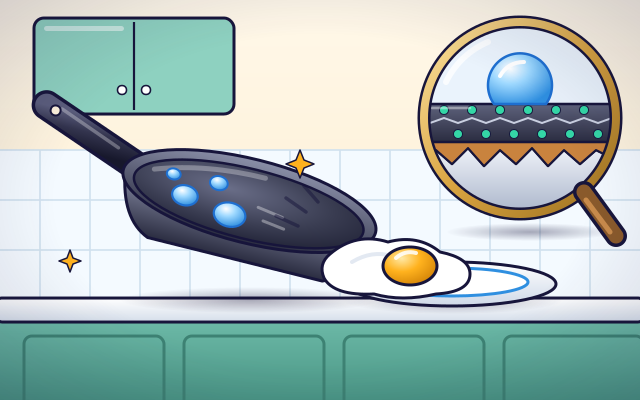
How do nonstick pans resist sticking?
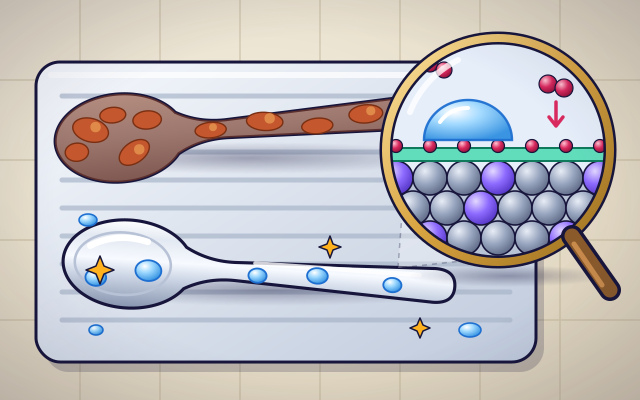
Explore a coated surface and compare its interaction with food and droplets.
#408
Everyday chemistry & materials
How do nonstick pans resist sticking?
Explore a coated surface and compare its interaction with food and droplets.
 #409
Everyday chemistry & materials
Why does stainless steel resist rust?
Inspect its protective surface layer and compare it with ordinary steel.
#409
Everyday chemistry & materials
Why does stainless steel resist rust?
Inspect its protective surface layer and compare it with ordinary steel.
Keep exploring
Games to play next
- Weather LabPredict the weather in a box, then run a fair test to find out why.
- Science QuizzesOlly's Science Quiz Show: plants, animals, the body, weather, space and more, for every grade.
- Ratio KitchenScale recipes, fill ratio tables and find the better buy.
Guide for grown-ups
- How to start homeschooling: a step-by-step guide for familiesA guide for parents · 7 min read
Science games by grade
Science worksheets by grade
- Preschool Science Worksheets
- Pre-K Science Worksheets
- Kindergarten Science Worksheets
- 1st Grade Science Worksheets
- 2nd Grade Science Worksheets
- 3rd Grade Science Worksheets
- 4th Grade Science Worksheets
- 5th Grade Science Worksheets
- 6th Grade Science Worksheets
- 7th Grade Science Worksheets
- 8th Grade Science Worksheets