How does sweating cool us?
Sweat cools you by drying. As each drop turns into vapor and floats away, it takes heat from your skin with it. Damp air slows the drying, so sticky days feel hotter.
The big idea: Sweat itself is not cold. It cools you only when it dries. Drying, called evaporation, needs heat, and that heat comes out of your skin. Dry, moving air dries sweat fast. Damp, still air dries it slowly.
It's like stepping out of the bath: the water on your skin dries and takes heat with it, so you shiver, even in a warm room.
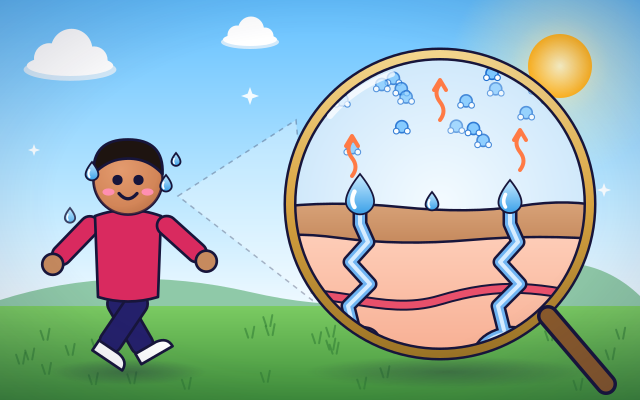
The interactive parts didn't load. The explanations below still work; try reloading the page.
How sweating cools you down
- Maya is running in the sunshine. Her working muscles make a lot of heat. If that heat stayed inside, her body would get too warm, so it has to get rid of it.
- Let us zoom into her skin. Deep down are tiny coiled tubes called sweat glands. They make sweat, which is mostly water with a little salt. It travels up a thin tube and out of a tiny hole called a pore.
- A drop of sweat is made of tiny water particles, always jiggling. The fastest ones break free and fly off into the air as an invisible gas called water vapor. This is called evaporation.
- Here is the trick: breaking free takes energy, and the water takes that energy as heat from Maya's skin. Every bit of sweat that dries carries heat away, so her skin, and the blood under it, cools down.
- But on a damp day, the air is already crowded with water vapor. There is little room for more, so sweat dries slowly. It just drips off, and dripping sweat does not cool you. That is why sticky days feel so hot.
- A breeze helps, because it blows the damp air away from your skin. And all that sweat is water your body has lost. So Maya rests in the shade and drinks water to put it back.
Look inside sweating skin
This is a slice of skin, magnified many times. Tap each part to see how sweat is made and how it cools you.
- Sweat gland. A tiny coiled tube deep in the skin. It takes water and a little salt from the body and makes sweat.
- Sweat tube. A thin tube that carries sweat from the gland up to the surface of the skin.
- Pore. The tiny opening where the sweat tube reaches the surface. It is too small to see without a magnifying glass.
- Sweat drop. Sweat on the skin. It is almost all water, with a little salt, which is why sweat tastes salty.
- Water vapor. Water that has dried off the skin and become an invisible gas. Each bit that leaves takes some heat away with it.
- Blood vessels. Warm blood flows through these tiny tubes. It carries heat from deep inside the body to the skin, where the drying sweat removes it.
- Outer skin. The tough outer layer of skin. It is waterproof, so water leaves mostly through the pores.
Sweat lab: hot, damp and breezy
Maya is jogging on the spot. Change how hot and how damp the air is, and switch the fan on. Watch the sweat in the magnifying glass. When does it dry fastest?
Experiment: On which day does sweat cool Maya best?
- Make the day hot. Set the air to dry. How fast does the sweat dry?
- Now make the air very damp. What happens to the drops?
- Keep it damp and tap the fan. Does it help?
What we found: Sweat cools best in dry air, where it dries quickly and takes heat away. In very damp air the drops just grow and drip, and Maya gets hotter. A fan helps because it blows the damp air away from her skin.
Turn on JavaScript to try it yourself.
Fix the stuffy gym
The gym is hot and steamy, and Maya's sweat is not drying. Switch things on or off so her sweat can cool her, then press Start the workout. For 3 stars, use as few machines as you can.
Cooling by drying
Your body works best at about 37 degrees Celsius. When you run, play or sit in the sun, you warm up. A part of your brain works like a thermostat. When it notices you getting too warm, it sends a signal to millions of tiny sweat glands in your skin, and they start making sweat.
Sweat is nearly all water. On its own it would not cool you much. The cooling happens when the sweat dries. Water is made of tiny particles that jiggle all the time. To break free from a drop and fly off as vapor, a particle needs energy, and it takes that energy as heat from your skin. So every drop that dries carries some of your heat away into the air.
How fast sweat dries depends on the air. Dry air has plenty of room for more water vapor, so sweat dries quickly and you cool well. Damp air is already crowded with vapor, so sweat dries slowly. It runs down your face and drips off, and dripping sweat takes almost no heat with it. A breeze or a fan helps by blowing the damp air next to your skin away.
Sweating uses up water, so on hot days you need to drink more. If you ever feel dizzy or sick in the heat, stop, find shade and tell a grown-up. Our swimming pool comparison is good but not perfect: pool water comes from outside, while sweat comes from inside you and has to be replaced.
Key words
- Sweat gland
- A tiny coiled tube in the skin that makes sweat.
- Evaporation
- When a liquid dries up by turning into a gas that floats away.
- Water vapor
- Water in the form of an invisible gas mixed into the air.
- Humidity
- How much water vapor is in the air. Damp, sticky air has high humidity.
- Latent heat
- The heat a liquid takes in when it turns into a gas.
Check your thinking
-
What has to happen to sweat for it to cool you?
Show the answer
It has to dry up, which is called evaporating. Drying needs heat, and the heat comes out of your skin. Sweat that drips off takes almost none.
-
Why do you feel hotter on a damp day than on a dry day at the same temperature?
Show the answer
The air is already full of water vapor, so sweat dries slowly. Crowded, damp air has little room for more vapor. The sweat stays wet and drips, so it cannot carry your heat away.
-
Why does a fan make you feel cooler when you are sweaty?
Show the answer
It blows the damp air away from your skin, so sweat dries faster. The air right next to wet skin gets damp. A fan swaps it for drier air, so more sweat can dry.
-
Why is it important to drink water on a hot day?
Show the answer
Sweat is water from your body, and it must be replaced. The water in sweat comes from your body. Drinking replaces it, so you can keep cooling yourself.
-
Evaporating 1 gram of sweat removes about 2,400 joules. Maya evaporates 5 grams each minute. About how much heat is that every second?
Show the answer
About 200 watts. 5 grams times 2,400 joules is 12,000 joules a minute. Divided by 60 seconds, that is 200 joules a second, or 200 watts.
You're a Human body expert!
You watched, looked inside, tried it, solved the challenge and went deeper. Pick another question below, or switch the age at the top to see this topic another way.
More about human body
 #254
Human body
How does our sense of smell work?
Follow odor molecules into the nose and match receptor patterns with familiar smells.
#254
Human body
How does our sense of smell work?
Follow odor molecules into the nose and match receptor patterns with familiar smells.
 #255
Human body
How do we taste food?
Explore taste buds and combine taste and smell signals into familiar flavors.
#255
Human body
How do we taste food?
Explore taste buds and combine taste and smell signals into familiar flavors.
 #256
Human body
How does the body keep its balance?
Combine information from inner-ear structures, vision, and body position while tilting a model head.
#256
Human body
How does the body keep its balance?
Combine information from inner-ear structures, vision, and body position while tilting a model head.
 #257
Human body
What happens while we sleep?
Move through sleep stages and compare brain activity, breathing, and movement.
#257
Human body
What happens while we sleep?
Move through sleep stages and compare brain activity, breathing, and movement.
Keep exploring
Games to play next
- Body ExplorerTap, match and label your way around the amazing human body.
- Label LabPut the right labels on beautiful science diagrams, from bean plants to heart chambers.
- Science QuizzesOlly's Science Quiz Show: plants, animals, the body, weather, space and more, for every grade.
Guide for grown-ups
- How to start homeschooling: a step-by-step guide for familiesA guide for parents · 7 min read
Science games by grade
Science worksheets by grade
- Preschool Science Worksheets
- Pre-K Science Worksheets
- Kindergarten Science Worksheets
- 1st Grade Science Worksheets
- 2nd Grade Science Worksheets
- 3rd Grade Science Worksheets
- 4th Grade Science Worksheets
- 5th Grade Science Worksheets
- 6th Grade Science Worksheets
- 7th Grade Science Worksheets
- 8th Grade Science Worksheets