How does the liver process and store substances?
Your liver is your body's storeroom and workshop. It stores sugar for later, changes harmful things into safe ones, and makes bile to help you digest fat.
The big idea: Everything your gut takes in from food goes to the liver first. The liver stores the extra sugar and gives it back between meals, so your blood always carries the right amount. It also makes harmful leftovers safe and makes bile.
It's like a storeroom with a workshop: deliveries arrive, some go on the shelves for later, some are made into new things, and rubbish is made safe to throw away.
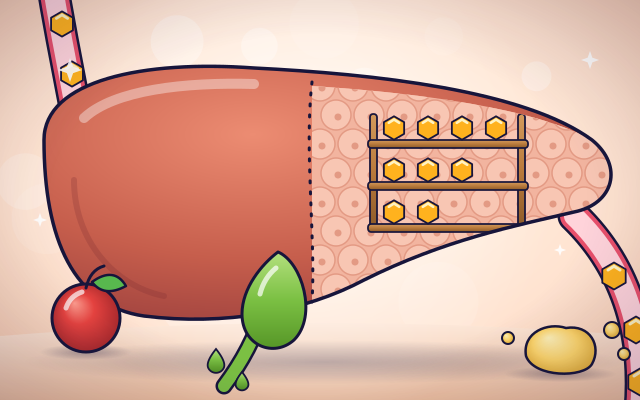
The interactive parts didn't load. The explanations below still work; try reloading the page.
What your liver does after lunch
- Leo eats his lunch. His gut breaks the food into tiny pieces, small enough to slip into his blood. But before the rest of his body gets them, they visit a big organ under his ribs: the liver.
- Blood from the gut is full of food pieces. It flows through a wide tube straight into the liver. Let us open the liver up and look. We have drawn its jobs as three little rooms.
- After a meal, lots of sugar arrives at once. That is more than the body needs right now. So the liver takes the extra sugar out of the blood and packs it onto its shelves.
- Hours later, no new sugar is arriving, but Leo's brain and muscles still need some. The liver takes sugar off its shelves and puts it back in the blood. That is why you do not run out of energy between meals.
- The liver is also a workshop. When your body uses proteins, a harmful leftover is made. The liver changes it into a safe one, which the blood carries to the kidneys to be sent out.
- The liver also makes a green liquid called bile. A little bag, the gallbladder, saves it up. When fatty food arrives in the gut, the bag squeezes, and the bile breaks big blobs of fat into tiny drops.
Look inside the liver
We cut the liver open and drew its jobs as three rooms. A real liver has no rooms: every tiny liver cell does all the jobs. Tap each part.
- Blood in. A wide tube brings blood from the gut to the liver. This blood is full of the food pieces you have just digested.
- Liver cells. The liver is packed with tiny liver cells, lined up along the blood. Each cell can store, change and make things.
- Sugar store. After a meal the liver stores extra sugar here. Between meals it hands the sugar back to the blood.
- Chemical workshop. Here harmful leftovers are changed into safe ones, and food pieces are rebuilt into things your body needs.
- Bile maker. Liver cells make bile here all day long. Bile is a yellow-green liquid that helps you digest fat.
- Gallbladder. A small, stretchy bag under the liver. It stores bile between meals and squeezes it out when fatty food arrives.
- Bile tube. This tube carries bile to the gut, where it mixes with your food.
- Blood out. Blood leaves the liver here and travels to the heart, which pumps it to the whole body. It now carries just the right amount of sugar.
Liver lab: store, change and squirt
Move the time slider from just after a meal to many hours later and watch the sugar shelves. Then tap the workshop and the gallbladder to see the other two jobs.
Experiment: It is many hours since Leo ate, and no new sugar is arriving. What will the liver do?
- Set the time to just after the meal. What happens on the shelves?
- Slide the time to many hours later. Watch the shelves and the blood sugar gauge.
- Tap the workshop, then tap the gallbladder.
What we found: Just after a meal the liver fills its shelves with the extra sugar. Later it empties them again, a little at a time. So the store goes up and down, but the sugar in your blood stays almost steady. That is the liver's trick.
Turn on JavaScript to try it yourself.
A day in the life of a liver
Get Leo through a whole day. For each thing that happens, choose the right liver job: store sugar, release sugar, make a harmful leftover safe, or send bile.
Storeroom, workshop and juice maker
Your liver is the biggest organ inside your body. It sits under your ribs on your right side, and it is a dark reddish brown because so much blood flows through it. Nearly everything your gut takes in from your food travels in the blood to the liver first, before it goes anywhere else.
Job one is storing. After a meal, a lot of sugar arrives all at once. Your body cannot use it all right away, so the liver takes the extra out of the blood and packs it away. Hours later, when you are playing or fast asleep and no food is arriving, the liver puts sugar back into the blood. This is why your brain and muscles have fuel all day and all night, even though you eat only a few times.
Job two is changing things. The liver is a chemical workshop. It builds new materials your body needs from the food pieces that arrive. It also changes harmful leftovers into safe ones that your kidneys can send out. Job three is making bile, a yellow-green liquid. Bile is saved in a little bag called the gallbladder and squirted into the gut when you eat something fatty. It breaks big blobs of fat into tiny drops that are much easier to digest.
Our storeroom picture is not quite right in one way. A real liver has no separate rooms. It is made of a huge number of tiny cells, and every one of them stores, changes and makes bile at the same time.
Key words
- Liver
- A large organ under your ribs that stores nutrients, changes chemicals and makes bile.
- Bile
- A yellow-green liquid made by the liver that breaks fat into tiny drops.
- Gallbladder
- A small bag under the liver that stores bile until it is needed.
- Glycogen
- The form in which the liver stores sugar: lots of sugar pieces joined together.
- Urea
- A safe waste the liver makes from a harmful one. The kidneys send it out.
- Emulsify
- To break a blob of fat into many tiny droplets that mix with water.
Check your thinking
-
Just after a big meal, what does the liver do with the extra sugar in the blood?
Show the answer
It stores the sugar to use later. There is more sugar than the body needs right now, so the liver saves the extra for the hours between meals.
-
You have not eaten for eight hours, but your brain still has fuel. Why?
Show the answer
The liver has been putting stored sugar back into the blood. The liver releases its stored sugar slowly, so the blood always carries enough.
-
What does bile do?
Show the answer
It breaks big blobs of fat into tiny drops. Tiny drops of fat are far easier for the gut to digest than one big blob.
-
What is the gallbladder for?
Show the answer
Storing bile until fatty food arrives. The liver makes bile all the time, so the gallbladder saves it for when it is needed.
-
The liver turns ammonia into urea. Which organ then removes the urea from the blood?
Show the answer
The kidneys. Urea travels in the blood to the kidneys, which filter it out and excrete it in urine. The two organs work as a team.
You're a Human body expert!
You watched, looked inside, tried it, solved the challenge and went deeper. Pick another question below, or switch the age at the top to see this topic another way.
More about human body
 #253
Human body
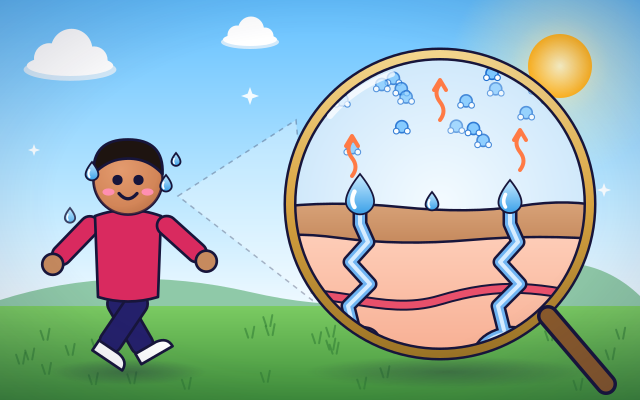
How does sweating cool us?
Change temperature and humidity and compare cooling as sweat evaporates.
#253
Human body
How does sweating cool us?
Change temperature and humidity and compare cooling as sweat evaporates.
 #254
Human body
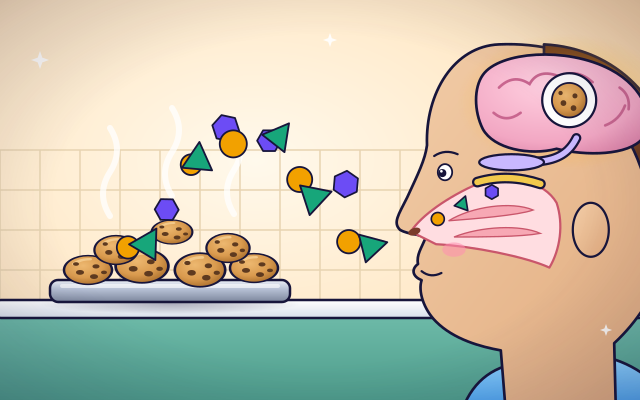
How does our sense of smell work?
Follow odor molecules into the nose and match receptor patterns with familiar smells.
#254
Human body
How does our sense of smell work?
Follow odor molecules into the nose and match receptor patterns with familiar smells.
 #255
Human body
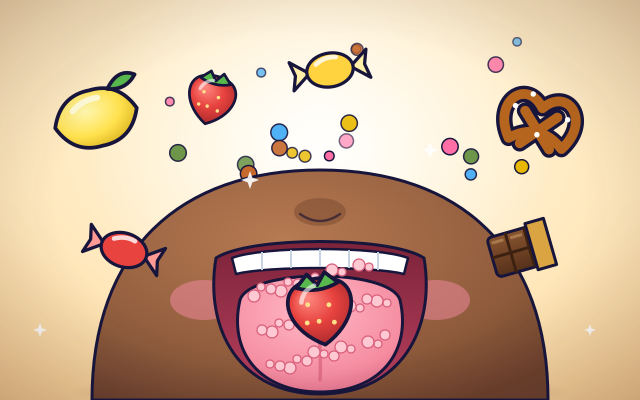
How do we taste food?
Explore taste buds and combine taste and smell signals into familiar flavors.
#255
Human body
How do we taste food?
Explore taste buds and combine taste and smell signals into familiar flavors.
 #256
Human body
How does the body keep its balance?
Combine information from inner-ear structures, vision, and body position while tilting a model head.
#256
Human body
How does the body keep its balance?
Combine information from inner-ear structures, vision, and body position while tilting a model head.
Keep exploring
Games to play next
- Body ExplorerTap, match and label your way around the amazing human body.
- Label LabPut the right labels on beautiful science diagrams, from bean plants to heart chambers.
- Science QuizzesOlly's Science Quiz Show: plants, animals, the body, weather, space and more, for every grade.
Guide for grown-ups
- How to start homeschooling: a step-by-step guide for familiesA guide for parents · 7 min read
Science games by grade
Science worksheets by grade
- Preschool Science Worksheets
- Pre-K Science Worksheets
- Kindergarten Science Worksheets
- 1st Grade Science Worksheets
- 2nd Grade Science Worksheets
- 3rd Grade Science Worksheets
- 4th Grade Science Worksheets
- 5th Grade Science Worksheets
- 6th Grade Science Worksheets
- 7th Grade Science Worksheets
- 8th Grade Science Worksheets