How do air purifiers remove particles?
Follow air through three filters and find out which specks are easy to catch and which ones try to slip through.
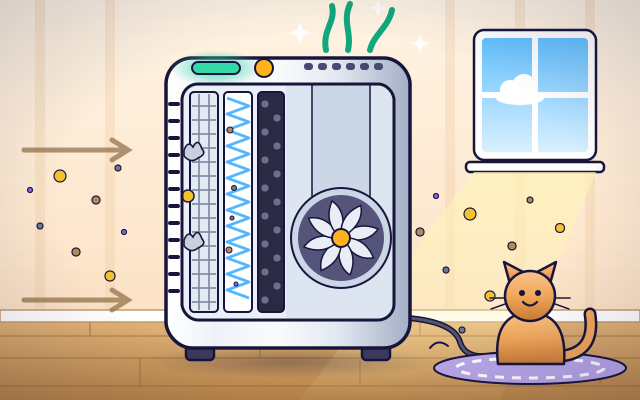
The big idea: An air purifier is a fan and a stack of filters. Each filter catches something different: a mesh for hair and fluff, a thick mat of fibers for fine dust and smoke, and carbon for smells.
It's like running through a thick forest: a big bear bumps into trees, and a bee buzzing in zigzags hits a branch. The fibers are the trees.
The interactive parts didn't load. The explanations below still work; try reloading the page.
Three filters and a fan
- A sunbeam shows what is always floating in the air: dust, pollen, pet hair and specks far too small to see. Could a machine take them out?
- Switch the purifier on and a fan inside starts to spin. It pulls room air in through the grille on one side and pushes it out of the top.
- The first filter is a simple mesh. It works like a sieve, stopping hair, lint and big dust. Anything smaller than its holes carries on.
- Next is the HEPA filter: a mat of tangled fibers. Big specks crash into fibers. Medium ones brush against them. The very tiniest jiggle about and bump into one. They all stick.
- Smells are single molecules, far too small for any fiber mat. So the last filter is activated carbon: black grains full of tiny tunnels where smell molecules stick.
- Clean air leaves the top and mixes back into the room. The purifier cannot clean it all at once, so the air goes round again and again, a little cleaner each time.
Look inside an air purifier
Tap each part. Follow the air from the grille, through three filters, to the top.
- Intake grille. Room air is pulled in through the slots in the side of the case.
- Pre-filter. A washable mesh. It stops hair, lint and big clumps of dust before they reach the finer filters.
- HEPA filter. A folded mat of very fine fibers. Dust, pollen and smoke particles hit the fibers and stick. It is folded like a fan so lots of filter fits in a small box.
- Carbon filter. A layer of black activated carbon grains. Cooking smells and other gases stick inside the tiny tunnels in each grain.
- Fan. The fan does the moving. It pulls air through all three filters and pushes it out of the top. A faster fan cleans the room sooner but makes more noise.
- Clean air outlet. Filtered air blows out of the top and spreads across the room, pushing more dusty air toward the intake.
- Air quality light. A small sensor counts specks in the air. The light shows the result: red for dusty, green for clean. Many purifiers speed up by themselves when it turns red.
Which specks get through?
Tap each puffer to send specks of a different size through the mesh and the fiber mat. Count how many get through. Tap a filter to take it out.
Experiment: Which specks are hardest for the fiber mat to catch?
- Tap the pollen puffer. Where do the big grains stop?
- Tap the smoke puffer, then the tiniest specks. Watch how each kind moves.
- Compare the numbers that got through.
What we found: The big grains never got past the mesh. The tiniest specks jiggled about so much that they soon bumped into a fiber. The in-between smoke specks were the best at slipping through: too small to crash, too big to jiggle much.
Turn on JavaScript to try it yourself.
Build it in the right order
Tap a filter, then tap a slot to put it in. Air comes in from the left. Choose the order that cleans fluff, smoke and smells, then switch on.
How filters catch what you cannot see
The air in a room looks empty, but it carries passengers: pet hair, pollen from plants, dust from clothes and carpets, and smoke from cooking. Some are big enough to see in a sunbeam. Most are far too small.
An air purifier is simple inside. A fan pulls air through a stack of filters. The first is a mesh that works like a kitchen sieve and stops anything bigger than its holes, such as hair and fluff.
The second, the HEPA filter, is the clever one. It is a thick mat of tangled fibers with gaps much bigger than the specks it catches, so it is not a sieve. A big speck cannot swerve around a fiber and crashes into it. A medium speck follows the air but brushes a fiber on the way past. The tiniest specks are so light that the air itself knocks them about, and they zigzag into a fiber. Once a speck touches a fiber, it sticks.
The forest comparison breaks down in one way: animals in a forest try not to hit the trees, but specks cannot steer at all. The last filter is activated carbon, which holds smell molecules in its tiny tunnels. A purifier helps, but it does not replace fresh air from outdoors, and its filters must be cleaned or changed.
Key words
- Filter
- Something that lets air through but holds back the things carried in it.
- HEPA
- A very fine fiber filter that traps almost all of the dust and smoke that reaches it.
- Micrometer
- One thousandth of a millimeter. A hair is about 70 micrometers wide.
- Diffusion
- The random jiggling of very tiny specks as the air bumps them around.
- Activated carbon
- Charcoal treated so that it is full of tiny pores where gas and smell molecules stick.
- Adsorption
- When molecules stick to the surface of something.
Check your thinking
-
What moves the air through an air purifier?
Show the answer
A fan. The fan pulls air in through the filters and pushes it out again.
-
Why is the coarse mesh put first?
Show the answer
It stops hair and fluff from clogging the fine filter. The mesh is easy to clean. Keeping big fluff off the HEPA mat makes it last much longer.
-
How does a fiber mat catch a speck much smaller than its gaps?
Show the answer
The speck jiggles about and bumps into a sticky fiber. Tiny specks are knocked around by the air, so they wander until they touch a fiber and stick.
-
Which specks slip through a fiber mat most easily?
Show the answer
In-between ones, like smoke. They are too small to crash into fibers and too big to jiggle much, so more of them get by.
-
A room is 40 m³ and a purifier delivers 200 m³/h of clean air. About how long does it take to remove 90% of the particles?
Show the answer
About 28 minutes. Time ≈ 2.3 × volume ÷ clean air rate = 2.3 × 40 ÷ 200 ≈ 0.46 hours, about 28 minutes.
-
What is the carbon filter for?
Show the answer
Smells and gases, which are too small for the fiber mat. Smell molecules pass straight through fiber filters but stick inside the tiny pores of activated carbon.
You're a Home systems expert!
You watched, looked inside, tried it, solved the challenge and went deeper. Pick another question below, or switch the age at the top to see this topic another way.
More about home systems
 #189
Home systems
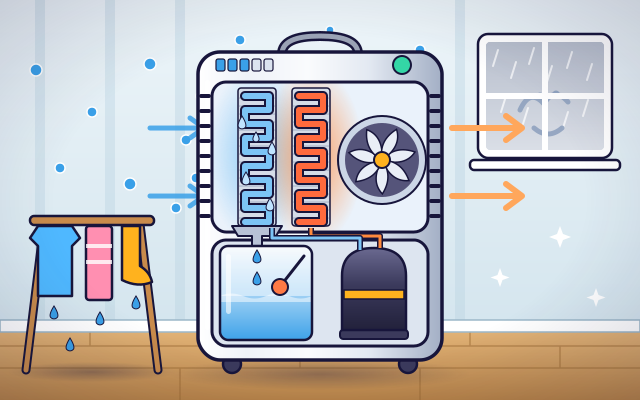
How does a dehumidifier remove moisture?
Watch water condense as moist air passes over a cold coil.
#189
Home systems
How does a dehumidifier remove moisture?
Watch water condense as moist air passes over a cold coil.
 #190
Home systems
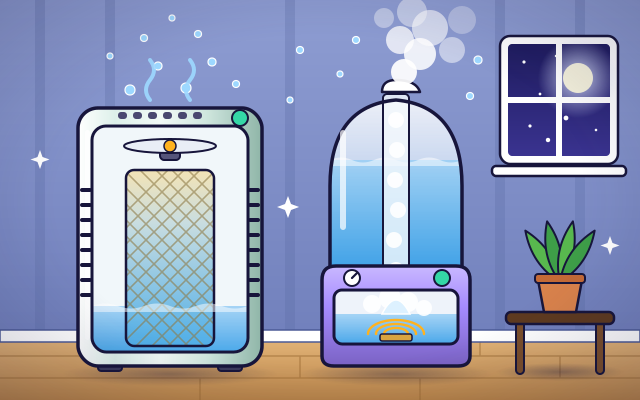
How does a humidifier add moisture?
Compare evaporative and ultrasonic designs and follow water into the surrounding air.
#190
Home systems
How does a humidifier add moisture?
Compare evaporative and ultrasonic designs and follow water into the surrounding air.
 #191
Home systems
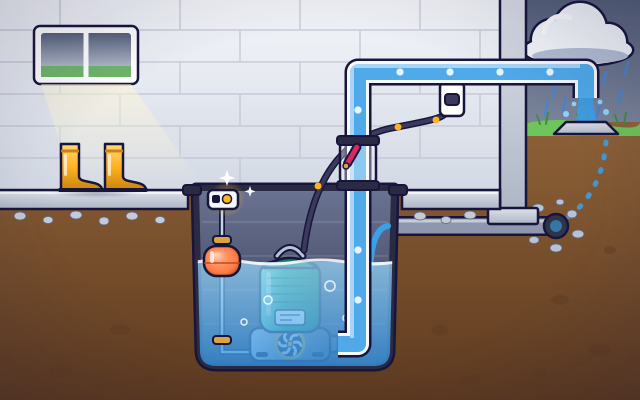
How does a sump pump keep a basement dry?
Raise water in a model sump and watch a float activate the pump.
#191
Home systems
How does a sump pump keep a basement dry?
Raise water in a model sump and watch a float activate the pump.
 #192
Home systems
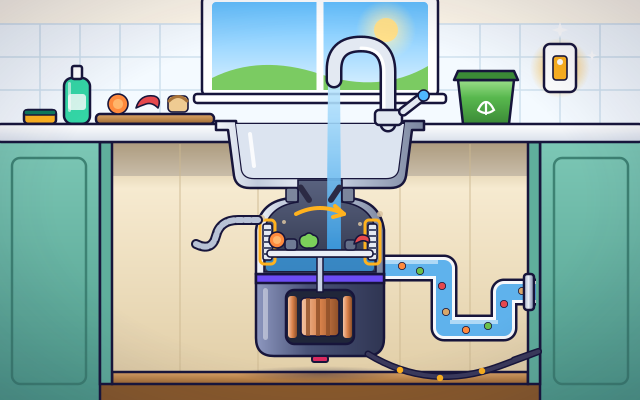
How does a kitchen garbage disposal work?
Observe impellers pushing suitable food scraps against a grinding ring beneath a sink.
#192
Home systems
How does a kitchen garbage disposal work?
Observe impellers pushing suitable food scraps against a grinding ring beneath a sink.
Keep exploring
Games to play next
- Machine RepairFix levers, pulleys, gears and ramps so every contraption works.
- Circuit Workshop 3DWire up batteries, bulbs and switches on a 3D workbench.
- Weather LabPredict the weather in a box, then run a fair test to find out why.
Guide for grown-ups
- How to start homeschooling: a step-by-step guide for familiesA guide for parents · 7 min read
Science games by grade
Science worksheets by grade
- Preschool Science Worksheets
- Pre-K Science Worksheets
- Kindergarten Science Worksheets
- 1st Grade Science Worksheets
- 2nd Grade Science Worksheets
- 3rd Grade Science Worksheets
- 4th Grade Science Worksheets
- 5th Grade Science Worksheets
- 6th Grade Science Worksheets
- 7th Grade Science Worksheets
- 8th Grade Science Worksheets