How does insulation slow heat loss?
Heat always sneaks from warm places to cold ones. Insulation is full of trapped air, which slows it right down.
The big idea: Heat flows from warm to cold. Still air passes heat on very slowly, so materials that trap lots of tiny air pockets slow the flow.
It's like a thick blanket on a cold night: the blanket is not warm by itself, it just keeps your body's heat from escaping.
The interactive parts didn't load. The explanations below still work; try reloading the page.
How insulation slows heat
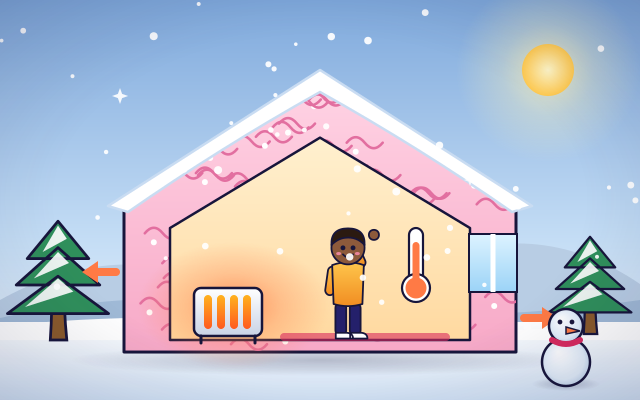
- It is snowing. The heater is on full, but the cabin is still cold. Its thin walls and roof let the heat slip straight out into the winter air. Even the snow on the roof is melting.
- Heat always moves from warmer things to colder things. Hot cocoa gives its heat to the room and cools down. An ice pop takes heat from the room and melts. Nothing can stop this. But it can be slowed.
- Zoom into a solid wall. It is made of tiny particles packed tightly together. On the warm side they jiggle hard. They bump their neighbors, who bump the next ones, and the heat is passed along quickly.
- Now fill the wall with fluffy wool. It is mostly air, held in thousands of tiny pockets. Air particles are far apart, so they rarely bump and pass heat on slowly. The fibers also keep the air from swirling around.
- A thicker layer makes the heat travel farther, so less gets through each second. Double the thickness and the leak is cut about in half. Now the heater can keep up, and the room warms.
- With thick insulation the cabin stays cozy while the heater barely works. That saves energy and money. In summer the same layer works the other way and keeps the heat out. A cooler box keeps lunch cold the same way.
Look inside an insulated wall
This wall is cut open. Winter is on the left and a warm room is on the right. Tap each part.
- Outer wall. The strong outside layer, here made of brick. It holds the house up and keeps out rain and wind. But brick passes heat along quite well.
- Fluffy filling. A thick layer of fluffy fibers, like wool made from glass, rock or recycled paper. It is the house's blanket. Most of it is not fiber at all. It is air.
- Trapped air. A tiny pocket of still air between the fibers. Air passes heat on very slowly, and in a pocket this small it cannot swirl around and carry heat with it.
- Inner wall. The smooth board on the room side. With insulation behind it, this surface stays close to room temperature, so the room feels warm.
- Double window. Glass passes heat easily, so this window has two panes with a layer of still air or gas sealed between them. That thin layer is the insulation.
- Seal. A soft rubber strip that closes the gap around the glass. Without seals, cold drafts blow in and warm air leaks out, whatever the walls are made of.
Insulate a model home
Fill the cabin's walls with different materials. Drag the inner wall to make the layer thicker. Then squash the wool flat.
Experiment: You squash the fluffy wool flat. The same wool is still in the wall. Will it keep the cabin just as warm?
- Start with the bare wall, then try solid brick. Read the temperature inside.
- Choose fluffy wool. Then switch on "Squash the wool flat".
What we found: Solid brick lets heat through quickly. Fluffy wool keeps the cabin warm, but only while it is fluffy. Squashed flat, it has lost its pockets of air, and the heat escapes much faster. The air does the insulating.
Turn on JavaScript to try it yourself.
Pack a cold lunch
It is 30 °C outside. Design a lunch box that keeps the lunch at 8 °C or below until noon, four hours away.
The science of staying warm
Heat is always on the move. It travels from warmer places to colder ones, and it does not stop until both are the same temperature. That is why a warm house loses heat on a winter night, and why an ice pop melts in your hand. We cannot stop heat from moving. We can only make it move more slowly.
Some materials pass heat along quickly. Metal, stone and brick are like that. Their tiny particles are packed closely, so when the ones on the warm side jiggle, they bump their neighbors and the jiggling spreads fast. That is why a metal spoon in hot soup soon feels hot.
Air is very different. Its particles are far apart, so they bump into each other much less often, and heat passes through still air slowly. But air that is free to move carries heat away as it rises and swirls. The trick is to trap the air so it cannot move. Wool, feathers, foam and fluffy wall insulation are all full of tiny pockets that hold air still.
So insulation is mostly air, held in place. A thicker layer works better, because the heat has farther to go. Gaps and drafts must be closed too. And insulation does not care which way the heat is going. It keeps a house warm in winter and cool in summer. The blanket comparison is a good one, with one warning: a blanket warms you because you make heat. Wrap a blanket around an ice pop and it stays cold longer.
Key words
- Insulation
- Material that slows down the flow of heat.
- Conduction
- Heat passing along as tiny particles bump their neighbors.
- Convection
- Heat carried along by moving air or water.
- Thermal conductivity
- A number that says how easily a material lets heat pass through.
- Draft
- Air leaking in or out through a gap.
Check your thinking
-
What does most of the insulating in a fluffy material?
Show the answer
The still air trapped between the fibers. Air passes heat slowly, and the fibers keep it from moving around.
-
A warm room has a cold window. Which way does heat flow?
Show the answer
From the warm room out to the cold. Heat flows from higher temperature to lower. The room loses heat, and that is what feels like cold coming in.
-
You wrap an ice pop in a thick wool sock on a hot day. What happens?
Show the answer
It melts more slowly, because the sock slows heat getting in. Wool is not warm by itself. It slows heat in both directions.
-
A wall's insulation is doubled from 10 cm to 20 cm. Roughly what happens to the heat conducted through that layer?
Show the answer
It halves. By Fourier's law, power is inversely proportional to thickness: twice the thickness, half the flow.
-
Why is the gap in double glazing only about 16 millimeters wide, not 10 centimeters?
Show the answer
In a wide gap the gas starts to circulate and carries heat across by convection. Still gas insulates well. Once the gap is wide enough for convection currents, the extra width stops helping.
You're a Everyday chemistry & materials expert!
You watched, looked inside, tried it, solved the challenge and went deeper. Pick another question below, or switch the age at the top to see this topic another way.
More about everyday chemistry & materials
 #415
Everyday chemistry & materials
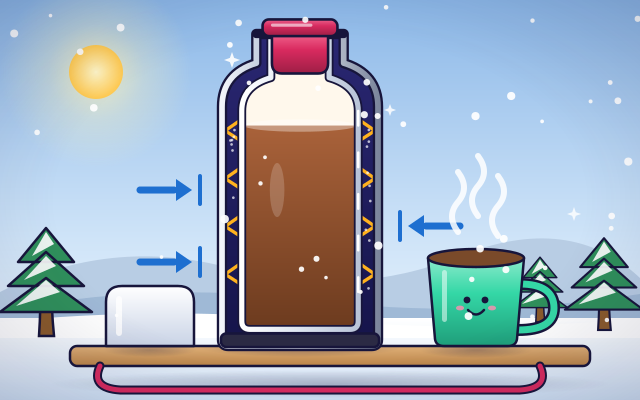
How does a vacuum flask keep drinks hot or cold?
Inspect the vacuum gap, reflective surfaces, and lid while tracking heat transfer.
#415
Everyday chemistry & materials
How does a vacuum flask keep drinks hot or cold?
Inspect the vacuum gap, reflective surfaces, and lid while tracking heat transfer.
 #416
Everyday chemistry & materials
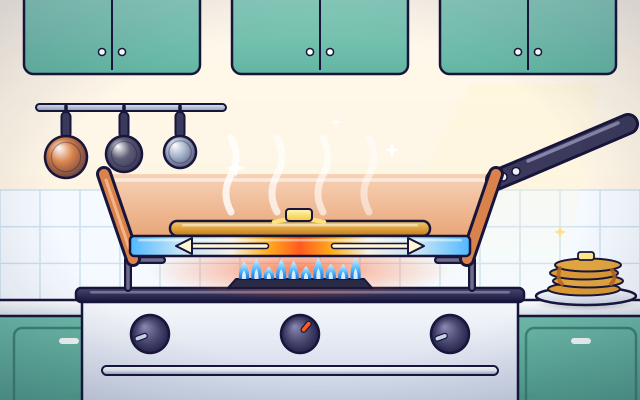
How do cooking pans transfer heat?
Compare metal types and watch heat spread from a burner through a pan.
#416
Everyday chemistry & materials
How do cooking pans transfer heat?
Compare metal types and watch heat spread from a burner through a pan.
 #417
Everyday chemistry & materials
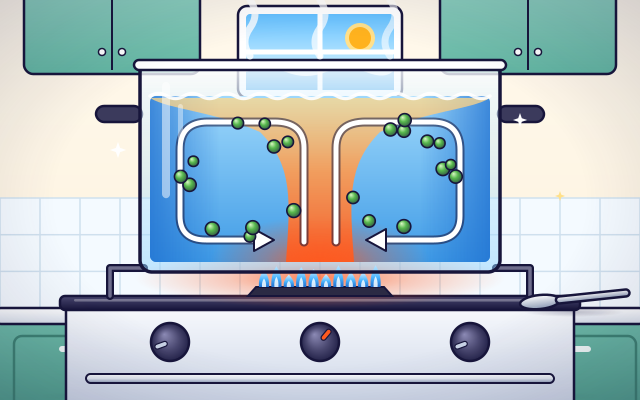
How does convection move heat through air and water?
Warm one region of a fluid and follow circulating currents.
#417
Everyday chemistry & materials
How does convection move heat through air and water?
Warm one region of a fluid and follow circulating currents.
 #418
Everyday chemistry & materials
How do emulsions keep oil and water mixed?
Build model droplets and explore how emulsifiers help stabilize salad dressing or mayonnaise.
#418
Everyday chemistry & materials
How do emulsions keep oil and water mixed?
Build model droplets and explore how emulsifiers help stabilize salad dressing or mayonnaise.
Keep exploring
Games to play next
- Weather LabPredict the weather in a box, then run a fair test to find out why.
- Science QuizzesOlly's Science Quiz Show: plants, animals, the body, weather, space and more, for every grade.
- Ratio KitchenScale recipes, fill ratio tables and find the better buy.
Guide for grown-ups
- How to start homeschooling: a step-by-step guide for familiesA guide for parents · 7 min read
Science games by grade
Science worksheets by grade
- Preschool Science Worksheets
- Pre-K Science Worksheets
- Kindergarten Science Worksheets
- 1st Grade Science Worksheets
- 2nd Grade Science Worksheets
- 3rd Grade Science Worksheets
- 4th Grade Science Worksheets
- 5th Grade Science Worksheets
- 6th Grade Science Worksheets
- 7th Grade Science Worksheets
- 8th Grade Science Worksheets