How does a vacuum flask keep drinks hot or cold?
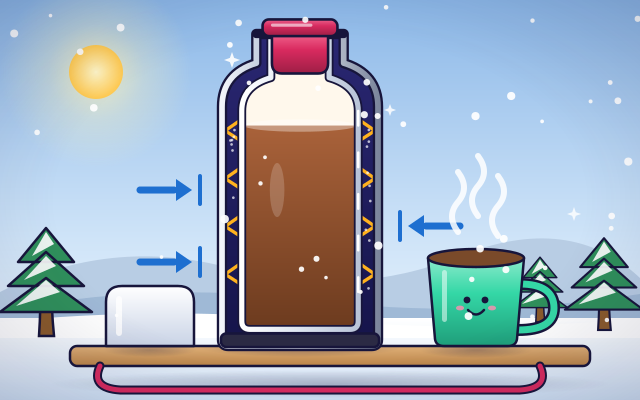
A vacuum flask is a bottle inside a bottle with the air pumped out of the gap. Heat has almost no way to cross.
The big idea: Heat escapes in three ways. A flask blocks all three: an empty gap stops heat being carried across, shiny walls bounce heat rays back, and a stopper keeps warm air and steam in.
It's like an island with no bridge: on land you could walk across, but with empty space in between there is nothing to carry you over.
The interactive parts didn't load. The explanations below still work; try reloading the page.
How a flask keeps its heat
- It is freezing on the hill. The cocoa was poured into this flask six hours ago, and it is still steaming hot. The same flask keeps lemonade icy on a summer day. How does it do both?
- Heat leaves an open cup in three ways. It passes into anything the cup touches. Warm air and steam rise from it and carry heat off. And it shines out as invisible heat rays, the kind you feel from a fire.
- Cut a flask open and you find a surprise. It is two bottles, one inside the other. There is a gap between them all the way round. The two walls only touch at the very top.
- At the factory, the air is pumped out of the gap. An empty space like this is called a vacuum. Heat is carried by tiny particles bumping and moving. With no particles in the gap, almost none gets across.
- One kind of heat can cross empty space: heat rays. That is how the Sun warms the Earth. So the walls facing the gap are made shiny, like mirrors. The rays bounce back toward the drink.
- The open top is the last way out, so a stopper plugs it and keeps warm air and steam inside. A little heat still creeps along the neck, where the two walls join. That is why even a flask cools down in the end.
Look inside a vacuum flask
This flask is cut in half from top to bottom. Tap each part to see what it does.
- Outer wall. The tough outer shell. It protects the flask and holds the vacuum in. Because so little heat reaches it, it stays cool to the touch, even with boiling soup inside.
- Inner bottle. The bottle that holds your drink. It hangs inside the outer wall and touches it only at the top, so there is hardly any path for heat to follow.
- Vacuum gap. The gap between the two bottles, with the air pumped out. Heat usually travels by particles bumping or flowing. Here there are almost none, so the heat is stuck.
- Shiny coating. The walls facing the gap are polished or coated until they shine like mirrors. Heat rays that try to cross the gap are bounced back the way they came.
- Stopper. A plug that closes the mouth of the flask. Without it, warm air and steam would rise out of the top and take the heat with them.
- Neck. The narrow top where the inner bottle joins the outer wall. It is the only solid bridge for heat, so it is made as thin and narrow as possible.
Take a flask apart, one defense at a time
Tap the gap, the wall and the stopper to switch each one on or off. The clock runs fast. How hot is the cocoa after six hours?
Experiment: The flask has its vacuum and its shiny walls, but you forget the stopper. Is the cocoa still hot after six hours?
- Start with everything on and read the temperature after 6 hours.
- Take out the stopper. Then put it back and let air into the gap instead.
What we found: Every part is needed. Without the stopper, heat pours out of the top. With air in the gap, heat is carried across to the outer wall. With dull walls, heat rays cross the empty gap. Only all three together keep the cocoa hot.
Turn on JavaScript to try it yourself.
Flask repair shop
Two flasks have stopped working. Look closely at each one, or use the heat camera, and choose the right repair.
Three ways out, three locks
A vacuum flask does not make heat, and it does not make cold. It has no batteries and no moving parts. All it does is stop heat from moving. To see how, you need to know the three ways heat travels.
The first way is by touching. Hot things pass heat to whatever they touch, as tiny particles bump into their neighbors. The second way is by flowing. Warm air or water moves and carries heat with it, like the steam rising from a cup. Both of these need stuff: particles to bump, or air to flow. The third way is by rays. Warm things give off invisible heat rays that can cross empty space. That is how the Sun's warmth reaches us.
A flask has an answer for each. It is a bottle inside a bottle, and the air between them has been pumped out. With almost no particles in the gap, heat cannot cross by touching or by flowing. The walls facing the gap are shiny, so heat rays bounce back. And the stopper plugs the top, where warm air and steam would escape.
No flask is perfect. The inner bottle has to be held up somehow, so it joins the outer wall at the neck, and a little heat creeps through there and through the stopper. After a day your cocoa will be lukewarm. And because a flask only blocks heat from moving, it works just as well the other way: on a hot day it keeps the heat out, so cold drinks stay cold. The island picture breaks down for rays, which need no bridge at all. That is why the mirrors are there.
Key words
- Vacuum
- A space with almost nothing in it, not even air.
- Conduction
- Heat passing from one thing to another by touching.
- Convection
- Heat carried along by moving air or liquid.
- Radiation
- Heat that travels as invisible rays, even through empty space.
- Emissivity
- How well a surface gives off heat rays. Shiny surfaces give off very few.
Check your thinking
-
What is special about the gap between a flask's two walls?
Show the answer
The air has been pumped out, so there is nothing to carry heat across. Heat is mostly carried by particles. With almost none in the gap, it cannot cross.
-
Why does a flask need a stopper?
Show the answer
To stop warm air and steam carrying heat out of the top. The top is the one place with no vacuum around it. The stopper blocks that way out.
-
Why are the walls facing the gap made shiny?
Show the answer
Heat rays can cross empty space, and shiny walls bounce them back. An empty gap cannot stop heat rays. Mirrors send them back.
-
You put iced water in a flask on a hot day. How does the flask keep it cold?
Show the answer
It slows heat flowing in, exactly as it slows heat flowing out. A flask adds nothing and removes nothing. It blocks heat transfer in both directions.
-
A steel flask feels warm on the outside an hour after you fill it with hot soup. What has most likely happened?
Show the answer
Air has leaked into the gap, so heat is being conducted across it. In a sound flask almost no heat reaches the outer wall. A warm shell means the vacuum is gone.
You're a Everyday chemistry & materials expert!
You watched, looked inside, tried it, solved the challenge and went deeper. Pick another question below, or switch the age at the top to see this topic another way.
More about everyday chemistry & materials
 #416
Everyday chemistry & materials
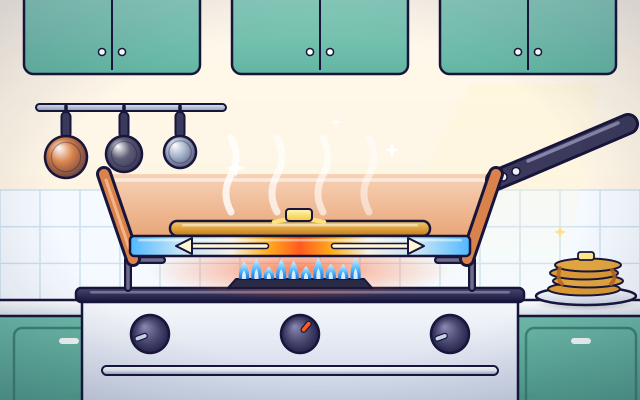
How do cooking pans transfer heat?
Compare metal types and watch heat spread from a burner through a pan.
#416
Everyday chemistry & materials
How do cooking pans transfer heat?
Compare metal types and watch heat spread from a burner through a pan.
 #417
Everyday chemistry & materials
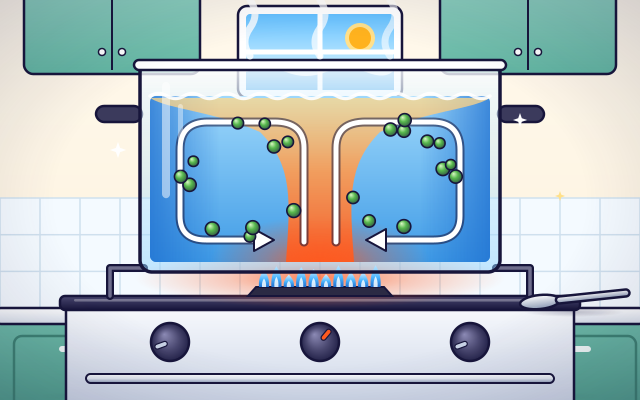
How does convection move heat through air and water?
Warm one region of a fluid and follow circulating currents.
#417
Everyday chemistry & materials
How does convection move heat through air and water?
Warm one region of a fluid and follow circulating currents.
 #418
Everyday chemistry & materials
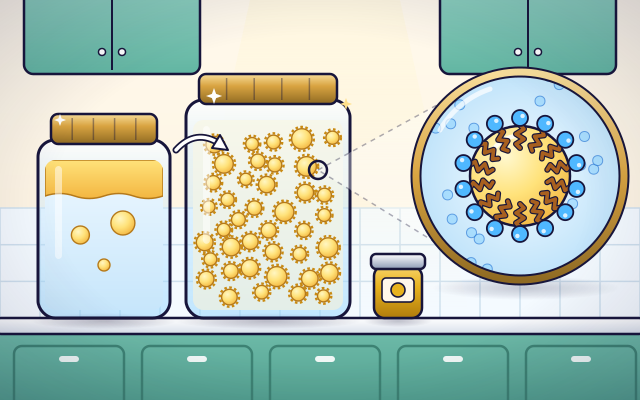
How do emulsions keep oil and water mixed?
Build model droplets and explore how emulsifiers help stabilize salad dressing or mayonnaise.
#418
Everyday chemistry & materials
How do emulsions keep oil and water mixed?
Build model droplets and explore how emulsifiers help stabilize salad dressing or mayonnaise.
 #419
Everyday chemistry & materials
How does baking powder help cakes rise?
Follow gas bubbles forming in batter and expanding during a baking simulation.
#419
Everyday chemistry & materials
How does baking powder help cakes rise?
Follow gas bubbles forming in batter and expanding during a baking simulation.
Keep exploring
Games to play next
- Weather LabPredict the weather in a box, then run a fair test to find out why.
- Science QuizzesOlly's Science Quiz Show: plants, animals, the body, weather, space and more, for every grade.
- Ratio KitchenScale recipes, fill ratio tables and find the better buy.
Guide for grown-ups
- How to start homeschooling: a step-by-step guide for familiesA guide for parents · 7 min read
Science games by grade
Science worksheets by grade
- Preschool Science Worksheets
- Pre-K Science Worksheets
- Kindergarten Science Worksheets
- 1st Grade Science Worksheets
- 2nd Grade Science Worksheets
- 3rd Grade Science Worksheets
- 4th Grade Science Worksheets
- 5th Grade Science Worksheets
- 6th Grade Science Worksheets
- 7th Grade Science Worksheets
- 8th Grade Science Worksheets