How does lake-effect snow happen?
When very cold air crosses a big, warmer lake, it soaks up heat and moisture, builds clouds and dumps snow on the far shore.
The big idea: A big lake stays warmer than the winter air. Cold wind crossing it is warmed and moistened from below, so it rises into clouds. When the air reaches the far shore, the clouds drop their snow.
It's like your warm breath on a freezing day: it puffs out as a cloud. A lake breathes warm, damp air into icy wind, and that cloud falls as snow.
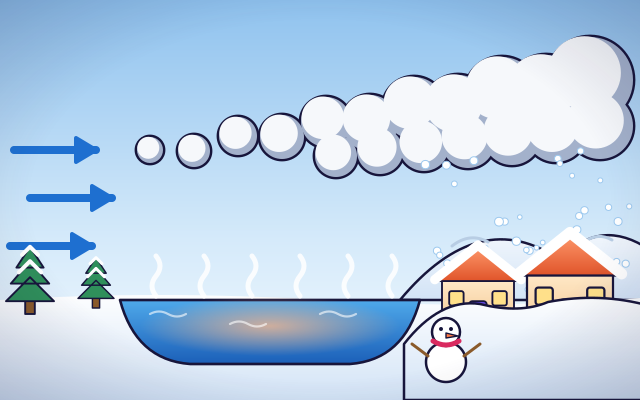
The interactive parts didn't load. The explanations below still work; try reloading the page.
How a lake makes a snowstorm
- Two towns sit on opposite sides of a big lake. One has clear, cold skies. The other is buried in snow again and again. The lake itself is the reason.
- It begins when very cold air sweeps down from the far north. This air is icy and dry: it holds almost no water at all.
- The lake has not frozen. Water holds on to summer's warmth for months, so in early winter it is much warmer than the air above it. You can even see it steaming.
- As the air crosses, the lake warms it from below and water evaporates into it. Warm, moist air is light, so it rises and builds clouds. The longer the trip over the water, the bigger they grow.
- At the far shore, the land slows the wind and hills push the air up even more. The clouds let go of their load as heavy snow, often in a narrow strip. One town is buried while the next one sees the sun.
- If ice covers the lake, the water is sealed off and the snow machine switches off. It also stops when the wind turns or the air warms. Heavy snow can arrive fast, so check the forecast and dress warmly.
How the lake makes snow
This slice shows cold air crossing a lake from left to right. Tap each part.
- Cold, dry air. Very cold air from the north arrives over the land. It is so cold that it holds almost no water.
- Warmer lake water. The lake still holds warmth from summer, so its water is much warmer than the winter air.
- Rising moisture. Water evaporates from the lake into the dry air, and the lake warms the air from below.
- Cloud band. The warmed, moistened air rises and makes clouds, which grow all the way across the lake.
- Path over the water. The farther the wind travels over open water, the more moisture it picks up. Wind along the length of a lake makes much more snow than wind across it.
- Shore and hills. Land is rougher than water, so the wind slows and piles up at the shore, and hills lift it higher. That makes the clouds drop even more snow.
- Heavy snow. The snow falls in a narrow strip. One town can get knee-deep snow while a town nearby gets hardly any.
What makes the most snow?
Send cold air across the lake. Try a long path and a short path, colder and milder air, and a frozen lake. When does the town get the most snow?
Experiment: Which trip makes the most snow for the town?
- Blow icy air the long way across the open lake. How deep is the snow?
- Now try the short way.
- Freeze the lake and blow again. What happens?
What we found: The most snow comes from very cold air making a long trip over open water. A short trip picks up less moisture, so there is less snow. A frozen lake gives almost none, because the ice seals the water in.
Turn on JavaScript to try it yourself.
Snow forecaster
For each day, read the conditions under this goal and look at the lake. Forecast big snow, a little snow or no snow for the town, then watch the wind blow.
Why some lakeside towns get so much snow
Some towns beside big lakes are famous for snow. In a single storm they can get snow up to your waist, while a town on the other side of the lake gets a few flakes. This is lake-effect snow, and it happens when three things come together.
First, the air must be very cold. In early winter, air from the far north sweeps down over the land. It is icy and dry. Second, the lake must be open and warmer than the air. Water cools much more slowly than land or air, so a big lake stays fairly warm for weeks after the air has turned freezing.
When the icy air slides over the lake, the water warms it from below and evaporates into it, just as your warm breath makes a cloud on a cold day. The warmed, damp air is lighter, so it rises and builds clouds. Third, the air needs a long trip over the water to collect plenty of moisture. Wind blowing along the length of a lake makes far more snow than wind blowing across it.
At the far shore, the land slows the wind and hills push it up, and the snow comes down in a narrow strip. When the lake freezes over, the supply is cut off. The breath comparison has a limit: your breath cloud just fades, but over a lake the cloud keeps growing for many kilometers. Lake-effect snow can pile up fast, so people who live there watch the forecast, dress warmly and take care on the roads.
Key words
- Lake-effect snow
- Snow made when very cold air crosses a warmer, unfrozen lake and drops snow on the far shore.
- Evaporation
- Liquid water turning into water vapor in the air.
- Fetch
- How far the wind travels over open water.
- Snowbelt
- An area downwind of a big lake that gets much more snow than places around it.
- Instability
- When air near the ground is warm and light under colder, heavier air, so it wants to rise.
Check your thinking
-
What does very cold air need to cross to make lake-effect snow?
Show the answer
A big, open lake that is warmer than the air. The open water warms the air and adds moisture. Ice blocks both.
-
The wind changes so it blows along the whole length of the lake. What happens to the snow?
Show the answer
More snow, because the air spends longer over the water. A longer trip over open water lets the air pick up more moisture.
-
Why does lake-effect snow stop when the lake freezes?
Show the answer
Ice seals the water, so no warmth or moisture can reach the air. The snow machine runs on water from the lake. Ice puts a lid on it.
-
Heavy lake snow is forecast for your town tonight. What is the smart thing to do?
Show the answer
Check the forecast, dress warmly and let grown-ups plan any travel. Lake snow can pile up quickly in one place. Knowing early keeps everyone safe and warm.
You're a Earth & weather expert!
You watched, looked inside, tried it, solved the challenge and went deeper. Pick another question below, or switch the age at the top to see this topic another way.
More about earth & weather
 #456
Earth & weather
How does humidity affect the air around us?
Change temperature and water vapor and explore relative humidity and condensation.
#456
Earth & weather
How does humidity affect the air around us?
Change temperature and water vapor and explore relative humidity and condensation.
 #457
Earth & weather
How do floods develop?
Add rainfall to a model watershed and compare absorption, runoff, and river levels.
#457
Earth & weather
How do floods develop?
Add rainfall to a model watershed and compare absorption, runoff, and river levels.
 #458
Earth & weather
How do droughts develop?
Follow rainfall, evaporation, soil moisture, and stored water through a dry period.
#458
Earth & weather
How do droughts develop?
Follow rainfall, evaporation, soil moisture, and stored water through a dry period.
 #459
Earth & weather
How do ocean currents move water?
Explore wind, temperature, salinity, and Earth's rotation in a simplified ocean model.
#459
Earth & weather
How do ocean currents move water?
Explore wind, temperature, salinity, and Earth's rotation in a simplified ocean model.
Keep exploring
Games to play next
- Weather LabPredict the weather in a box, then run a fair test to find out why.
- Landform ExplorerMountains, valleys, peninsulas and deltas — learn the shapes of the land and find them on Earth.
- River MysterySomething changed the river. Sample sites with a limited budget, follow the evidence and find where the change begins.
Guide for grown-ups
- How to start homeschooling: a step-by-step guide for familiesA guide for parents · 7 min read
Science games by grade
Science worksheets by grade
- Preschool Science Worksheets
- Pre-K Science Worksheets
- Kindergarten Science Worksheets
- 1st Grade Science Worksheets
- 2nd Grade Science Worksheets
- 3rd Grade Science Worksheets
- 4th Grade Science Worksheets
- 5th Grade Science Worksheets
- 6th Grade Science Worksheets
- 7th Grade Science Worksheets
- 8th Grade Science Worksheets