How do laundry detergents remove different stains?
Laundry detergent mixes several ingredients, and each one removes a different kind of stain.
The big idea: Stains are made of different stuff: grease, protein, starch or color. Detergent contains a different ingredient for each kind, and each ingredient only works on its own kind of stain.
It's like a team with different jobs: one helper carries grease away, two snip long chains into bits, and one fades colors.
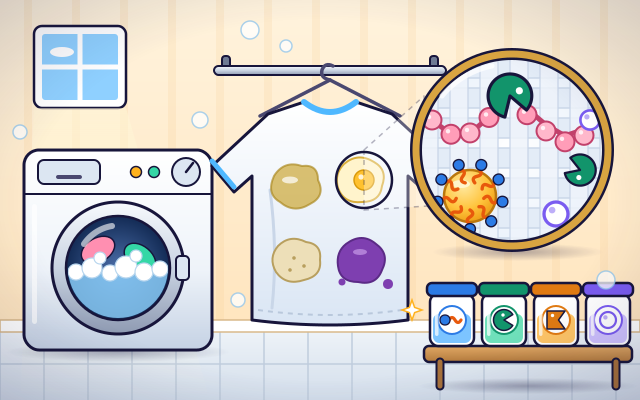
The interactive parts didn't load. The explanations below still work; try reloading the page.
One detergent, four jobs
- After a picnic this shirt has four stains: butter, egg, pasta and berry juice. They look different because they are made of different stuff. Can one detergent beat them all?
- Laundry detergent is not one thing. It is a mix of ingredients, each with its own job. Here they are in separate jars, so we can test them one at a time.
- The soapy helper is called a surfactant. One end of it loves grease and the other end loves water. It wraps the butter into tiny droplets that float off the fibers.
- Egg protein and pasta starch are long chains tangled in the fibers. Enzymes are helpers shaped to fit one kind of chain. One snips protein, another snips starch, and the small pieces rinse away.
- The juice stain is made of small, strongly colored molecules. The color remover releases active oxygen. The oxygen changes those molecules so they no longer look purple.
- In the machine all the helpers work at the same time. Warm water and tumbling carry the droplets, the snipped pieces and the faded color down the drain. The shirt comes out clean.
Inside the detergent box
Tap each jar to see its helper at work in the lens. Tap each stain to see what it is made of.
- Surfactant (the soapy helper). Surfactant is the soap-like part of detergent. Its tail digs into grease and its head holds on to water, so the grease can be carried away.
- Protease (protein snipper). Protease is an enzyme that snips long protein chains, like those in egg, milk and grass stains, into small pieces that rinse away.
- Amylase (starch snipper). Amylase is an enzyme that snips starch, from foods like pasta, rice, potato and gravy, into small sugars that dissolve in water.
- Oxygen bleach (color remover). Oxygen bleach releases active oxygen in the wash. It changes the colored molecules of tea, juice and fruit stains so they lose their color.
- Grease stain (butter). Butter is fat. Fat and water do not mix, so plain water cannot lift this stain.
- Protein stain (egg). Egg is mostly protein: long chains that tangle around the fibers and stick.
- Starch stain (pasta). Pasta leaves starch behind: long chains of sugar units that dry into a stiff, glue-like film.
- Color stain (berry juice). Berry juice contains small molecules with a very strong color. They soak into the fibers and stay.
Match the helper to the stain
Tap a jar (or drag a scoop from it) and then a stain. The lens shows what the helper does to the stain's molecules.
Experiment: Does every helper work on every stain?
- Pick the protein snipper and tap the butter stain. Watch the lens.
- Now tap the egg stain with the same helper.
- Find the right helper for every stain.
What we found: Each helper works on one kind of stain only. The soapy helper wraps grease, each snipper fits one kind of chain, and the color remover only changes colored molecules. That is why detergent needs the whole team.
Turn on JavaScript to try it yourself.
Mix the right detergent
This shirt has butter, egg and berry juice on it. Switch on only the helpers it needs, then start the wash.
Why detergent needs a whole team
A stain is not just dirt. It is made of something: butter is fat, egg is protein, pasta leaves starch, and berry juice leaves strongly colored molecules. Each of these holds on to cloth in its own way, so each needs a different kind of help.
The soapy part of detergent is called a surfactant. Its molecules have a tail that digs into grease and a head that holds on to water, so greasy dirt is wrapped up and carried away. But a surfactant cannot do much to a tangle of long protein or starch chains.
For those, detergent contains enzymes. An enzyme is a tiny helper with a special shape that fits just one kind of chain, the way a key fits one lock. Protease snips protein into small pieces, and amylase snips starch into small sugars. Enzymes are not used up, so each one can snip again and again. Very hot water spoils them: the heat bends them out of shape, and they stop fitting.
Colored stains are different again. Oxygen bleach changes the colored molecules so they lose their color. Put all these helpers together, add warm water and the tumbling of the machine, and most stains wash out. Our jars are a simplified model: real detergents contain other ingredients too, such as builders that soften the water.
Key words
- Surfactant
- The soap-like ingredient. One end of each molecule holds grease and the other end holds water.
- Enzyme
- A tiny helper with a shape that fits one kind of molecule and helps cut it up, again and again.
- Protease
- An enzyme that cuts protein chains into smaller pieces.
- Amylase
- An enzyme that cuts starch into small sugars.
- Oxygen bleach
- An ingredient that releases active oxygen, which makes colored stains lose their color.
- Denatured
- Bent out of shape. A denatured enzyme, for example one that got too hot, no longer fits its target and stops working.
- Builder
- An ingredient that softens hard water by capturing its minerals, so the surfactant can do its job.
Check your thinking
-
Which ingredient removes a greasy butter stain?
Show the answer
The surfactant (soapy helper). Surfactant molecules hold grease with one end and water with the other, so the grease is carried away.
-
You put the starch snipper on an egg stain. What happens?
Show the answer
Nothing. Its shape only fits starch chains. An enzyme fits just one kind of chain. Egg is protein, so it needs the protein snipper.
-
Why can a wash that is much too hot leave an egg stain behind?
Show the answer
The heat bends the enzymes out of shape, so they stop working. Enzymes need their exact shape. Too much heat spoils the shape, and hot water also makes egg stick harder.
-
What does oxygen bleach do to a berry juice stain?
Show the answer
It changes the colored molecules so they lose their color. Active oxygen changes the colored molecules. They may still be there, but they no longer look purple.
-
A shirt has only a butter stain and a pasta stain. Which mix does the job with nothing wasted?
Show the answer
Surfactant and amylase. Butter is fat (surfactant) and pasta is starch (amylase). Protease and bleach would have nothing to act on.
-
Why is detergent a mix of several ingredients?
Show the answer
Because stains are made of different stuff, and each ingredient handles one kind. Grease, protein, starch and color each need a different kind of chemistry, so detergent brings a team.
You're a Everyday chemistry & materials expert!
You watched, looked inside, tried it, solved the challenge and went deeper. Pick another question below, or switch the age at the top to see this topic another way.
More about everyday chemistry & materials
 #403
Everyday chemistry & materials
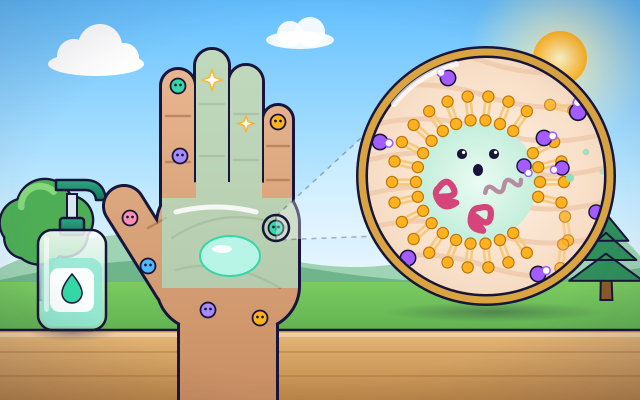
How does hand sanitizer affect microbes?
Explore alcohol acting on microbial membranes and proteins in a simplified animation.
#403
Everyday chemistry & materials
How does hand sanitizer affect microbes?
Explore alcohol acting on microbial membranes and proteins in a simplified animation.
 #404
Everyday chemistry & materials
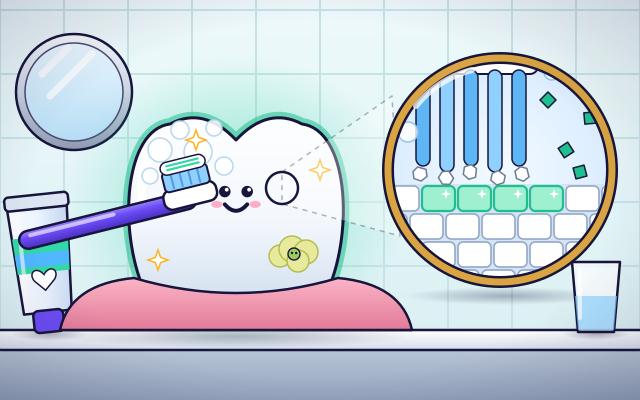
How does toothpaste clean and protect teeth?
Explore cleaning ingredients and fluoride interacting with a model tooth surface.
#404
Everyday chemistry & materials
How does toothpaste clean and protect teeth?
Explore cleaning ingredients and fluoride interacting with a model tooth surface.
 #405
Everyday chemistry & materials
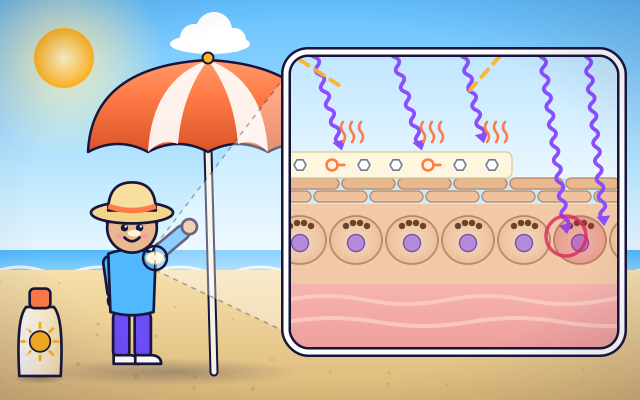
How does sunscreen protect skin?
Follow ultraviolet light interacting with sunscreen ingredients in a simplified skin model.
#405
Everyday chemistry & materials
How does sunscreen protect skin?
Follow ultraviolet light interacting with sunscreen ingredients in a simplified skin model.
 #406
Everyday chemistry & materials
How does glue hold surfaces together?
Compare adhesives, surface contact, and curing while joining virtual materials.
#406
Everyday chemistry & materials
How does glue hold surfaces together?
Compare adhesives, surface contact, and curing while joining virtual materials.
Keep exploring
Games to play next
- Weather LabPredict the weather in a box, then run a fair test to find out why.
- Science QuizzesOlly's Science Quiz Show: plants, animals, the body, weather, space and more, for every grade.
- Ratio KitchenScale recipes, fill ratio tables and find the better buy.
Guide for grown-ups
- How to start homeschooling: a step-by-step guide for familiesA guide for parents · 7 min read
Science games by grade
Science worksheets by grade
- Preschool Science Worksheets
- Pre-K Science Worksheets
- Kindergarten Science Worksheets
- 1st Grade Science Worksheets
- 2nd Grade Science Worksheets
- 3rd Grade Science Worksheets
- 4th Grade Science Worksheets
- 5th Grade Science Worksheets
- 6th Grade Science Worksheets
- 7th Grade Science Worksheets
- 8th Grade Science Worksheets