How do lichens work as living partnerships?
A lichen is a team: a fungus that builds the home and holds water, and tiny green algae that make the food.
The big idea: A lichen is not one living thing but two. The fungus gives the algae a home, water and shelter from the hot sun. The algae use sunlight to make sugar and share it with the fungus. Together they can live on bare rock, where neither could live alone.
It's like two friends camping together: one builds the tent and fetches the water, the other cooks the meals, and each would have a hard time alone.
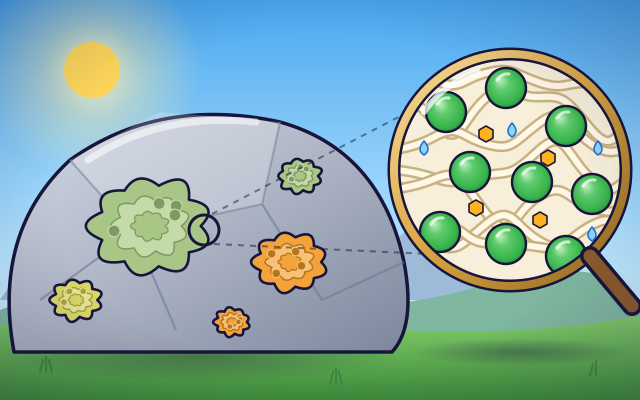
The interactive parts didn't load. The explanations below still work; try reloading the page.
How a lichen works
- This rock has no soil, and it bakes dry in the sun. Yet crusty patches of green and orange grow on it. They are lichens. How can anything live here?
- Zoom in very close. A lichen is two living things joined together. The pale threads are a fungus. Tucked among them are tiny green balls called algae.
- The fungus builds the home. Its threads soak up rain like a sponge and hold on to the rock. A tough skin on top shades the algae from the hot sun.
- The green algae are the cooks. They catch sunlight and use it to turn air and water into sugar. A fungus cannot do that. It cannot make its own food.
- So they trade. The algae pass sugar to the fungus. The fungus gives the algae water, minerals and a safe place to live. Each one gets what it cannot get alone.
- Lichens grow very slowly, often only about a millimeter a year. When it is dry they wait, and after rain they wake up. Bit by bit they help make the first crumbs of soil.
A slice through a lichen
This is a thin slice through a lichen, magnified many times. Tap each layer to see who does what.
- Top skin. The top skin is made of fungus threads packed tightly together. It works like a roof and sunscreen, and it slows down drying.
- Algae layer. Just under the skin sit the green algae, where light can reach them. Each one makes sugar from sunlight, air and water.
- Fungus threads. The middle is a loose tangle of fungus threads with air spaces between them. It soaks up water like a sponge and stores it.
- Holdfasts. Little bundles of threads grip the rock like tiny feet. They are anchors, not roots: they hold on, but they do not drink like a plant's roots.
- Travel bundles. Tiny dusty balls break off the top. Each one holds a few algae wrapped in fungus threads, so both partners travel together to a new place.
- Rock. The rock is just a place to sit, not food. But over many years the lichen loosens tiny grains from it, and those grains become the start of soil.
Who needs whom?
Make it rain and watch the trade begin. Then take one partner away and see what happens to the other.
Experiment: Could the fungus or the algae live on this bare rock without the other?
- Tap the cloud to make it rain. Watch the sugar and the water move.
- Choose "Fungus only". What is missing now?
- Choose "Algae only" and make it rain again. How long do the algae stay wet?
What we found: Neither partner can live here alone. The fungus holds water but cannot make food, so it starves. The algae make food, but with no fungus to hold water they dry out very fast. Together, each gets what it is missing.
Turn on JavaScript to try it yourself.
A home and a team
Help a lichen grow for 20 years. Tap the place with what both partners need, and pick the right mix of fungus and algae.
How lichens really work
A lichen looks like one living thing, but it is really a team. Most of its body is a fungus, made of thin threads woven together. Living among the threads are tiny green algae. Some lichens use blue-green bacteria instead, and they do the same job.
Each partner has a skill. The fungus builds the body, grips the rock, soaks up rain and mist like a sponge, and shades the algae with a tough top skin. The algae are the cooks: they use sunlight to turn air and water into sugar, and they pass some of that sugar to the fungus. A fungus cannot make its own food, and on bare rock there is nothing for it to eat.
Because they share, lichens can live where almost nothing else can: on bare rock, tree bark, roofs, deserts and icy mountains. When they dry out they simply stop and wait. After rain they wake up within minutes. They grow very slowly, and they need clean air, so lots of bushy lichens on the trees is a good sign.
Our tent comparison is not quite fair. The two campers are equal friends, but in a lichen the fungus is in charge and seems to get the better deal. Many of the algae could live without the fungus in a wet place, but the fungus could not live without them.
Key words
- Lichen
- A fungus and algae living together as if they were one living thing.
- Algae
- Tiny, simple green living things that make food from sunlight.
- Symbiosis
- Two different living things living closely together for a long time.
- Photosynthesis
- Making sugar from air and water, using the energy of sunlight.
- Hyphae
- The thin threads that a fungus is made of.
Check your thinking
-
Which partner makes the sugar in a lichen?
Show the answer
The algae. Only the green algae can use sunlight to make sugar. The fungus cannot make its own food.
-
What does the fungus give the algae?
Show the answer
Water, minerals and shelter. The fungus soaks up and holds water, gathers minerals and shades the algae.
-
A lichen is moved into a dark cave that stays damp. What happens after a while?
Show the answer
Both partners starve, because the algae cannot make sugar without light. Without light the algae cannot make sugar. Then there is no food for the algae or for the fungus.
-
Why can lichens live on bare rock when most plants cannot?
Show the answer
The partners supply each other with food, water and shelter, so they need no soil. A lichen needs only light, air, rain and a place to hold on. The rock is a seat, not food.
-
A city plants new trees. Years later their bark carries almost no lichens, while trees in the countryside nearby are covered. What is the most likely reason?
Show the answer
City air carries more pollution, and many lichens absorb it directly. Lichens take in whatever is dissolved in rain and air over their whole surface, so many kinds disappear where the air is polluted.
You're a Plants & ecosystems expert!
You watched, looked inside, tried it, solved the challenge and went deeper. Pick another question below, or switch the age at the top to see this topic another way.
More about plants & ecosystems
 #238
Plants & ecosystems
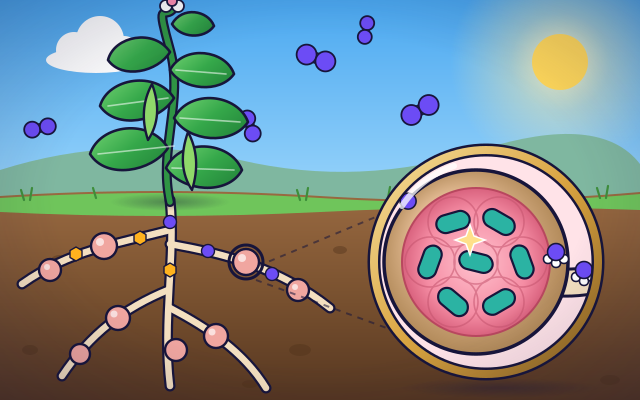
How do root bacteria help plants obtain nitrogen?
Look inside legume root nodules and follow exchanges between plants and bacteria.
#238
Plants & ecosystems
How do root bacteria help plants obtain nitrogen?
Look inside legume root nodules and follow exchanges between plants and bacteria.
 #239
Plants & ecosystems
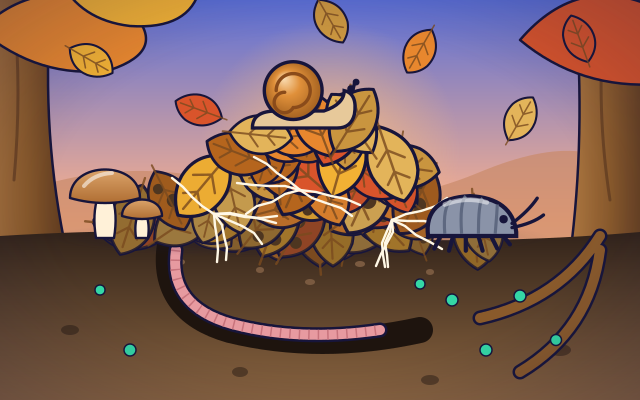
How do decomposers break down fallen leaves?
Accelerate a forest-floor timeline and follow fungi, bacteria, and small animals at work.
#239
Plants & ecosystems
How do decomposers break down fallen leaves?
Accelerate a forest-floor timeline and follow fungi, bacteria, and small animals at work.
 #240
Plants & ecosystems
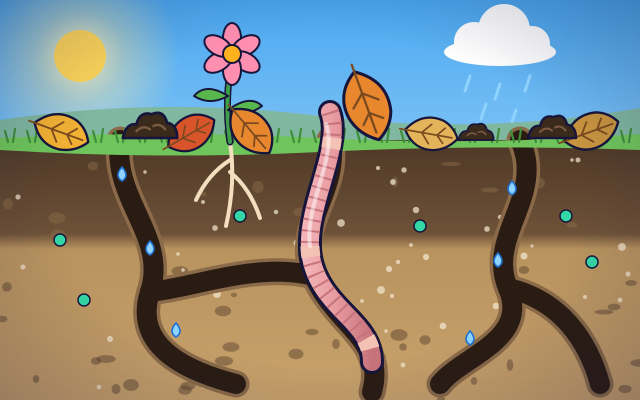
How do earthworms change the ground?
Follow tunnels and compare their effects on air spaces and organic material.
#240
Plants & ecosystems
How do earthworms change the ground?
Follow tunnels and compare their effects on air spaces and organic material.
 #241
Plants & ecosystems
How do wetlands help clean water?
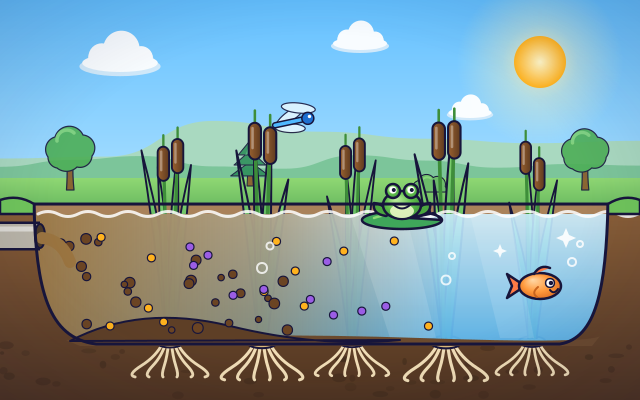
Trace settling particles, plant uptake, and microbial activity through a model wetland.
#241
Plants & ecosystems
How do wetlands help clean water?
Trace settling particles, plant uptake, and microbial activity through a model wetland.
Keep exploring
Games to play next
- Classification ExplorerSort living things by what you can see, then follow and build yes-or-no keys.
- Habitat Builder 3DFind the right home for frogs, camels, polar bears and more.
- Label LabPut the right labels on beautiful science diagrams, from bean plants to heart chambers.
Guide for grown-ups
- How to start homeschooling: a step-by-step guide for familiesA guide for parents · 7 min read
Science games by grade
Science worksheets by grade
- Preschool Science Worksheets
- Pre-K Science Worksheets
- Kindergarten Science Worksheets
- 1st Grade Science Worksheets
- 2nd Grade Science Worksheets
- 3rd Grade Science Worksheets
- 4th Grade Science Worksheets
- 5th Grade Science Worksheets
- 6th Grade Science Worksheets
- 7th Grade Science Worksheets
- 8th Grade Science Worksheets