How do mechanical watches work without batteries?
No battery needed. A wound-up spring pushes a row of gears, and a tiny swinging wheel lets the energy out one tick at a time.
The big idea: Winding a watch tightens a spring. The spring wants to unwind fast, but the escapement stops the gears and lets them go one tooth at a time, in time with a wheel that swings back and forth at a steady beat.
It's like a wind-up toy with a careful gatekeeper: the spring wants to rush, but a swinging gate lets only one gear tooth through on every swing.
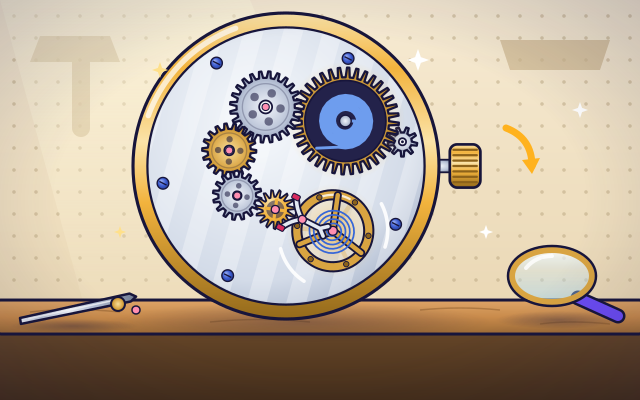
The interactive parts didn't load. The explanations below still work; try reloading the page.
From a wound spring to a tick
- This watch has no battery at all. Instead, you turn the little knob on its side, called the crown. A few turns in the morning keep it ticking all day and all night.
- Turning the crown curls a long, thin metal ribbon into a tight coil inside a little drum. This is the mainspring. A tight spring pushes hard to uncurl, so it is full of stored energy.
- As the spring tries to uncurl, it turns its drum. Teeth on the drum push a row of gears called the gear train. Each gear turns faster than the one before it.
- But there is a problem. If nothing held the gears back, they would spin wildly, and the spring would be empty in a few seconds. The watch needs a brake that lets go just a little at a time.
- The last gear has pointed teeth. A tiny fork rocks from side to side, catching one tooth, letting it go, then catching the next. Each catch makes a sound: tick, tock. This part is the escapement.
- What rocks the fork? A balance wheel with a hair-thin spring. It swings one way, the spring pulls it back, and it swings the other way, always at the same steady beat. Each swing lets one tooth go by and moves the hands a tiny step.
Look inside a wind-up watch
This is the back of the watch with the cover off. Tap each part to see it move.
- Crown. The knob on the side. Turning it winds the spring. Pulling it out lets you set the hands to the right time.
- Mainspring. A thin metal ribbon about as long as a ruler, coiled inside a drum called the barrel. Wound tight, it holds the energy that runs the watch.
- Gear train. A row of gears that carries the spring's push to the escapement. Each gear turns faster than the one before. The hands are fixed to some of these gears.
- Escape wheel. The last and fastest wheel. Its pointed teeth are caught and let go by the fork, one at a time.
- Pallet fork. A tiny rocking lever shaped like an anchor. Its two jewel tips take turns catching the escape wheel's teeth. It makes the tick and the tock.
- Balance wheel. A wheel that swings one way and then the other, several times a second. Every swing takes exactly the same time, and that steady beat keeps the watch on time.
- Hairspring. A spiral spring thinner than a hair. Every time the balance wheel swings away, it pulls the wheel back toward the middle.
- Hands. The hands on the front are turned by the gears. The second hand moves a tiny step with every tick.
Watch lab: what does the fork do?
Tap the crown to wind the spring and follow the energy to the swinging wheel. Then lift the fork out and see what the escapement was doing.
Experiment: What happens if you lift the fork out while the spring is wound?
- Tap the crown a few times to wind the spring. Watch the tick and the tock.
- Tap the fork to lift it out of the way.
- Put the fork back and wind the spring again.
What we found: Without the fork, nothing holds the gears back. They race, and the spring is empty in seconds. The escapement is the brake that lets the spring's energy out one tooth at a time, and the swinging balance wheel decides when.
Turn on JavaScript to try it yourself.
Regulate the watch
This watch does not keep good time. Wind it, test it and move the regulator until it is within one minute a day.
How a wind-up watch keeps time
People made watches for hundreds of years before batteries existed. A wind-up watch gets its energy from you. When you turn the crown, you curl a long metal ribbon, the mainspring, into a tight coil. A tight spring pushes to uncurl, just like a wind-up toy that wants to go.
The spring pushes on a row of gears. But if the gears were free to spin, the spring would uncurl in a few seconds and the hands would whirl around. So the last gear, the escape wheel, is held by a tiny rocking fork. The fork catches a tooth, lets it go, and catches the next one. This part is called the escapement, because it lets the energy escape a little bit at a time.
What tells the fork when to rock? The balance wheel. It swings one way, a hair-thin spring pulls it back, and it swings the other way. Every swing takes the same time, whether the swing is big or small. Each swing flips the fork, lets one tooth through, and gets a tiny push in return, which keeps it swinging.
Our comparison with a gatekeeper is a little too simple. A real gatekeeper could get bored and speed up. The balance wheel cannot: its beat depends only on how heavy the wheel is and how strong its little spring is. That is why a good wind-up watch is wrong by only a few seconds a day. Some watches even wind themselves, using a weight that swings when you move your arm.
Key words
- Mainspring
- The coiled metal ribbon that stores the energy when you wind the watch.
- Gear train
- The row of gears that carries the spring's push through the watch.
- Escapement
- The escape wheel and fork that let the gears move one tooth at a time.
- Balance wheel
- The wheel that swings back and forth at a steady beat.
- Hairspring
- The very fine spiral spring that pulls the balance wheel back toward the middle.
- Elastic energy
- Energy stored in something that has been bent, stretched or wound, like a spring.
Check your thinking
-
Where does a mechanical watch store its energy?
Show the answer
In the wound-up mainspring. Turning the crown coils the mainspring tightly. It holds the energy and lets it out slowly.
-
What would happen to a wound watch with no escapement?
Show the answer
The gears would race and the spring would unwind in seconds. The escapement holds the gears back and lets them move one tooth at a time. Without it, all the energy rushes out.
-
Which part decides how fast a mechanical watch ticks?
Show the answer
The balance wheel and its hairspring. The balance wheel swings at its own steady beat. The mainspring only gives the push that keeps it going.
-
A watchmaker adds weight to the rim of the balance wheel. What happens?
Show the answer
The balance swings more slowly, so the watch loses time. More mass at the rim means a larger moment of inertia, and the period grows with the square root of it.
-
What makes the tick and the tock?
Show the answer
The fork's jewel tips catching the teeth of the escape wheel. Every swing lets one tooth go, and the next tooth lands on a jewel with a tiny click.
-
Why does the hairspring matter so much?
Show the answer
It pulls the balance wheel back so it keeps swinging at a steady beat. Without the hairspring the wheel would just spin one way. The spring's pull turns it around, again and again.
You're a Measuring & instruments expert!
You watched, looked inside, tried it, solved the challenge and went deeper. Pick another question below, or switch the age at the top to see this topic another way.
More about measuring & instruments
 #173
Measuring & instruments
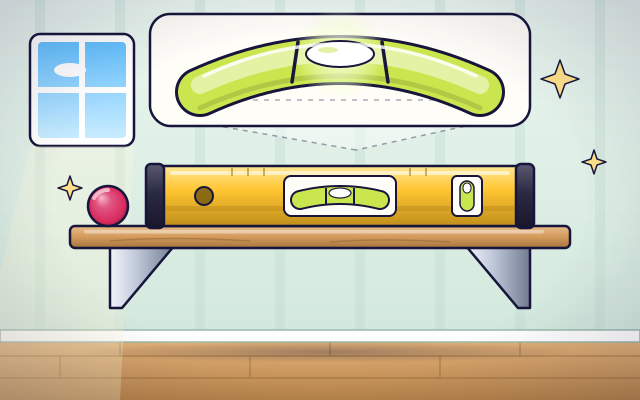
How does a spirit level show whether something is level?
Tilt a model shelf and watch the bubble move within its curved vial.
#173
Measuring & instruments
How does a spirit level show whether something is level?
Tilt a model shelf and watch the bubble move within its curved vial.
 #174
Measuring & instruments
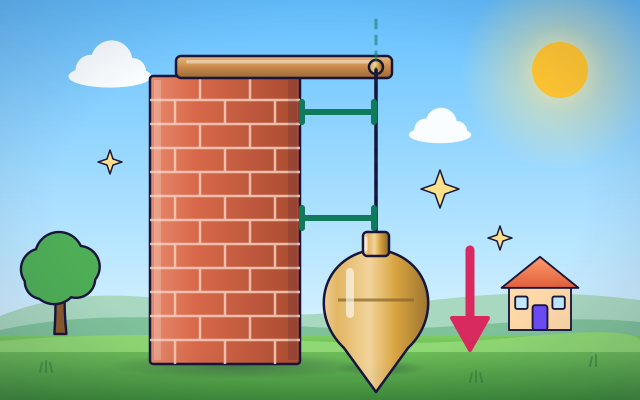
How does a plumb bob show a vertical line?
Hang a virtual weight beside walls and compare their alignment with the string.
#174
Measuring & instruments
How does a plumb bob show a vertical line?
Hang a virtual weight beside walls and compare their alignment with the string.
 #175
Measuring & instruments
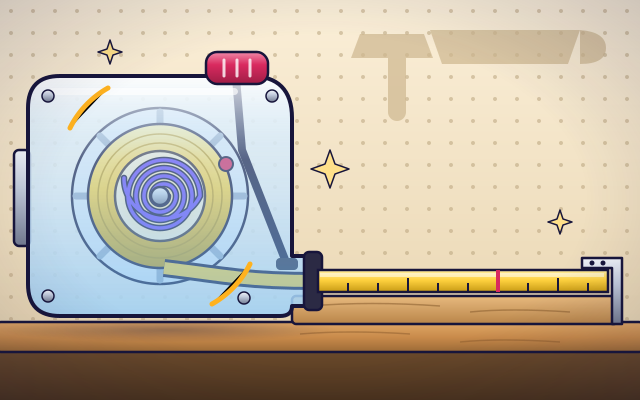
How does a retractable tape measure work?
Inspect the spring, spool, hook, and locking mechanism inside a transparent case.
#175
Measuring & instruments
How does a retractable tape measure work?
Inspect the spring, spool, hook, and locking mechanism inside a transparent case.
 #176
Measuring & instruments
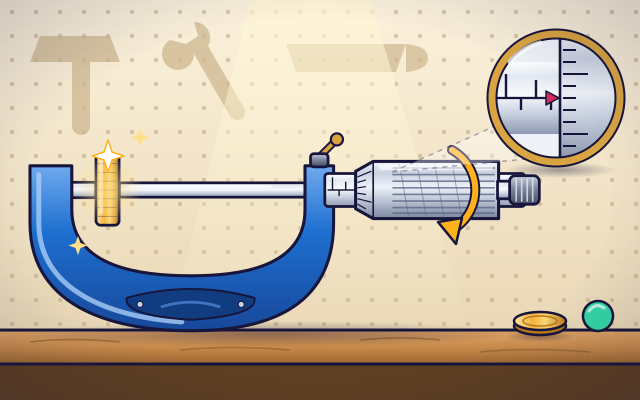
How does a micrometer measure tiny differences?
Turn a precision screw and connect its movement to readings on the scale.
#176
Measuring & instruments
How does a micrometer measure tiny differences?
Turn a precision screw and connect its movement to readings on the scale.
Keep exploring
Games to play next
- Clock TowerKeep the town on time: set the tower clock's hands just right.
- Globe ExplorerSpin a real 3D globe, flip to the flat map, and find continents, oceans and countries.
- Mapmaker QuestFollow directions to make a map, then read its legend, compass rose and scale.
Guide for grown-ups
- How to start homeschooling: a step-by-step guide for familiesA guide for parents · 7 min read
Science games by grade
Science worksheets by grade
- Preschool Science Worksheets
- Pre-K Science Worksheets
- Kindergarten Science Worksheets
- 1st Grade Science Worksheets
- 2nd Grade Science Worksheets
- 3rd Grade Science Worksheets
- 4th Grade Science Worksheets
- 5th Grade Science Worksheets
- 6th Grade Science Worksheets
- 7th Grade Science Worksheets
- 8th Grade Science Worksheets