How does a spirit level show whether something is level?
A spirit level has a curved tube of liquid with one air bubble. The bubble floats to the highest spot, so it shows which end is too high.
The big idea: Air is lighter than liquid, so the bubble floats to the highest part of the curved tube. When the tool is level, the highest part is the middle, between the two lines.
It's like a marble in a bowl, but upside down: a marble rolls to the lowest spot of a bowl, and a bubble floats to the highest spot of an arch.
The interactive parts didn't load. The explanations below still work; try reloading the page.
How a bubble finds level
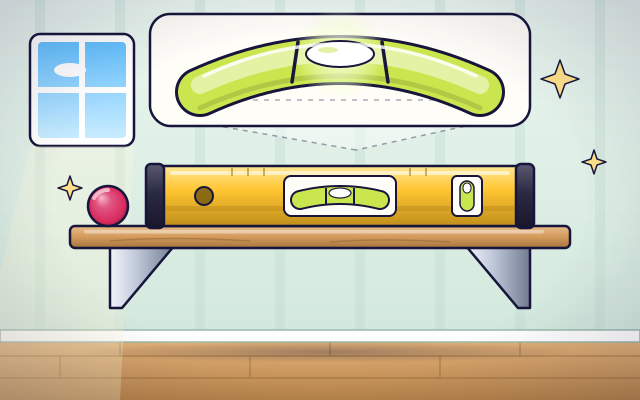
- This shelf looks straight, but a ball put on it rolls to one end. One side must be lower. Our eyes cannot always tell.
- A spirit level is a straight bar with a small window. Inside the window is a tube of liquid with one bubble. On this shelf the bubble sits off to one side.
- The tube is called a vial. It is filled with colored liquid, except for one air bubble. The secret is its shape: it curves gently upward in the middle, like a low arch.
- Air is much lighter than the liquid, so the liquid sinks and pushes the bubble up. Tip the vial, and the bubble slides along the arch to whichever end is higher.
- When the level is perfectly flat, the top of the arch is exactly in the middle. The bubble settles there, between two lines. Bubble in the middle means level.
- So raise the low end of the shelf until the bubble sits between the lines. Now the shelf is level, and the ball stays right where you put it.
Look closely at a spirit level
Tap each part. The big tube at the top shows the vial in the window, magnified.
- Body. The body is a long, stiff bar, often made of aluminum. It has to be perfectly straight, because it carries the vial along the thing you are checking.
- Flat edge. The bottom edge is made very flat and smooth. You rest it on the shelf, so the level leans exactly as much as the shelf does.
- Vial. The vial is a clear, sealed tube. It curves upward very slightly in the middle. On a real level the curve is so gentle you can hardly see it.
- Liquid. The liquid is alcohol with yellow-green dye. Alcohol is used instead of water because it flows easily and does not freeze on cold days.
- Bubble. The bubble is a little pocket of air. Air is far lighter than the liquid, so the bubble is always pushed up to the highest spot in the tube.
- Two lines. Two lines mark the middle of the vial, just far enough apart to fit the bubble. When the bubble sits exactly between them, the level is flat.
- Upright vial. This second vial is turned a quarter of the way around. Hold the level against a wall or a post, and this bubble shows whether it stands straight up.
Tilt the shelf, watch the bubble
Drag the right end of the shelf up and down. Which way does the bubble go? Which way does the ball roll? Then make the shelf level.
Experiment: When you raise the right end of the shelf, which way does the bubble move?
- Drag the right end of the shelf up. Watch the bubble.
- Now drag it down below level. Where does the bubble go, and where does the ball roll?
- Find the spot where the bubble sits between the lines.
What we found: The bubble always moves toward the high end, because air floats up through the liquid. The ball does the opposite and rolls to the low end. When the bubble rests between the lines, neither end is higher, and the ball stays still.
Turn on JavaScript to try it yourself.
Hang it level
Level the shelf using only the bubble, then press Check. The crooked picture might fool your eyes, so trust the bubble!
Why the bubble finds the top
A spirit level looks simple: a straight bar with a little window. In the window is a sealed tube, called a vial, filled with colored liquid and one air bubble.
Air is much lighter than liquid. Gravity pulls the heavier liquid down, and the liquid pushes the light bubble up. So a bubble always ends up at the highest place it can reach. You see the same thing when you tip a bottle of water.
The clever part is the shape of the vial. It curves upward very slightly in the middle, like a long, low arch. When the level sits on something flat, the top of the arch is in the middle, so the bubble rests between the two lines. Tip the level, and the top of the arch moves toward the raised end. The bubble follows it.
Builders use levels to hang shelves, lay bricks and set floors, because a tilt too small to see can still make water run or a marble roll. Many levels have a second vial turned sideways for checking that walls stand straight up. Our bottle comparison is not perfect: a bottle is not curved the right way, so its bubble jumps about instead of stopping at one exact spot.
Key words
- Level
- Perfectly flat, with neither end higher than the other.
- Vial
- The sealed, slightly curved tube of liquid with a bubble inside.
- Buoyancy
- The upward push a liquid gives to lighter things in it, like a bubble.
- Plumb
- Standing exactly straight up and down.
- Sensitivity
- How far the bubble moves for a small tilt.
Check your thinking
-
Why does the bubble move to the higher end of the vial?
Show the answer
Air is lighter than the liquid, so it floats up. The heavier liquid sinks and pushes the lighter air up to the highest spot.
-
The bubble sits exactly between the two lines. What does that tell you?
Show the answer
The surface is level. The top of the arch is in the middle only when neither end is higher.
-
The bubble is near the left end. What should you do to make the shelf level?
Show the answer
Lower the left end, or raise the right end. The bubble goes to the high end, so the left end is too high.
-
What would happen if the vial were perfectly straight instead of gently curved?
Show the answer
The bubble would rush to one end at the tiniest tilt. With no arch there is no highest spot in the middle, so the bubble shoots to whichever end is a hair higher.
-
A vial's arc has a radius of 2 meters. About how far does the bubble move for a tilt of 0.5 degrees (about 0.0087 radians)?
Show the answer
About 17 millimeters. Offset is radius times angle in radians: 2000 millimeters times 0.0087 is about 17 millimeters.
You're a Measuring & instruments expert!
You watched, looked inside, tried it, solved the challenge and went deeper. Pick another question below, or switch the age at the top to see this topic another way.
More about measuring & instruments
 #174
Measuring & instruments
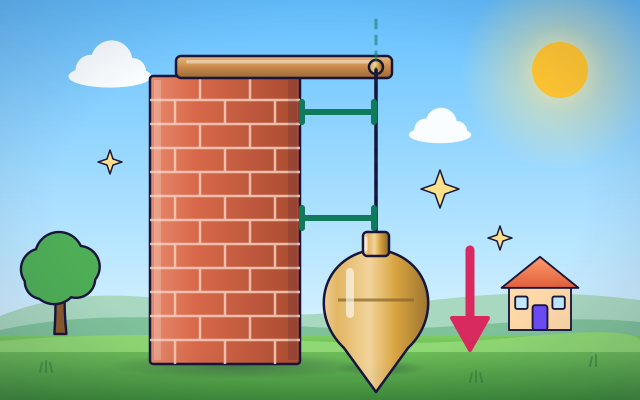
How does a plumb bob show a vertical line?
Hang a virtual weight beside walls and compare their alignment with the string.
#174
Measuring & instruments
How does a plumb bob show a vertical line?
Hang a virtual weight beside walls and compare their alignment with the string.
 #175
Measuring & instruments
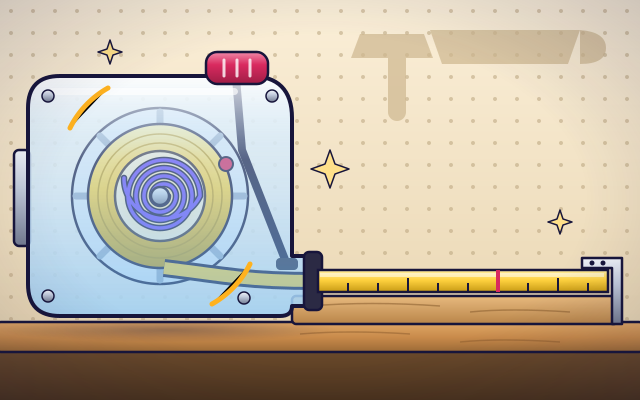
How does a retractable tape measure work?
Inspect the spring, spool, hook, and locking mechanism inside a transparent case.
#175
Measuring & instruments
How does a retractable tape measure work?
Inspect the spring, spool, hook, and locking mechanism inside a transparent case.
 #176
Measuring & instruments
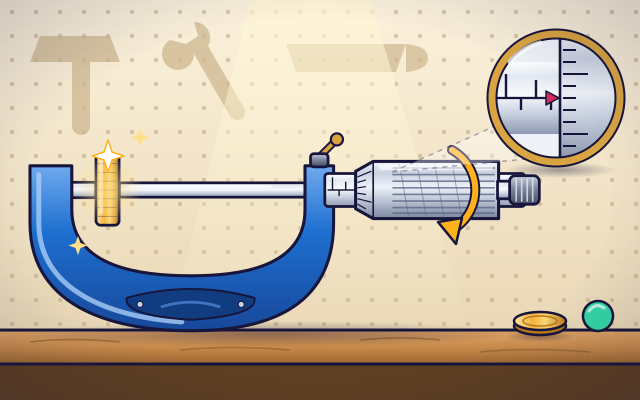
How does a micrometer measure tiny differences?
Turn a precision screw and connect its movement to readings on the scale.
#176
Measuring & instruments
How does a micrometer measure tiny differences?
Turn a precision screw and connect its movement to readings on the scale.
 #177
Measuring & instruments
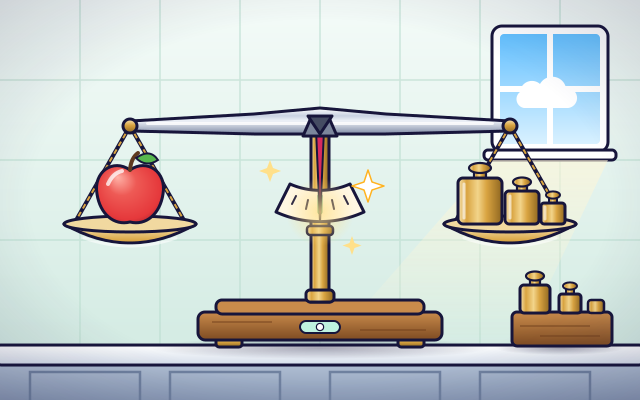
How do balance scales compare masses?
Add known masses to two pans and find combinations that balance the beam.
#177
Measuring & instruments
How do balance scales compare masses?
Add known masses to two pans and find combinations that balance the beam.
Keep exploring
Games to play next
- Clock TowerKeep the town on time: set the tower clock's hands just right.
- Mapmaker QuestFollow directions to make a map, then read its legend, compass rose and scale.
- Data DetectiveRead the clues hidden in graphs — and build your own.
Guide for grown-ups
- How to start homeschooling: a step-by-step guide for familiesA guide for parents · 7 min read
Science games by grade
Science worksheets by grade
- Preschool Science Worksheets
- Pre-K Science Worksheets
- Kindergarten Science Worksheets
- 1st Grade Science Worksheets
- 2nd Grade Science Worksheets
- 3rd Grade Science Worksheets
- 4th Grade Science Worksheets
- 5th Grade Science Worksheets
- 6th Grade Science Worksheets
- 7th Grade Science Worksheets
- 8th Grade Science Worksheets