How does a microwave heat food?
A microwave oven fills a metal box with invisible waves that shake the water in food until it is hot.
The big idea: A microwave oven makes invisible waves that bounce around inside a metal box. The waves make water molecules in the food twist back and forth billions of times a second, and all that jostling warms the food. A turning plate moves the food through hot and cold spots.
It's like
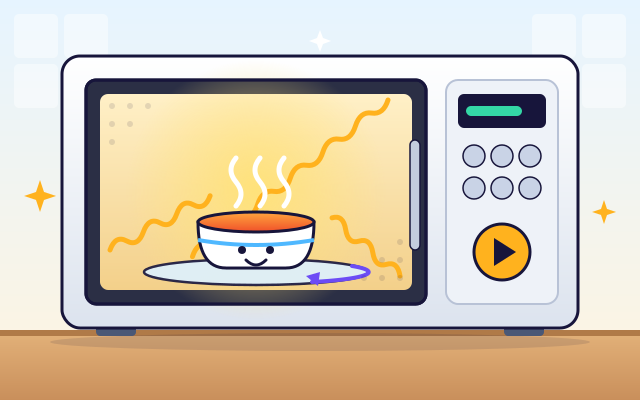
The interactive parts didn't load. The explanations below still work; try reloading the page.
How microwaves heat your food
- A bowl of cold soup goes into the microwave oven. The door shuts, the plate starts to turn, and in a minute or two the soup will be steaming hot. How?
- Behind the buttons is a part called a magnetron. It turns electricity into microwaves: invisible waves, a bit like the radio waves that carry music, but shorter.
- The metal walls act like mirrors for microwaves, so the waves bounce around inside. The door has a metal screen full of tiny holes. Light gets through the holes, but the microwaves are too big to fit.
- Food is full of water molecules. Each one has a plus end and a minus end. The waves push them one way, then the other, billions of times a second. All that twisting and bumping is heat.
- But the bouncing waves don't spread evenly. Where waves add together, food gets very hot. Where they cancel out, it stays cool. That is why still food can be burning in one place and cold in another.
- The fix is simple: a turning plate. It carries every part of the food through hot spots and cool spots, so the heating evens out. Letting food rest also helps the heat spread.
Inside a microwave oven
The side panel is cut away so you can see the hidden parts. Tap each one. Never open a real microwave oven: this is just a picture!
- Magnetron. The magnetron is the heart of the oven. It turns electricity into microwaves.
- Waveguide. The waveguide is a metal tunnel. It carries the microwaves from the magnetron into the cooking box.
- Metal box. The cooking box has metal walls. They reflect the microwaves like mirrors, so the waves stay inside and keep hitting the food.
- Door screen. The door has a metal screen with tiny holes. Light can pass through so you can see your food, but microwaves are too big for the holes and bounce back.
- Turntable. A small motor turns the glass plate. It carries the food through the hot spots and cool spots so it heats more evenly.
- Timer and power. The buttons set how long the oven runs and how strong it is. On lower power, the magnetron switches on and off to give the heat time to spread.
- Cooling fan. The magnetron gets hot when it works, so a fan blows air over it to keep it cool. That is the humming sound you hear.
- Lamp. A lamp lights up the inside so you can watch through the door screen.
Hot spot lab
Look down into the oven. Heat a pizza with the turntable off, then on. Watch the colors: where are the hot spots, and what does the turntable change?
Experiment: What will the pizza look like if the turntable is switched off?
- Turn the turntable off and press Heat.
- Look for the hottest and coolest places.
- Turn the turntable on and heat a fresh pizza. Compare.
What we found: With the turntable off, the pizza gets very hot where the waves are strong and stays cool where they are weak. With the turntable on, every part travels through strong and weak places, so it warms much more evenly.
Turn on JavaScript to try it yourself.
The turntable is broken!
The turntable won't turn. Use power, time, a half-way turn and a rest to make every part at least 50 °C without any part boiling.
Waves that shake water
Microwaves are a kind of invisible light, like radio waves but shorter. A part called a magnetron makes them, and they bounce around inside the oven's metal box.
Almost all food contains water. A water molecule is a bit like a tiny magnet with a plus end and a minus end. Microwaves push those ends one way and then the other, billions of times each second. The molecules twist and bump into their neighbors, and that jiggling is heat. The waves heat the food directly, in its outer few centimeters, instead of warming it with hot air.
The waves bouncing around the box overlap. In some places they add up and make hot spots. In others they cancel and leave cool spots. That is why microwaved food can be scalding in one bite and cold in the next.
A turning plate carries the food through the hot and cool spots so it heats more evenly. Stirring helps too, and so does letting the food stand for a minute so the heat can spread. Always be careful: food can be much hotter inside than it looks.
Key words
- Microwave
- An invisible wave, like a radio wave but shorter.
- Magnetron
- The part that turns electricity into microwaves.
- Hot spot
- A place in the oven where the waves add up and heat food fastest.
- Standing wave
- A wave pattern that stays in place, made when waves bounce back on themselves.
- Wavelength
- The distance from one wave crest to the next.
- Polar molecule
- A molecule with a slightly positive end and a slightly negative end, like water.
Check your thinking
-
What do microwaves shake inside food to make heat?
Show the answer
Water molecules. Water molecules twist back and forth and bump into each other. That is heat.
-
Why does a microwave oven have a turning plate?
Show the answer
To move food through the hot and cool spots. The waves make fixed hot and cool spots, so turning the food evens out the heating.
-
An oven runs at 2.45 GHz. About how far apart are the hot spots? (d = c / 2f)
Show the answer
About 6 cm. λ = 3.0 × 10⁸ / 2.45 × 10⁹ ≈ 0.122 m, and hot spots are half a wavelength apart: about 6.1 cm.
-
Why can you see through the door but the microwaves can't get out?
Show the answer
The holes are big enough for light but too small for microwaves. Microwaves are about 12 centimeters long, far too big to squeeze through the tiny holes.
-
Why should you let microwaved food stand for a minute?
Show the answer
So heat can spread from the hot parts to the cool parts. Resting lets the heat even out, and stops you biting into a scalding hot spot.
You're a Everyday machines expert!
You watched, looked inside, tried it, solved the challenge and went deeper. Pick another question below, or switch the age at the top to see this topic another way.
More about everyday machines
 #143
Everyday machines
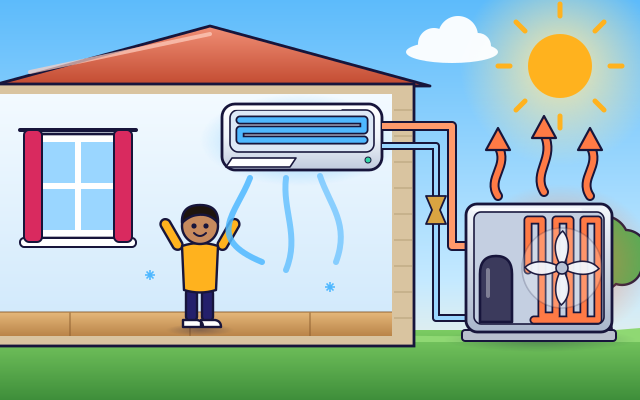
How does an air conditioner cool a room?
Follow heat moving outdoors while cooled air circulates inside a model room.
#143
Everyday machines
How does an air conditioner cool a room?
Follow heat moving outdoors while cooled air circulates inside a model room.
 #144
Everyday machines
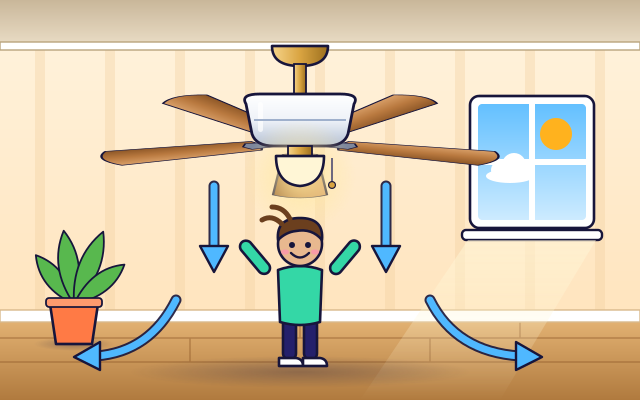
How do ceiling fans help us feel cooler?
Change blade speed and follow airflow around a person in a room.
#144
Everyday machines
How do ceiling fans help us feel cooler?
Change blade speed and follow airflow around a person in a room.
 #145
Everyday machines
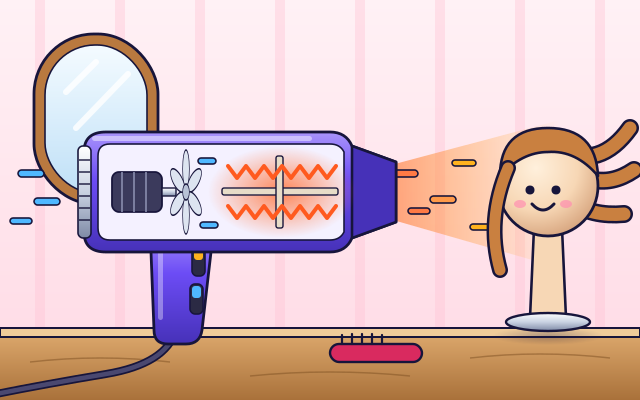
How does a hair dryer work?
Trace air past a heating element and compare airflow, temperature, and drying.
#145
Everyday machines
How does a hair dryer work?
Trace air past a heating element and compare airflow, temperature, and drying.
 #146
Everyday machines
How does a toaster brown bread?
Watch heating elements warm bread and control browning with a virtual timer.
#146
Everyday machines
How does a toaster brown bread?
Watch heating elements warm bread and control browning with a virtual timer.
Keep exploring
Games to play next
- Machine RepairFix levers, pulleys, gears and ramps so every contraption works.
- Circuit Workshop 3DWire up batteries, bulbs and switches on a 3D workbench.
- Clock TowerKeep the town on time: set the tower clock's hands just right.
Guide for grown-ups
- How to start homeschooling: a step-by-step guide for familiesA guide for parents · 7 min read
Science games by grade
Science worksheets by grade
- Preschool Science Worksheets
- Pre-K Science Worksheets
- Kindergarten Science Worksheets
- 1st Grade Science Worksheets
- 2nd Grade Science Worksheets
- 3rd Grade Science Worksheets
- 4th Grade Science Worksheets
- 5th Grade Science Worksheets
- 6th Grade Science Worksheets
- 7th Grade Science Worksheets
- 8th Grade Science Worksheets