How do ratchets allow movement in only one direction?
A ratchet lets a wheel turn one way and stops it from turning back. A small catch called a pawl drops behind each slanted tooth.
The big idea: Each tooth of a ratchet has a gentle slope and a steep side. Turning forward, the pawl slides up the slope and clicks down. Turning backward, the steep side runs into the pawl and stops.
It's like a door with a spring latch: the door pushes the slanted latch aside to close with a click, but then it cannot swing back open.
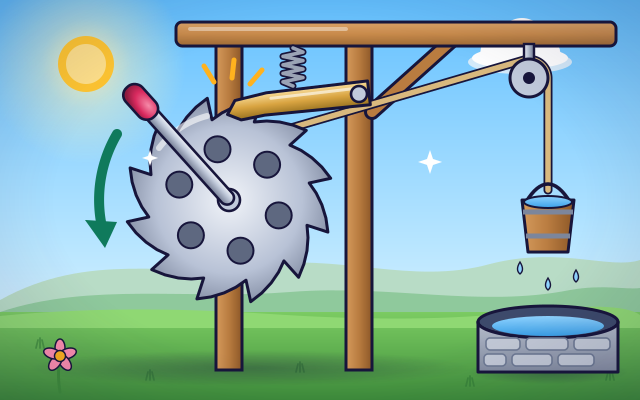
The interactive parts didn't load. The explanations below still work; try reloading the page.
How a ratchet holds on
- Yara winds a bucket of water up from the well. But the moment she lets go of the crank, the heavy bucket pulls the rope back and drops into the water again.
- A ratchet wheel goes on the same axle as the drum. Its teeth are lopsided: one side of each tooth is a gentle slope, and the other side is steep, like a wall.
- A small arm called a pawl rests on the wheel. It swings on a pin, and a spring presses its tip into the gap between two teeth.
- Wind the crank forward. Each sloped tooth slides under the pawl and lifts it, and then the pawl drops into the next gap with a click. The wheel turns freely.
- Now Yara lets go. The bucket pulls the wheel backward, but only a little way. The steep side of a tooth runs into the tip of the pawl, and the wheel stops.
- Ratchets are everywhere. A cable tie pulls tight but cannot slide loose. A ratchet wrench turns a bolt one way and clicks freely on the way back.
Look inside a ratchet
This is the ratchet on the well's winch, close up. Tap each part to see what it does.
- Ratchet wheel. The ratchet wheel is fixed to the axle, so it turns together with the drum and the crank. Whatever the wheel does, the drum does too.
- Slanted tooth. Each tooth is lopsided. Its long, gentle slope lets the pawl slide over. Its steep side is a wall that the pawl catches on.
- Pawl. The pawl is the catch. Going forward it rides up and over each tooth. Going backward it gets pushed against a tooth's steep side and holds the wheel still.
- Pivot pin. The pawl swings up and down on a pin that is fixed to the frame. The pin does not move, so it can push back when the wheel pushes on the pawl.
- Spring. A spring pushes the pawl against the wheel, so it drops into every gap as soon as a tooth has passed. That quick drop makes the click.
- Rope drum. The rope winds onto the drum behind the wheel. The bucket's weight pulls on the rope, which tries to turn the drum, and the wheel, backward.
- Crank. The crank is the handle you turn. Its long arm makes the heavy bucket easier to lift, and the ratchet means you can let go to rest.
Pawl on, pawl off
Tap the crank to wind the bucket up, and watch the pawl. Then lift the pawl off the wheel and see what the bucket does.
Experiment: The bucket is halfway up and you lift the pawl off the wheel. What happens?
- Tap the crank a few times. Listen for the clicks.
- Watch the bucket after each tap: it settles back onto the pawl and stays.
- Now tap the pawl to lift it off the wheel.
What we found: The bucket falls back down. The pawl is the only thing holding the wheel, so with the pawl lifted the bucket's weight unwinds the rope. With the pawl in place, the wheel can slip back only as far as the next tooth.
Turn on JavaScript to try it yourself.
Build a winch that holds
Build the winch: choose a wheel, set the pawl, then crank the bucket to the top without letting it fall back.
Why a ratchet turns only one way
Some jobs need a part that moves one way but never goes back. When you wind a bucket out of a well, tighten a strap or crank up a car on a jack, you want to rest without losing what you have done. A ratchet is the simple machine part that makes this possible.
A ratchet has two main pieces: a wheel with lopsided teeth and a small arm called a pawl. Every tooth has a gentle slope on one side and a steep wall on the other. A spring pushes the tip of the pawl into the gaps between the teeth.
Turn the wheel forward, and each slope slides under the pawl and lifts it. When the tooth has passed, the pawl snaps down into the next gap. That snap is the click you hear. Try to turn the wheel backward, and the steep wall of a tooth runs straight into the tip of the pawl. The pawl cannot be pushed aside, so the wheel stops.
To let the wheel run back, you lift the pawl out of the way. The door latch comparison is not perfect: a latch locks in just one place, when the door is shut, but a ratchet can lock at every tooth all the way around.
Key words
- Ratchet
- A wheel or bar with slanted teeth that can move in one direction only.
- Pawl
- The small pivoting arm that drops between the teeth of a ratchet and stops it from moving backward.
- Pivot
- The fixed pin that a part swings on.
- Slip-back
- The little way a ratchet can run backward before the pawl catches the next tooth.
- Torque
- Turning force: how hard something twists.
Check your thinking
-
Why can a ratchet wheel turn forward?
Show the answer
The gentle slopes of the teeth lift the pawl out of the way. Each slope slides under the pawl and lifts it, then the pawl clicks into the next gap.
-
What stops a ratchet wheel from turning backward?
Show the answer
The steep side of a tooth runs into the pawl. The steep side is like a wall. It meets the tip of the pawl and cannot push it aside.
-
What makes the clicking sound of a ratchet?
Show the answer
The pawl snapping down into the next gap. The spring pushes the pawl into each gap as soon as a tooth has passed.
-
You are making a ratchet and want it to slip back as little as possible. What should you change?
Show the answer
Give the wheel more, smaller teeth. The wheel can only slip back as far as the next tooth, so closer teeth mean a smaller slip.
-
Why can a ratchet wheel not simply have hundreds of tiny teeth to remove slip-back?
Show the answer
Each tooth still carries the whole holding force, and tiny teeth are too weak. The load's torque is held by one tooth at a time. Smaller teeth have less metal to carry it, so tooth size limits how fine a ratchet can be.
-
Which of these uses a ratchet?
Show the answer
A cable tie that pulls tight and will not slide back. The ridges on the strap are slanted teeth, and a tiny catch in the head stops them from sliding back.
You're a Forces & mechanisms expert!
You watched, looked inside, tried it, solved the challenge and went deeper. Pick another question below, or switch the age at the top to see this topic another way.
More about forces & mechanisms
 #111
Forces & mechanisms
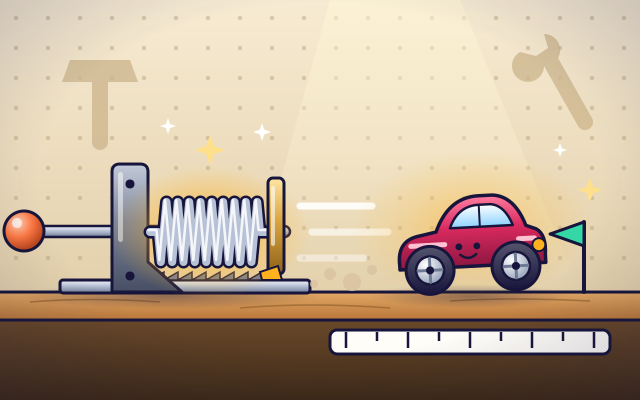
How do springs store and release energy?
Stretch or compress virtual springs and compare the movement produced when released.
#111
Forces & mechanisms
How do springs store and release energy?
Stretch or compress virtual springs and compare the movement produced when released.
 #112
Forces & mechanisms
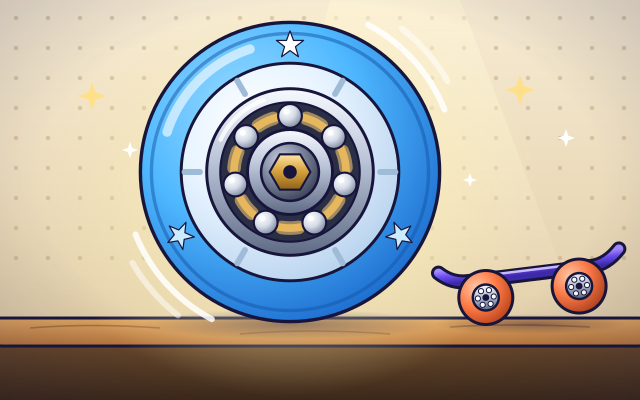
How do ball bearings help wheels turn smoothly?
Compare sliding surfaces with rolling bearings while moving the same load.
#112
Forces & mechanisms
How do ball bearings help wheels turn smoothly?
Compare sliding surfaces with rolling bearings while moving the same load.
 #113
Forces & mechanisms
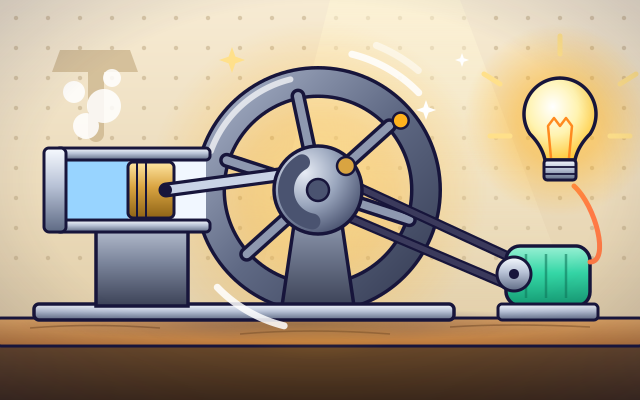
How do flywheels keep machines running smoothly?
Add a flywheel to a jerky mechanism and observe changes in rotational speed.
#113
Forces & mechanisms
How do flywheels keep machines running smoothly?
Add a flywheel to a jerky mechanism and observe changes in rotational speed.
 #114
Forces & mechanisms
How do mechanical linkages transfer movement?
Connect pivoting bars and change their lengths to create different movements.
#114
Forces & mechanisms
How do mechanical linkages transfer movement?
Connect pivoting bars and change their lengths to create different movements.
Keep exploring
Games to play next
- Machine RepairFix levers, pulleys, gears and ramps so every contraption works.
- Marble MountainLay straights, curves, drops and splitters to roll marbles down the mountain.
- Bridge LabBuild a bridge from beams, brace it with triangles, and stay on budget.
Guide for grown-ups
- How to start homeschooling: a step-by-step guide for familiesA guide for parents · 7 min read
Science games by grade
Science worksheets by grade
- Preschool Science Worksheets
- Pre-K Science Worksheets
- Kindergarten Science Worksheets
- 1st Grade Science Worksheets
- 2nd Grade Science Worksheets
- 3rd Grade Science Worksheets
- 4th Grade Science Worksheets
- 5th Grade Science Worksheets
- 6th Grade Science Worksheets
- 7th Grade Science Worksheets
- 8th Grade Science Worksheets