How are roads built?
A road is built in layers of soil, gravel, crushed stone and asphalt, pressed flat and shaped so the rain runs off.
The big idea: Each layer of a road spreads the weight of traffic over the layer below, and the whole road is shaped to keep water out. Water, freezing weather and heavy trucks together are what break roads.
It's like
The interactive parts didn't load. The explanations below still work; try reloading the page.
Building a road, layer by layer
- A plain dirt road is fine when it is dry. But when it rains, the soil turns to soft mud, and wheels sink right in. A good road needs more than dirt.
- Builders dig out the soft soil and build the road in layers: big gravel at the bottom, crushed stone in the middle and smooth asphalt on top.
- A heavy roller drives back and forth over every layer. It squeezes out the air and locks the stones together, so the road is hard and strong.
- The road is built a little higher in the middle. This shape is called a crown. Rain runs down to the edges, into gutters and drain pipes, instead of soaking in.
- If water gets into a small crack and freezes, the ice swells and pushes the crack wider. When it melts, it leaves a weak, soggy gap. Then heavy wheels break the surface, and a pothole is born.
- A road crew cleans out the hole, fills it with fresh hot asphalt and presses it flat. Sealing cracks early keeps the water out and stops new potholes.
The layers of a road
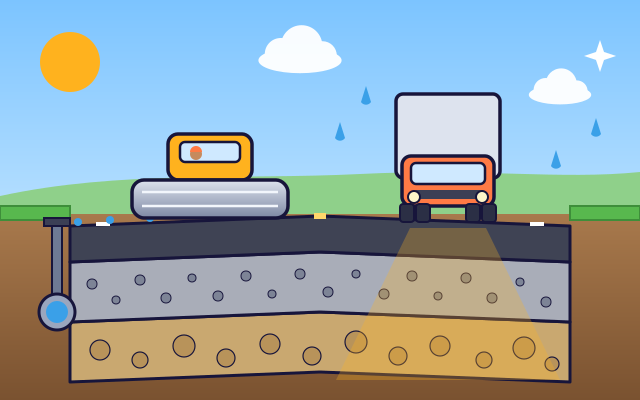
This road has been cut across so you can see inside. Tap each part!
- Asphalt surface. The top layer is asphalt: small stones and sand glued together with sticky black bitumen. It gives a smooth, grippy, waterproof surface.
- Crushed stone base. Under the asphalt is a thick layer of crushed stone. Its sharp-edged pieces lock together and spread the weight of each wheel over a wider area.
- Gravel subbase. Below the base is a layer of bigger gravel. It adds strength, and the gaps between the stones let water drain away instead of staying under the road.
- Subgrade (soil). At the bottom is the natural soil, called the subgrade. It is shaped and pressed down firmly. All the layers above protect it from heavy loads and water.
- Crown. The road is slightly higher in the middle than at the edges. This gentle slope, called the crown, makes rain run off to the sides.
- Gutters and drains. Water running off the road flows along the gutter, drops through a grate and is carried away in pipes under the ground.
- Road markings. Painted lines divide the lanes and mark the edges. Tiny glass beads in the paint bounce headlight beams back, so the lines shine at night.
- Road roller. A road roller is a very heavy machine with a wide steel drum. It rolls back and forth to press each layer tight and smooth.
The pothole test
Change the water, the temperature and the traffic. Watch the crack in the magnifying glass. Which mix makes a pothole fastest?
Experiment: Which makes a pothole grow fastest?
- Start dry, warm and with cars only. Read how long until a pothole.
- Add one thing at a time: rain, then freezing and thawing, then heavy trucks.
- Record each test and compare.
What we found: Rain on its own just soaks in slowly, and cold on its own has no water to freeze. Heavy trucks wear even a dry road, and much faster when the base is wet and soft. Add freezing and thawing, which pries the crack apart, and the road breaks soonest of all. Water, frost and heavy loads together make potholes fastest.
Turn on JavaScript to try it yourself.
Build a road that lasts
Design a road that survives 15 winters of rain, frost and heavy trucks. For 3 stars, do it for 240 coins or less.
Why roads are built in layers
A road looks simple from above, but underneath it is built like a layer cake. At the bottom is the natural soil, shaped and pressed down. On top come layers of gravel and crushed stone, and finally the smooth asphalt you see. (Some roads have a top of concrete instead.)
The layers work as a team. A truck wheel presses hard on a small patch of asphalt. Each layer spreads that push over a wider area, so by the time it reaches the soil, the pressure is gentle. A heavy roller packs every layer tight, which makes the road much stronger.
Water is a road's worst enemy. That is why roads are a little higher in the middle, with gutters and drains at the sides. If water gets into a crack and freezes, the ice swells and pushes the crack wider. When it melts, the ground underneath is soft and soggy.
Then heavy traffic finishes the job. Wheels press on the weak spot until the asphalt breaks, and a pothole appears. Road crews fix it by filling the hole with fresh asphalt, and they seal small cracks early so water can't get in.
Key words
- Asphalt
- Stones and sand glued together with sticky black bitumen.
- Base and subbase
- The layers of crushed stone and gravel under the asphalt that spread the load and drain water.
- Subgrade
- The natural soil under the road, shaped and compacted.
- Compaction
- Pressing a layer tight with a heavy roller to squeeze out the air.
- Crown
- The gentle slope from the middle of the road to its edges that makes rain run off.
- Freeze-thaw cycle
- Water freezing into ice and then melting again.
Check your thinking
-
Why is a road built in layers?
Show the answer
Each layer spreads the weight of traffic over a wider area. By the time the push from a wheel reaches the soil, it is spread out and gentle.
-
Why is a road a little higher in the middle?
Show the answer
So rain runs off to the sides. The crown sends water to the gutters instead of letting it soak into the road.
-
How does freezing water damage a road?
Show the answer
It swells into ice and pushes cracks wider. Ice takes up more room than water, so it forces the crack apart a little more each time.
-
Which does the most damage to a road?
Show the answer
One heavy truck. A heavy truck bends the road far more than a car. One truck can do as much damage as thousands of cars.
-
Why do builders roll each layer with a heavy roller?
Show the answer
To squeeze out air and lock the stones together. Tightly packed stones can't shift, so the road stays strong and keeps water out.
-
The same trucks drive on a road with a dry base and on one with a wet base. Which road is damaged faster?
Show the answer
The wet one, because water makes the layers less stiff. A saturated granular layer is less stiff, so the road bends more under every axle and the asphalt cracks sooner. That is why drainage matters so much.
You're a Buildings & city systems expert!
You watched, looked inside, tried it, solved the challenge and went deeper. Pick another question below, or switch the age at the top to see this topic another way.
More about buildings & city systems
 #158
Buildings & city systems
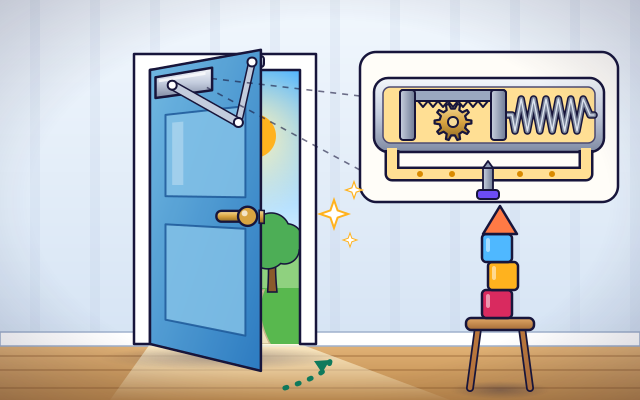
How do door closers shut doors gently?
Adjust spring tension and damping to control a model door's return.
#158
Buildings & city systems
How do door closers shut doors gently?
Adjust spring tension and damping to control a model door's return.
 #198
Buildings & city systems
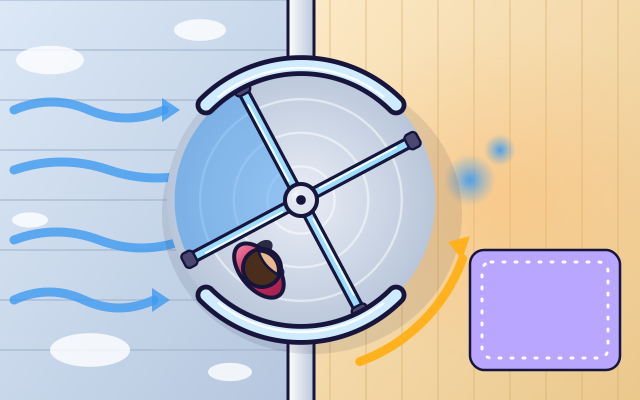
How do revolving doors help control airflow?
Compare air movement through rotating compartments with an ordinary open doorway.
#198
Buildings & city systems
How do revolving doors help control airflow?
Compare air movement through rotating compartments with an ordinary open doorway.
 #199
Buildings & city systems
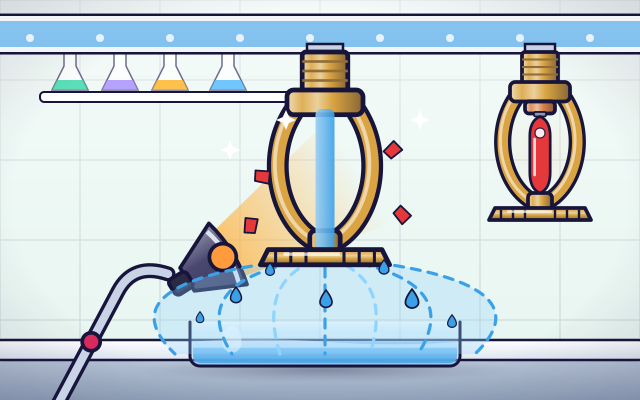
How do automatic fire sprinklers release water?
Warm a model sprinkler's heat-sensitive element and watch that individual sprinkler open.
#199
Buildings & city systems
How do automatic fire sprinklers release water?
Warm a model sprinkler's heat-sensitive element and watch that individual sprinkler open.
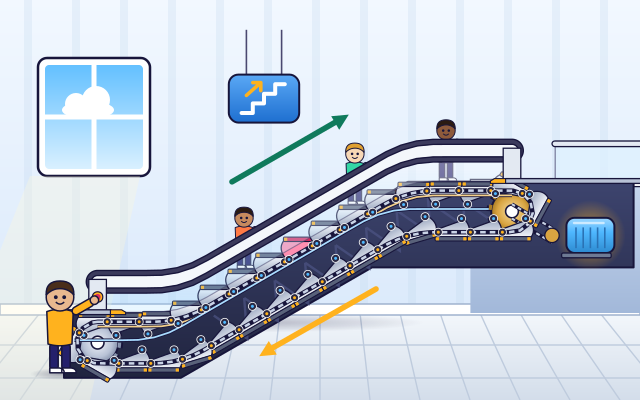 #351
Buildings & city systems
How do escalators move their steps?
Look beneath the surface and follow linked steps circulating around the mechanism.
#351
Buildings & city systems
How do escalators move their steps?
Look beneath the surface and follow linked steps circulating around the mechanism.
Keep exploring
Games to play next
- Route PlannerFind the shortest way around town, dodge closed roads, and measure trips with a scale bar.
- City Driving AdventureExplore the city behind the wheel, park safely and collect roadside deliveries.
- Bridge LabBuild a bridge from beams, brace it with triangles, and stay on budget.
Guide for grown-ups
- How to start homeschooling: a step-by-step guide for familiesA guide for parents · 7 min read
Science games by grade
Science worksheets by grade
- Preschool Science Worksheets
- Pre-K Science Worksheets
- Kindergarten Science Worksheets
- 1st Grade Science Worksheets
- 2nd Grade Science Worksheets
- 3rd Grade Science Worksheets
- 4th Grade Science Worksheets
- 5th Grade Science Worksheets
- 6th Grade Science Worksheets
- 7th Grade Science Worksheets
- 8th Grade Science Worksheets