How does a saw cut wood?
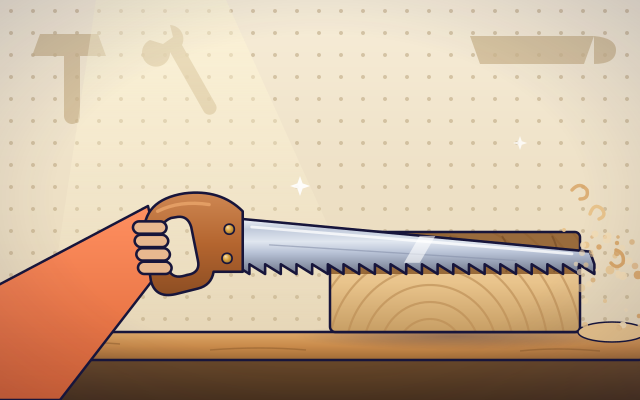
A saw is a row of tiny blades. Each tooth scrapes out a small chip, and hundreds of small bites make one deep cut.
The big idea: Each saw tooth is a tiny blade that scrapes out a small chip. The gaps between the teeth carry the chips out, so push after push the cut gets deeper.
It's like a line of tiny shovels digging a ditch: each tooth scoops out a little wood, and the gap behind it carries the scoop out of the cut.
The interactive parts didn't load. The explanations below still work; try reloading the page.
How teeth cut wood
- Leo needs to cut a thick beam. He pushes a thin steel saw back and forth, and it sinks into the wood. How can a thin strip of steel do that?
- Look closely at the bottom edge. It is a row of small, sharp teeth, all leaning the same way: forward, the way the saw is pushed.
- As the saw is pushed, each tooth works like a tiny chisel. Its sharp front edge scrapes a thin curl off the wood. One tooth takes only a little, but there are lots of teeth.
- Where do the curls go? Into the gaps between the teeth, called gullets. The gullets carry them along and drop them outside the wood as sawdust.
- From the end you can see a trick. The teeth are bent a little, one left, one right. So the slot they cut is wider than the blade, and the blade slides without getting pinched.
- Push after push, the teeth scoop out more wood and the cut gets deeper, until the piece drops off. All the wood from the slot has become a pile of sawdust.
The parts of a hand saw
Tap each part. The round lens shows the teeth close up, and the small picture shows the saw from its end.
- Handle. The handle fits your hand. Its shape lets you push straight along the blade, in line with the teeth.
- Blade. The blade is a thin sheet of springy steel. Thin means it only has to remove a narrow strip of wood.
- Teeth. Each tooth is a tiny blade with a steep, sharp front. On the push it scrapes off a small chip. On the pull it slides back over the wood.
- Gullet. A gullet is the gap between two teeth. Chips curl into it and ride along until they fall out of the cut as sawdust.
- Set. The teeth are bent a little to each side, first left, then right. This bend is called set.
- Kerf. The kerf is the slot the saw leaves behind. Thanks to the bent teeth it is a bit wider than the blade, so the saw does not get stuck.
Big teeth or small teeth?
Drag the saw back and forth, or press Saw. Watch the enlarged teeth, then try the other saw. What changes?
Experiment: Which saw gets through the beam in fewer strokes?
- Saw with the big teeth and count the strokes.
- Press New beam, choose the small teeth and saw again.
- Compare the strokes and look at the cut edge each saw leaves.
What we found: Big teeth take big bites, so the saw gets through in fewer strokes, but they tear the wood and leave a rough edge. Small teeth take small bites: more strokes, but a smooth edge. Woodworkers pick the saw to suit the job.
Turn on JavaScript to try it yourself.
The right saw for the job
Two jobs. First cut the thick beam in 8 strokes or fewer. Then cut the thin strip and leave a smooth edge.
How a saw really cuts
A knife cuts by pushing material apart. That works for soft things like bread or clay, but wood is too hard and too thick. A saw does something different: it takes the wood away, a tiny bit at a time, until there is a thin slot all the way through.
Each saw tooth is a tiny blade with a steep, sharp front. When you push the saw, every tooth scrapes a small chip off the bottom of the slot, like a line of tiny shovels digging a ditch. When you pull back, the sloping backs of the teeth slide over the wood, so the saw rests and gets ready for the next push.
The chips need somewhere to go. They curl into the gaps between the teeth, called gullets, and ride there until the teeth come out of the wood. Then they fall out as sawdust. The shovel idea is not perfect: a real shovel is lifted out to be emptied, but a saw tooth just carries its chip sideways out of the cut.
The teeth are also bent a little, one to the left and the next to the right. This is called set. It makes the slot, called the kerf, slightly wider than the blade, so the wood does not squeeze the blade and stop it. Saws with big teeth cut fast but leave a rough edge. Saws with small teeth cut slowly and leave a smooth one.
Key words
- Tooth
- One of the small sharp points along the edge of a saw. Each one cuts a tiny chip.
- Gullet
- The gap between two teeth, which carries the chips out of the cut.
- Set
- The small bend of the teeth to the left and right.
- Kerf
- The slot that a saw cuts. The wood that was in it becomes sawdust.
- Teeth per inch
- A way to say how big saw teeth are: a small number means big teeth.
Check your thinking
-
How does a saw get through a thick piece of wood?
Show the answer
Its teeth scrape out small chips, again and again. Each tooth takes a small chip. Hundreds of small chips add up to a cut right through.
-
What are the gaps between the teeth for?
Show the answer
They carry the chips out of the cut. Chips curl into the gullets and are carried out. Without them the cut would jam.
-
A saw's teeth are bent a little left and right. What would happen if they were perfectly straight?
Show the answer
The slot would be too tight and would pinch the blade. Bent teeth cut a slot wider than the blade. Without that room, the wood squeezes the blade and it sticks.
-
You want a very smooth edge on a thin strip of wood. Which saw should you pick?
Show the answer
A saw with many small teeth. Small teeth take small bites, so they tear the wood less and leave a smooth edge.
-
A shelf must be exactly 600 mm long. Why should you cut just beside the pencil line, on the waste side, and not down the middle of it?
Show the answer
The kerf removes a strip of wood, so cutting on the line makes the shelf too short. The kerf has width, often more than a millimeter. That wood turns to sawdust, so it has to come from the waste piece.
You're a Tools & workshop expert!
You watched, looked inside, tried it, solved the challenge and went deeper. Pick another question below, or switch the age at the top to see this topic another way.
More about tools & workshop
 #168
Tools & workshop
How does a power sander smooth surfaces?
Compare abrasive sizes and sanding motions on a rough virtual surface.
#168
Tools & workshop
How does a power sander smooth surfaces?
Compare abrasive sizes and sanding motions on a rough virtual surface.
 #169
Tools & workshop
How do clamps hold pieces tightly together?
Tighten a clamp and trace how its mechanism maintains squeezing force.
#169
Tools & workshop
How do clamps hold pieces tightly together?
Tighten a clamp and trace how its mechanism maintains squeezing force.
 #170
Tools & workshop
How does a hammer drive a nail?
Change hammer mass and speed and compare the impact on a model nail.
#170
Tools & workshop
How does a hammer drive a nail?
Change hammer mass and speed and compare the impact on a model nail.
 #171
Tools & workshop
How does a rivet fasten sheets together?
Set a virtual rivet and watch its end deform to grip the sheets.
#171
Tools & workshop
How does a rivet fasten sheets together?
Set a virtual rivet and watch its end deform to grip the sheets.
Keep exploring
Games to play next
- Machine RepairFix levers, pulleys, gears and ramps so every contraption works.
- Bridge LabBuild a bridge from beams, brace it with triangles, and stay on budget.
Guide for grown-ups
- How to start homeschooling: a step-by-step guide for familiesA guide for parents · 7 min read
Science games by grade
Science worksheets by grade
- Preschool Science Worksheets
- Pre-K Science Worksheets
- Kindergarten Science Worksheets
- 1st Grade Science Worksheets
- 2nd Grade Science Worksheets
- 3rd Grade Science Worksheets
- 4th Grade Science Worksheets
- 5th Grade Science Worksheets
- 6th Grade Science Worksheets
- 7th Grade Science Worksheets
- 8th Grade Science Worksheets