How do sinkholes form?
Rainwater slowly dissolves limestone and hollows out caves. When a cave's roof gets too thin, the ground above sinks.
The big idea: A sinkhole starts far below the grass. Slightly sour rainwater dissolves limestone, a cave grows, and at last the ground on top sinks into it.
It's like a sugar cube hidden under a layer of sand: drip water on it, the sugar dissolves, and the sand above sinks into the space it leaves.
The interactive parts didn't load. The explanations below still work; try reloading the page.
How a sinkhole forms
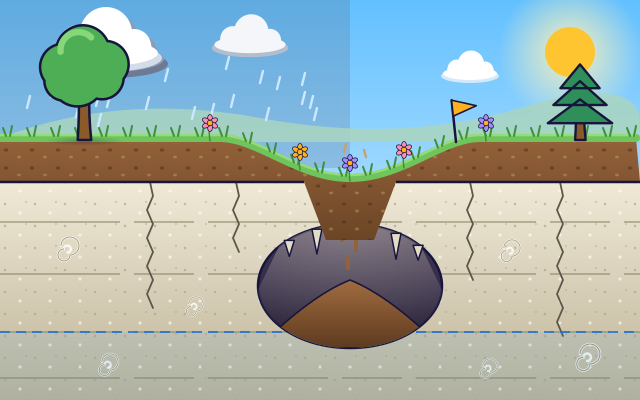
- This is a model meadow, cut open so you can see below. Under the soil lies limestone, a pale rock made from the shells of sea creatures. It has cracks in it.
- As rain falls and soaks through the soil, it picks up a gas called carbon dioxide. That makes the water a very weak acid, a bit like fizzy water.
- The sour water seeps down the cracks. Limestone dissolves in weak acid, like sugar in tea but far, far slower. Year after year, the crack gets wider.
- After tens of thousands of years, the crack has become a cave. The cave keeps growing, so the roof of rock above it gets thinner and thinner.
- At last the roof is too thin to hold. Soil trickles down into the cave, and the meadow above sags into a bowl. That bowl is a sinkhole.
- Geologists use scanners to look under the ground and find hidden caves. Their maps show where it is safe to build. If you ever see ground that is sagging or cracked, keep away and tell a grown-up.
Look inside the ground
Tap each part, from the rain cloud down to the cave. Watch what happens there.
- Rain. Rain picks up a little carbon dioxide gas as it falls, which makes it very slightly sour.
- Soil. In the soil, the water picks up even more carbon dioxide from roots and tiny living things, and gets a bit more sour.
- Crack. Water cannot soak through solid limestone, so it runs down the cracks. That is where the dissolving happens.
- Limestone. Limestone is made of shells and corals pressed into rock long ago. You can sometimes see fossils in it. Weak acid slowly dissolves it.
- Rock roof. The roof is the rock left above the cave. It holds up the soil and the meadow, but it gets thinner as the cave grows.
- Cave. The cave is the space left where the limestone has dissolved away. Stone icicles called stalactites can grow from its roof.
- Water table. Below this line every crack and cave is full of water. The water helps to hold the cave roof up.
- Sinkhole. This is where the ground will sink when the roof gives way. A sinkhole is usually round, like a bowl.
A time machine for rock
Make it rain for thousands of years, or slide the time machine. Then swap the rock for granite. What changes?
Experiment: Under which rock will rain make a cave?
- With limestone, slide the time machine forward slowly. Watch the crack, the cave and the roof.
- Switch to granite and slide through the same time.
- Compare what happened under the meadow.
What we found: Only the limestone changed. Rainwater is a very weak acid, and limestone dissolves in it, so a cave grew and the ground sank. Granite does not dissolve this way, so it stayed solid.
Turn on JavaScript to try it yourself.
Scan before you plant
The ground is hidden. Drag the scanner to look under each plot, then plant the tree on the plot with solid rock.
The slow chemistry under our feet
Most rocks do not care about rain. Limestone is different. It is made from the shells and skeletons of sea creatures that piled up on ancient sea floors, and the material they are made of can be dissolved by acid, even a very weak one.
Rainwater is a very weak acid. As it falls through the air and soaks through the soil, it picks up carbon dioxide, the same gas that makes drinks fizzy. This sour water runs down cracks in the limestone and dissolves a tiny bit of rock each time. In one year you would see no change at all. In ten thousand years a crack can become a cave.
As the cave grows wider, the roof of rock above it grows thinner. For a long time nothing shows on the surface. Then the roof becomes too weak, soil starts to trickle down into the space below, and the ground on top sags into a bowl. That bowl is a sinkhole. Many fill with water and become round ponds.
Places with lots of limestone often have caves, sinkholes and streams that vanish underground. Geologists study these places with scanners and drills and make maps, so people know where the ground is solid. Sinkholes are rare, and most form slowly. If you ever see a new hole, or ground that is cracking or sagging, stay well back and tell a grown-up. Our model speeds up thousands of years and shows only one simple cave.
Key words
- Sinkhole
- A bowl-shaped dip or hole where the ground has sunk into a space below.
- Limestone
- A rock made mostly of calcium carbonate from ancient shells and corals. Weak acid can dissolve it.
- Dissolve
- To break up and spread out in a liquid, the way sugar disappears into water.
- Carbonic acid
- The very weak acid made when carbon dioxide gas mixes with water.
- Karst
- A landscape shaped by dissolving rock, with caves, sinkholes and streams that disappear underground.
- Water table
- The level below which the cracks and spaces in the ground are full of water.
Check your thinking
-
What slowly makes caves in limestone?
Show the answer
Slightly sour rainwater dissolving the rock. Rain picks up carbon dioxide and becomes a weak acid. Limestone dissolves in it, very slowly.
-
About how long does it take for a crack in limestone to become a cave?
Show the answer
Thousands of years. Only a tiny amount of rock dissolves each year, so caves take thousands of years to form.
-
Why does the ground above a growing cave finally sink?
Show the answer
The roof gets too thin to hold up the soil. As the cave grows, less and less rock is left above it, until it cannot carry the weight.
-
A town pumps so much groundwater that the water table drops below a flooded cave. Why might a sinkhole form soon after?
Show the answer
The water was helping to support the roof and the soil above. Water in the cavity carries part of the load by buoyancy. Draining it raises the stress on the roof without the cave growing at all.
-
You notice a new dip in the ground with cracks around it. What should you do?
Show the answer
Keep away and tell a grown-up. Sagging or cracked ground can be a sign of a space below. Stay back and let a grown-up report it.
You're a Earth & weather expert!
You watched, looked inside, tried it, solved the challenge and went deeper. Pick another question below, or switch the age at the top to see this topic another way.
More about earth & weather
 #465
Earth & weather
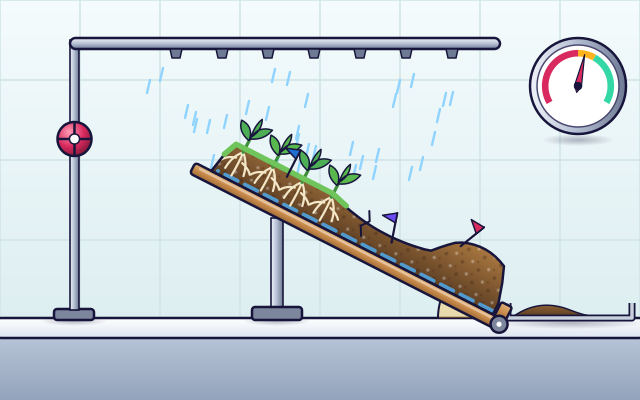
How do landslides happen?
Change slope, water content, and vegetation and compare ground stability.
#465
Earth & weather
How do landslides happen?
Change slope, water content, and vegetation and compare ground stability.
 #466
Earth & weather
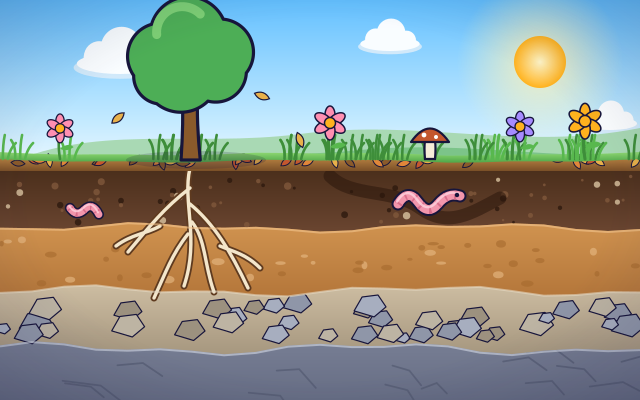
How does soil form?
Follow rock weathering, organic matter, organisms, and time into layered soil.
#466
Earth & weather
How does soil form?
Follow rock weathering, organic matter, organisms, and time into layered soil.
 #467
Earth & weather
How do waves change coastlines?
Compare erosion and sediment movement around beaches, cliffs, and headlands.
#467
Earth & weather
How do waves change coastlines?
Compare erosion and sediment movement around beaches, cliffs, and headlands.
 #468
Earth & weather
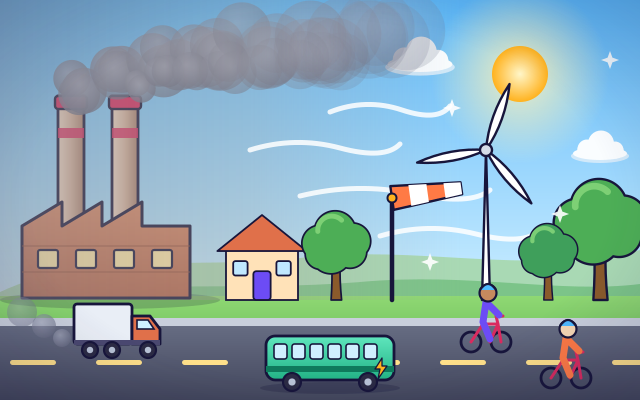
How does air pollution form and spread?
Trace model emissions, particles, wind, and atmospheric reactions across a town.
#468
Earth & weather
How does air pollution form and spread?
Trace model emissions, particles, wind, and atmospheric reactions across a town.
Keep exploring
Games to play next
- Landform ExplorerMountains, valleys, peninsulas and deltas — learn the shapes of the land and find them on Earth.
- Weather LabPredict the weather in a box, then run a fair test to find out why.
- River MysterySomething changed the river. Sample sites with a limited budget, follow the evidence and find where the change begins.
Guide for grown-ups
- How to start homeschooling: a step-by-step guide for familiesA guide for parents · 7 min read
Science games by grade
Science worksheets by grade
- Preschool Science Worksheets
- Pre-K Science Worksheets
- Kindergarten Science Worksheets
- 1st Grade Science Worksheets
- 2nd Grade Science Worksheets
- 3rd Grade Science Worksheets
- 4th Grade Science Worksheets
- 5th Grade Science Worksheets
- 6th Grade Science Worksheets
- 7th Grade Science Worksheets
- 8th Grade Science Worksheets