What happens while we sleep?
Sleep is not switching off. All night your brain and body move through stages of light sleep, deep sleep and dream sleep.
The big idea: A sleeping body is busy. It cycles through light sleep, deep sleep and dream sleep several times a night, and each stage does a different job for your body and brain.
It's like a school after the last bell: the classrooms look quiet, but cleaners tidy up, the day's work gets filed and everything is made ready for tomorrow.
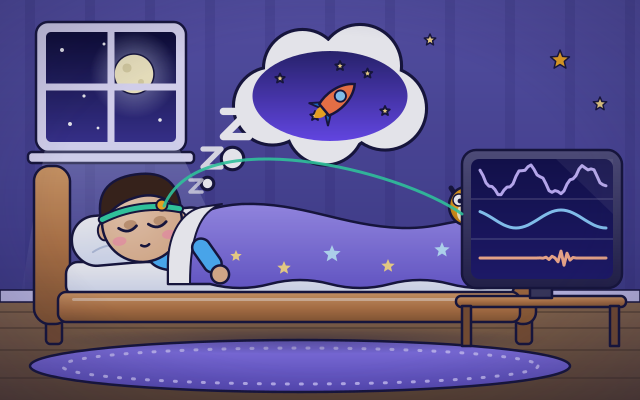
The interactive parts didn't load. The explanations below still work; try reloading the page.
A night of sleep
- It gets dark, and a clock inside Noor's brain notices. It sends out a sleepy signal, and she yawns. She will lie still for hours. But is her body really doing nothing?
- First comes light sleep. Noor's muscles relax and her breathing and heartbeat slow down. Her brain waves get slower too. A small noise could still wake her easily.
- Next comes deep sleep. Her brain makes big, slow waves and she lies very still. It is hard to wake her now. Her body uses this time to grow, mend itself and build up strength for tomorrow.
- Then something surprising happens. Her eyes dart about under her eyelids and her brain is almost as busy as when she is awake. She is dreaming. Her big muscles are switched off, so she does not act out the dream.
- Light, deep, dream: one round is called a sleep cycle, and Noor goes through about five or six of them each night. Deep sleep comes mostly early in the night. Dreams get longer toward morning.
- Morning light tells her body clock to wake up. Overnight her body has rested and grown, and her brain has sorted yesterday's memories. That is why a good night's sleep helps you learn, play and feel happy.
Inside a sleeping body
Tap each part of the sleeper to find out what it does during the night.
- Brain. Your brain stays busy all night. It replays what you learned, keeps the important memories and tidies itself up. Its electrical waves change with each stage of sleep.
- Eyes. In light and deep sleep your eyes stay still or roll slowly. In dream sleep they dart quickly from side to side under your eyelids, which is how this stage got its name.
- Lungs. You never stop breathing, but in sleep each breath is slower and more even, because a resting body needs less oxygen. In dream sleep the rhythm becomes uneven.
- Heart. Your heart beats more slowly while you sleep and your blood pressure goes down. It is slowest in deep sleep. This nightly rest is good for your heart.
- Muscles. Your muscles relax as you fall asleep. In deep sleep your body releases a growth signal that helps bones and muscles grow and repair. In dream sleep the big muscles are switched off completely.
- Body clock. A tiny clock in your brain keeps time with day and night. When it gets dark, it sends out a sleepy signal. Morning light tells it to wake you up. Bright screens at bedtime can confuse it.
Move through the stages of sleep
Choose a stage, or drag the moon through the night. Compare Noor's brain waves, breathing and movement. Ring the chime to test how easily she wakes.
Experiment: In which stage of sleep is the brain busiest, almost as if it were awake?
- Choose Awake and look at the brain-wave line on the monitor.
- Choose Light sleep, then Deep sleep. How does the line change?
- Choose Dream sleep and compare it with Awake. Watch her eyes too.
What we found: The brain-wave line gets slower and bigger from light sleep to deep sleep. Then, in dream sleep, it turns small and fast again, almost like being awake. The brain is busy dreaming, yet the body lies still and it takes a fairly loud sound to wake the sleeper.
Turn on JavaScript to try it yourself.
Sleep detective
Four sleepers, four mystery stages. Use the eyes, the breathing, the movement and the monitor to name each stage.
What sleep is for
When you fall asleep, you do not switch off like a lamp. Your brain and body begin a long night of work. Scientists can watch it happen with sensors that pick up the brain's tiny electrical waves, the movement of the eyes and the rhythm of breathing.
First you drift into light sleep. Your muscles relax, your breathing and heartbeat slow down, and a small noise could still wake you. Then you sink into deep sleep. Your brain makes big, slow waves and you are hard to wake. This is when your body grows and repairs itself the most.
After that comes dream sleep. Your eyes dart about under your eyelids and your brain is almost as busy as when you are awake, but your big muscles are switched off. One round of light, deep and dream sleep is called a sleep cycle. You go through about five or six cycles every night.
Sleep helps you remember what you learned, keeps you from getting sick so often and helps you feel calm and cheerful. Most school-age children need 9 to 12 hours a night. The school comparison is not perfect: a school is tidied once, when everyone has gone home, but your brain repeats its work again and again through the night.
Key words
- Sleep cycle
- One round of light sleep, deep sleep and dream sleep. It is repeated several times a night.
- Deep sleep
- The stage with big, slow brain waves, when you are hardest to wake.
- REM sleep
- Dream sleep. Your eyes move quickly under your eyelids.
- Brain waves
- Tiny electrical rhythms made by brain cells working together.
- Body clock
- The timer in your brain that makes you sleepy at night and alert in the day.
Check your thinking
-
How can you tell that a sleeper is probably dreaming?
Show the answer
The eyes dart about under closed eyelids. Quick eye movements are the sign of dream sleep, which is why it is called REM sleep.
-
Which stage of sleep is most important for growing and repairing the body?
Show the answer
Deep sleep. Most of the body's growth signal is released during deep sleep.
-
Why is a sleeper hardest to wake in deep sleep?
Show the answer
The brain is making big, slow waves and ignores most sounds. In deep sleep the brain pays far less attention to the outside world, so it takes a loud sound to wake you.
-
Someone goes to bed very late and gets up at the usual time. Which kind of sleep do they still get most of?
Show the answer
Deep sleep, because it comes early in the night. Deep sleep fills the first cycles of the night. The long dreams near morning are what gets cut short.
-
Why do the large muscles lose their tone in REM sleep?
Show the answer
The brainstem blocks their motor neurons, so dreams are not acted out. Signals from the brainstem switch off the motor neurons of the large muscles during REM. Breathing and eye muscles are spared.
-
What happens to brain waves as sleep gets deeper, from N1 to N3?
Show the answer
They get slower and larger. In deep sleep huge numbers of neurons fire together in a slow rhythm, which adds up to large delta waves.
-
What tells your body that it is time to feel sleepy?
Show the answer
It gets dark. When it gets dark, the clock inside your body sends out a sleepy signal.
You're a Human body expert!
You watched, looked inside, tried it, solved the challenge and went deeper. Pick another question below, or switch the age at the top to see this topic another way.
More about human body
 #258
Human body
How does the brain form memories?
Explore attention, repeated experiences, and changing connections in a simplified brain model.
#258
Human body
How does the brain form memories?
Explore attention, repeated experiences, and changing connections in a simplified brain model.
 #259
Human body
How do hormones guide growth?
Follow chemical messages from glands to tissues and explore their developmental roles.
#259
Human body
How do hormones guide growth?
Follow chemical messages from glands to tissues and explore their developmental roles.
 #260
Human body
How do body cells make copies of themselves?
Arrange division stages and follow chromosomes as one model cell becomes two.
#260
Human body
How do body cells make copies of themselves?
Arrange division stages and follow chromosomes as one model cell becomes two.
 #261
Human body
How do inherited traits pass through families?
Combine fictional gene versions and compare outcomes using a clearly simplified inheritance model.
#261
Human body
How do inherited traits pass through families?
Combine fictional gene versions and compare outcomes using a clearly simplified inheritance model.
Keep exploring
Games to play next
- Body ExplorerTap, match and label your way around the amazing human body.
- Life Skills & Health QuizzesOlly's Life Skills Quiz Show: healthy habits, safety, feelings, money, time and kind, safe screens.
- Label LabPut the right labels on beautiful science diagrams, from bean plants to heart chambers.
Guide for grown-ups
- How to start homeschooling: a step-by-step guide for familiesA guide for parents · 7 min read
Science games by grade
Science worksheets by grade
- Preschool Science Worksheets
- Pre-K Science Worksheets
- Kindergarten Science Worksheets
- 1st Grade Science Worksheets
- 2nd Grade Science Worksheets
- 3rd Grade Science Worksheets
- 4th Grade Science Worksheets
- 5th Grade Science Worksheets
- 6th Grade Science Worksheets
- 7th Grade Science Worksheets
- 8th Grade Science Worksheets