How do snowmobiles move over snow?
A wide rubber track grips the snow and pushes the sled forward, while two skis at the front glide and steer.
The big idea: A snowmobile's engine spins a wide rubber track. Its lugs dig in and push snow backward, and the snow pushes the sled forward. Skis at the front slide easily and point the way.
It's like paddling a canoe: you push water backward and the canoe moves forward. The track's lugs are tiny paddles that push snow backward.
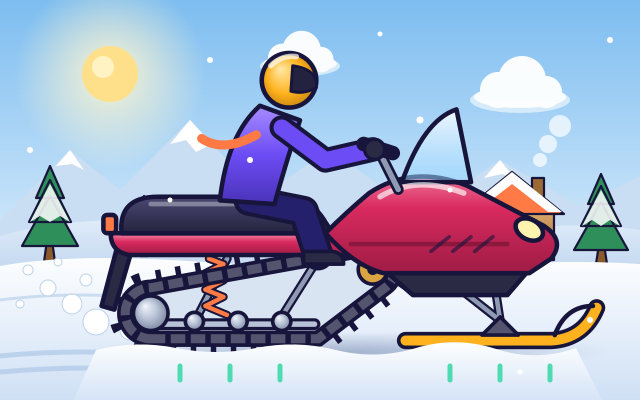
The interactive parts didn't load. The explanations below still work; try reloading the page.
Track at the back, skis at the front
- Walking in deep snow is hard work, because your boots sink in at every step. A snowmobile glides right over the top. How does it stay up, and what pushes it along?
- The sled rests on two long skis and a wide track. Together they make a big footprint that spreads the weight, so each bit of snow gets only a gentle push.
- Under the hood, the engine spins a pulley. A rubber belt carries the spin to a second pulley, and a toothed wheel then drives the wide track around.
- The track is covered in rubber bumps called lugs. They dig into the snow and push it backward. The snow pushes back on the track, and that push sends the sled forward.
- To steer, the rider turns the handlebars. Rods turn both skis, their edges bite into the snow, and the front of the sled swings that way. Leaning into the turn keeps it steady.
- So the track pushes and the skis glide and steer. Working together, they carry the sled across deep snow all the way to the cabin.
Look inside a snowmobile
Tap each part. Watch what moves when you find it!
- Engine. The engine sits under the hood at the front. It burns fuel to make the turning power that drives the track.
- Belt drive. A rubber belt runs between two pulleys. It carries the engine's spin back toward the track, and it changes gear all by itself as the sled speeds up.
- Track. The track is a wide loop of strong rubber. A toothed wheel at the front of the loop drives it around, and the part underneath pushes on the snow.
- Lugs. Lugs are the rubber bumps on the track. They dig into the snow like little paddles. Deep, soft snow needs tall lugs.
- Suspension. Springs and shock absorbers sit inside the track and above the skis. They let the sled soak up bumps, and they keep the track pressed onto the snow.
- Skis. The two skis slide easily forward but resist sliding sideways. So when they turn, the front of the sled follows them.
- Handlebars. The rider turns the handlebars to steer. Rods under the hood join them to both skis. The go lever and the brake lever are on the handlebars too.
Grip or spin?
Squeeze the throttle and watch the track. Change the lugs and the snow. When does the track grip, and when does it just spin?
Experiment: The sled is in deep, fluffy snow. Which track will push it along best?
- Choose Deep powder and the Smooth track. Push the throttle up.
- Now choose Tall lugs and use the same throttle.
- Try both tracks again on the Packed trail.
What we found: In deep powder a smooth track just spins: it has nothing to push against. Tall lugs dig in and push the snow backward, so the sled goes. On a hard, packed trail even short lugs grip well.
Turn on JavaScript to try it yourself.
The flag trail
Steer through every pair of flags in order, then park at the cabin. Do not bump the trees!
Push, glide and steer
A snowmobile has two jobs to do in deep snow: stay on top, and push itself along. It stays on top the way skis and snowshoes do. Its two long skis and its wide track spread the weight over a big footprint, so the snow underneath is only pressed gently.
The push comes from the track, a wide loop of rubber under the seat. The engine spins it with a rubber belt and a toothed wheel. Bumps on the track, called lugs, dig into the snow and shove it backward. When you push something backward, it pushes you forward. Swimmers and canoe paddlers use the same trick with water.
Soft, fluffy snow gives way easily, so a smooth track just spins. Tall lugs scoop up more snow and have more to push against. On a hard trail, short lugs are enough, and they waste less power.
The skis do the steering. A ski slides easily forward, but a metal edge underneath stops it from sliding sideways. Turn the handlebars and both skis turn, so the front of the sled follows them. Riders lean into each turn, slow down before sharp corners, and always wear a helmet and warm clothes. Children ride only with a trained grown-up, on marked trails.
Key words
- Track
- The wide loop of rubber under a snowmobile that pushes on the snow.
- Lug
- A rubber bump on the track that digs into the snow for grip.
- Traction
- Grip: how well the track can push on the snow without spinning.
- Slip
- When the track spins faster than the sled is really going.
- Thrust
- The forward push on the sled. It comes from the snow pushing back on the track.
- Ski
- A long runner that slides forward easily but resists sliding sideways, so it can steer.
Check your thinking
-
What pushes a snowmobile forward?
Show the answer
The track pushes snow backward, and the snow pushes the sled forward. Push snow backward and it pushes you forward. The skis only slide and steer.
-
How does the rider steer?
Show the answer
Turning the handlebars turns both skis. Rods join the handlebars to the skis. The sled follows where the skis point.
-
A smooth track spins in deep, fluffy snow. Why?
Show the answer
It has no lugs to dig in, so it has nothing to push against. Soft snow slides away under a smooth belt. Lugs scoop the snow and push on it.
-
Why does a snowmobile stay on top of deep snow?
Show the answer
Its skis and wide track spread its weight over a big footprint. A big footprint means a gentle push on each bit of snow, so the snow can hold the sled up.
-
Which track is best for deep powder snow?
Show the answer
One with tall lugs. Tall lugs scoop soft snow, so the track has something to push against.
You're a Flight & transportation expert!
You watched, looked inside, tried it, solved the challenge and went deeper. Pick another question below, or switch the age at the top to see this topic another way.
More about flight & transportation
 #138
Flight & transportation
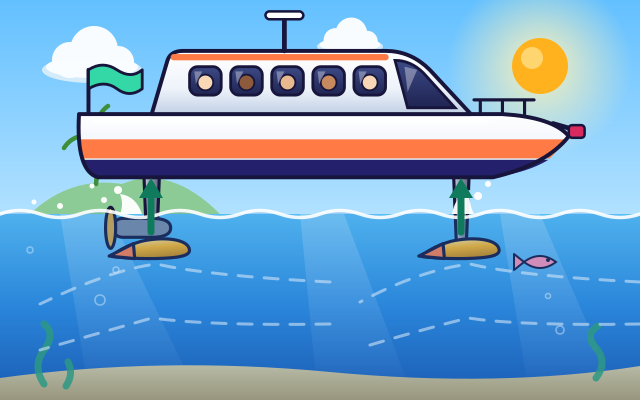
How do hydrofoil boats rise above the water?
Increase speed and watch underwater wings lift a model boat's hull.
#138
Flight & transportation
How do hydrofoil boats rise above the water?
Increase speed and watch underwater wings lift a model boat's hull.
 #139
Flight & transportation
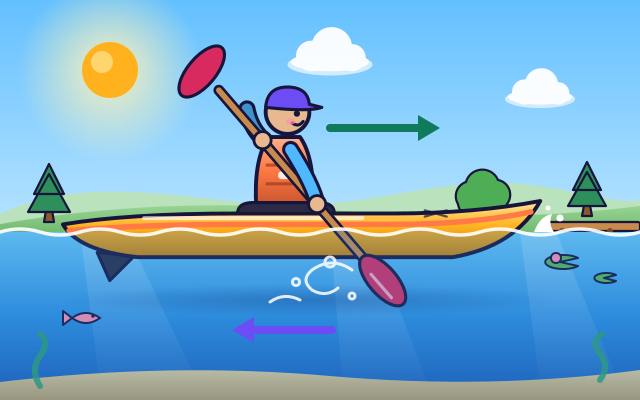
How do paddles move and steer a kayak?
Compare paddle strokes that propel, turn, slow, or reverse a virtual kayak.
#139
Flight & transportation
How do paddles move and steer a kayak?
Compare paddle strokes that propel, turn, slow, or reverse a virtual kayak.
 #140
Flight & transportation
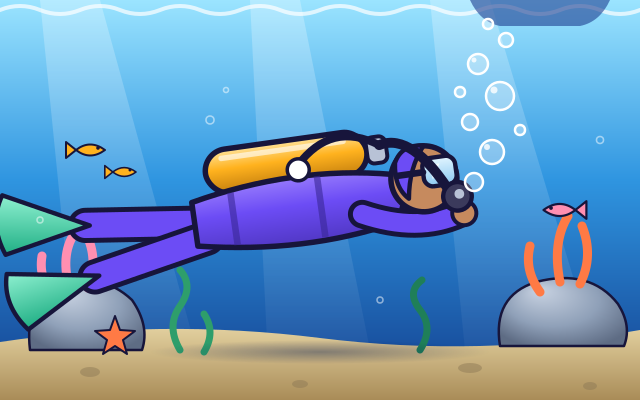
How do scuba regulators deliver breathing gas?
Follow compressed gas through a simplified regulator as surrounding water pressure changes.
#140
Flight & transportation
How do scuba regulators deliver breathing gas?
Follow compressed gas through a simplified regulator as surrounding water pressure changes.
 #141
Flight & transportation
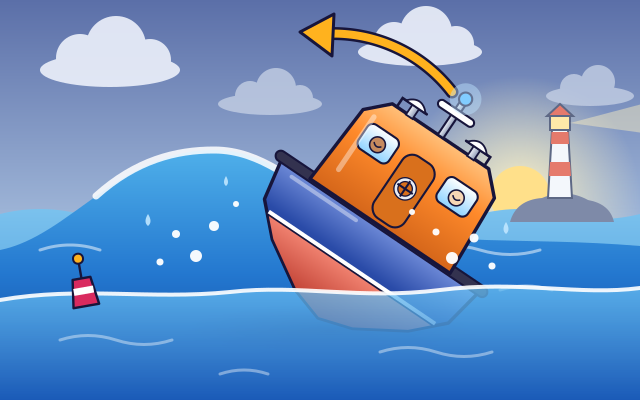
How do self-righting lifeboats turn upright again?
Tilt model boats and compare how hull shape and weight placement affect recovery.
#141
Flight & transportation
How do self-righting lifeboats turn upright again?
Tilt model boats and compare how hull shape and weight placement affect recovery.
Keep exploring
Games to play next
- Plane Flight SimulatorTake off from the runway and thread numbered sky hoops in order. Every clean flight is a new personal best.
- Machine RepairFix levers, pulleys, gears and ramps so every contraption works.
- Timetable TerminalRead the departure board, count the minutes and catch your connection on time.
Guide for grown-ups
- How to start homeschooling: a step-by-step guide for familiesA guide for parents · 7 min read
Science games by grade
Science worksheets by grade
- Preschool Science Worksheets
- Pre-K Science Worksheets
- Kindergarten Science Worksheets
- 1st Grade Science Worksheets
- 2nd Grade Science Worksheets
- 3rd Grade Science Worksheets
- 4th Grade Science Worksheets
- 5th Grade Science Worksheets
- 6th Grade Science Worksheets
- 7th Grade Science Worksheets
- 8th Grade Science Worksheets