How does soap remove grease?
Soap molecules hold grease with one end and water with the other, so a rinse can carry the grease away.
The big idea: Water cannot grab grease on its own. A soap molecule has a head that likes water and a tail that likes grease, so soap wraps grease into tiny droplets that water can carry off.
It's like a helper standing between two kids who will not hold hands: soap holds the grease with one end and the water with the other.
The interactive parts didn't load. The explanations below still work; try reloading the page.
How soap lifts grease
- This plate is covered in greasy food. Water pours over it, but the grease does not budge. The water just beads up and rolls off. What is going on?
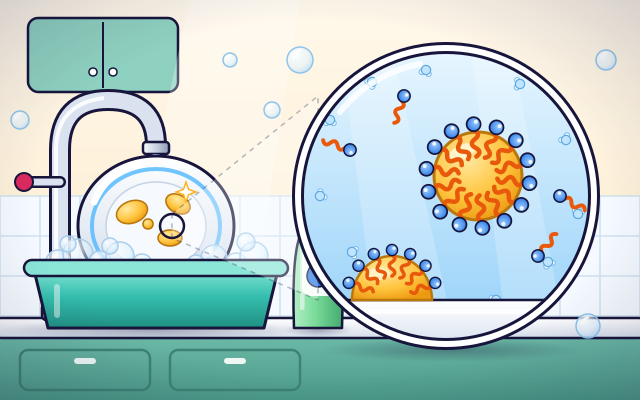
- Zoom in until you can see molecules. Water molecules pull on each other strongly. Grease does not join in, so the water slides past and the grease stays stuck to the plate.
- Now add soap. A soap molecule has two different ends. Its round head is attracted to water. Its long tail avoids water and is attracted to oil and grease.
- The tails push into the grease to get away from the water. The heads stay outside, facing the water. Soon each blob of grease is covered in soap molecules.
- Scrubbing shakes the grease loose. It rolls up into tiny droplets, each one wrapped in soap with the heads pointing out. A wrapped droplet like this is called a micelle.
- The outside of each droplet is covered in water-loving heads, so water can finally grab it. Rinse, and the water carries the grease down the drain. The plate is clean!
Look closely at a soapy plate
The window shows the plate a million times bigger. Tap each part to see its job.
- Water-loving head. The round end of a soap molecule is attracted to water. It stays in the water and faces outward.
- Oil-loving tail. The long tail avoids water. It is made of the same kind of stuff as oil, so it slips easily into grease.
- Grease. Grease is fat and oil from food. It holds on to the plate, and water slides right over it.
- Wrapped droplet (micelle). A droplet of grease wrapped in soap: tails inside, heads outside. It is called a micelle, and water can carry it.
- Water. Water molecules pull on each other. They can carry away anything that water can hold on to, such as the heads of soap molecules.
- The plate. The hard surface of the plate. Grease clings to it until soap and scrubbing make the grease let go.
- Sponge. Scrubbing pushes and shakes the soapy grease, so it breaks into droplets and lifts off the plate.
Water alone, or water with soap?
Tap the faucet, the soap bottle and drag the sponge in the close-up. Watch what the soap molecules do to each blob of grease.
Experiment: What happens when you rinse a greasy plate with water only, and then after adding soap and scrubbing?
- Start with a greasy plate and tap the faucet. Watch the grease in the close-up.
- Add soap. Wait until the tails have dug into every blob.
- Scrub with the sponge, then rinse again.
What we found: Water alone slides over grease, because water molecules hold on to each other and not to oil. Soap molecules dig their tails into the grease and leave their heads in the water. Scrubbing lifts the wrapped droplets, and the rinse carries them away.
Turn on JavaScript to try it yourself.
Clean plate, little soap
Wash every blob of grease off the plate using as few drops of soap as you can.
Why soap can do what water cannot
Try rinsing a buttery knife under the tap and you will see the problem. Water molecules pull strongly on each other, like a crowd of friends holding hands. Grease molecules are a different kind of stuff, and the water has no way to hold on to them. So the water slides past and the grease stays.
A soap molecule is special because its two ends are different. The round head is attracted to water. The long tail is made of the same kind of stuff as oil, so it avoids water and slips into grease. When soap meets a greasy plate, the tails dive into the grease and the heads stay outside in the water.
When you scrub, the soapy grease breaks into tiny droplets. Each droplet is wrapped in soap with all the heads pointing out. To the water, the droplet now looks friendly, so water can grab it and carry it down the drain. Scientists call the smallest of these wrapped clusters micelles.
The same thing happens when you wash your hands. The natural oils on skin hold on to dirt. Soap lifts the oily layer, and the rinse carries it away. That is why rubbing your hands together with soap for a little while matters: the soap needs time and motion to wrap things up. Our picture is a simplified model: real soap molecules are millions of times smaller, and there are far more of them.
Key words
- Surfactant
- A cleaning molecule with one end that likes water and one end that likes oil. Soap is a surfactant.
- Hydrophilic
- Water-loving: attracted to water.
- Hydrophobic
- Water-avoiding: not attracted to water, and mixes with oil instead.
- Micelle
- A tiny cluster of soap molecules with tails inside and heads outside. It can carry grease in its middle.
- Hard water
- Water with a lot of dissolved minerals. It makes soap form scum instead of suds.
- Emulsion
- Tiny droplets of one liquid spread through another liquid that it does not normally mix with.
Check your thinking
-
Why does water alone not wash grease off a plate?
Show the answer
Water molecules hold on to each other, not to grease. Water pulls on other water. It has no way to hold on to grease, so it slides past.
-
Which way do soap molecules sit on a blob of grease?
Show the answer
Tails in the grease, heads out in the water. The tail avoids water and slips into grease. The head is attracted to water and stays outside.
-
Why can water carry away a droplet of grease once it is wrapped in soap?
Show the answer
Its outside is covered in water-loving heads. Water can grab the heads on the outside, so the whole droplet goes along with the water.
-
You have only a little soap. What helps it clean more grease?
Show the answer
Scrubbing, which shakes the soapy grease loose. Scrubbing breaks soapy grease into droplets and lifts them, even when a blob is not completely covered.
-
In hard water, part of the soap forms a grey scum and does no cleaning. Why?
Show the answer
Calcium and magnesium ions bind to soap and make an insoluble solid. The dissolved metal ions react with the charged heads of soap molecules. The product does not dissolve, so that soap is lost from the wash.
-
Does soap destroy the grease?
Show the answer
No. It wraps the grease so water can carry it away. The grease is still grease. Soap just makes it able to travel in water and go down the drain.
You're a Everyday chemistry & materials expert!
You watched, looked inside, tried it, solved the challenge and went deeper. Pick another question below, or switch the age at the top to see this topic another way.
More about everyday chemistry & materials
 #402
Everyday chemistry & materials
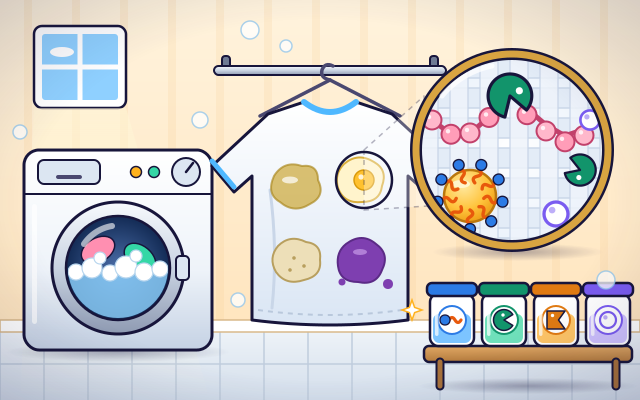
How do laundry detergents remove different stains?
Match cleaning ingredients to model grease, protein, and other stain types.
#402
Everyday chemistry & materials
How do laundry detergents remove different stains?
Match cleaning ingredients to model grease, protein, and other stain types.
 #403
Everyday chemistry & materials
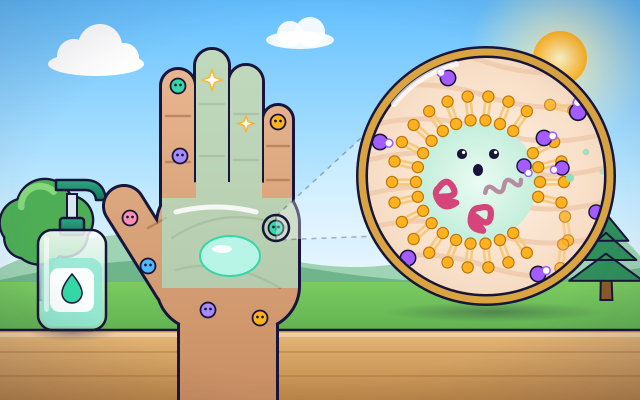
How does hand sanitizer affect microbes?
Explore alcohol acting on microbial membranes and proteins in a simplified animation.
#403
Everyday chemistry & materials
How does hand sanitizer affect microbes?
Explore alcohol acting on microbial membranes and proteins in a simplified animation.
 #404
Everyday chemistry & materials
How does toothpaste clean and protect teeth?
Explore cleaning ingredients and fluoride interacting with a model tooth surface.
#404
Everyday chemistry & materials
How does toothpaste clean and protect teeth?
Explore cleaning ingredients and fluoride interacting with a model tooth surface.
 #405
Everyday chemistry & materials
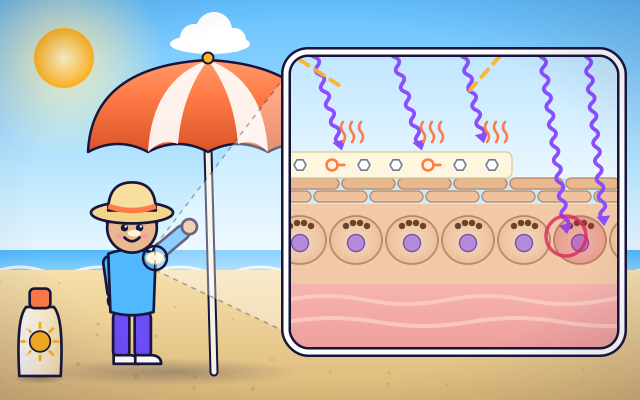
How does sunscreen protect skin?
Follow ultraviolet light interacting with sunscreen ingredients in a simplified skin model.
#405
Everyday chemistry & materials
How does sunscreen protect skin?
Follow ultraviolet light interacting with sunscreen ingredients in a simplified skin model.
Keep exploring
Games to play next
- Weather LabPredict the weather in a box, then run a fair test to find out why.
- Science QuizzesOlly's Science Quiz Show: plants, animals, the body, weather, space and more, for every grade.
- Ratio KitchenScale recipes, fill ratio tables and find the better buy.
Guide for grown-ups
- How to start homeschooling: a step-by-step guide for familiesA guide for parents · 7 min read
Science games by grade
Science worksheets by grade
- Preschool Science Worksheets
- Pre-K Science Worksheets
- Kindergarten Science Worksheets
- 1st Grade Science Worksheets
- 2nd Grade Science Worksheets
- 3rd Grade Science Worksheets
- 4th Grade Science Worksheets
- 5th Grade Science Worksheets
- 6th Grade Science Worksheets
- 7th Grade Science Worksheets
- 8th Grade Science Worksheets