How do natural springs bring water to the surface?
A spring is rain that soaked into the ground, met a layer it could not pass, and was steered back out onto the hillside.
The big idea: Water sinks through rock with gaps in it until a layer like clay stops it. Then it runs along that layer and comes out where the layer reaches the surface.
It's like water on a sloping roof: rain cannot get through the roof, so it runs down along it and pours out at the lowest edge.
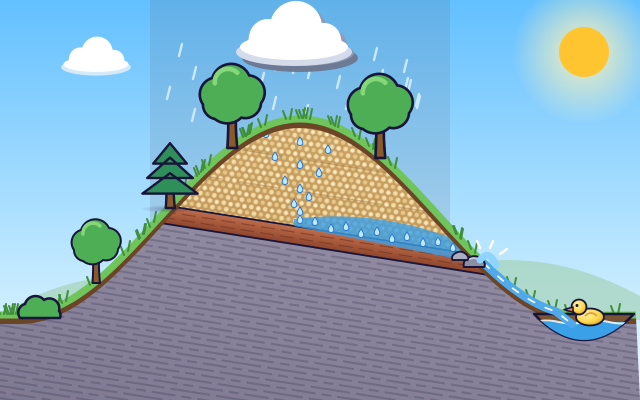
The interactive parts didn't load. The explanations below still work; try reloading the page.
Where does a spring come from?
- Water trickles out of this hillside day and night, with no pipe and no pump. It is a spring. Let us cut the hill open and find out where the water comes from.
- It starts with rain on the hilltop. This hill is made of sandstone, a rock full of tiny gaps. The rain soaks in and sinks down through the gaps.
- Deep in the hill the water meets a layer of clay. Clay is packed so tightly that water cannot get through. The water piles up on top of it.
- The clay layer is tilted. So the water does what water always does: it runs downhill, along the top of the clay, toward the lower side of the hill.
- Where the clay layer reaches the hillside, the water has nowhere left to go but out. That spot is the spring. From there a stream runs down to the pond.
- The rain stops, but the spring keeps flowing for weeks. The hill is like a huge sponge that lets its water out slowly. That is why springs run on sunny days.
Look inside a hill with a spring
Tap each part and follow the water from the hilltop to the pond.
- Hilltop. This is where the spring's water goes in. Rain and melting snow soak into the hilltop.
- Sandstone. Sandstone is made of sand grains stuck together, with tiny gaps between them. Water can soak in and move through it.
- Clay layer. Clay is packed so tightly that water cannot pass. It works like a roof inside the hill that steers the water sideways.
- Water on the move. The water creeps through the sandstone along the top of the clay, always toward the lower end.
- Spring. Where the clay reaches the hillside, the water comes out into the daylight. Spring water is usually cool and clear, because the rock has filtered it.
- Stream. The spring is the start of a stream. Many rivers begin as springs high in the hills.
- Pond. The stream fills the pond in the valley. Animals and people have always settled near water like this.
Which side does the spring come out?
Tilt the clay layer, make it rain and watch the drops. Can you make the spring come out on each side of the hill?
Experiment: The clay layer slopes down to the left. Where will the spring come out?
- Press Make it rain and watch which side the spring comes out.
- Tilt the clay layer the other way and watch again.
- Try the layer flat. What happens now?
What we found: The spring always comes out on the side where the clay layer is lower. Water sinks until the clay stops it, runs downhill along the top of the clay, and comes out where the clay meets the hillside.
Turn on JavaScript to try it yourself.
Where will the spring appear?
Look at the clay layer inside the hill. Move the trough to the spot where the spring will come out, then make it rain.
Why springs appear where they do
A spring can look like magic: clear water pouring out of the ground with no rain in sight. But every drop of it fell as rain or snow, perhaps weeks or even years ago. It soaked into the ground somewhere higher up and has been traveling slowly through the rock ever since.
Rock is not all the same. Some rocks, like sandstone, are full of tiny gaps that water can move through. Others, like clay, are packed so tightly that water cannot pass. When sinking water reaches a layer like clay, it cannot go down any further. So it flows sideways along the top of that layer, always toward the lower end.
If the layer comes out on a hillside or in a valley, the water comes out there too, and that is a spring. This is why springs are often found partway down a slope, and why several springs sometimes appear in a line along a hill: they all mark the edge of the same hidden layer.
Because the rock stores water like a giant sponge, a spring keeps flowing long after the rain has stopped. It also means that anything spilled on the ground uphill can end up in the spring, so the land above a spring needs looking after. Spring water looks clean, but ask a grown-up before drinking from one. Our model hill is very simple: real hills have many layers, cracks and bends.
Key words
- Spring
- A place where water from under the ground flows out by itself.
- Permeable
- Letting water pass through. Sandstone and gravel are permeable.
- Impermeable
- Not letting water pass through. Clay and solid, uncracked rock are impermeable.
- Contact spring
- A spring that comes out where a rock that holds water sits on top of one that blocks it.
- Discharge
- How much water flows out of a spring or along a stream in a given time, for example in liters per second.
- Recharge area
- The land where rain soaks in to feed a spring or an aquifer.
Check your thinking
-
Where does the water in a spring come from?
Show the answer
Rain that soaked into the ground higher up. All spring water began as rain or snow that soaked into the ground and traveled through the rock.
-
A clay layer inside a hill slopes down toward the east. On which side will the spring be?
Show the answer
The east side. Water runs downhill along the top of the clay, so it comes out at the layer's lower end.
-
Why does a spring keep flowing after the rain has stopped?
Show the answer
The rock stores water and lets it out slowly. The hill is like a giant sponge. It soaks up rain and releases it over weeks.
-
A short clay layer high in a hill ends before it reaches the hillside. What happens to the water running along it?
Show the answer
It drops off the end and sinks on to the next impermeable layer. A spring needs an outlet at the surface. Inside the hill the water just keeps sinking through permeable rock until another layer stops it.
-
Someone spills oil on the ground at the top of a hill. Why might that matter for a spring lower down?
Show the answer
Whatever soaks into the hilltop can come out at the spring. The spring's water went in at the hilltop, so pollution there can travel with it.
You're a Earth & weather expert!
You watched, looked inside, tried it, solved the challenge and went deeper. Pick another question below, or switch the age at the top to see this topic another way.
More about earth & weather
 #464
Earth & weather
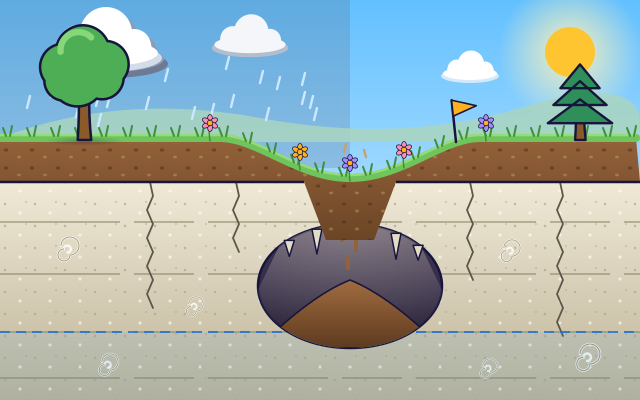
How do sinkholes form?
Explore dissolving rock and underground cavities beneath a model landscape.
#464
Earth & weather
How do sinkholes form?
Explore dissolving rock and underground cavities beneath a model landscape.
 #465
Earth & weather
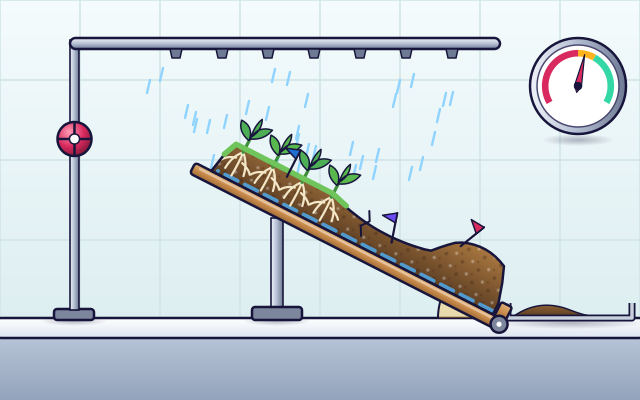
How do landslides happen?
Change slope, water content, and vegetation and compare ground stability.
#465
Earth & weather
How do landslides happen?
Change slope, water content, and vegetation and compare ground stability.
 #466
Earth & weather
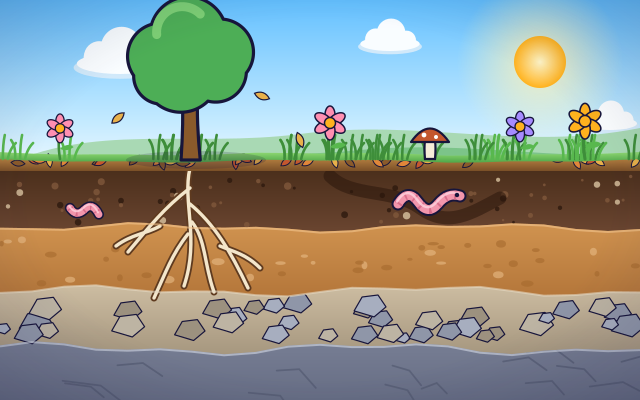
How does soil form?
Follow rock weathering, organic matter, organisms, and time into layered soil.
#466
Earth & weather
How does soil form?
Follow rock weathering, organic matter, organisms, and time into layered soil.
 #467
Earth & weather
How do waves change coastlines?
Compare erosion and sediment movement around beaches, cliffs, and headlands.
#467
Earth & weather
How do waves change coastlines?
Compare erosion and sediment movement around beaches, cliffs, and headlands.
Keep exploring
Games to play next
- River MysterySomething changed the river. Sample sites with a limited budget, follow the evidence and find where the change begins.
- Weather LabPredict the weather in a box, then run a fair test to find out why.
- Landform ExplorerMountains, valleys, peninsulas and deltas — learn the shapes of the land and find them on Earth.
Guide for grown-ups
- How to start homeschooling: a step-by-step guide for familiesA guide for parents · 7 min read
Science games by grade
Science worksheets by grade
- Preschool Science Worksheets
- Pre-K Science Worksheets
- Kindergarten Science Worksheets
- 1st Grade Science Worksheets
- 2nd Grade Science Worksheets
- 3rd Grade Science Worksheets
- 4th Grade Science Worksheets
- 5th Grade Science Worksheets
- 6th Grade Science Worksheets
- 7th Grade Science Worksheets
- 8th Grade Science Worksheets