How do volcanoes erupt?
Look under a volcano to see how magma, gas bubbles and pressure make some volcanoes ooze and others explode.
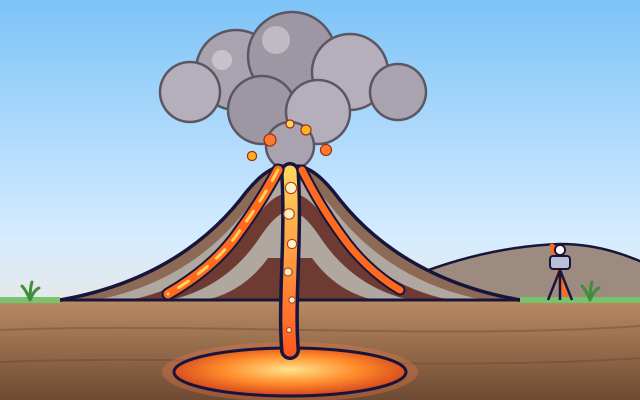
The big idea: Magma is melted rock with gas mixed in. It rises because it is lighter than the solid rock around it. Gas bubbles grow as it rises. Runny magma lets the gas escape, so lava flows out gently. Sticky magma traps the gas until the pressure bursts out in an explosive eruption.
It's like
The interactive parts didn't load. The explanations below still work; try reloading the page.
The journey of magma
- Far below our feet, the Earth is extremely hot. In some places, rock melts into a glowing liquid called magma.
- Magma is lighter than the solid rock around it, so it slowly rises, like a blob in a lava lamp. It collects in a magma chamber under the volcano.
- Magma has gas dissolved in it, like the fizz in a soda bottle. As the magma rises, the squeeze on it drops, and gas bubbles appear and grow.
- The growing bubbles push on the rock above. The ground can swell a little and small earthquakes happen. Scientists measure these signs to warn people early.
- When the pressure wins, magma erupts. Runny magma lets gas escape easily, so lava flows out gently. Sticky magma traps the gas until it bursts out explosively as clouds of ash.
- Lava cools into new rock and ash settles in layers, so volcanoes grow with every eruption. Runny lava builds wide, gentle shield volcanoes; sticky magma builds steep cones.
Cutaway of a volcano
Tap each part of the volcano. Some of them move when you find them!
- Magma chamber. A large pocket of magma deep under the volcano. It fills up slowly, sometimes for hundreds of years, before an eruption.
- Main vent (conduit). The main pipe that carries magma from the chamber up to the crater.
- Gas bubbles. Gas bubbles grow as the magma rises, like the fizz in a soda. They push the magma up and power the eruption.
- Crater. The bowl-shaped hole at the top where magma, gas and ash come out.
- Ash cloud. Volcanic ash is not soft like ash from a fire. It is tiny, sharp pieces of rock and glass blasted into the sky.
- Lava flow. When magma reaches the surface it is called lava. Runny lava can flow a long way before it cools and hardens.
- Layers of lava and ash. This volcano is built from layer upon layer of hardened lava and ash, added by many eruptions over thousands of years.
- Side vent. Some magma squeezes through cracks and comes out of a side vent on the volcano's slope.
Volcano lab: runny or sticky?
Change how runny or sticky the magma is and how much gas it holds. Watch the pressure, the eruption and the shape of the volcano.
Experiment: Which kind of magma makes an explosive eruption?
- Set the gas to medium.
- Try very runny magma and watch an eruption.
- Now try very sticky magma and compare.
What we found: Sticky magma traps the gas bubbles, so pressure builds up until it bursts out in an explosive eruption of ash. Runny magma lets bubbles slip out easily, so lava flows out gently. Gentle eruptions build wide, flat volcanoes; explosive ones build steep cones.
Turn on JavaScript to try it yourself.
Build the volcano in the picture
Choose the right magma for each eruption so the volcano grows into the dotted shape.
Why some volcanoes explode
Deep under the ground it is very hot. In some places, rock melts into magma. Magma is lighter than the rock around it, so it slowly rises and collects in a magma chamber under a volcano.
Magma has gas mixed into it, a bit like the fizz in a bottle of soda. While the bottle is closed, you can't see the bubbles. When you open it, the pressure drops and bubbles appear. Rising magma does the same thing: the closer it gets to the surface, the more the bubbles grow.
What happens next depends on how runny the magma is. Runny magma, like the lava in Hawaii, lets the bubbles escape easily. It flows out in glowing rivers and builds wide, gently sloping shield volcanoes. Sticky magma traps the bubbles. Pressure builds until the magma bursts apart into ash, which builds steep, cone-shaped volcanoes.
Scientists called volcanologists watch volcanoes closely. They measure tiny earthquakes, the ground swelling up and gases coming out. These signs help them warn people early. If a volcano near you becomes active, listen to the experts and follow their plan.
Key words
- Magma
- Melted rock underground, often with gas and crystals mixed in.
- Lava
- Magma that has come out onto the surface.
- Viscosity
- How runny or sticky a liquid is. Honey has a higher viscosity than water.
- Shield volcano
- A wide volcano with gentle slopes, built by many runny lava flows.
- Stratovolcano
- A tall, steep volcano built from layers of lava and ash.
- Volcanic ash
- Tiny pieces of rock and volcanic glass blasted out in an explosive eruption.
Check your thinking
-
What do we call magma once it comes out of a volcano?
Show the answer
Lava. Magma is called lava once it reaches the surface.
-
What happens to gas bubbles as magma rises?
Show the answer
They grow bigger as the pressure drops. Less squeeze lets the dissolved gas come out and expand, like opening a soda.
-
Which magma is more likely to explode?
Show the answer
Sticky magma with lots of gas. Sticky magma traps the gas, so pressure builds until it bursts.
-
How do scientists know a volcano might erupt soon?
Show the answer
They measure small earthquakes, ground swelling and gases. Moving magma shakes the ground, makes it swell and releases gas.
-
A wide volcano with gentle slopes was built mostly by...
Show the answer
Runny lava flows. Runny lava flows far before it hardens, building a wide shield.
You're a Earth & weather expert!
You watched, looked inside, tried it, solved the challenge and went deeper. Pick another question below, or switch the age at the top to see this topic another way.
More about earth & weather
 #73
Earth & weather
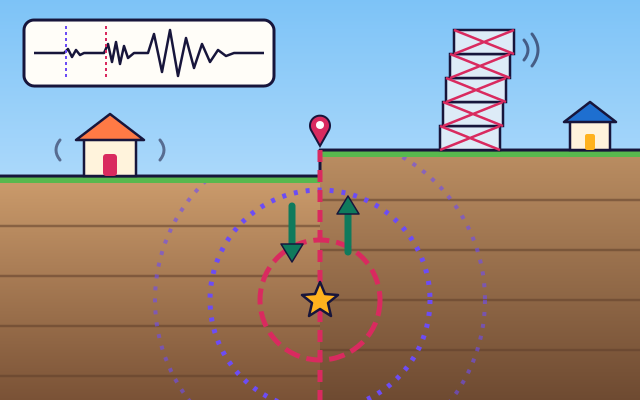
How do earthquakes happen?
Move sections of Earth's crust, watch a fault slip, and follow earthquake waves. Compare how different model buildings respond to shaking.
#73
Earth & weather
How do earthquakes happen?
Move sections of Earth's crust, watch a fault slip, and follow earthquake waves. Compare how different model buildings respond to shaking.
 #74
Earth & weather
How does wind form?
Explore uneven heating, air pressure, and moving air. Change land and water temperatures in a simplified coastal model to investigate sea breezes.
#74
Earth & weather
How does wind form?
Explore uneven heating, air pressure, and moving air. Change land and water temperatures in a simplified coastal model to investigate sea breezes.
 #75
Earth & weather
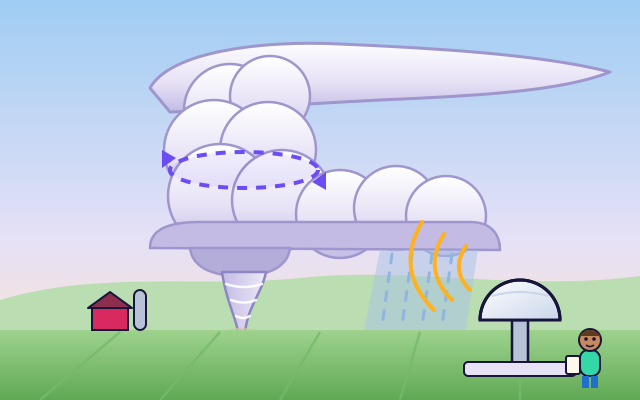
How do tornadoes form?
Explore airflow inside a simplified rotating thunderstorm. Watch a tornado develop and follow its movement across a model landscape.
#75
Earth & weather
How do tornadoes form?
Explore airflow inside a simplified rotating thunderstorm. Watch a tornado develop and follow its movement across a model landscape.
 #76
Earth & weather
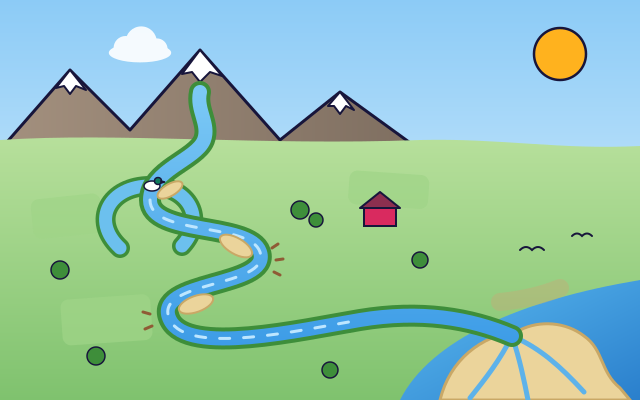
How do rivers shape the land?
Guide flowing water across a landscape and watch erosion, sediment transport, and deposition. Change slope and flow to create bends, channels, and deltas.
#76
Earth & weather
How do rivers shape the land?
Guide flowing water across a landscape and watch erosion, sediment transport, and deposition. Change slope and flow to create bends, channels, and deltas.
Keep exploring
Games to play next
- Landform ExplorerMountains, valleys, peninsulas and deltas — learn the shapes of the land and find them on Earth.
- Weather LabPredict the weather in a box, then run a fair test to find out why.
- River MysterySomething changed the river. Sample sites with a limited budget, follow the evidence and find where the change begins.
Guide for grown-ups
- How to start homeschooling: a step-by-step guide for familiesA guide for parents · 7 min read
Science games by grade
Science worksheets by grade
- Preschool Science Worksheets
- Pre-K Science Worksheets
- Kindergarten Science Worksheets
- 1st Grade Science Worksheets
- 2nd Grade Science Worksheets
- 3rd Grade Science Worksheets
- 4th Grade Science Worksheets
- 5th Grade Science Worksheets
- 6th Grade Science Worksheets
- 7th Grade Science Worksheets
- 8th Grade Science Worksheets