
Animal
Hawaiian monk seal
The Hawaiian monk seal lives only in Hawaiʻi. It loves to nap on sandy beaches. There are not many of these seals left.
The Hawaiian monk seal lives only in the Hawaiian Islands and nowhere else in the world. It sleeps on beaches, hunts fish and octopuses on the seafloor, and mostly lives alone. Only about 1,600 are left, but thanks to careful help, their numbers are slowly growing.
Neomonachus schauinslandi is endemic to the Hawaiian archipelago, with about 1,600 seals, most in Papahānaumokuākea. After decades of decline, the population has grown slowly since 2013 with intensive recovery work. It is listed as Vulnerable (IUCN, 2025) and endangered under the U.S. Endangered Species Act.
Photo: E bailey, CC BY-SA 4.0, via Wikimedia Commons
Meet the Hawaiian monk seal
The Hawaiian monk seal has gray and brown fur.
It has a round face, big whiskers and dark eyes. It likes to sleep on the sand.
The Hawaiian monk seal is a true seal found only in Hawaiʻi. Adults are about 1.8 to 2.1 meters long and weigh about 180 to 270 kilograms. Males and females are the same size.
Newborn pups have black fur. Older seals are dark gray to brown on the back and light gray to yellowish brown on the belly. Many have scars or white spots that help scientists tell them apart. Seals that have been at sea for a long time can even grow green algae on their fur!
Neomonachus schauinslandi is a monk seal endemic to Hawaiʻi. NOAA Fisheries gives adults as 6 to 7 feet (1.8 to 2.1 meters) and 400 to 600 pounds (180 to 270 kilograms); the sexes are similar in size and can only be told apart by looking at the belly.
Pups are born black; weaned pups and adults are dark gray to brown above and light gray to yellowish brown below. Once a year they undergo a "catastrophic molt", shedding the top layer of skin and fur at once, as elephant seals do. Natural scars and bleach marks, plus tags on the rear flippers, let NOAA follow individuals for life.
Quick facts
- Group
- Mammal
- Length
- 1.8 to 2.1 m
- Weight
- 180 to 270 kg
- Lifespan in the wild
- up to 30 years
Where it lives
Hawaiian monk seals live only in Hawaiʻi.
They swim in warm water around the islands. They rest on beaches.
Hawaiian monk seals live only in the Hawaiian Islands, a chain about 2,400 kilometers long, from Kure Atoll in the northwest to Hawaiʻi Island in the southeast. Most of them, about 1,200, live in the remote northwestern islands, a protected area called Papahānaumokuākea. About 400 live around the main islands such as Kauaʻi and Oʻahu.
They spend about two-thirds of their time at sea, around reefs and underwater banks, and come ashore on sandy beaches, coral rubble or volcanic rock.
The species is endemic to the Hawaiian archipelago, about 1,500 miles (2,400 kilometers) from Kure Atoll (Hōlanikū) to Hawaiʻi Island, with about 1,200 seals in Papahānaumokuākea Marine National Monument and about 400 in the main Hawaiian Islands (NOAA Fisheries). There are rare sightings, and one birth, at Johnston Atoll, nearly 1,000 miles to the southwest.
Monk seals spend about two-thirds of their time at sea in warm subtropical waters, around atolls and islands, offshore reefs, submerged banks and deepwater coral beds. They haul out on sand, coral rubble and volcanic rock, preferring protected sandy beaches with shallow water for pupping.
Continent
Its habitat

Where can you find this animal?
- Lives here naturally · Countries and seas named by a scientific source
- Sightings recorded · Records of wild sightings (GBIF)
Lives here naturally · Countries and seas named by a scientific source
Only the Hawaiian Islands, from Kure Atoll in the northwest to Hawaiʻi Island in the southeast; most live in the Northwestern Hawaiian Islands (Papahānaumokuākea). Very rare at Johnston Atoll. The map can only shade the whole Pacific, but this seal lives in just this one island chain.
Places: Pacific Ocean.
Source: NOAA Fisheries · checked October 2026
Sightings recorded · Records of wild sightings (GBIF)
Counts of GBIF records of wild observations (human and machine) and preserved specimens. Records include introduced populations, vagrants, escaped or released animals and misidentifications, so a country with records is not necessarily part of the native range.
Wild sightings have been recorded in United States, Pacific Ocean, Southern Ocean, Arctic Ocean, Atlantic Ocean and Indian Ocean.
Source: gbif · checked October 2026
Range maps show where scientists say an animal lives, often country by country. An animal may live in only part of a country shown, and sightings records can include animals that wandered far from home.
Hunting on the seafloor
Monk seals eat fish, octopuses, eels and crabs.
They find food hiding in the sand and under rocks.
Hawaiian monk seals are generalists: they eat whatever they can find. Their meals include many kinds of fish, squids, octopuses, eels, crabs, shrimps and lobsters.
They hunt at or near the seafloor and like prey that hides in the sand or under rocks. Most dives last about 6 minutes and go less than 60 meters deep, but a monk seal can hold its breath for up to 20 minutes and dive more than 550 meters.
Monk seals are generalist foragers on fish, squids, octopuses, eels and crustaceans such as crabs, shrimps and lobsters (NOAA Fisheries). Diet studies show they forage at or near the seafloor, preferring prey that hides in sand or under rocks, and they do not target most popular Hawaiian gamefish such as ulua.
They can hold their breath for up to 20 minutes and dive more than 1,800 feet (about 550 meters), but average dives last about 6 minutes to less than 200 feet (about 60 meters). In Papahānaumokuākea they compete for food with other top predators such as sharks and large jacks.
Did you know?
Boy and girl monk seals are the same size.
Male and female monk seals are the same size; you have to look at the belly to tell them apart.
There is little size difference between the sexes; sex is confirmed only by examining the belly.
A seal at rest
Monk seals sleep on the beach for a long time.
Sometimes they sleep for days! Their whiskers help them find food.
Monk seals often sleep on beaches, sometimes for days at a time, and occasionally sleep in small underwater caves. A seal sleeping on the sand is resting, and it needs to be left alone.
Once a year, a monk seal sheds the whole top layer of its skin and fur at once. Before that, seals that have spent a long time at sea can look green from algae growing on their old coat.
Monk seals usually sleep on beaches, sometimes for days, and occasionally in small underwater caves (NOAA Fisheries). Long rests on land follow foraging trips; disturbing resting seals is one of the threats NOAA lists in the main islands.
The annual catastrophic molt replaces skin and fur in one go. Algae can grow on the fur of seals that have been foraging at sea for long periods; green-tinged seals have not molted recently and may soon reveal a new silvery coat.
Growing up
Baby seals are called pups.
They are born with black fur. Mom stays with her pup on the beach for weeks.
Monk seals mate in the water. Females give birth on quiet, sandy beaches, and the newborn pup has black fur. The mother stays on the beach with her pup and feeds it milk for up to seven weeks.
Females usually start having pups at 5 to 6 years old around the main islands, and later, at 7 to 10, in the northwestern islands. Monk seals can live more than 30 years, but few live that long.
Mating takes place in the water. Mother-pup pairs remain on the beach for up to seven weeks of nursing (NOAA Fisheries). Newborns are black-furred; after weaning they turn gray-brown.
The youngest documented mother was 4; females typically begin breeding at 5 to 6 in the main Hawaiian Islands and 7 to 10 in Papahānaumokuākea. Monk seals can exceed 30 years of age, though few do.
A loner on the beach
Monk seals usually live alone.
They do not live in big groups like some other seals.
Unlike sea lions and many other seals, Hawaiian monk seals do not live in big colonies. They are mostly solitary. Sometimes a few rest near each other on a beach, but usually not touching.
Monk seals do not migrate with the seasons, but some have swum hundreds of kilometers across the open ocean. Many return to the same beaches again and again, though they do not defend territories.
Hawaiian monk seals are mostly solitary and do not form colonies; small groups may rest near one another, usually without contact (NOAA Fisheries). They do not migrate seasonally, though some individuals travel hundreds of miles in open ocean, and they repeatedly use favorite beaches without defending territories.
In the 1980s and early 1990s, groups of aggressive males at some northwestern islands were a leading threat to females and young; removing specific males proved effective, and NOAA now describes male aggression as episodic and largely manageable.
Did you know?
Some monk seals look green!
Monk seals that have been at sea a long time can grow green algae on their fur.
Algae growing on the coat of long-foraging seals turns them greenish until their next molt.
Bringing monk seals back
There are only about 1,600 Hawaiian monk seals.
People help them by cleaning beaches and giving them space to rest.
In the 1800s, hunters almost wiped out Hawaiian monk seals. Their numbers fell again for many years after the 1950s, but since 2013 they have been slowly growing. In 2021 there were more than 1,500 for the first time in over 20 years. Today there are about 1,600.
Monk seals still face many dangers: getting tangled in old fishing nets and trash, losing beaches to storms and rising seas, a disease called toxoplasmosis, and people or dogs bothering them on the beach.
Sealing in the mid-1800s brought the species near extinction; after a rebound by the late 1950s, a prolonged decline followed, driven in Papahānaumokuākea by low juvenile survival likely linked to food limitation. Since 2013 the population has grown slowly, passing 1,500 in 2021, and now stands at about 1,600, still about a third of its historic size (NOAA Fisheries). The IUCN listed it as Vulnerable in 2025.
Threats include entanglement (437 cases in Papahānaumokuākea, 1974 to 2022, despite 945 metric tons of debris removed), loss of low-lying atoll beaches to storms and sea level rise, toxoplasmosis (at least 15 deaths), fishery hookings and disturbance on busy beaches. NOAA vaccinates seals against morbillivirus and moves young seals away from danger.
IUCN Red List
How is the hawaiian monk seal doing in the wild?
- Least Concern
- Near Threatened
- Vulnerable (this animal)
- Endangered
- Critically Endangered
- Extinct in the Wild
- Extinct
Vulnerable
At high risk of disappearing from the wild.
See the IUCN Red List assessment · The IUCN Red List of Threatened Species 2025.2
Amazing facts
-
Some monk seals look green!
Monk seals that have been at sea a long time can grow green algae on their fur.
Algae growing on the coat of long-foraging seals turns them greenish until their next molt.
-
A monk seal can sleep on the beach for days.
Hawaiian monk seals sometimes sleep on beaches for days at a time.
Haul-outs can last days; seals also occasionally sleep in small underwater caves.
-
Boy and girl monk seals are the same size.
Male and female monk seals are the same size; you have to look at the belly to tell them apart.
There is little size difference between the sexes; sex is confirmed only by examining the belly.
-
Monk seals shed all their old skin and fur at once.
Once a year, a monk seal sheds the top layer of its skin and fur all at once.
The annual "catastrophic molt" replaces the outer skin and fur in one event.
Words to know
- endemic
- found naturally in only one place in the world
- molt
- to shed old fur or skin and grow new
- solitary
- living alone
- entanglement
- getting caught in nets, ropes or trash
- atoll
- a ring-shaped coral island around a lagoon
Discovery challenge
-
Where do Hawaiian monk seals live?
Where in the world do Hawaiian monk seals live?
What is the natural range of the Hawaiian monk seal?
- Only in the Hawaiian Islands
- All over the Arctic
- In rivers in Africa
Show the answer
Only in the Hawaiian Islands
They live only in Hawaiʻi.
Only in the Hawaiian Islands, nowhere else in the world.
Endemic to the Hawaiian archipelago, with rare visits to Johnston Atoll.
-
What color is a baby monk seal?
What color fur does a newborn monk seal pup have?
What is the coat color of newborn Hawaiian monk seal pups?
- Black
- White
- Spotted orange
Show the answer
Black
Baby monk seals have black fur.
Black. After weaning, the fur turns dark gray to brown.
Black; weaned pups and adults are gray-brown above.
-
What should you do if you see a monk seal sleeping on a beach?
What is the best thing to do if you find a monk seal resting on a beach?
Why should people keep their distance from resting monk seals?
- Stay far away and let it rest
- Go close for a photo
- Give it food
Show the answer
Stay far away and let it rest
Stay far away and let it sleep.
Stay far away, keep dogs back and let it rest.
Disturbance, feeding and dog attacks are threats; mothers with pups can also be dangerous.
-
Are there more monk seals now than a few years ago?
How has the Hawaiian monk seal population changed since 2013?
What has the monk seal population trend been since 2013?
- It has slowly grown
- It has disappeared
- It has doubled every year
Show the answer
It has slowly grown
Yes, there are slowly getting to be more of them.
It has slowly grown, passing 1,500 in 2021; today there are about 1,600.
Slow, steady growth since 2013, to about 1,600, still about a third of historic size.
Explore next
-
 Watch
Animal
Spinner dolphin
The spinner dolphin is famous for leaping out of the water and spinning around several times before splashing back. These slim, long-beaked dolphins live in warm oceans around the world, rest in calm bays by day and hunt deep-sea fish and squid at night.
-
 Watch
Animal
Green sea turtle
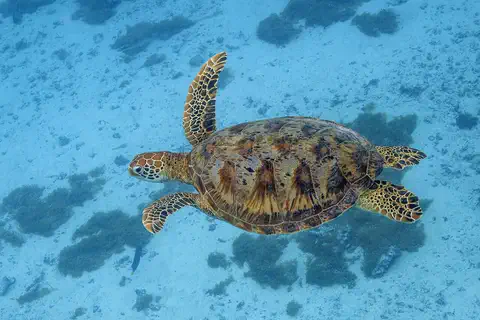
The green sea turtle is the largest sea turtle with a hard shell. It lives in warm seas around the world and, unlike other sea turtles, grown-ups eat mostly seagrass and algae. Females swim hundreds or even thousands of kilometers to lay their eggs on the beaches where they hatched long ago.
-
 Watch
Animal
Weddell seal
The Weddell seal lives farther south than any other mammal that lives in Antarctica all year. It spends the dark winter under the sea ice, diving deep for fish and keeping breathing holes open by scraping the ice with its teeth.
-
 Watch
Animal
Nēnē
The nēnē, or Hawaiian goose, lives only on the Hawaiian Islands and is the state bird of Hawaiʻi. In the 1950s only about 30 were left in the wild. Thanks to captive breeding, releases and protection from predators, there are now a few thousand, but they still need people's help to survive.
-
 Watch
Animal
Aardvark
The aardvark is a shy night digger of African savannas. It sniffs out ant and termite nests, rips them open with its spade-like claws and laps up the insects with a sticky tongue about 30 centimeters long. Its name means 'earth pig' in Afrikaans.
-
 Watch
Animal
African buffalo
The African buffalo is a huge, cow-like grazer with heavy, curving horns. It lives in herds that can number in the thousands, and a herd will rush to protect a calf in danger. It lives across much of Africa south of the Sahara, from open savannas to rainforests.
-
 Watch
Animal
African forest elephant
The African forest elephant is a separate species from the bigger bush elephant. It lives in the rainforests of central and western Africa, eats lots of fruit and spreads the seeds of forest trees in its dung. It is Critically Endangered.
-
 Watch
3D
Animal
African wild dog
The African wild dog, or painted dog, has a patchy coat unlike any other dog's, big round ears and only four toes on its front feet. It lives in close packs that hunt together, share food and care for the pups. It is endangered: the IUCN estimated in 2025 that only about 1,676 adults are left in the wild.
For parents & teachers
What children will learn
- Explain that the Hawaiian monk seal is endemic to the Hawaiian Islands.
- Describe how monk seals feed and rest.
- Discuss threats such as marine debris, beach loss and disturbance.
- Practice how to behave around wildlife on a beach.
Recommended ages: 3 to 17 · About 15 minutes
Talk about it
- Why might an animal that lives in only one place be at extra risk?
- How could rising seas affect animals that rest and have babies on low beaches?
- What could your family do to keep beaches safe for wildlife?
Try at home or in class
- Find the Hawaiian Islands on a globe and trace the chain from Kure Atoll to Hawaiʻi Island.
- Collect litter on a beach or in a park (with gloves and a grown-up) and sort what could harm sea animals.
Key vocabulary: endemic, molt, solitary, entanglement, atoll
Where these facts come from
- GBIF Backbone Taxonomy and GBIF Occurrence Search , Global Biodiversity Information Facility (CC0 1.0 (backbone); occurrence counts are facts derived from records under CC0, CC BY and CC BY-NC)
- The IUCN Red List of Threatened Species , International Union for Conservation of Nature (IUCN terms of use (no redistribution of Red List data or range maps))
- Hawaiian monk seal , NOAA Fisheries
- Neomonachus schauinslandi: IUCN Red List global assessment record (Baker et al. 2025), IUCN checklist on GBIF , GBIF
- Wikidata , Wikimedia Foundation (CC0 1.0)
- Wikimedia Commons , Wikimedia Foundation (Per file: Public domain, CC0, CC BY or CC BY-SA only (credited on each page))
Checked, not yet human-reviewed. Last updated November 1, 2026. Spotted a mistake? Tell us.