
What If? Lab
What if a caterpillar never became a butterfly?
A caterpillar eats and eats. Then it turns into a butterfly! What if it just stayed a caterpillar? Let's imagine it with Olly.
A caterpillar is an eating machine. Inside its chrysalis it rebuilds its whole body into a butterfly that can fly, find a mate and lay eggs. Imagine a caterpillar that never changed: what would it miss, and what would happen to the next generation?
In complete metamorphosis the larva is a specialized feeding stage and the adult disperses and reproduces. Inside the pupa, most larval tissue breaks down while imaginal discs, set aside in the embryo, build the adult. Without that change there would be no winged, breeding adult.
The big question
A caterpillar munches leaves all day long. It gets bigger and bigger.
Then it hangs up and makes a chrysalis. Out comes a butterfly! What if that never happened?
A caterpillar spends its days munching leaves and growing. Then one day it stops eating, hangs upside down and becomes a chrysalis. Some time later, a butterfly climbs out.
But what if the caterpillar never changed? What if it just stayed a caterpillar forever? In this thought experiment you can look inside the big change, see why caterpillars and butterflies have such different jobs, and meet other insects that change too.
Butterflies and moths go through complete metamorphosis: egg, larva, pupa and adult. The larva and adult look, eat and behave so differently that they could be different animals.
This lab asks what would be lost if the larva never became an adult. To answer it, we look at what really happens inside a pupa, at how the life stages divide the work of feeding, traveling and breeding, and at how other insects grow up without a pupa at all.
Explore the idea
Make a prediction
If a caterpillar never became a butterfly, what could it never do?
If a caterpillar never became a butterfly, which of these could it never do?
Which function belongs to the adult stage, so a larva that never pupated could not do it?
- Fly and lay eggs
- Eat leaves
- Grow bigger
-
Established fact
A caterpillar changes into a butterfly inside a chrysalis.
Butterflies have four life stages: egg, caterpillar, chrysalis and adult.
The monarch's four life stages, egg, larva, pupa and adult, make up complete metamorphosis (U.S. Forest Service).
-
Established fact
Monarch butterflies help flowers when they sip nectar.
While feeding on nectar, monarch butterflies pollinate many kinds of wildflowers.
Adult monarchs pollinate many wildflowers while feeding on nectar (National Park Service).
-
An idea scientists discuss
A caterpillar that never changed is something we imagine.
This lab imagines a caterpillar that never changes, using what scientists know about real life cycles; it could never really happen to a whole species and last.
The outcomes here are inferred from life-cycle biology; a lineage stuck in its larval stage could not reproduce, so the scenario is a thought experiment, not a forecast.
-
Established fact
Caterpillars eat a lot and grow very fast.
Caterpillars can grow up to 1,000 times heavier than they were when they hatched.
Caterpillars can reach up to 1,000 times their original weight; some, like the wood-eating carpenter worm, take as long as three years to finish the larval stage (AMNH).
-
An idea scientists discuss
A caterpillar that never changed could never fly.
A caterpillar that never changed would have no wings, so it could only crawl and munch where it was.
A permanent larva would stay a wingless feeding stage, limited to crawling, with none of the adult's ability to travel.
-
Established fact
Inside the chrysalis, a caterpillar's body is rebuilt.
Inside a chrysalis, the caterpillar's body breaks down and is reorganized into a butterfly.
The larva breaks down at a cellular level and reorganizes into the adult inside the chrysalis, which is the last form of the caterpillar's exoskeleton (AMNH).
-
Established fact
Tiny groups of cells grow into wings and legs.
Groups of cells called imaginal discs survive the breakdown and grow into wings, legs, eyes and antennae. Some caterpillars even carry tiny early wings tucked inside their bodies.
Imaginal discs form while the caterpillar is still in its egg; in some species they stay dormant, in others they start shaping adult parts before pupation. A fruit fly wing disc can go from about 50 cells to more than 50,000 (Scientific American).
-
Established fact
Grown-up butterflies find a partner and lay eggs.
Adult butterflies spend most of their time looking for a mate, and many kinds live less than a month as adults.
Adults spend most of their time seeking mates; many species live less than a month after reaching adulthood (AMNH).
-
Established fact
Some monarch butterflies fly all the way to Mexico.
Migrating monarchs weigh less than a gram but fly 2,000 to 3,000 miles to spend the winter in Mexico.
The last monarch generation of the year delays breeding and flies 2,000 to 3,000 miles to overwinter in Mexico; some live as long as 9 months (U.S. Forest Service).
-
An idea scientists discuss
Without butterflies, there might be no new caterpillars.
If caterpillars never became butterflies, there might be no eggs, and after a while no caterpillars either.
Without adults, reproduction would stop; a species locked in its larval stage could not persist beyond one generation.
-
Established fact
Most kinds of insects change a lot as they grow up.
About three out of every four kinds of insects go through egg, larva, pupa and adult, including all beetles, bees, ants and flies.
About 75 percent of world insect species undergo complete metamorphosis; all Lepidoptera, Coleoptera, true flies and Hymenoptera do (University of Kentucky Entomology).
-
Established fact
Baby grasshoppers look like small grown-ups.
In gradual metamorphosis, the young (called nymphs) look like small adults without wings and eat the same food.
Gradual metamorphosis has no pupa: nymphs resemble adults, share their food and mouthparts, and develop external wing buds; dragonfly naiads live in water with gills (University of Kentucky Entomology).
-
An idea scientists discuss
If no insects changed, our world would look very different.
If none of these insects could change, many kinds that we know as adults, from bees to beetles, might never appear.
Halting metamorphosis across the three-quarters of insect species that use it would remove their adult stages, an idea far beyond what any study could test.
How a caterpillar changes today
A butterfly lays a tiny egg on a leaf. A little caterpillar hatches out.
It eats and grows. Then it becomes a chrysalis. Inside, it changes into a butterfly.
Every butterfly starts as a tiny egg laid on a leaf. Out hatches a caterpillar, which eats and eats. The American Museum of Natural History says caterpillars can grow up to 1,000 times heavier than when they hatched.
A monarch caterpillar, for example, starts out less than 1 centimeter long and grows to about 5 centimeters. Then it forms a chrysalis. Inside, its body is completely rebuilt, and an adult butterfly comes out with wings.
The monarch shows the four stages clearly. The U.S. Forest Service notes that a female lays 100 to 300 eggs in her life; they hatch about four days later. The larva grows from under 1 cm to about 5 cm through a series of molts, each stage between molts called an instar.
The chrysalis, the American Museum of Natural History explains, is the last form of the caterpillar's outer skeleton. Inside it the larva breaks down at the level of its cells and reorganizes into an adult. AMNH gives several weeks for this stage in butterflies generally; for the monarch, the Forest Service says it can take as few as five days. The adult's emergence is called eclosion.
A caterpillar that never changes
Now imagine the caterpillar never makes a chrysalis. It just keeps being a caterpillar.
It has no wings, so it cannot fly. And caterpillars do not lay eggs. So there might be no new baby caterpillars.
In our imaginary world, the caterpillar keeps eating but never forms a chrysalis. It would have no wings, so it could never fly to find flowers or a mate.
That matters, because in butterflies it is the adult that finds a mate and lays eggs. A caterpillar that never grew up might never have young of its own. If every caterpillar stayed a caterpillar, there might soon be no butterflies, no eggs and, in the end, no more caterpillars either.
Stopping metamorphosis would leave the animal in its feeding form for life. In insects with complete metamorphosis, it is the winged adult that is able to reproduce, as a University of Kentucky entomology guide puts it, and adult butterflies spend most of their time looking for a mate.
So the most direct consequence is an idea that follows from the life cycle: a larva that never became an adult could not breed, and the species could not continue. Other effects, such as flowers losing butterfly visitors, are reasonable ideas but would depend on the species.
Why two different bodies?
A caterpillar has strong jaws for chewing leaves.
A butterfly has a long tongue like a straw for sipping nectar. Each body is good at its own job.
A caterpillar and a butterfly do different jobs, so they need different bodies. The caterpillar's job is to eat and grow, so it has chewing mouthparts for leaves. The butterfly's jobs are to travel, find a mate and lay eggs, so it has wings and a long tube for sipping nectar.
Inside the chrysalis, the change is huge. Scientific American explains that the caterpillar's body mostly breaks down, while small groups of cells survive and build the wings, legs, eyes and antennae of the butterfly.
Entomologists describe the larva as a specialized feeding stage, very different from the adult, which may not feed at all; caterpillars chew, while adult moths and butterflies have siphoning mouthparts for nectar (University of Kentucky).
Scientific American describes the rebuild: enzymes dissolve most larval tissue, but imaginal discs, groups of cells formed while the caterpillar was still developing inside its egg, one for each adult structure, survive and divide rapidly using that protein-rich mix. A fruit fly's wing disc can grow from about 50 cells to more than 50,000. Some muscles and parts of the nervous system are largely kept, and one study suggests moths remember things they learned as caterpillars.
Travelers on new wings
Monarch butterflies fly very far. Some fly all the way to Mexico!
They also sip nectar from flowers and help the flowers make seeds.
Wings let butterflies go places caterpillars never could. The U.S. Forest Service says migrating monarchs, each weighing less than a gram, fly 2,000 to 3,000 miles to spend the winter in Mexico. Some of these butterflies live as long as 9 months, while summer monarchs live 2 to 5 weeks.
As they feed on nectar, monarchs also pollinate many kinds of wildflowers, the National Park Service explains. A caterpillar that never changed would never make that journey or visit a single flower.
Metamorphosis gives one species two very different lives. Monarch caterpillars feed on milkweed, and the National Park Service notes that the plant's toxins stay in the monarch even after metamorphosis, so animals that eat one become sick and learn to avoid them. As adults, monarchs drink nectar and pollinate many wildflowers.
The U.S. Forest Service describes up to four summer generations, each traveling a little farther north, and a final generation that does not breed but flies 2,000 to 3,000 miles to overwinter in Mexico, some living as long as 9 months. None of that would be possible for a larva without wings.
Amazing facts
-
Some caterpillars carry tiny wings hidden inside them.
Some caterpillars walk around with tiny early wings tucked inside their bodies, though you would never know by looking.
In some species imaginal discs begin forming adult structures before pupation, so the larva carries rudimentary wings internally (Scientific American).
-
A monarch caterpillar eats its own egg first!
When a monarch caterpillar hatches, it eats its own egg, then switches to milkweed leaves.
Newly hatched monarch larvae eat their own egg before feeding on milkweed, whose toxins persist through metamorphosis into the adult (National Park Service).
-
Moths might remember things from when they were caterpillars.
One study suggests that moths remember things they learned as caterpillars, even after their bodies were rebuilt.
Parts of the nervous system are largely preserved through metamorphosis in some species, and one study suggests moths remember what they learned in late larval stages (Scientific American).
-
Some caterpillars stay caterpillars for years.
The carpenter worm, a caterpillar that eats wood, can take as long as three years to finish growing.
The wood-boring carpenter worm can remain a larva for up to three years (American Museum of Natural History).
Words to know
- metamorphosis
- a big change in body shape as an animal grows up
- larva
- the young, feeding stage of an insect; a caterpillar is a butterfly's larva
- chrysalis
- the hard case a butterfly caterpillar forms, where it changes into a butterfly
- pupa
- the resting stage between larva and adult, when the body is rebuilt
- imaginal disc
- a small group of cells that grows into an adult body part, such as a wing
- nymph
- a young insect, such as a grasshopper, that looks like a small adult without wings
Discovery challenge
-
What does a caterpillar mostly do?
What is a caterpillar's main job?
What is the main role of the larval stage in butterflies?
- Eat and grow
- Lay eggs
- Fly far away
Show the answer
Eat and grow
It eats and grows bigger and bigger.
Eating and growing: some caterpillars become up to 1,000 times heavier.
Feeding and growth; the larva is a specialized feeding stage.
-
What grows into a butterfly's wings inside the chrysalis?
Inside the chrysalis, what builds the butterfly's wings, legs and eyes?
Which structures survive larval breakdown and build adult organs?
- Small groups of cells called imaginal discs
- The caterpillar's old skin
- Leaves the caterpillar saved
Show the answer
Small groups of cells called imaginal discs
Tiny groups of cells grow into wings.
Imaginal discs survive the breakdown and grow into the adult's body parts.
Imaginal discs, formed in the embryo, one for each adult structure.
-
Who lays the eggs: the caterpillar or the butterfly?
Which stage finds a mate and lays eggs?
Which life stage reproduces in butterflies?
- The butterfly
- The caterpillar
- The chrysalis
Show the answer
The butterfly
The butterfly lays the eggs.
The adult butterfly, which spends much of its time looking for a mate.
The winged adult; larvae are not reproductive.
-
Which baby insect looks like a small grown-up?
Which insect's young look like small adults without wings?
Which insect develops by gradual metamorphosis, without a pupa?
- Grasshopper
- Butterfly
- Beetle
Show the answer
Grasshopper
A baby grasshopper looks like a little grasshopper.
Grasshopper nymphs look like small adults and eat the same food.
Grasshoppers (Orthoptera): egg, nymph, adult.
Experiments to try
- Watch What If? Lab What if there were no spiders? Spiders around the world catch an estimated 400 to 800 million tons of prey every year, mostly insects. They also spin some of the toughest materials in nature. Imagine a world with no spiders: what would happen to all those insects, and what would we lose?
- Watch What If? Lab What if seeds could not travel? Seeds ride the wind, float on water, hide in fruit that animals eat, and cling to fur and socks. What if every seed simply dropped under its parent plant? Explore crowded seedlings, wind and animal helpers, and the burrs that gave people an idea.
Explore next
-
 Watch
3D
Animal
Monarch butterfly
The monarch butterfly is famous for its bright orange wings and its amazing journey. Each fall, monarchs from eastern North America fly up to 3,000 miles to mountain forests in Mexico, where they spend the winter clustered together on fir trees. Their caterpillars eat only milkweed, which makes them taste bad to predators.
-
 Watch
3D
Animal
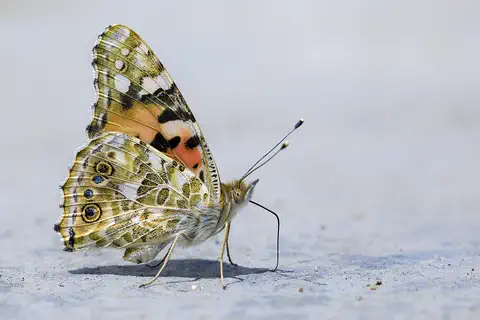
Painted lady
The painted lady is one of the most widespread butterflies in the world. Its orange and black wings carry it on huge journeys: each year, families of painted ladies fly between Africa and northern Europe, one generation after another.
- Watch What If? Lab What if there were no spiders? Spiders around the world catch an estimated 400 to 800 million tons of prey every year, mostly insects. They also spin some of the toughest materials in nature. Imagine a world with no spiders: what would happen to all those insects, and what would we lose?
- Watch What If? Lab What if seeds could not travel? Seeds ride the wind, float on water, hide in fruit that animals eat, and cling to fur and socks. What if every seed simply dropped under its parent plant? Explore crowded seedlings, wind and animal helpers, and the burrs that gave people an idea.
- Watch Try it What If? Lab What if elephants talked with very low sounds? Elephants really do talk with very low rumbles, some too low for people to hear. Turn the pitch down in our sound model and see what changes about the wave, then find out how far real elephant calls can carry.
- Watch Try it What If? Lab What if fish had no swim bladder? Most bony fish carry a gas-filled pouch called a swim bladder. It makes the fish almost exactly as heavy for its size as the water around it, so it can stay at one depth without sinking or floating up. Use a floating-and-sinking model to see what happens when the gas is taken away.
- Watch What If? Lab What if there were no decomposers? Bacteria, fungi, earthworms and millipedes break down dead leaves, wood and dead plants and animals, and give their nutrients back to the soil. National Geographic calls them Earth's cleanup crew. Imagine a world without them, and follow what might pile up, what might run short, and who does the work.
- Watch What If? Lab What if we could understand animal sounds? Animals pass messages with sounds, smells, movements and touch. Scientists have already worked out what a honey bee's dance means, and they are listening hard to whales. Imagine understanding three animals, a bee, a whale and a dog, and find out how much we really know.
For parents & teachers
What children will learn
- Butterflies go through four stages: egg, caterpillar, chrysalis and adult.
- Inside the chrysalis, the caterpillar's body is broken down and rebuilt from small groups of cells.
- Caterpillars and butterflies have different jobs: eating and growing versus traveling and laying eggs.
- Not all insects change in the same way; grasshoppers grow gradually without a pupa.
Recommended ages: 4 to 17 · About 15 minutes
Talk about it
- Why might it help an animal to have a young stage and an adult stage that eat different foods?
- What would a garden be missing if there were no butterflies?
- Can you think of other animals that change shape as they grow up?
Try at home or in class
- Draw the four stages of a butterfly's life in a circle and talk about what the animal does at each stage.
- On a walk, look on the undersides of leaves for insect eggs or caterpillars. Look only, and leave them where you found them.
Key vocabulary: metamorphosis, larva, chrysalis, pupa, imaginal disc, nymph
Where these facts come from
- How Does a Caterpillar Turn into a Butterfly? , Scientific American
- The Life Cycle of a Butterfly: Egg, Larva, Pupa, Adult , American Museum of Natural History
- Insect Basics (Entomology for Master Gardeners) , University of Kentucky Entomology
- Monarch Butterfly Biology , U.S. Forest Service
- Pollinators: Monarch butterfly , U.S. National Park Service
Checked, not yet human-reviewed. Last updated October 26, 2026. Spotted a mistake? Tell us.
Picture credits
- Photo: Rhododendrites, CC BY-SA 4.0, via Wikimedia Commons · source · license
- Photo: Rhododendrites, CC BY-SA 4.0, via Wikimedia Commons · source · license
- Photo: Reytan (uploader), CC BY-SA 3.0, via Wikimedia Commons · source · license
- Photo: Quartl, CC BY 3.0, via Wikimedia Commons · source · license