
What If? Lab
What if cats had no whiskers?
Cats have long whiskers on their faces. What are they for? What if a cat had none? Let's find out with Olly!
A cat's whiskers are not just for looks. They are touch sensors that feel air moving, things brushing past, and the edges of gaps. Imagine a cat with no whiskers: how would it find its way in the dark or know if it fits through a hole?
Whiskers (vibrissae) are stiff tactile hairs whose sensors sit in deep, nerve-rich follicles. Cats use them to detect air currents, contact, texture and nearby objects, especially in dim light. This thought experiment asks what a cat might lose without them.
The big question
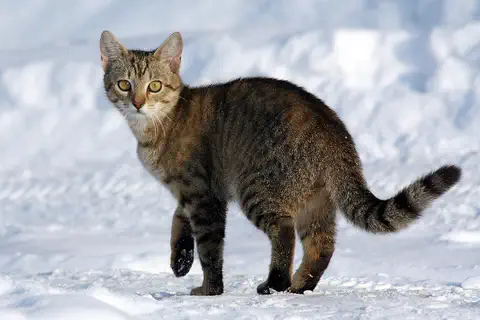
Look at a cat's face. Can you see the long whiskers?
Whiskers help a cat feel things. What if a cat had no whiskers at all?
Cats have long, stiff whiskers on their faces, and some shorter ones in other places too. They look a bit like hairs, and they are hairs, but very special ones.
What if a cat had no whiskers? Would it notice? In this thought experiment, you can explore three of a whisker's jobs: squeezing through gaps, feeling the air, and moving in the dark. Then decide what a cat without whiskers might find hard.
Whiskers, or vibrissae, are specialized tactile hairs. Britannica describes them as touch receptors that are vital to a cat's hunting, and the University of Michigan's Animal Diversity Web says they help house cats get around obstacles in low light by sensing changes in airflow.
A thought experiment can isolate their role: remove the whiskers and ask which everyday tasks would get harder. The answers are ideas built on what whiskers are known to sense, not results from an experiment on cats.
Explore the idea
Make a prediction
What do you think a cat's whiskers do?
What do you think a cat's whiskers are mainly for?
What is the main function of a cat's vibrissae?
- Help it feel things around it
- Help it smell food
- Keep its face warm
-
Established fact
Whisker roots go deep into the skin.
Whisker follicles go about three times deeper into the skin than the follicles of normal hairs.
Whisker follicles extend about three times deeper than ordinary hair follicles, with bundles of nerves at the base (veterinarian Marty Becker, Vetstreet).
-
Established fact
Lots of animals have whiskers.
Most mammals use whiskers to explore the world through touch.
Most mammals use whiskers to explore their environments by touch (Northwestern University).
-
An idea scientists discuss
A cat with no whiskers would have to be extra careful.
A cat with no whiskers might find dark rooms and narrow gaps harder, and might rely more on its other senses.
Losing vibrissae would remove a short-range touch channel; the size of the effect is a reasoned idea, not a measured result.
-
Established fact
Whiskers help a cat feel things around it.
Whiskers are touch receptors that are vital to a cat's hunting.
The whiskers (vibrissae) are touch receptors vital to the cat's hunting ability (Britannica).
-
Established fact
Whiskers can help a cat tell if it fits through a gap.
A veterinarian explains that if a cat's whiskers fit through an opening, the rest of its body probably will too.
Whiskers can serve as a measuring device: if they fit through an opening, the body probably will (veterinarian Marty Becker, Vetstreet).
-
An idea scientists discuss
A cat with no whiskers might get stuck more often.
Without whiskers, a cat might try gaps that are too small, or avoid ones it could fit through.
Losing this cue might raise the rate of misjudged openings, though vision and experience might partly make up for it.
-
Established fact
Whiskers can feel moving air.
Whiskers can detect air currents, and they vibrate when they touch a surface, telling the cat about its shape and texture.
Whiskers detect air currents and, through contact vibrations, the shape and texture of surfaces (veterinarian Marty Becker, Vetstreet).
-
Established fact
The feeling part of a whisker is at its root.
Whiskers have no sensors along their length; all their sensors are at the base, inside the follicle.
All whisker sensors sit in the follicle; contact bends the whisker into an S shape there, pushing or pulling on sensor cells (Northwestern University, 2021).
-
Established fact
Whiskers help cats get around things in dim light.
Cats' whiskers let them find their way around obstacles in low light by sensing changes in the air flowing around objects.
Vibrissae on the muzzle, eyebrows and elbows act as touch receptors that let house cats navigate obstacles in low light by sensing changes in airflow (Animal Diversity Web).
-
Established fact
Cats are busy at dawn and dusk.
Domestic cats are most active at dawn and dusk, and their whisker 'radar' helps them move and hunt in low light.
Domestic cats are crepuscular; Britannica calls their sensitive whiskers and hairs a 'radar' vital for moving and hunting in low light.
-
An idea scientists discuss
A cat with no whiskers might bump into things at night.
A cat with no whiskers might bump into more things in the dark and might have to rely more on its eyes, ears and nose.
Without vibrissae, low-light navigation might slow and collisions might rise; how far other senses compensate is unknown.
Whiskers today
A cat has whiskers on its nose, over its eyes and under its chin.
It even has some on its front legs! They all help it feel.
Whiskers grow on a cat's muzzle, above its eyes and under its chin. Cats also have some on the underside of their lower front legs. They are thicker and stiffer than normal hairs and taper to a point at the tip.
Cats can move their whiskers. They can spread them out to the sides, pull them back against the face, or push them forward to feel things close to the mouth.
Veterinarian Marty Becker describes whiskers as specialized tactile hairs, also called sinus hairs or vibrissae, found on the muzzle, above the eyes and beneath the chin, and in cats also on the underside of the lower foreleg (carpal hairs). They are thicker than ordinary hairs and tapered.
Whiskers are mobile: cats extend them sideways, pull them back against the face, or point them forward to find and pick up things with the mouth. Britannica adds that the hairs of the eyebrows, cheeks, chin, legs and ears are extremely sensitive to vibration.
A cat with no whiskers
Without whiskers, a cat might bump into things in the dark.
It might not know if it fits through a gap. It would have to go slowly and carefully.
Whiskers tell a cat about things it can't easily see. Without them, a cat might find a dark room harder to cross. It might need to rely more on its eyes, ears and nose, and on its legs bumping into things.
A cat might also find gaps trickier. One veterinarian writes that if a cat's whiskers fit through an opening, the rest of the cat will probably fit too. Without whiskers, it might have to poke its head in and find out the hard way.
If whiskers were removed, a cat would lose one source of touch information about nearby objects, air movement and surface texture. It might move more cautiously in dim light, misjudge narrow gaps more often, and find it harder to locate things right in front of its mouth.
It would still have other senses: Britannica notes cats' acute hearing and a sense of smell with about 200 million odor sensors. How well a cat could compensate is an open question; these consequences are ideas based on what whiskers are known to do.
How whiskers feel
A whisker is like a long feeler. When it bends, the cat feels it.
The feeling part is deep in the skin, at the bottom of the whisker.
A whisker has no feeling along its length. All of its sensors are at the base, deep inside a pocket in the skin called a follicle. Whisker follicles go about three times deeper than the follicles of normal hairs, and bundles of nerves wait at the bottom.
When something bends a whisker, even a puff of air, the bend travels down to the base and presses on the sensor cells. They send a message to the brain: something is there!
Northwestern University researchers note that whiskers, like human hairs, have no sensors along their length; all the sensors sit in the follicle. In a 2021 study in PLoS Computational Biology, Mitra Hartmann's team built the first mechanical simulation of a whisker inside its follicle and found that contact makes the whisker form an S-shaped bend there, pushing or pulling on sensor cells.
Their model is based on data from rats, though Hartmann expects the findings to apply to mammals generally. Veterinarian Marty Becker notes that whisker follicles extend about three times deeper than ordinary hair follicles, with bundles of nerves at the base.
Whiskers in real life
Never cut a cat's whiskers. The roots are very tender.
Many animals have whiskers, not just cats!
Real cats need their whiskers. Veterinarians say never to trim or pull them out, because the nerves at their roots are very sensitive and trimming can make a cat uncomfortable.
Cats are not the only animals with whiskers. Northwestern University scientists say most mammals use whiskers to explore the world by touch. Studying them may even help us understand how our own sense of touch works.
Veterinarian Marty Becker advises never trimming or pulling out a pet's whiskers, because the nerves at their roots are highly sensitive. Cats are crepuscular, most active at dawn and dusk, and Britannica calls their sensitive whiskers and hairs a “radar” vital for moving and hunting in low light.
Whisker research reaches beyond cats: most mammals use whiskers for touch, and the Northwestern team suggests that understanding how whiskers trigger sensor cells could offer insight into human touch.
Amazing facts
-
Some cats have curly whiskers!
Devon Rex and Cornish Rex cats often have short, kinked or curly whiskers.
Some breeds with unusual fur, such as the Devon Rex and Cornish Rex, often have short, kinked or curly whiskers (veterinarian Marty Becker).
-
Cats have whiskers on their legs too.
Cats have stiff sensing hairs on the underside of their lower front legs, called carpal hairs.
Besides the face, cats carry carpal vibrissae on the underside of the lower foreleg.
-
A cat's nose is super good at smelling.
Cats have about 200 million odor sensors in their noses; people have about 5 million.
Britannica gives cats 200 million odor sensors against about 5 million in humans, one of the senses a whisker-less cat could still use.
-
Cats can move their whiskers.
Cats can spread their whiskers out, pull them back against their face, or push them forward.
Whiskers are highly mobile: cats extend them sideways, retract them, or point them forward to find things with the mouth.
Words to know
- whiskers
- long, stiff hairs on an animal's face that help it feel
- vibrissae
- the scientific name for whiskers
- follicle
- the small pocket in the skin that a hair or whisker grows from
- sensor
- something that notices a change, like a touch, and sends a message
- crepuscular
- most active at dawn and dusk
Discovery challenge
-
Where does a whisker do its feeling?
Where are a whisker's sensors?
Where are the touch sensors of a whisker located?
- At the base, deep in the skin
- At the very tip
- All along the whisker
Show the answer
At the base, deep in the skin
The feeling part is at the bottom, deep in the skin.
All the sensors are at the base, in the follicle.
In the follicle; the shaft itself has no sensors (Northwestern University).
-
How do whiskers help a cat in the dark?
How do whiskers help a cat move around in the dark?
How do vibrissae help a cat navigate in low light?
- They feel moving air near things
- They glow in the dark
- They make a squeaking sound
Show the answer
They feel moving air near things
They feel the air moving near things.
Air bouncing off nearby objects bends the whiskers slightly, warning the cat.
They sense changes in airflow around nearby obstacles.
-
Should we cut a cat's whiskers?
Should people trim a cat's whiskers?
What do veterinarians advise about trimming a cat's whiskers?
- No, their roots are very sensitive
- Yes, to keep them neat
- Yes, whenever they get long
Show the answer
No, their roots are very sensitive
No! Whisker roots are tender.
No: the nerves at the roots are very sensitive, and trimming can make a cat uncomfortable.
Never trim or pull them: the nerves at their roots are highly sensitive.
-
Which animals use whiskers?
Which animals use whiskers to feel the world?
According to Northwestern researchers, which animals use whiskers for touch?
- Most mammals
- Only cats
- Only birds
Show the answer
Most mammals
Lots of furry animals have whiskers.
Most mammals use whiskers to explore by touch.
Most mammals; the 2021 model used data from rats.
Experiments to try
- Watch What If? Lab What if all flowers were the same color? Flower colors are signals. Bees go for blue and yellow, hummingbirds for red, and night-flying moths for white. Imagine a world where every flower was the same color: how would pollinators find the right flowers, and what might happen to the plants?
- Watch What If? Lab What if penguins could fly? Penguins are birds whose wings became stiff flippers for swimming. Their ancestors flew, but today's penguins are superb divers instead. Imagine a penguin that could fly: what would it need to change, and what might it lose underwater?
Explore next
-
 Watch
3D
Animal
Domestic cat
The domestic cat is one of the world's favorite pets. Cats live with people in homes, farms and towns in almost every country on Earth. Long ago they came from a small wildcat of the Middle East and Africa, and they still have the sharp senses and soft paws of a wild hunter.
- Watch What If? Lab What if all flowers were the same color? Flower colors are signals. Bees go for blue and yellow, hummingbirds for red, and night-flying moths for white. Imagine a world where every flower was the same color: how would pollinators find the right flowers, and what might happen to the plants?
- Watch What If? Lab What if penguins could fly? Penguins are birds whose wings became stiff flippers for swimming. Their ancestors flew, but today's penguins are superb divers instead. Imagine a penguin that could fly: what would it need to change, and what might it lose underwater?
- Watch Try it What If? Lab What if elephants talked with very low sounds? Elephants really do talk with very low rumbles, some too low for people to hear. Turn the pitch down in our sound model and see what changes about the wave, then find out how far real elephant calls can carry.
- Watch Try it What If? Lab What if fish had no swim bladder? Most bony fish carry a gas-filled pouch called a swim bladder. It makes the fish almost exactly as heavy for its size as the water around it, so it can stay at one depth without sinking or floating up. Use a floating-and-sinking model to see what happens when the gas is taken away.
- Watch What If? Lab What if there were no decomposers? Bacteria, fungi, earthworms and millipedes break down dead leaves, wood and dead plants and animals, and give their nutrients back to the soil. National Geographic calls them Earth's cleanup crew. Imagine a world without them, and follow what might pile up, what might run short, and who does the work.
- Watch What If? Lab What if we could understand animal sounds? Animals pass messages with sounds, smells, movements and touch. Scientists have already worked out what a honey bee's dance means, and they are listening hard to whales. Imagine understanding three animals, a bee, a whale and a dog, and find out how much we really know.
- Watch What If? Lab What if there were no fungi? Fungi are a whole kingdom of living things, with about 144,000 known species, from tiny yeasts to big mushrooms. They puff up our bread, ripen some cheeses, rot dead wood and team up with plant roots. Imagine a world with no fungi at all and follow what might change.
For parents & teachers
What children will learn
- Whiskers are special touch-sensing hairs, not decoration.
- A whisker's sensors are at its base, in a deep follicle full of nerves.
- Whiskers help cats detect air movement, judge gaps and move in dim light.
- Animals use several senses together, and losing one would make others more important.
Recommended ages: 4 to 17 · About 15 minutes
Talk about it
- How do you find your way in a dark room? Which senses do you use?
- Why might a cat need to know about things very close to its face?
- If you could have whiskers for a day, what would you use them for?
Try at home or in class
- With eyes closed, gently brush a feather or a soft paintbrush near (not on) your arm hairs and notice what you feel. Then try it on your fingertips.
- Make 'whiskers' from pipe cleaners taped to a headband, then slowly walk toward a cushion with eyes closed (a grown-up nearby) and notice when they touch it first.
Key vocabulary: whiskers, vibrissae, follicle, sensor, crepuscular
Where these facts come from
- Cat , Encyclopaedia Britannica
- Felis catus (domestic cat) , Animal Diversity Web, University of Michigan Museum of Zoology
- How Dog and Cat Whiskers Work (Dr. Marty Becker) , Vetstreet
- Whisker simulation gives insight into mammals' sense of touch , Northwestern University
Checked, not yet human-reviewed. Last updated October 26, 2026. Spotted a mistake? Tell us.